


What is the most famous painting of trees?
In our ranking, Two Men Contemplating the Moon by Caspar David Friedrich (1819), in Gemäldegalerie, then Four Trees by Egon Schiele and Autumn Landscape by Vincent van Gogh.
Famous paintings by subject
1648 – 1917
The masters our own painters keep coming back to. Trees were painted as portraits of a place, as symbols of life and as studies of light through leaves: Ruisdael's oaks, Friedrich's bare branches, Van Gogh's cypresses and Klimt's birch forests. Here are 24 masterpieces of the kind, each with its painter, its date and the museum that keeps it.
Our artists keep returning to Two Men Contemplating the Moon by Caspar David Friedrich, Four Trees by Egon Schiele and Autumn Landscape by Vincent van Gogh. Here are 24 great paintings of trees, each with painter, date and museum.

The list
Gemäldegalerie, Dresden1819Oil on canvas35 × 44 cm
Two Men Contemplating The Moon is not simply a landscape; it is an emotional threshold. The two figures, positioned with their backs to us, act as Rückenfigur —a signature Friedrich device that allows the viewer to project themselves into the scene, sharing in the characters' quiet awe.

Egon SchieleExpressionism
Austrian Gallery Belvedere, Vienna1917Oil on canvas110 × 141 cm
Egon Schiele’s influence extends far beyond the confines of Vienna, establishing him as a pivotal figure in modern art —particularly Expressionism. Reproductions of Four Trees offer a glimpse into this extraordinary artistic vision.

Vincent van GoghPost-Impressionism
Kröller-Müller Museum, Otterlo1885Oil on canvas64 × 89 cm
The field in the background extends beyond the trees, providing a sense of openness and space. Landscape painting has a rich history, with roots in both Western and Eastern art traditions. Some of Van Gogh's other notable works include The Seated Zouave, Wheat Field, and Landscape at Auvers in the Rain.
Look forbirdsfour trees

John ConstableRomanticism
National Gallery, London1826Oil on canvas143 × 122 cm
The composition is carefully orchestrated to draw the viewer into the scene. The painting reflects a growing appreciation for rural life in 19th-century England, as industrialization began to transform the nation's landscape.

John ConstableRomantic Landscape Painting
The Louvre, Paris1823Oil on canvas103 × 129 cm
He meticulously documented the specific light conditions—particularly the diffused glow filtering through the trees—that characterized Helmingham Park during his visit in 1800, reflecting a core principle of Romanticism. Viewing “Helmingham Dell” is akin to stepping into Constable's own vision of rural England, experiencing firsthand the transformative beauty he sought to capture on canvas.

National Trust, Basingstoke1841Oil on canvas112 × 142 cm
The composition focuses on the interplay between the architectural remnants and the natural movement of the water under a nocturnal sky. It is currently located at The Vyne, where it remains part of the permanent collection. The painting is kept in the care of the National Trust in Basingstoke, United Kingdom.

Aert van der NeerDutch Golden Age
National Gallery, London1648Oil on canvas39.5 × 53 cm
A pale, frozen river dominates the center of the canvas, a wide ribbon of ice cutting through a Dutch village. Buildings line the banks, their dark, earthy tones providing a sturdy frame for the pale expanse of the waterway. Figures move across the ice, small and rhythmic against the vastness of the winter landscape.

Ivan ShishkinContemporary Realism
Kiev National Picture Gallery, Kyiv1887Oil on canvas42 × 62 cm
As one stands before this oil on canvas, the immediate sensation is one of total immersion. The composition of Oak Grove is a masterclass in natural balance and structural stability.

Claude MonetImpressionism
Musée d'Orsay, Paris1868–1869Oil on canvas130 × 89 cm
The Magpie is an oil-on-canvas landscape painting by the French Impressionist Claude Monet. The jury of the 1869 salon met this work with rejection. His work eventually led to the creation of Impression, Sunrise (1873), a piece that helped define the movement. It occupies a space in the permanent collection, having been acquired in 1984.

Paul CézannePost-Impressionism
Pushkin State Museum, Moscow1904Oil on canvas60 × 73 cm
Cézanne’s genius lay not in replicating reality but in distilling its essence. Vollard's decision to organize a solo exhibition of Cézanne’s paintings in 1895 proved to be a turning point, bringing the artist’s work to a wider audience and establishing him as a major figure in the art world.
Look formountain rangetrees

Vincent van GoghPost-Impressionism
Kröller-Müller Museum, Otterlo1890Oil on canvas63 × 50.5 cm
The composition is balanced yet dynamic; the two trees frame the view, drawing the viewer's eye into the heart of the painting. Rather than striving for photographic realism, Van Gogh used expressive strokes to convey emotion and energy. Painted in the final months of Van Gogh’s life, “Chestnut Trees in Bloom” offers a poignant glimpse into his state of mind. The painting’s beauty lies not only in its visual appeal but also in the emotional depth it conveys.

Frits ThaulowImpressionism
Reading Public MuseumOil on canvas
In the background, trees line the banks, providing a dark, textured contrast to the surface of the river. The scene is located along the Beaulieu River, a tidal waterway situated in Hampshire, southern England. The painting is held in the collection of the Reading Public Museum.

Paul CézannePost-Impressionism
National Gallery, London1890Oil on canvas65 × 81 cm
The painting depicts a serene hillside scene characteristic of Provence. Cézanne’s artistic style in "Mountains in Provence" is defined by his meticulous study of form and his innovative use of color. “Mountains in Provence” emerged during a period of significant artistic change.

Vincent van GoghPost-Impressionism
1888Oil on canvas93.3 × 73.3 cm
In the midground, a cluster of slender, curving trees rises from the earth, their trunks displaying organic, swirling lines. To the far left, the dark silhouette of an architectural structure sits atop a distant hill. Painted in 1888, this work originated in Arles, France.

Pierre-Auguste RenoirImpressionism
Musée d'Orsay, Paris1881Oil on canvas65 × 54 cm
It's a subtle yet powerful commentary on the changing social landscape of France during Belle Époque. Renoir’s Railway Bridge at Chatou cemented his reputation as one of Impressionism’s foremost practitioners, demonstrating his ability to distill complex emotions into deceptively simple visual forms.

Paul CézannePost-Impressionism
Norton Simon Museum, Pasadena1878Oil on canvas52 × 56 cm
Nestled within the picturesque setting of the Jas de Bouffan estate near Aix-en-Provence—a place deeply intertwined with Cézanne’s family history—the painting captures a tranquil scene dominated by a shimmering pond reflecting the sky above. The Pond of the Jas de Bouffan exemplifies this shift.
Look forgeometric formscolor

Metropolitan Museum of Art, New York1905Oil on canvas46 × 55 cm
Employing a distinctive method—applying paint directly from the tube with quick, sketchy brushstrokes— Matisse achieved an unprecedented level of textural vibrancy. Two figures—likely Matisse’s wife Amélie and André Derain —are subtly integrated into the scene, adding depth and human presence without disrupting the painting's harmonious balance.

Van Gogh Museum, Amsterdam1884Oil on panel99 × 65.7 cm
Created in 1884, this piece showcases the artist’s unique style and technique, which has become synonymous with his name. For those interested in exploring more of Van Gogh’s works or learning about the art medium he used, The Art Media Oil On Canvas provides a comprehensive overview.

Claude MonetImpressionism
Tate Gallery, London1891Oil on canvas92.4 × 73.7 cm
The scene unfolds along the banks of the Epte River, a tranquil waterway just outside Giverny, where Monet established his beloved home and studio. Towering poplar trees, their leaves shimmering with reflected light, dominate the composition, creating a sense of both grandeur and intimate serenity.
Look forblue huescloudy sky

Vincent van GoghPost-Impressionism
Museum of John Paul II Collection, Warsaw1883Oil on panel28.5 × 39.5 cm
This oil on canvas work is an excellent example of realism and showcases Van Gogh's exceptional talent for capturing the beauty of rural landscapes. The use of oil on canvas as the medium for this painting is significant, as it allowed Van Gogh to create a textured and vibrant work of art.

Paul CézannePost-Impressionism
The Israel Museum, Jerusalem1882Oil on canvas73 × 60 cm
The composition is centered around two dominant trees that stand as sentinels against a backdrop of lush green fields and a hazy sky. Scattered throughout the landscape are several figures, including a family enjoying a picnic, and a solitary car parked on the right side of the field.
Look forpeoplecar

Wassily KandinskyExpressionist Painting
Centre Pompidou, Paris1917Oil on canvas21 × 28.7 cm
A Datcha close to the pond is a landscape painting created in 1917. The composition features a large building, described as a datcha, situated on the side of a hill near a body of water. The artwork is an oil on canvas that depicts a serene setting through a harmonious blend of nature and architecture.

Rijksmuseum, Amsterdam1855Oil on canvas82 × 102 cm
Courbet’s connection to the Barbizon School is evident in his focus on capturing the atmosphere and light of the Fontainebleau forest. For centuries, it served as a royal hunting ground for French monarchs, from François I to Louis XIV.
Look forrivertrees

Ivan ShishkinRussian Landscape Realism
Tretyakov Gallery, Moscow1886Oil on canvas102 × 70 cm
This evocative landscape, measuring 102 x 70 cm, offers a glimpse into a world meticulously observed and rendered with an almost tactile realism that has secured Shishkin's place as one of the most beloved figures in Russian art.
Look forsunlit pines
Where to see them
The artists
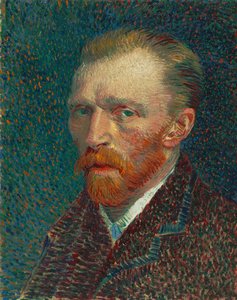
1853–1890 · Netherlands · 5
Dutch Post-Impressionist of swirling night skies and sunflowers, known for thick impasto and expressive brushwork in vibrant colors.
3. Autumn Landscape, 11. Chestnut Trees in Bloom, 14. Sunset at Montmajour, 18. Avenue of Poplars at Sunset, 20. Farmhouses Among Trees
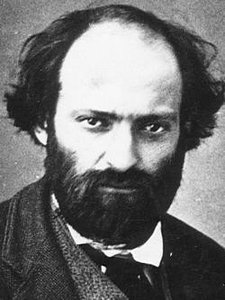
1839–1906 · France · 4
French Post-Impressionist who used color modulation and geometric forms to capture Mont Sainte-Victoire through repetitive, constructive strokes.
10. Mont Sainte-Victoire Seen from Les Lauves, 13. Mountains in Provence, 16. The Pond of the Jas de Bouffan, 21. The Tree by the Bend
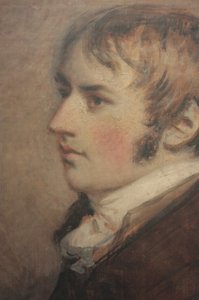
1776–1837 · United Kingdom · 2
British Romantic landscape painter of the Stour Valley, known for textured impasto and capturing the shifting light of the English countryside.

1831–1898 · Russia · 2
Russian realist painter of detailed forests and vast landscapes, known for precise textures and the play of light through towering pines.
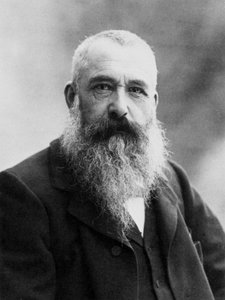
1840–1926 · France · 2
French Impressionist of plein air landscapes and water lilies, capturing shifting light through repetitive series of the same subject.


1890–1918 · Austria · 1
Austrian Expressionist known for raw, contorted figures and nervous, expressive line work that explores sexuality and the human condition.
Questions and answers
In our ranking, Two Men Contemplating the Moon by Caspar David Friedrich (1819), in Gemäldegalerie, then Four Trees by Egon Schiele and Autumn Landscape by Vincent van Gogh.
Vincent van Gogh (5), Paul Cézanne (4) and John Constable (2), out of 24 works.
National Gallery holds 3 of the 24 works on the list, then Kröller-Müller Museum (2), Musée d'Orsay (2) and Gemäldegalerie (1).
From 1648 (A Frozen River near a Village by Aert van der Neer) to 1917 (Akhtyrka. A Datcha close to the pond by Wassily Kandinsky).
6,805 works; this page shows the 24 most famous of them, by 14 artists.
London, with 4 of the 24; then Paris (4), Otterlo (2) and Moscow (2).
Our ranking draws on Wikipedia, the manual rank our editors give each artist and artwork, and the visits each page receives every month.