Famous painters by country

Great Dutch Painters

The masters our own painters keep coming back to. The Dutch Republic of the 17th century had an open art market, and its painters set up the genre scene, the still life and the landscape as subjects of their own. Here are 24 of them, each with three works that still teach painters today and the museum where they can be seen.

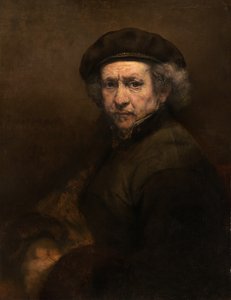
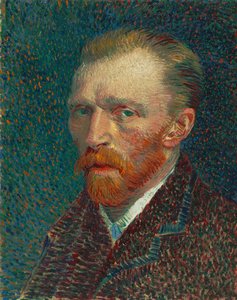
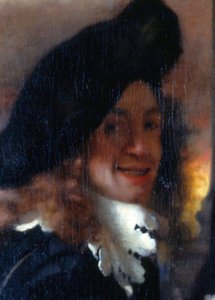
Rembrandt (1606–1669), Vincent van Gogh (1853–1890) and Johannes Vermeer (1632–1675) head the 24 great Dutch masters who inspire our artists, all born in the Netherlands, each with three key works.

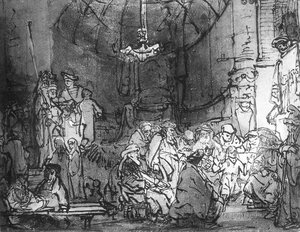
  1. Isaac and Rebecca, known as by Rembrandt1Rembrandt
  2. Sunflowers by Vincent van Gogh2Vincent van Gogh
  3. The Milkmaid by Johannes Vermeer3Johannes Vermeer
  • 24Painters on this list
  • 1450–1921Years of birth
  • 3,039Artists born in the Netherlands in our catalogue
  • 45,322Of their works in our catalogue

The list

The 24 great Dutch painters

1of 24

Rembrandt

Born in Leiden Dutch Golden Age

Rembrandt

Rembrandt had a way of making light feel like a physical presence in a room. He became a master of chiaroscuro, using the sharp contrast between deep shadows and bright highlights to create a sense of drama and weight.

Where to see His legacy is spread across many collections, with the National Gallery in London holding sixteen of his works.

Teacher of Carel Fabritius #15

Signature works · The 100 signature works

2of 24

Vincent van Gogh

Born in Zundert

Vincent van Gogh

In 1886, the move to Paris changed the way he saw light and color. He spent time absorbing the techniques of masters like Monet, Renoir, and Pissarro. His approach to color and form helped clear a path for Expressionism, moving art away from the need to mirror the physical world.

Where to see To see the physical traces of his brushwork, one can travel to several specific collections.

Signature works · The 100 signature works

3of 24

Johannes Vermeer

Born in Delft Dutch Golden Age

Johannes Vermeer

Vermeer found his purpose in the quietude of domestic life. He did not simply paint a room; he captured how light moves through it, hitting a ceramic jug or a piece of bread with a clarity that feels almost scientific. When the light finally faded for Vermeer in Delft in December 1675, he was only forty-three.

Where to see In Amsterdam, the Rijksmuseum holds The Milkmaid, where the light settles on the earthenware and the bread.

Signature works · The 100 signature works

4of 24

Piet Mondrian

Born in Amersfoort

Piet Mondrian

Mondrian strips away the accidental details of the physical world to reach for a structural truth. His technique relies on precise, clean lines and flat areas of color that refuse to suggest depth or texture. In 1965, this aesthetic crossed into the realm of high fashion.

Where to see The search for Mondrian’s visual logic leads to several key institutions across Europe and North America.

Signature works · The 100 signature works

5of 24

Hieronymus Bosch

Born in 's-Hertogenbosch

Hieronymus Bosch

He does not seek the smooth, invisible surface favored by many of his contemporaries. Through the precise use of glazing—layering thin, translucent washes of color—he achieves a sense of luminous depth and intricate texture. Pieter Bruegel the Elder emerges as his most significant follower, adopting and expanding upon the complex compositional structures and moralizing themes that Bosch pioneered.

Where to see The weight of Bosch's legacy is concentrated heavily in Madrid.

Signature works · The 100 signature works

6of 24

Pieter Brueghel the Elder

Born in Breda Northern Renaissance

Pieter Brueghel the Elder

His path into the arts began around 1545 when he entered the workshop of Pieter Coecke van Aelst. Between 1551 and 1552, he was admitted as a free master into the Guild of Saint Luke in Antwerp. By 1552, he had reached Rome and even traveled as far south as Reggio Calabria.

Where to see In Vienna, the Kunsthistorisches Museum holds a vast assembly of his creations, preserving many of the scenes that once filled the halls of the powerful.

Signature works · The 100 signature works

7of 24

Willem de Kooning

Born in Rotterdam Abstract Expressionism

Willem de Kooning

The evenings belong to the Academie van Beeldende Kunsten en Technische Wetenschappen. From his teenage years until 1924, he attends these classes in Rotterdam, balancing the demands of work with the study of formal art. He moves through a landscape of ideas, absorbing the influence of Stuart Davis and John Graham, whose presence helps steer his vocabulary away from literal depiction.

Signature works · The 100 signature works

8of 24

Jacob van Ruisdael

Born in Haarlem Dutch Golden Age

Jacob van Ruisdael

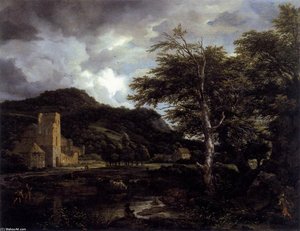
Ruisdael’s approach to the canvas was defined by a restless versatility. This method allowed him to achieve subtle gradations of color and tone, building a sense of depth that felt lived-in rather than merely painted. His influence helped shape the English Romantics and the Barbizon school in France, and his impact crossed the Atlantic to inform the Hudson River school in the United States.

Where to see The physical presence of his canvases remains scattered across the major repositories of European and American art.

Teacher of Meindert Hobbema #23

Signature works · The 100 signature works

9of 24

Jan Steen

Born in Leiden Baroque, Genre painting

Jan Steen

His early compositions from the 1640s leaned into the grotesque, utilizing exaggerated and distorted figures to drive his narratives. This raw, almost jarring approach to characterization provided a foundation for the more nuanced social observations that would define his later output.

Pupil of Jan van Goyen #16

Signature works · The 100 signature works

10of 24

Pieter de Hooch

Born in Rotterdam Delft School, Dutch Golden Age

Pieter de Hooch

He was the eldest of five children born to Hendrick Hendricksz de Hooch, a master bricklayer, and Annetge Pieters, a midwife. During these formative years, de Hooch was a pupil of Claes Berchem. His compositions often shared thematic ground and structural similarities with the works of Emanuel de Witte, particularly in their approach to interior spaces.

Signature works · The 100 signature works

11of 24

Lawrence Alma-Tadema

Born in Dronryp Victorian realism, Classical representation

Lawrence Alma-Tadema

When Lourens was four years old, his father passed away, leaving his mother, Hinke Dirks Brouwer, to raise five children. In 1852, he entered The Royal Academy of Antwerp. Even writers found his imagery useful, incorporating his specific visual details into their descriptions of ancient Rome to ground their stories in a sense of physical reality.

Where to see Finding the traces of his brushwork requires a bit of travel across Europe, as his paintings are held in several significant collections.

Signature works · The 100 signature works

12of 24

Theo van Doesburg

Born in Utrecht De Stijl, Neoplasticism

Theo van Doesburg

While celebrated as a painter, van Doesburg’s artistic pursuits were remarkably diverse. He was a prolific writer, poet, and critic, using his pen to articulate the theoretical underpinnings of De Stijl and challenge conventional notions of art. De Stijl, though relatively short-lived as a cohesive movement, exerted an enormous influence on subsequent artistic developments, including Bauhaus design, Minimalism, and Constructivism.

Signature works · The 100 signature works

13of 24

Gerard van Honthorst

Born in Utrecht Baroque, Caravaggism

Gerard van Honthorst

He was a key figure in the Utrecht Caravaggisti movement – a group of Dutch painters who embraced Caravaggio's dramatic realism and tenebrism.

Signature works · The 100 signature works

14of 24

Karel Appel

Born in Amsterdam CoBrA, Expressionism

Karel Appel

Appel’s artistic journey truly ignited with the formation of the CoBrA group in 1948 – an acronym derived from Copenhagen, Brussels, and Amsterdam, representing the movement's core cities. Alongside Corneille, Constant, Jan Nieuwenhuys, and Christian Dotremont, Appel spearheaded a radical departure from established artistic norms. The foundation now serves as his official estate and image archive, represented in the U.S. by The Artists Rights Society.

Signature works · The 100 signature works

15of 24

Carel Fabritius

Born in Middenbeemster Baroque art

Carel Fabritius

Following his time with Rembrandt, Fabritius settled in Delft, becoming a member of the local painters’ guild in 1652. What sets Fabritius apart is his masterful manipulation of light. Beyond The Goldfinch, Fabritius’s oeuvre includes other compelling works that showcase his distinctive vision.

Pupil of Rembrandt #1

Signature works · The 100 signature works

16of 24

Jan van Goyen

Born in Leiden

Jan van Goyen

Van Goyen’s style is immediately recognizable for its simplicity, subtle tonal variations, and use of a limited palette – primarily grays, browns, and greens. He moved away from the more colorful and detailed landscapes popular at the time, pioneering a more realistic and atmospheric approach. He directly impacted artists such as Jan Steen, who was one of his pupils.

Teacher of Jan Steen #9

Signature works · The 100 signature works

18of 24

Gerard David

Born in Oudewater Early Netherlandish painting

Gerard David

It is believed he spent time in Haarlem absorbing these lessons before relocating to Bruges, a vibrant hub of artistic exchange attracting talent from across Europe. Here, David encountered the masterpieces of Jan van Eyck, Rogier van der Weyden, and Hans Memling, absorbing their techniques while forging his own distinct path. Early works reveal a clear debt to painters like Jacob Janszoon, Dieric Bouts, and Geertgen tot Sint Jans – masters who instilled in him a meticulous attention to detail and a sensitivity to religious narrative.

Signature works · The 100 signature works

19of 24

Gabriel Metsu

Born in Leiden Eclectic; genre, portrait, still life

Gabriel Metsu

By 1650, he had ceased to be a subscriber to the guild. His focus shifted as he moved toward Amsterdam around 1655. His work is credited with influencing several major figures of the era, including Johannes Vermeer, Jan Steen, Frans van Mieris, and Pieter de Hooch.

Where to see Tracing the presence of his paintings requires traveling through several major collections.

Signature works · The 100 signature works

20of 24

Pieter Aertsen

Born in Amsterdam Northern Mannerism

Pieter Aertsen

The Renaissance humanist Hadrianus Junius (Adriaen de Jonghe) compared Aertsen to Peiraikos, an ancient Greek painter celebrated for his ability to depict ordinary subjects with extraordinary realism and symbolic depth.

Signature works · The 100 signature works

21of 24

Johan Jongkind

Born in Lattrop Impressionism forerunner

Johan Jongkind

Jongkind entered the studios of Eugène Isabey and François-Édouard Picot, immersing himself in the French art scene. He quickly gained recognition, exhibiting at the Salon as early as 1848, earning praise from influential critics like Charles Baudelaire and Émile Zola. His work can be found in prominent museums such as the Van Gogh Museum in Amsterdam and the Musée d'Orsay in Paris, testaments to his enduring artistic merit.

Signature works · The 100 signature works

22of 24

Willem Kalf

Born in Rotterdam Dutch Golden Age, Still Life

Willem Kalf

His semi-monochrome still lifes exerted a notable influence on French art, particularly within the circle of the Le Nain brothers, who admired his sophisticated use of light and shadow.

Signature works · The 100 signature works

23of 24

Meindert Hobbema

Born in Amsterdam Golden Age Dutch Landscape Art

Meindert Hobbema

The partnership with Ruysdael was far more than a mere educational period; it fostered an intellectual and stylistic exchange that propelled Hobbema’s artistic evolution. Unlike the more dramatic or stormy landscapes found in other Dutch traditions, Hobbema’s oeuvre often leans toward a peaceful, structured realism. His paintings do not merely document the topography of 17th-century Holland; they evoke a sense of stillness and permanence.

Pupil of Jacob van Ruisdael #8

Signature works · The 100 signature works

24of 24

Nicolaes Maes

Born in Dordrecht Baroque, Dutch Golden Age

Nicolaes Maes

Returning to Dordrecht in 1654, Maes began to forge his own artistic path, gradually distancing himself from direct imitation of his former master. The subsequent decade witnessed a shift towards smaller-scale domestic genre scenes, yet retaining the vibrant colorism he had absorbed during his time with Rembrandt. His paintings offer invaluable insights into the social customs, domestic interiors, and psychological complexities of the Dutch Golden Age.

Pupil of Rembrandt #1

Signature works · The 100 signature works

Figures

Where they were born, when, and where to see them

City of birth
Leiden5
Rotterdam3
Amsterdam3
Utrecht2
Zundert1
Delft1
Amersfoort1
's-Hertogenbosch1
Century of birth
15th century3
16th century4
17th century10
19th century5
20th century2
Museums holding their key works
Rijksmuseum6
Metropolitan Museum of Art4
Kunsthistorisches Museum3
The Louvre3
Gemäldegalerie3
Museo del Prado2
National Gallery2
Isabella Stewart Gardner Museum1

Questions and answers

Great Dutch painters: questions and answers

  • Who is the most famous Dutch painter?

    In our ranking, Rembrandt (1606–1669), then Vincent van Gogh and Johannes Vermeer.

  • How many Dutch artists are in your catalogue?

    3,039 artists born in the Netherlands, with 45,322 works; this page shows the 24 most famous painters.

  • Which Dutch painter has the most works in your catalogue?

    Vincent van Gogh, with 2,853 works.

  • Where were the most painters of this list born?

  • When were these painters born?

    Most in the 17th century (10 of 24); births range from 1450 to 1921.

  • Where can I see their works?

    The works shown on this page are mostly in Rijksmuseum (8), Metropolitan Museum of Art (5), Kunsthistorisches Museum (3) and The Louvre (3).

How this list is ranked Our ranking draws on Wikipedia, the manual rank our editors give each artist and artwork, and the visits each page receives every month.