Famous painters by country

Great Flemish and Belgian Painters

The masters our own painters keep coming back to. The towns of Flanders invented oil painting as Europe came to know it: Van Eyck in Bruges, then the workshops of Antwerp, Bruegel's peasant scenes and the Baroque of Rubens and Van Dyck. Here are 24 of them, each with three works that still teach painters today and the museum where they can be seen.

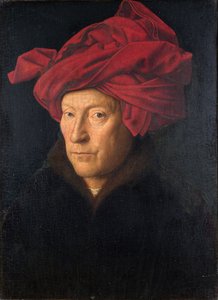
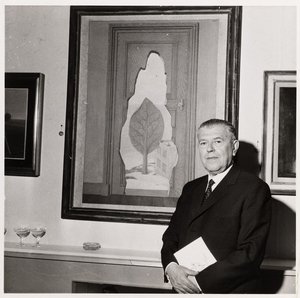
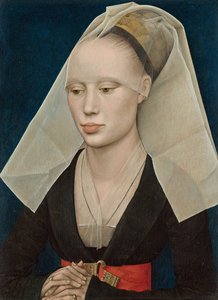
Jan van Eyck (1390–1441), René Magritte (1898–1967) and Rogier van der Weyden (1400–1464) head the 24 great Flemish and Belgian masters who inspire our artists, all born in Belgium (Flanders), each with three key works.

  1. The Ghent Altarpiece by Jan van Eyck1Jan van Eyck
  2. The Lovers by René Magritte2René Magritte
  3. The Annunciation by Rogier van der Weyden3Rogier van der Weyden
  • 24Painters on this list
  • 1366–1927Years of birth
  • 1,700Artists born in Belgium (Flanders) in our catalogue
  • 22,646Of their works in our catalogue

The list

The 24 great Flemish and Belgian painters

1of 24

Jan van Eyck

Born in Maaseik Early Netherlandish

Jan van Eyck

While others struggled with the flat, matte finish of egg tempera, he found a new way to make color breathe. This method allowed him to capture the way light actually behaves when it hits a surface. His influence was not confined to the northern reaches of Europe; his work served as a model to generations of painters both North and South of the Alps.

Signature works · The 100 signature works

2of 24

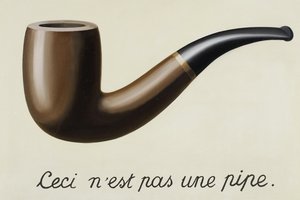
René Magritte

Born in Lessines Surrealism

René Magritte

Magritte’s early forays into painting around 1915 were marked by an Impressionistic sensibility. The 1914 painting The Song of Love left a lasting impression on him, introducing a sense of dreamlike tension that resonated deeply.

Where to see The preservation of his visual puzzles is distributed across several major institutions, ensuring his presence remains felt in both Europe and the Americas.

Signature works · The 100 signature works

3of 24

Rogier van der Weyden

Born in Tournai Early Netherlandish art

Rogier van der Weyden

Working from life models, Rogier van der Weyden captures the physical world with a meticulous, detailed realism. He does not merely replicate a face; he sculpts it. He is recognized alongside Jan van Eyck and Robert Campin as one of the three great Early Flemish masters.

Where to see His presence in modern collections spans the major cultural centers of Europe and the Americas.

Signature works · The 100 signature works

4of 24

Frans Hals

Born in Antwerp

Frans Hals

This technique imbued his paintings with a sense of immediacy and vitality, capturing the personality and character of his subjects in a way that was revolutionary for its time. His portraits weren’t simply likenesses; they were psychological studies. However, it's likely he was aware of the work of earlier Flemish painters like Pieter Bruegel the Elder.

Signature works · The 100 signature works

5of 24

Anthony van Dyck

Born in Antwerp Baroque

Anthony van Dyck

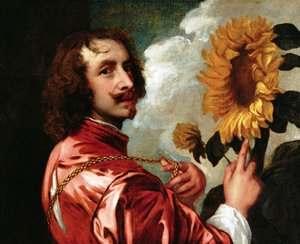
By his late teens, van Dyck had already achieved success as an independent painter, a feat that provided the momentum necessary for his departure from the Low Countries. Between 1621 and late 1627, he traveled through Italy, a period that would refine his ability to navigate the complex social hierarchies of European nobility. The trajectory of van Dyck’s career was fundamentally shaped by his time in the studio of Peter Paul Rubens.

Signature works · The 100 signature works

6of 24

Pieter Brueghel The Younger

Born in Brussels Dutch Golden Age

Pieter Brueghel The Younger

He acted as a vital bridge between the late Renaissance and the burgeoning Flemish Baroque, maintaining the integrity of his father's humanist traditions while adapting to the commercial demands of a growing export market. Ultimately, the legacy of Brueghel the Younger is one of continuity and expansion. Born in Brussels around 1564, his life was inextricably woven into the very fabric of the Northern Renaissance.

Signature works · The 100 signature works

7of 24

Jan Brueghel the Elder

Born in Brussels Flemish Baroque

Jan Brueghel the Elder

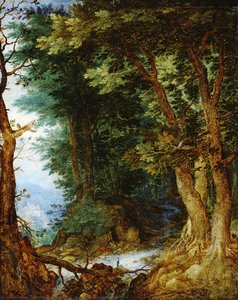
Brueghel possessed a hand so precise that it earned him the nickname "Velvet" Brueghel. The Garden of Eden with the Fall of Man. His professional standing was such that he was trusted to act as an executor of the last will of Peter Paul Rubens, alongside Hendrick van Balen the Elder, Cornelis Schut, and Paulus van Halmaele.

Signature works · The 100 signature works

8of 24

Jacob Jordaens

Born in Antwerp Baroque

Jacob Jordaens

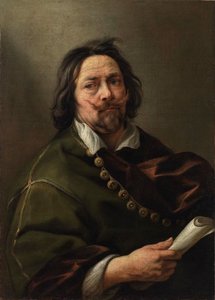
Jordaens possessed a hand that favored the tangible and the real over the idealized dreams of the court. This careful layering gave his surfaces a certain glow, even when the subjects themselves were of a most earthly nature. While his contemporaries often looked toward the courtly elegance of Italy, Jordaens found his strength in the soil of Flanders.

Where to see In Paris, the Louvre preserves his hand, while the Museo del Prado in Madrid offers a glimpse into his ability to render the human form with such substantial presence.

Signature works · The 100 signature works

9of 24

James Ensor

Born in Ostend ['Symbolism', 'Expressionism']

James Ensor

James Ensor was born on April 13, 1860, in Ostend, Belgium. His identity was shaped by a specific cultural intersection: his father, James Frederic Ensor, was born in Brussels to English parents, while his mother, Maria Catherina Haegheman, was Belgian.

Where to see Ensor’s presence in major international collections confirms his lasting impact on the development of modernism.

Signature works · The 100 signature works

10of 24

Hugo van der Goes

Born in Ghent Early Netherlandish painting

Hugo van der Goes

Van der Goes’s artistic signature lies in his ability to infuse religious scenes with a startling sense of immediacy and emotional weight. His use of color was deliberate and often somber, creating a sense of gravity and spiritual intensity. Perhaps Van der Goes’s most celebrated work is the Portinari Altarpiece, commissioned by Tommaso Portinari, an Italian banker residing in Bruges.

Signature works · The 100 signature works

11of 24

Quinten Metsys

Born in Leuven Antwerp School

Quinten Metsys

His influence can be traced through the evolution of Northern European art, as he paved the way for a more expressive, observational style that embraced the complexities of the modernizing world. His legacy is preserved in the enduring power of his imagery: Technical Innovation: The seamless integration of metalworking-inspired precision with the fluid grace of Renaissance oil painting. The Antwerp School: Establishing a lasting artistic movement that prioritized both realism and moral narrative.

Signature works · The 100 signature works

14of 24

David Teniers the Younger

Born in Antwerp

David Teniers the Younger

The early years of Teniers's career show a painter finding his footing through the shadows of others. He adopts Brouwer’s specific subject matter, technique, color, and composition, creating works that mirror the gritty, immediate energy of that style. As the leading genre painter of his era, he moved the focus of Northern European painting away from grand mythological narratives and toward the immediate realities of the common people.

Where to see The legacy of Teniers is anchored in the major collections of Europe, where his depictions of everyday life remain accessible to those tracing the history of Flemish Baroque painting.

Signature works · The 100 signature works

15of 24

Frans Snyders

Born in Antwerp Baroque

Frans Snyders

He quickly established himself as a sought-after partner for leading artists of the time, most notably Peter Paul Rubens. The Torre de la Parada hunting pavilion in Spain stands as a testament to their combined genius—Snyders executing over sixty animal paintings based on designs by Rubens. His work paved the way for later masters like Jean-Baptiste Oudry and François Desportes, who further refined the art of animal portraiture.

Signature works · The 100 signature works

16of 24

Adriaen Brouwer

Born in Oudenaarde Baroque, Genre painting

Adriaen Brouwer

He deeply admired the meticulous realism of the Flemish Primitives – artists like Jan van Eyck and Robert Campin – evident in his attention to detail and precise rendering of textures. Brouwer embraced the dramatic lighting and emotional intensity characteristic of Baroque art, injecting a dynamic energy into his compositions.

Signature works · The 100 signature works

17of 24

Pierre Alechinsky

Born in Brussels CoBrA, Tachisme & Abstract Expressionism

Pierre Alechinsky

Beyond the aesthetic allure of his canvases, Pierre Alechinsky holds a position of immense historical significance within the canon of modern art.

Signature works · The 100 signature works

18of 24

Bartholomeus Spranger

Born in Antwerp Northern Mannerism

Bartholomeus Spranger

Spranger’s style is a quintessential example of Northern Mannerism, characterized by elongated figures, complex poses, and a deliberate emphasis on elegance and refinement. Spranger’s work is notable for its dynamism, achieved through carefully orchestrated diagonals and a sense of movement within each composition. Crucially, his travels extended into Italy, where he spent eight months in Milan and three months in Parma, assisting Bernardino Gatti on the ambitious fresco project for the dome of Santa Maria della Steccata.

Signature works · The 100 signature works

19of 24

Paul Delvaux

Born in Huy Surrealism

Paul Delvaux

He employed a hyper-realistic styling and naturalistic landscapes to ground his scenes, yet he frequently paired this precision with the bizarre juxtapositions characteristic of surrealism. Between 1945 and 1947, his approach underwent a subtle shift toward a flattened style, often utilizing distorted or forced perspective to unsettle the viewer's sense of space. While he shared a certain kinship with the works of René Magritte, Delvaux remained a solitary figure.

Where to see For those seeking to encounter his visual language in its most concentrated form, the Paul Delvaux Museum in Saint-Idesbald, Belgium, remains the primary destination.

Signature works · The 100 signature works

20of 24

Constantin Meunier

Born in Etterbeek Social Realism

Constantin Meunier

Paintings such as “Melting Steel at the Factory at Seraing” (1882) and “Returning from the Pit” (1884) are not merely depictions of labor; they are powerful statements about human endurance, resilience, and the often-brutal realities of industrial life. Perhaps Meunier’s most ambitious undertaking was the "Monument to Labour," a sprawling, multi-faceted work acquired by the Belgian state.

Signature works · The 100 signature works

21of 24

Jean Clouet

Born in Brussels Renaissance portraiture

Jean Clouet

His technique involved a meticulous layering of strokes, building up form with incredible precision. While influenced by Italian Renaissance masters whose works Francis I avidly collected, Clouet’s style remained distinctly French, characterized by a certain restraint and an emphasis on capturing inner life rather than outward grandeur. Though Jean Clouet died around 1541 in Paris, his artistic legacy extended far beyond his lifetime.

Signature works · The 100 signature works

22of 24

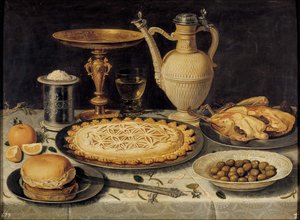
Clara Peeters

Born in Antwerp Dutch Golden Age

Clara Peeters

The precise circumstances surrounding Peeters’s artistic education remain shrouded in mystery, largely due to the limitations imposed upon women during this period. Unlike many male artists who benefited from formal guild apprenticeships—a cornerstone of Flemish artistic development—Peeters’s name does not appear in guild records, fueling speculation that she may have been educated privately or by a familial mentor. She represents a crucial milestone in recognizing women's artistic capabilities during the Dutch Golden Age —the earliest significant female painter of this era.

Signature works · The 100 signature works

Figures

Where they were born, when, and where to see them

City of birth
Antwerp7
Brussels5
Maaseik2
Lessines1
Tournai1
Ostend1
Ghent1
Leuven1
Century of birth
14th century3
15th century4
16th century9
17th century3
19th century4
20th century1
Museums holding their key works
Museo del Prado4
Musées Royaux des Beaux-Arts3
Cathedral of St Bavo2
The Louvre2
Los Angeles County Museum of Art2
Metropolitan Museum of Art2
Galleria degli Uffizi2
Kunsthistorisches Museum2

Questions and answers

Great Flemish and Belgian painters: questions and answers

How this list is ranked Our ranking draws on Wikipedia, the manual rank our editors give each artist and artwork, and the visits each page receives every month.