Famous painters by country

Great French Painters

The masters our own painters keep coming back to. Many turning points of painting happened in France: the court art of Versailles, the Salon, Realism, Impressionism, Post-Impressionism, Fauvism and Cubism were all born or shaped in Paris. Here are 24 of them, each with three works that still teach painters today and the museum where they can be seen.

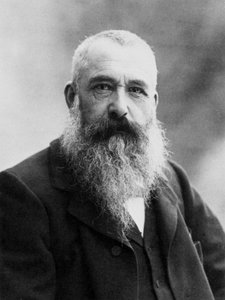
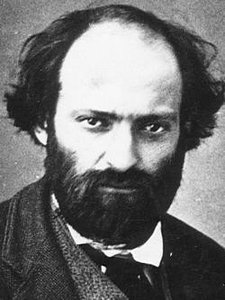
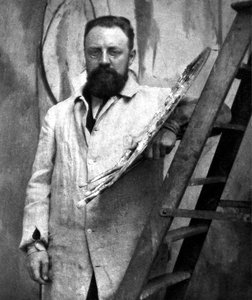
Claude Monet (1840–1926), Paul Cézanne (1839–1906) and Henri Matisse (1869–1954) head the 24 great French masters who inspire our artists, all born in France, each with three key works.

  1. Water Lilies (or Nympheas) by Claude Monet1Claude Monet
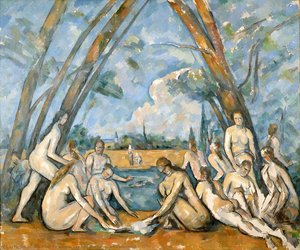
  2. The bathers Sun by Paul Cézanne2Paul Cézanne
  3. Woman with a Hat by Henri Matisse3Henri Matisse
  • 24Painters on this list
  • 1593–1887Years of birth
  • 4,687Artists born in France in our catalogue
  • 87,481Of their works in our catalogue

The list

The 24 great French painters

1of 24

Claude Monet

Born in Paris Impressionism

Claude Monet

This pursuit was defined by plein air landscape painting, a method that required him to work directly on large-scale canvases out of doors. He would often return to his studio to rework and complete these pieces, bridging the gap between the immediate observation of the outdoors and the controlled environment of the studio. Throughout his career, he worked and exhibited alongside figures such as Edgar Degas and Édouard Manet, contributing to a collective shift in how light and atmosphere were perceived on canvas.

Signature works · The 100 signature works

2of 24

Paul Cézanne

Born in Aix-en-Provence Post-Impressionism

Paul Cézanne

While his father’s ambitions leaned toward the law, the young artist found his footing under the guidance of Joseph Gibert at the Free Municipal School of Drawing. The move to Paris in 1862 marked a period of both struggle and essential exposure. Pablo Picasso and Georges Braque drew heavily from this method, finding in his work a way to organize space through volume rather than mere light.

Where to see The physical presence of his vision remains scattered across several major institutions, allowing the viewer to trace his evolution from the dark, expressive brushwork of his youth to the structured clarity of his later years.

Signature works · The 100 signature works

3of 24

Henri Matisse

Born in Le Cateau-Cambrésis Fauvism, Post-impressionism, Cubism

Henri Matisse

Later, he moved to the École Nationale des Beaux-Arts. He looked closely at the works of Jean-Baptiste-Siméon Chardin, Nicolas Poussin, and Antoine Watteau.

Where to see Walking through the halls of the Hermitage Museum in Saint Petersburg, one can find his work held within the collection.

Signature works · The 100 signature works

4of 24

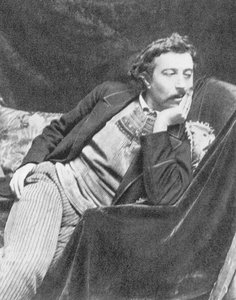
Paul Gauguin

Born in Paris ['Post-Impressionist', 'Symbolist', 'Synthetism', 'Primitivism']

Paul Gauguin

The years between 1886 and 1891 were marked by a restless search for a visual language that could transcend mere observation. In 1887, a shift in scenery brought him to Panama and Martinique alongside Charles Laval. By prioritizing the expression of internal meaning over the accurate depiction of the external world, he helped shift the focus of the French avant-garde toward a more subjective, symbolic language.

Where to see In Paris, the Musée d'Orsay preserves a significant portion of his output, offering a glimpse into the evolution of his color and form.

Signature works · The 100 signature works

5of 24

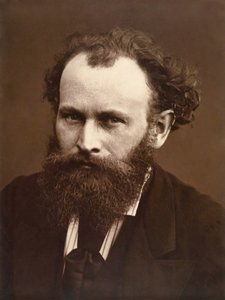
Édouard Manet

Born in former 10th arrondissement of Paris Realism, Impressionism, Avant-garde

Édouard Manet

The surface of a canvas reveals a deliberate departure from the polished, invisible finish required by the Salon. This approach prioritizes the physical reality of the paint itself. He shared spaces and ideas with Claude Monet and Edgar Degas, men who were also pushing against the boundaries of what a painting could be.

Signature works · The 100 signature works

6of 24

Eugène Delacroix

Born in Saint-Maurice

Eugène Delacroix

As Talleyrand navigated the shifting political tides, serving both the Restoration and King Louis-Philippe, he ensured Delacroix remained positioned within the center of Parisian life. Charles Auguste Louis Joseph, duc de Morny, acted as another vital shield for the painter. This passion for North African landscapes and traditions provided the essential spark for the Symbolist movement.

Where to see The traces of Delacroix’s life remain anchored in Paris.

Signature works · The 100 signature works

7of 24

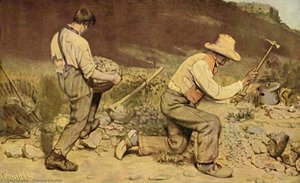
Gustave Courbet

Born in Ornans Realism

Gustave Courbet

This meant looking at what was actually present rather than what tradition suggested should be there. He focused on the truth of the subject, often choosing to present the mundane and the unidealized as his primary focus. The shift from Romanticism toward the modern era found its momentum in the way he handled paint and subject.

Where to see His canvases are scattered across several major collections, inviting a close look at the textures of his paint.

Signature works · The 100 signature works

8of 24

Nicolas Poussin

Born in Le Havre French Baroque, French Classicism

Nicolas Poussin

He did not stay in France to find his voice; instead, he spent most of his working life in Rome, a city that provided the necessary intellectual and physical landscape for his evolution. This transition was driven by a deep engagement with the classical ruins and the scholarly circles of the Eternal City. Artists such as Jacques-Louis David and Paul Cézanne acknowledged their debt to his intellectual depth and his preference for line over color.

Signature works · The 100 signature works

9of 24

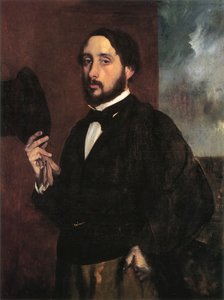
Edgar Degas

Born in Paris Realism

Edgar Degas

He prefers the term "Realist," a choice that dictates his entire approach to the canvas. He avoids the outdoor landscape and the loose, flickering brushstrokes favored by his contemporaries. The shift in late 19th-century art finds a central figure in Degas.

Where to see The traces of Degas's observation remain scattered across major institutions, preserved in the quiet halls of Paris and beyond.

Signature works · The 100 signature works

10of 24

Marcel Duchamp

Born in Blainville-Crevon ['Cubism', 'Dadaism', 'Conceptual Art']

Marcel Duchamp

He found himself drawn to the ideas of Paul Cézanne, whose approach to form and structure left a mark on his developing vision. It was during this time that he produced Coffee Mill, a work that signaled his growing interest in the mechanical and the conceptual. The ripples from his provocations reached far beyond the small circles of the avant-garde, eventually reshaping the very foundations of how we perceive creativity.

Where to see To follow the traces of his restless intellect, one might travel to the Philadelphia Museum of Art.

Signature works · The 100 signature works

11of 24

Pierre-Auguste Renoir

Born in Limoges Impressionism

Pierre-Auguste Renoir

His early years were defined by a preoccupation with the way light interacts with the physical world. He utilized loose brushstrokes and a palette of saturated colors to capture the fleeting atmosphere of a moment.

Where to see The distribution of his canvases across the globe reflects the widespread reach of his influence.

Signature works · The 100 signature works

12of 24

Jacques-Louis David

Born in Paris Neoclassicism

Jacques-Louis David

He maintained a close friendship with Maximilien Robespierre, a connection that placed him at the very center of the era's most intense political machinations. The Lictors Returning to Brutus the Bodies of his Sons (1789). His influence reached into the radical shifts of the modern era, finding unexpected echoes in the work of Henri Matisse and Pablo Picasso.

Where to see The physical presence of David’s oeuvre is scattered across the major repositories of European and international art.

Signature works · The 100 signature works

13of 24

Jean-Antoine Watteau

Born in Valenciennes Rococo

Jean-Antoine Watteau

By employing a delicate layering of colors, he achieved a shimmering effect, as if the very light of the scene were caught in a moment of transition. This method allowed him to build a world that felt both present and fleeting, a quality that defined his unique approach to the canvas. Even in his most quiet works, the legacy of his vision remains clear: The Country Dance.
Signature works · The 100 signature works

14of 24

Jean-Auguste-Dominique Ingres

Born in Montauban Neoclassicism

Jean-Auguste-Dominique Ingres

Having won the Grand Prix de Rome in 1801, Ingres arrives in Rome to begin a residency that will define his middle years. His presence in Italy is long-lasting, eventually leading to his appointment as the Director of the Academy of France in Rome in 1834. When he died in 1867, the landscape of French art had shifted.

Where to see The traces of his hand remain scattered across major global institutions.

Pupil of Jacques-Louis David #12

Signature works · The 100 signature works

15of 24

Georges Braque

Born in Argenteuil ['Fauvism', 'Cubism', 'Analytical Cubism', 'Synthetic Cubism']

Georges Braque

Braque’s approach to the canvas was defined by a restless curiosity regarding the physical properties of his materials. He moved beyond the traditional boundaries of oil painting by introducing elements that challenged the illusion of depth. The results of this synthesis are visible in his 1908 work, Houses at L'Estaque.

Signature works · The 100 signature works

16of 24

Georges Seurat

Born in former 5th arrondissement of Paris ['Neo-Impressionism', 'Post-Impressionism', 'Pointillism', 'Divisionism', 'Chromoluminarism']

Georges Seurat

Seurat replaced the spontaneous, intuitive brushwork of his predecessors with a calculated, systematic approach to light. He developed Pointillism, a method defined by the application of small, distinct dots of pure color onto a canvas. The Fauvists adopted his emphasis on bold, non-naturalistic color, while the Cubists drew from his ability to deconstruct forms into geometric components.

Signature works · The 100 signature works

17of 24

Théodore Géricault

Born in Rouen Romanticism

Théodore Géricault

While The Raft of the Medusa remains his most celebrated achievement, Géricault's artistic output extended beyond this singular masterpiece. Sadly, Géricault’s life was cut short by illness at the age of 32 in 1824, following years of suffering from riding accidents and a chronic tubercular infection. He continually returned to military themes, evident in works like Wounded Cuirassier (1814) and The Derby of Epsom (1821), demonstrating a fascination with drama and expressive force.

Signature works · The 100 signature works

18of 24

Jean-François Millet

Born in Gréville-Hague Realism, Barbizon school

Jean-François Millet

In 1837, he moved to Paris to enroll at the École des Beaux-Arts. His first submission to the Salon, Saint Anne Instructing the Virgin, was rejected by the jury. His insistence on depicting the working class with dignity provided the necessary groundwork for the emergence of Social Realism and the later developments of Impressionism.

Where to see Paris remains the primary destination for his work.

Signature works · The 100 signature works

19of 24

Jean-Baptiste-Camille Corot

Born in Paris Neoclassicism, Realism, Impressionism

Jean-Baptiste-Camille Corot

He spent time sketching and making preliminary paintings directly in the landscape to capture the immediate light. This method allowed him to build up his compositions through a specific layering of thin washes of oil paint onto the canvas. By the time he reached his final decade, he was known in Parisian circles as "Père Corot." This title reflected more than just his age; it spoke to his position as a central figure for those navigating the shift from academic traditions toward new ways of seeing.

Where to see To find his traces, one often looks to Paris.

Teacher of Berthe Morisot #20

Signature works · The 100 signature works

20of 24

Berthe Morisot

Born in Bourges Impressionism

Berthe Morisot

Her mother, Marie-Joseph-Cornélie Thomas, brought a connection to the Rococo tradition as the great-niece of Jean-Honoré Fragonard. By 1858, she was spending her time in the Louvre, learning the mechanics of paint by copying the Old Masters.

Where to see To see her brushwork in person, one might start in Paris.

Pupil of Jean-Baptiste-Camille Corot #19

Signature works · The 100 signature works

21of 24

Élisabeth Louise Vigée Le Brun

Born in Paris Rococo and Neoclassical

Élisabeth Louise Vigée Le Brun

Louise Élisabeth Vigée Le Brun enters a city defined by the strict hierarchies of the Ancien Régime. She is born to Jeanne Maisin, a hairdresser from a peasant background, and Louis Vigée, a portraitist, pastellist, and member of the Académie de Saint-Luc. Portrait of Marie-Gabrielle de Gramont, Comtesse de Caderousse (1784).

Where to see Vigée Le Brun remains a pioneer for women in the arts, having navigated a professional landscape almost exclusively reserved for men.

Signature works · The 100 signature works

22of 24

Claude Lorrain

Born in Chamagne

Claude Lorrain

Luminous Sunlight: A defining feature of Claude’s work is his masterful depiction of light. Classical Influences: His compositions often draw inspiration from classical antiquity, incorporating Roman ruins, mythological figures, and architectural elements. He also studied the works of Italian Renaissance masters like Titian and Raphael.

Signature works · The 100 signature works

23of 24

Georges de la Tour

Born in Vic-sur-Seille French Baroque

Georges de la Tour

The origins of Georges de La Tour remain partially obscured by the shadows of the early seventeenth century. Other theories suggest he may have sought instruction under Jacques Bellange in Nancy, or perhaps traveled to the Netherlands during the early stages of his professional life. The specific nuances of his style—the way he used light to bridge the gap between Caravaggism and French Classicism —were largely lost to the broader historical memory.

Where to see The presence of his canvases is felt across several major institutions, scattered between the quiet halls of Europe and the expansive galleries of the Americas.
Signature works · The 100 signature works

24of 24

Henri De Toulouse-Lautrec

Born in Albi Post-Impressionism

Henri De Toulouse-Lautrec

His hand moved with a precision that transformed simple lines into instruments of character and emotion. By rejecting traditional depth, he achieved a directness that mirrored the immediacy of the Parisian nightlife he inhabited. The transition from Impressionism to modern art found a distinct voice in the works of Henri de Toulouse-Lautrec.

Where to see The Musée Toulouse-Lautrec, housed within the Palais de la Berbie, maintains the most significant collection, containing over 1000 works that trace his evolution from an aristocratic youth to a chronicler of the Parisian night.

Signature works · The 100 signature works

Figures

Where they were born, when, and where to see them

City of birth
Paris6
Aix-en-Provence1
Le Cateau-Cambrésis1
former 10th arrondissement of Paris1
Saint-Maurice1
Ornans1
Le Havre1
Blainville-Crevon1
Century of birth
16th century3
17th century1
18th century6
19th century14
Museums holding their key works
Musée d'Orsay8
The Louvre7
Metropolitan Museum of Art4
Art Institute of Chicago3
The Phillips Collection2
National Museum of Western Art1
Scottish National Gallery1
Philadelphia Museum of Art1

Questions and answers

Great French painters: questions and answers

How this list is ranked Our ranking draws on Wikipedia, the manual rank our editors give each artist and artwork, and the visits each page receives every month.