Famous painters by country

Great Spanish Painters

The masters our own painters keep coming back to. From the Golden Age court of Madrid to the avant-gardes of Paris, Spanish painters changed the way Europe painted light, faith and the human figure. Here are 24 of them, each with three works that still teach painters today and the museum where they can be seen.

Pablo Picasso (1881–1973), Diego Velázquez (1599–1660) and Francisco Goya (1746–1828) head the 24 great Spanish masters who inspire our artists, all born in Spain, each with three key works.

  1. Guernica by Pablo Picasso1Pablo Picasso
  2. The Surrender of Breda (Las Lanzas) by Diego Velázquez2Diego Velázquez
  3. La maja desnuda. . Madrid, Museo del Prado. by Francisco Goya3Francisco Goya
  • 24Painters on this list
  • 1509–1936Years of birth
  • 1,566Artists born in Spain in our catalogue
  • 21,219Of their works in our catalogue

The list

The 24 great Spanish painters

1of 24

Pablo Picasso

Born in Málaga Cubism, Surrealism

Pablo Picasso

In 1937, the news of the bombing of Guernica reached him, a devastating attack on a town in the Basque Country. In 1967, he gifted the city of Chicago an untitled monumental sculpture made of COR-TEN steel. The ripples of his creative life reached far beyond the walls of his studios in Paris and the South of France.

Where to see To walk through the halls of the Musée Picasso in Paris is to enter a sanctuary where the artist's restless spirit remains palpable.

Signature works · The 100 signature works

2of 24

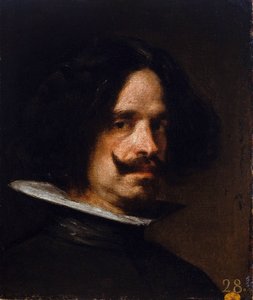
Diego Velázquez

Born in Seville Spanish Baroque / Spanish Golden Age

Diego Velázquez

In his early years, Velázquez worked within the boundaries of an idealizing style, one rooted in the strictures of Catholic propriety. Christ in the House of Martha and Mary. Édouard Manet found deep inspiration in the composition of Las Meninas, a work that continues to challenge how we perceive the relationship between the viewer and the painted scene.

Where to see To stand before a Velázquez is to encounter the quiet weight of history.

Signature works · The 100 signature works

3of 24

Francisco Goya

Born in Fuendetodos ['Rococo', 'Romanticism', 'Modernism']

Francisco Goya

Between 1819 and 1823, he painted the Black Paintings directly onto the plaster. These murals, including Saturn Devouring His Son and Asmodea, deal with madness and existential dread. Later, the visceral, distorted energy found in the paintings of Francis Bacon carries echoes of the darkness Goya explored.

Signature works · The 100 signature works

4of 24

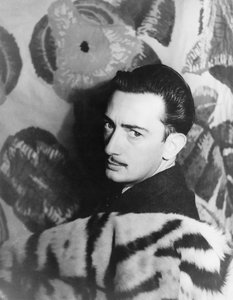
Salvador Dalí

Born in Figueres Surrealism

Salvador Dalí

His early training was shaped by the textures of Impressionism and the precise draftsmanship of the Renaissance masters. By 1929, he had joined the Surrealist group, a move that signaled a shift toward the irrational.

Where to see To find his traces, one can travel to Figueres, Spain, where the Dalí Theatre-Museum sits.

Signature works · The 100 signature works

5of 24

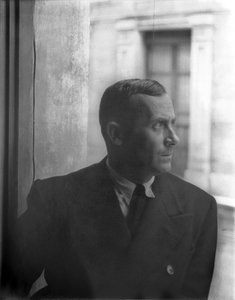
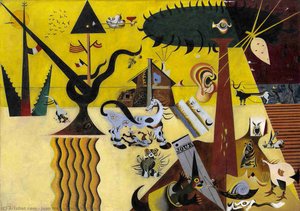
Joan Miró

Born in Barcelona ['Surrealism', 'Fauvism', 'Expressionism']

Joan Miró

His work often defies easy classification, frequently interpreted as Surrealist but driven by a deeply personal style that resists any single "ism." He moves through media with a feverish energy, experimenting with painting, pastel, printmaking, sculpture, ceramics, collage, muralism, and tapestry. This versatility allows him to escape the constraints of traditional representation. This was followed by the establishment of the Fundació Pilar i Joan Miró in Palma de Mallorca in 1981.

Where to see The most concentrated encounter with his creative output occurs on the Montjuïc hill in Barcelona, Spain.

Signature works · The 100 signature works

6of 24

Francisco de Zurbarán

Born in Fuente de Cantos Spanish Baroque, Tenebrism

Francisco de Zurbarán

His style drew from the realism of Caravaggio and his followers, but it was also shaped by the quiet precision of Juan Sánchez Cotán and the influence of polychrome sculpture. Rather than relying on the grand, sweeping movements seen in other Baroque works, he focused on a severe and direct way of seeing. As Murillo rose to prominence in the 1650s, the popularity of Zurbarán's more severe and direct style began to wane.

Where to see In Madrid, Spain, the Prado Museum houses a version of his Agnus Dei, a work that captures the stark, heavy presence of the lamb.

Signature works · The 100 signature works

7of 24

Bartolomé Esteban Murillo

Born in Seville Spanish Baroque

Bartolomé Esteban Murillo

In his youth, his work carried the weight and gravity of the Baroque tradition, but he eventually found a way to soften those edges. He had a way of building up forms through a layered approach, using delicate glazes and subtle brushwork to create depth. Later artists, including Gainsborough and Greuze, acknowledged the impact of his luminous style on their own approach to light and form.

Where to see In Spain, the Museo del Prado in Madrid holds several of his paintings, offering a direct connection to the spirit of the Golden Age.

Signature works · The 100 signature works

8of 24

Juan Gris

Born in Madrid Cubism, Synthetic Cubism, Analytical Cubism

Juan Gris

He does not simply break an object apart; he reconstructs it through a series of intersecting planes. In many of his works, he moves away from the chaotic, shattering abstraction seen in earlier Cubism, opting instead for a more organized and legible structure. His work grew from the foundations laid by Paul Cézanne, specifically the way the older painter explored the underlying structure of form and space.

Where to see Tracing the physical presence of his work requires a trip through several major collections.

Signature works · The 100 signature works

9of 24

Joaquín Sorolla

Born in Valencia Luminism, Impressionism, Social Realism

Joaquín Sorolla

He was a painter who preferred the directness of the outdoors, choosing to paint almost all of his works en plein air. This commitment to working in the open air allowed him to confront the shifting elements head-on. The Return from Fishing; Hauling the Boat (1894).

Where to see For those wishing to walk through the spaces that shaped his life, the Museo Sorolla in Madrid offers a rare glimpse into his private world.

Signature works · The 100 signature works

10of 24

Jusepe de Ribera

Born in Xàtiva Baroque

Jusepe de Ribera

He synthesized this technique with elements gleaned from other masters like Guido Reni, incorporating a classical sensibility into his compositions while retaining the visceral impact of Caravaggio's realism. His early works, such as the Martyrdom of Saint Bartholomew, exemplify this approach – a harrowing depiction of pain rendered with unflinching detail. He became a pivotal figure in Spanish Baroque painting, alongside masters like Velázquez, Zurbarán, and Murillo.

Signature works · The 100 signature works

11of 24

Remedios Varo

Born in Anglès Para-Surrealism

Remedios Varo

In the quiet corners of her studio, Remedios Varo worked with a meticulousness that mirrored the technical drawings of her father, a hydraulic engineer. Her upbringing in Anglès, Spain, provided a foundation of duality. She moved through the world with a curious eye, absorbing the landscapes of her frequent relocations and the formal training she received at the Real Academia de Bellas Artes de San Fernando in Madrid.

Signature works · The 100 signature works

12of 24

Antoni Tàpies

Born in Barcelona Art Informel, Surrealism

Antoni Tàpies

Co-founded the avant-garde movement Dau al Set in 1948, connected to Surrealism and Dadaism. Became a prominent figure in Spanish Informalism, alongside artists like Enrique Tàbara, Antonio Saura, and Manolo Millares. Son of a lawyer and Catalan nationalist, Josep Tàpies i Mestre.

Signature works · The 100 signature works

13of 24

Antonio López García

Born in Tomelloso Realism, Hyperrealism

Antonio López García

Post-War Isolation: López García’s artistic development occurred during a period of relative isolation for Madrid from the broader international art scene. Italian Study (1955): A scholarship in 1955 allowed him and Francisco López Hernández to travel to Italy, where they studied Italian painting from the Renaissance period.

Signature works · The 100 signature works

14of 24

Alonso Cano

Born in Granada Baroque

Alonso Cano

This proximity to power allowed him to leave an indelible mark on the architectural landscape of Spain; notably, he served as the chief architect of the Granada Cathedral, designing its magnificent façade which was eventually erected following his passing.

Signature works · The 100 signature works

15of 24

Juan de Valdés Leal

Born in Seville Baroque

Juan de Valdés Leal

The canvases of Valdés Leal reject gentle radiance. This is a visceral art of the Baroque era, where the boundaries between the earthly and the divine dissolve into darkness.

Signature works · The 100 signature works

16of 24

Juan Carreño de Miranda

Born in Avilés Spanish Baroque

Juan Carreño de Miranda

Carreño de Miranda’s style is deeply rooted in the Spanish Baroque tradition, yet it possesses a unique character all its own. He wasn't simply mimicking Velázquez; he was building upon that foundation, infusing his work with a distinct sensibility. Initial commissions, such as those adorning the cloister of Doña María de Aragón and the Iglesia de la Virgen del Rosario in Marlofa (La Joyosa), showcased a burgeoning talent and hinted at the mastery to come.

Signature works · The 100 signature works

17of 24

Julio Romero de Torres

Born in Córdoba Symbolism, Impressionism

Julio Romero de Torres

The intellectual climate of Córdoba also played a crucial role; he engaged with the vibrant discussions at the Royal Academy of Science, Arts and Literature, absorbing the philosophical currents that informed his work. Amor Místico y Amor Profano, perhaps his most iconic work, exemplifies this approach perfectly. He became a respected figure in the Spanish art world, eventually securing a professorship at the Real Academia de Bellas Artes de San Fernando in Madrid in 1916.

Signature works · The 100 signature works

18of 24

Luis de Morales

Born in Badajoz Mannerism

Luis de Morales

Luis de Morales’s influence extended far beyond his own lifetime, establishing him as a cornerstone of Spanish Renaissance art and securing his place among the greatest painters of his generation.

Signature works · The 100 signature works

19of 24

Ramon Casas

Born in Barcelona Catalan Modernisme

Ramon Casas

The painting Self-portrait as a Flamenco Dancer (1883) garnered significant attention, leading to an invitation for him to join the Societé d'Artistes Français. His work Intérieur du Moulin de la Galette (1891) earned him a medal at the Berlin International Exposition, demonstrating his growing artistic maturity. Ramon Casas i Carbó left an indelible mark on Catalan art and the broader Modernisme movement.

Signature works · The 100 signature works

24of 24

Antonio de Pereda

Born in Valladolid

Antonio de Pereda

Pereda came from a deeply artistic family; his father, mother, and two brothers were all painters. This familial environment undoubtedly fostered his early interest and development in art. Pereda’s work was influenced by several key artists and movements: Pedro de las Cuevas: His early teacher, who provided foundational training.

Signature works · The 100 signature works

Figures

Where they were born, when, and where to see them

City of birth
Seville3
Barcelona3
Granada2
Málaga1
Fuendetodos1
Figueres1
Fuente de Cantos1
Madrid1
Century of birth
16th century5
17th century5
18th century1
19th century9
20th century4
Museums holding their key works
Museo del Prado7
Museo Nacional Centro de Arte Reina Sofía2
Museu Nacional d'Art de Catalunya2
Art Institute of Chicago1
National Gallery1
Legion of Honor1
Palácio Nacional da Ajuda1
Cleveland Museum of Art1

Questions and answers

Great Spanish painters: questions and answers

How this list is ranked Our ranking draws on Wikipedia, the manual rank our editors give each artist and artwork, and the visits each page receives every month.