Luis de Morales (c. 1509 – May 9, 1586), affectionately known as “El Divino,” stands as one of the most revered figures in Spanish Renaissance art—a painter whose profound spirituality and astonishing realism captivated audiences throughout his lifetime and continue to inspire admiration centuries later. Born in Badajoz, Extremadura, Morales’s artistic journey unfolded against a backdrop of burgeoning humanist ideals and religious fervor, shaping him into an unparalleled master of devotional imagery and cementing his legacy as the quintessential artist of his era.
Early Life & Influences: Little is known definitively about Morales's formative years beyond documented records indicating he was born in Badajoz around 1509. His artistic training likely commenced under the tutelage of Hernando Sturmio, a Flemish painter who had established himself in Badajoz, and possibly Pedro de Campaña, a prominent artist based in Seville—locations renowned for their vibrant artistic traditions during the Renaissance.
The Lombard School & Florentine Echoes: Morales’s early works bear unmistakable marks of the Lombard school of Leonardo da Vinci – characterized by subtle sfumato (blurred outlines) and atmospheric perspective. Simultaneously, he absorbed influences from Michelangelo, whose monumental sculptures instilled in him a masterful understanding of anatomy and expressive gesture. These formative experiences profoundly impacted his artistic sensibilities.
A Period Defined by Anatomical Precision & Spiritual Depth
Morales’s artistic output can be broadly divided into two distinct periods, reflecting evolving stylistic trends and intellectual currents. The first phase, spanning roughly from 1539 to 1560, witnessed a continued engagement with Florentine aesthetics—particularly Michelangelo’s anatomical rigor—resulting in paintings imbued with palpable emotion and dramatic tension. Works such as *La Virgen del Pajarito* exemplify this early style, showcasing meticulous detail and conveying profound spiritual contemplation.
The Second Flowering: Following his marriage to Leonor de Chaves and subsequent relocation to Alcántara, Morales experienced a remarkable artistic renaissance. This period saw him produce masterpieces that pushed the boundaries of Renaissance technique—particularly in terms of anatomical accuracy—drawing inspiration from German and Flemish painters who championed chiaroscuro (contrast between light and dark) and meticulous observation of nature.
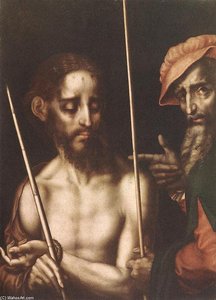
Notable Achievements: Among his most celebrated paintings are *La Piedad* (1560), housed in Badajoz Cathedral, a breathtaking depiction of Mary mourning the death of Jesus—a testament to Morales’s unparalleled skill in conveying sorrowful emotion; *San Juan de Ribera* (1564), residing in Madrid's Prado Museum; and *Ecce Homo*, displayed at the Hispanic Society of America. These works stand as enduring symbols of Renaissance piety and artistic excellence.
Legacy & Recognition
Luis de Morales’s influence extended far beyond his own lifetime, establishing him as a cornerstone of Spanish Renaissance art and securing his place among the greatest painters of his generation. His unwavering devotion to religious themes—expressed with breathtaking realism and imbued with palpable emotion—resonated deeply with audiences across Europe. Today, his paintings are housed in prestigious institutions worldwide—including the Prado Museum in Madrid and Kingston Lacy House in Dorset—attesting to their enduring artistic merit and historical significance. Morales’s legacy continues to inspire artists and scholars alike, ensuring that “El Divino” remains a beacon of spiritual artistry for generations to come.
Selected Works
*La Virgen del Pajarito*(*Virgin of the Bird*) (1546), kept in the church of San Agustín, in Madrid.
*La Piedad*() (1560), kept in Badajoz Cathedral.
*San Juan de Ribera*(1564), in the Prado Museum, Madrid.
Explore the Renaissance! Discover key artists like Leonardo & Michelangelo, the rise of Humanism, and groundbreaking techniques such as chiaroscuro. A comprehensive guide for art enthusiasts.