Famous painters by country

Great Mexican Painters

The masters our own painters keep coming back to. Mexican painting in the 20th century turned walls into public history books and made the self-portrait a political act. Here are 24 of them, each with three works that still teach painters today and the museum where they can be seen.

Frida Kahlo (1907–1954), Diego Rivera (1886–1957) and David Alfaro Siqueiros (1896–1974) head the 24 great Mexican masters who inspire our artists, all born in Mexico, each with three key works.

  1. Frida Kahlo - `The Two Fridas` by Frida Kahlo1Frida Kahlo
  2. Creation by Diego Rivera2Diego Rivera
  3. The March of Humanity by David Alfaro Siqueiros3David Alfaro Siqueiros
  • 24Painters on this list
  • 1300–1948Years of birth
  • 319Artists born in Mexico in our catalogue
  • 1,901Of their works in our catalogue

The list

The 24 great Mexican painters

1of 24

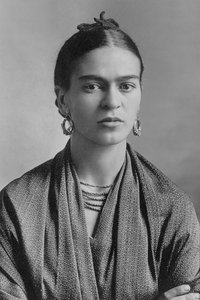
Frida Kahlo

Born in Coyoacán Surrealism, Mexican folk art, Realism
Frida Kahlo

Their lives move between the studios of Mexico and the urban landscapes of San Francisco, California, and New York City. Amidst this emotional turbulence, a personal transformation occurs; around 1935, she drops the "e" from her name, transitioning from Frieda to Frida. She did not merely paint; she constructed a visual language of identity that resonated far beyond the borders of Mexico.

Signature works · The 100 signature works

2of 24

Diego Rivera

Born in Guanajuato Mexican Muralism, Social Realism

Diego Rivera

Diego Rivera emerged from a family of modest means in Guanajuato, Mexico, born on December 8, 1886. His early environment was marked by a significant loss when his twin brother, Carlos, died at the age of two. Rivera remains a central figure in the history of post-revolutionary Mexico.

Where to see Here, the Detroit Industry Murals occupy a central place, capturing the mechanical pulse of labor and the grit of the industrial era.

Signature works · The 100 signature works

3of 24

David Alfaro Siqueiros

Born in Chihuahua City Social Realism, Muralism

David Alfaro Siqueiros

As one of the “big three” Mexican muralists – alongside Diego Rivera and José Clemente Orozco – he played an instrumental role in establishing Mexican muralism as a significant artistic movement, transforming public spaces into canvases for social commentary.

Signature works · The 100 signature works

4of 24

José Clemente Orozco

Born in Ciudad Guzmán Mexican Muralism

José Clemente Orozco

Orozco’s mastery lay not only in his ability to convey powerful emotions but also in his innovative use of fresco technique. Omnisciencia, painted in 1925, exemplifies this approach—a powerful exploration of social justice rendered with vibrant expressionism and layered symbolism. His murals can be found in prominent locations around the world, including the Baker-Berry Library at Dartmouth College in Hanover, New Hampshire, where his Epic of American Civilization stands as a testament to his artistic vision and intellectual depth.

Signature works · The 100 signature works

5of 24

Rufino Tamayo

Born in Oaxaca de Juárez Figurative Abstraction, Surrealism

Rufino Tamayo

His early career saw him working at the Department of Ethnographic Drawings under José Vasconcelos, eventually rising to head the department—a position that deepened his engagement with Mexico’s cultural heritage. While contemporaries like Diego Rivera, José Clemente Orozco, and David Alfaro Siqueiros were consumed by creating large-scale murals brimming with overt political messages, Tamayo charted a different course. Beyond his paintings, Rufino Tamayo made significant contributions to the field of graphic arts through the development of “Mixografia,” a unique fine art printing process he pioneered with Mexican painter and engineer Luis Remba.

Signature works · The 100 signature works

6of 24

Graciela Iturbide

Born in Mexico City Documentary photography

Graciela Iturbide

Graciela Iturbide, born in Mexico City in 1942, is more than a photographer; she’s a visual poet whose black-and-white images resonate with the soul of her nation and the universal human experience. These formative years weren’t merely about learning technique; they were about understanding how photographs could encapsulate identity, preserve history, and evoke profound emotion. Eugene Smith Grant in 1971 and secured a scholarship from the Guggenheim College, providing crucial support for her artistic endeavors.

Signature works · The 100 signature works

7of 24

Cornelio García Ramírez

Born in Tenamextlan Traditional/Modern blend

Cornelio García Ramírez

García Ramírez’s formative years were spent in the rural community of Tenamaxtlán, a region steeped in indigenous culture and folklore. He moved to Los Angeles, California, during his adolescence, experiencing a significant cultural shift – a “shock culture” as he describes it – that undoubtedly influenced his artistic perspective and broadened his understanding of diverse traditions. Cornelio García Ramírez’s artistic legacy extends beyond individual paintings; it encompasses a broader commitment to documenting and celebrating Mexican culture.

Signature works · The 100 signature works

8of 24

Aztec Empire

Born in Tenochtitlan Mesoamerican art

Aztec Empire

Featherwork was perhaps the most visually arresting aspect of Aztec art. Furthermore, Aztec artists were masters of mosaic work, creating stunning decorative panels using small, precisely cut stone tiles. Born in the early 14th century in Tenochtitlan, the heart of the Aztec Empire, the artistic traditions of the Aztecs were deeply rooted in the legacies of earlier Mesoamerican civilizations.

Signature works · The 100 signature works

9of 24

José De Alcibar

Neoclassical

José De Alcibar

Beyond the individual brilliance of his paintings, José de Alcibar’s historical significance is cemented by his role as an educator and institutional founder. He was a foundational member of the Real Academia de Bellas Artes de San Carlos in 1784, serving as a professor and helping to establish the first major art school and museum in the Americas. Born around 1728, his life unfolded during a transformative epoch for the Americas, where the artistic echoes of Europe met the unique cultural textures of New Spain.

Signature works · The 100 signature works

12of 24

Miguel Cabrera

Born in Oaxaca de Juárez Mexican Baroque

Miguel Cabrera

Miguel Cabrera lived during a period when the Mexican Baroque shaped the visual identity of a colonial society. Born in 1695, he became a figure of great importance to both the religious orders and the wealthy elite of his time. His hands were busy with more than just paint; he was also a designer who understood how to decorate the spaces where people gathered for prayer and social prestige.

Signature works · The 100 signature works

13of 24

Juan O'Gormann

Born in Coyoacán Modernism; Muralism

Juan O'Gormann

His work often functioned as a bridge between the ancient and the contemporary, utilizing pre-Hispanic motifs to tell stories of conquest, colonization, and revolution. By integrating the symbolic language of indigenous cultures into the structural language of modernism, he helped define a uniquely Mexican aesthetic that commanded international respect. Born on July 6, 1905, in the historic neighborhood of Coyoacán, Mexico City, O'Gorman emerged from a lineage that blended international perspectives with deep Mexican roots.

Signature works · The 100 signature works

14of 24

Octavio Ocampo

Born in Celaya Surrealism, Metamorphic Art

Octavio Ocampo

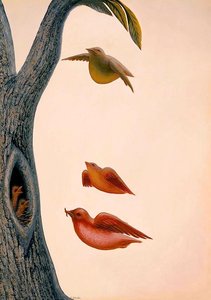
Faces emerge from landscapes, figures blend seamlessly with flora and fauna, and iconic portraits are constructed from multitudes, suggesting the complex layers within each individual identity. The optical illusions he creates aren’t accidental; they force the viewer to actively participate in the artwork's unveiling, prompting a deeper consideration of what is seen—and unseen. The Visions Fine Art Gallery in Sedona, Arizona, serves as his primary representation in the United States, bringing his captivating visions to a wider audience.

Signature works · The 100 signature works

15of 24

Luis Nishizawa Flores

Born in Cuautitlán Landscape painting; Muralism; Expressionism

Luis Nishizawa Flores

His academic contributions as a professor at the National Autonomous University of Mexico (UNAM) ensured that his philosophy of cultural synthesis would influence generations of subsequent artists.

Signature works · The 100 signature works

16of 24

Alejandro Sebastián Romero Gamarra

Born in Tabasco European Expressionism & Mexican styles

Alejandro Sebastián Romero Gamarra

Alejandro Sebastián Romero Gamarra, born in 1948 in Tabasco, Mexico, embodies a fascinating confluence of artistic traditions—a bridge between the powerful legacy of Mexican muralism and the emotive force of European Expressionism. He acknowledges the impact of José Guadalupe Posada, whose satirical prints often critiqued societal norms, as well as the legacy of the great Mexican muralists.

Signature works · The 100 signature works

17of 24

Gabriel Portillo Del Toro

Cubism

Gabriel Portillo Del Toro

Beyond the individual beauty of his canvases, Gabriel Portillo del Toro’s significance lies in his role as a transitional figure in Mexican art history. His monumental murals, which adorned public spaces across Mexico, solidified his reputation as an artist capable of commanding large-scale narratives, while his smaller paintings offered a more intimate dialogue with the viewer. In the grand tapestry of Mexican modernism, few artists managed to weave together the structural rigor of European avant-garde with the soulful warmth of regional tradition as masterfully as Gabriel Portly Del Toro.

Signature works · The 100 signature works

20of 24

Abelardo Favela

Simple Colors

Abelardo Favela

Color Theory: Revolutionizing the use of primary colors to evoke atmosphere without the need for traditional shading. Humanistic Focus: Maintaining a steadfast focus on the beauty of everyday life, celebrating the dignity of simple human movements and interactions. The historical significance of Abelardo Favela lies in his ability to redefine the boundaries of Mexican contemporary art through: Visual Storytelling: Utilizing his background in media to create narratives that are instantly accessible yet deeply layered.

Signature works · The 100 signature works

22of 24

Manuel González Serrano

Born in Mexico City Mexican muralism

Manuel González Serrano

He began painting at an early age, demonstrating a natural inclination towards artistic expression. His initial works showcased a fascination with the fantastical and surreal, reflecting international trends of the time. For more information about Manuel González Serrano and his artwork, visit AllPaintingsStore.

Signature works · The 100 signature works

Figures

Where they were born, when, and where to see them

City of birth
Mexico City5
Coyoacán2
Oaxaca de Juárez2
Guanajuato1
Chihuahua City1
Ciudad Guzmán1
Tenamextlan1
Tenochtitlan1
Century of birth
13th century1
17th century2
18th century1
19th century6
20th century14
Museums holding their key works
Fundación Universidad de las Américas Puebla3
Pinacoteca Universidad de Colima2
Museum of Fine Arts2
National Museum of Mexican Art2
Museo Dolores Olmedo1
Palace of Fine arts1
National Museum of Women in the Arts1
Museum of the Arts of the University of Guadalajara1

Questions and answers

Great Mexican painters: questions and answers

How this list is ranked Our ranking draws on Wikipedia, the manual rank our editors give each artist and artwork, and the visits each page receives every month.