Famous painters by country

Great German Painters

The masters our own painters keep coming back to. German painting runs from the precision of Dürer and Holbein to the Romantic landscapes of Caspar David Friedrich and the Expressionist groups Die Brücke and Der Blaue Reiter. Here are 24 of them, each with three works that still teach painters today and the museum where they can be seen.

Albrecht Dürer (1471–1528), Peter Paul Rubens (1577–1640) and Caspar David Friedrich (1774–1840) head the 24 great German masters who inspire our artists, all born in Germany, each with three key works.

  1. Adam and Eve by Albrecht Dürer1Albrecht Dürer
  2. The Raising of the Cross by Peter Paul Rubens2Peter Paul Rubens
  3. Wanderer above the Sea of Fog by Caspar David Friedrich3Caspar David Friedrich
  • 24Painters on this list
  • 1435–1945Years of birth
  • 4,172Artists born in Germany in our catalogue
  • 35,778Of their works in our catalogue

The list

The 24 great German painters

1of 24

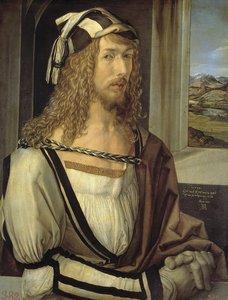
Albrecht Dürer

Born in Nuremberg Northern Renaissance
Albrecht Dürer

He did not merely observe the surface of things; he applied a rigorous, analytical approach to the way light falls upon a limb or how a body occupies space. He took the meticulous, sharp-edged precision of the Northern European tradition and infused it with the grace and harmonious composition he encountered in Italy. Even in his later years, his curiosity remained active, leading him through the Netherlands between 1520 and 1521.

Where to see In London, the British Museum holds a vast assembly of sixty-seven of his works, offering a deep look into the precision of his vision.

Teacher of Hans Baldung Grien #20

Signature works · The 100 signature works

2of 24

Peter Paul Rubens

Born in Siegen Baroque

Peter Paul Rubens

In 1600, Rubens left the Low Countries for Italy, a move that fundamentally altered his visual language. He took the anatomical precision of Michelangelo and the coloristic depth of Titian, stripping away the static qualities of the High Renaissance to create something more muscular and immediate. This ability to command space and movement ensured his influence reached far beyond the borders of the Southern Netherlands.

Signature works · The 100 signature works

3of 24

Caspar David Friedrich

Born in Greifswald Romanticism

Caspar David Friedrich

Born in the Baltic port city of Greifswald in 1774, Caspar David Friedrich’s early years were shaped by a profound sense of loss. His technical skills were further honed in Copenhagen, where he was exposed to landscape traditions that he would eventually transform into a medium for expressing inner emotional states. His reputation underwent a significant rediscovery in the late 20th century, as he was recognized as a central figure in German Romanticism.

Signature works · The 100 signature works

4of 24

Hans Holbein the Younger

Born in Augsburg Northern Renaissance

Hans Holbein the Younger

Holbein’s work operates through a Northern Renaissance style that prioritizes a hyper-realistic clarity. He did not rely on vague impressions; instead, he used oil paint to achieve vivid colors and a level of precise detail that makes the subjects feel immediate. Through his brush, we see the faces and the intellectual weight of the humanists who shaped European thought, such as Desiderius Erasmus and Thomas More.

Where to see The National Gallery in London maintains a significant presence of his output, providing a direct link to the Tudor era through several of his portraits.

Signature works · The 100 signature works

5of 24

Max Ernst

Born in Brühl ['Dada', 'Surrealism']

Max Ernst

In 1911, he became part of the Die Rheinischen Expressionisten group. A significant turning point occurred in 1912 when he visited the Sonderbund exhibition in Cologne. Seeing the works of Pablo Picasso, Vincent van Gogh, and Paul Gauguin changed his perspective.

Where to see Finding the traces of Max Ernst's restless imagination requires a trip through several major cultural hubs.

Signature works · The 100 signature works

6of 24

Gerhard Richter

Born in Dresden

Gerhard Richter

After dropping out of school at age fifteen, Richter enters the industrial landscape of post-war Germany. From 1957 to 1961, he remains within the academy's structure, working as a master trainee. In 1972, he represented West Germany at the Venice Biennale, a moment that solidified his standing on the international stage.

Where to see The physical presence of Richter’s practice spans major institutional collections across Europe.

Signature works · The 100 signature works

7of 24

Franz Marc

Born in Kreuzstraße German Expressionism

Franz Marc

Marc’s early output reflects the heavy weight of academic painting and Impressionism. His time in France, specifically during visits to Paris in 1903 and 1907, acted as a catalyst for this departure. It was in Paris that he encountered the work of Vincent van Gogh.

Where to see The Franz Marc Museum in Kochel am See, Germany, functions as a primary site for his legacy, housing over 150 of his works.

Signature works · The 100 signature works

9of 24

Hans Memling

Born in Seligenstadt Early Netherlandish painting

Hans Memling

This technical mastery allowed him to render the heavy folds of drapery and the subtle textures of skin with a clarity that felt almost startling to those who viewed them. In his portraiture, he developed a particular way of arranging the world to achieve a sense of quiet balance. Through his many assistants, his particular way of seeing the world was carried across Europe, spreading a style that many would come to recognize as the very essence of the Early Netherlandish painting movement.

Signature works · The 100 signature works

10of 24

Matthias Grünewald

Born in Würzburg German Renaissance, Late Gothic

Matthias Grünewald

The year 1515 marks a peak of expressive power. In the hospital chapel of the Monastery of St Anthony in Isenheim, Alsace, a massive polyptych is being realized.

Signature works · The 100 signature works

11of 24

Ernst Ludwig Kirchner

Born in Aschaffenburg German Expressionism

Ernst Ludwig Kirchner

His early years were marked by the frequent movements of his family, dictated by the career of his father, Ernst Kirchner, a chemical technician in the paper industry. After obtaining his school-leaving certificate in 1901, he enrolled at the university in Dresden to study architecture. Kirchner remains a central figure of the German Expressionist movement, a presence that helped define the visual language of a transformative era.

Where to see The physical presence of Kirchner’s vision is scattered across several major institutions, reflecting the international reach of his influence.

Signature works · The 100 signature works

12of 24

Albrecht Altdorfer

Born in Regensburg Danube School, Renaissance

Albrecht Altdorfer

A transformative journey down the Danube River and into the Alps around 1511 proved crucial to his artistic development. His work, like “ The Large Spruce,” exemplifies this shift, offering a serene and intricate depiction of nature's beauty. His collaboration with Emperor Maximilian I in Innsbruck from 1513 further expanded his artistic horizons and provided opportunities for large-scale projects.

Signature works · The 100 signature works

13of 24

Otto Dix

Born in Untermhaus ['Neue Sachlichkeit', 'Dadaism', 'Expressionism']

Otto Dix

The environment shaping Otto Dix is one of stark industrial labor and quiet, poetic undertones. His father, Franz Dix, works in an iron foundry, a setting defined by heavy toil. His presence in the permanent collections of major institutions, such as the Museum of Modern Art in New York, confirms his lasting importance.

Where to see The physical presence of Dix’s vision remains scattered across major international institutions.

Signature works · The 100 signature works

14of 24

Albert Bierstadt

Born in Solingen Hudson River School, Luminism

Albert Bierstadt

Bierstadt’s approach to the canvas was shaped by his time in Düsseldorf, where he moved away from the simple crayon sketches of his youth toward a more disciplined, naturalistic style. His later works in the Bahamas showed a shift toward a more expressive use of color, moving away from the controlled Luminist style toward bolder, more brilliant tones. Bierstadt was an important interpreter of the western landscape, providing a way for people to see the scale of the American West.

Where to see His canvases can be found in several collections across different continents.

Signature works · The 100 signature works

15of 24

Max Beckmann

Born in Leipzig Expressionism, New Objectivity

Max Beckmann

Born into a middle-class family in Leipzig, Germany, Max Beckmann showed an early inclination toward drawing. By 1912, he was already tackling ambitious subjects that required a command of large-scale composition. While he often resisted the labels placed upon him, his work is widely considered a cornerstone of the German Expressionism movement.

Where to see Finding the physical traces of Beckmann's life requires traveling through the cities that shaped his exile and his later years.

Signature works · The 100 signature works

16of 24

Anselm Kiefer

Born in Donaueschingen Neo-Expressionism

Anselm Kiefer

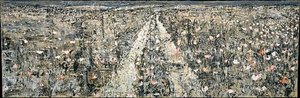
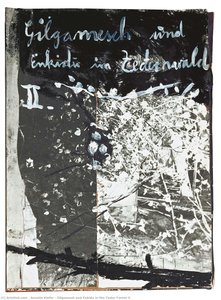
As his career progressed, Kiefer’s international recognition grew through works that challenged the boundaries between painting, sculpture, and installation.

Pupil of Joseph Beuys #18

Signature works · The 100 signature works

17of 24

Lucian Freud

Born in Berlin Realism, Figurative art

Lucian Freud

He favored large hogs-hair brushes, applying paint with a physicality mirroring the subject matter itself. This created a textured surface, almost sculptural in quality, where every brushstroke revealed the weight and substance of flesh. Lucian Freud’s 60-year career left an indelible mark on British portraiture, challenging conventional notions of beauty and representation.

Signature works · The 100 signature works

18of 24

Joseph Beuys

Born in Krefeld Fluxus, Performance Art

Joseph Beuys

He radically challenged conventional notions of creativity and authorship, emphasizing participation and social engagement.

Teacher of Anselm Kiefer #16

Signature works · The 100 signature works

19of 24

George Grosz

Born in Berlin Berlin Dada, New Objectivity

George Grosz

The boy who would eventually dissect the soul of Berlin first learned the weight of loss in the Pomeranian town of Stolp, in the Free State of Prussia. Following this tragedy, he moved with his mother and sisters to the Wedding district of Berlin.

Signature works · The 100 signature works

20of 24

Hans Baldung Grien

Born in Schwäbisch Gmünd Renaissance, Mannerism

Hans Baldung Grien

However, while deeply influenced by Dürer —evident in early works showcasing precise draftsmanship and Northern realism —Baldung quickly began to forge his own artistic identity. His time in Venice, overseeing Dürer’s affairs, also exposed him to the burgeoning Italian Renaissance art scene, broadening his artistic horizons and subtly influencing his palette and compositional choices. His early training commenced around 1500 in the Upper Rhineland with an artist from Strasbourg, laying the groundwork for his technical skills before he sought out more prominent masters to hone his craft.

Pupil of Albrecht Dürer #1

Signature works · The 100 signature works

22of 24

Paula Modersohn-Becker

Born in Dresden Expressionism

Paula Modersohn-Becker

Paula Modersohn-Becker, a name that resonates with quiet power in the annals of early modern art, was an artist who dared to look inward. Immersing herself in the vibrant art scene of the French capital, she encountered the works of Paul Cézanne, Paul Gauguin, Vincent van Gogh, and other Post-Impressionist masters.

Signature works · The 100 signature works

23of 24

Kurt Schwitters

Born in Hanover

Kurt Schwitters

The devastation of World War I profoundly impacted his artistic direction. “In the war, things were in terrible turmoil…everything had broken down and new things had to be made out of the fragments; and this is Merz.”. While associated with Dadaism, Schwitters maintained a distinct artistic identity.

Signature works · The 100 signature works

24of 24

Philipp Otto Runge

Born in Wolgast Romanticism

Philipp Otto Runge

His formal training began later than most, initially through a commercial apprenticeship in Hamburg at his brother Daniel’s firm. This marked the true beginning of Runge's journey toward becoming one of Germany’s most innovative and spiritually driven artists. His exploration of color theory influenced generations of artists, including those associated with the Bauhaus movement.

Signature works · The 100 signature works

Figures

Where they were born, when, and where to see them

City of birth
Dresden2
Berlin2
Nuremberg1
Siegen1
Greifswald1
Augsburg1
Brühl1
Kreuzstraße1
Century of birth
15th century7
16th century1
18th century2
19th century10
20th century4
Museums holding their key works
National Gallery3
Hamburger Kunsthalle2
Szépművészeti Múzeum2
Alte Pinakothek2
MOMA - Museum of Modern Art2
Bavarian State Painting Collections2
Guggenheim Museum Bilbao2
National Gallery Prague1

Questions and answers

Great German painters: questions and answers

  • Who is the most famous German painter?

    In our ranking, Albrecht Dürer (1471–1528), then Peter Paul Rubens and Caspar David Friedrich.

  • How many German artists are in your catalogue?

    4,172 artists born in Germany, with 35,778 works; this page shows the 24 most famous painters.

  • Which German painter has the most works in your catalogue?

    Peter Paul Rubens, with 1,621 works.

  • Where were the most painters of this list born?

    In Dresden: 2 of the 24, Gerhard Richter and Paula Modersohn-Becker.

  • Which women painters are on this list?

  • When were these painters born?

    Most in the 19th century (10 of 24); births range from 1435 to 1945.

How this list is ranked Our ranking draws on Wikipedia, the manual rank our editors give each artist and artwork, and the visits each page receives every month.