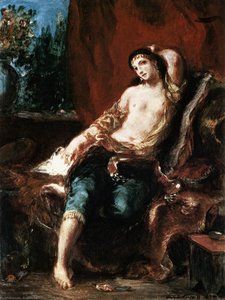
Portrait of Eugène Delacroix

The 100 Most Famous Eugène Delacroix Paintings, Each One of a Kind

Updated November 2026 · ranked by our popularity score (searches, visits and orders for each work) · 604 works by Eugène Delacroix in our catalogue

In short

Liberty Leading the People (1831) is the Eugène Delacroix painting that draws the most eyes; the original belongs to the The Louvre, Paris. After it, the eye goes to The Massacre at Chios (1824) and The Death of Sardanapalus (1827). Among the 604 works of Eugène Delacroix in our catalog, these 100 are the most famous, each a unique original presented with its year, its museum and the reason it endures.

1798 – 1863, Saint-Maurice Romanticism Most works: The Louvre

Top 10 paintings by Eugène Delacroix, through the gallery's eye

1
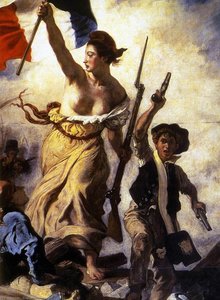
Liberty Leading the People (1831) by Eugène Delacroix

Liberty Leading the People

1831 · Oil On Canvas · The Louvre, Paris

A Masterpiece of Romanticism Eugène Delacroix's "Liberty Leading the People" is an iconic work of French Romanticism, capturing the spirit of revolution and the fight for freedom. Painted in 1830, this monumental piece commemorates the July Revolution that toppled King Charles X, marking a pivotal moment in French history. The artwork is a powerful blend of historical narrative and emotional intensity, making it a must-have for art enthusiasts and collectors…

2
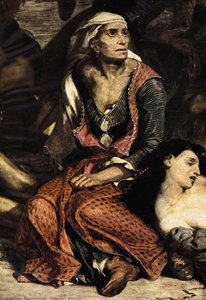
The Massacre at Chios (1824) by Eugène Delacroix

The Massacre at Chios

1824 · Acrylic On Canvas · The Louvre, Paris

Eugène Delacroix's "The Massacre at Chios" isn’t merely a painting; it’s a visceral scream rendered in oil, a monumental testament to the brutality and injustice inflicted upon the Greek people during their struggle for independence. Completed in 1824, this colossal canvas – measuring over four meters tall – plunges the viewer directly into the heart of a horrific event: the Ottoman Empire's merciless assault on the island of Chios. More…

3
The Death of Sardanapalus (1827) by Eugène Delacroix

The Death of Sardanapalus

1827 · Oil On Canvas · The Louvre, Paris

Eugène Delacroix's 1827 masterpiece is a monumental and intensely dramatic depiction of the final moments of Sardanapalus, the last king of Assyria. Inspired by Lord Byron’s play of the same name, this painting isn’t merely a historical scene; it’s an immersive experience into a world of opulent chaos and impending doom – a quintessential example of Romanticism's power to evoke strong emotion.

4
The Barque of Dante by Eugène Delacroix

The Barque of Dante

Oil On Canvas

A Descent into Darkness: Eugène Delacroix’s *The Barque of Dante* The Barque of Dante, painted in 1822 by Eugène Delacroix, is a pivotal work marking the dramatic transition from Neoclassicism to Romanticism. This monumental canvas doesn't merely depict a scene; it *immerses* the viewer into the harrowing world of Dante Alighieri’s *Inferno*, specifically Canto VIII – the terrifying crossing of the River Styx. Historical Context & Artistic Revolution Delacroix, born…

5
Algerian Women in Their Apartments, - (180x229) (1834) by Eugène Delacroix

Algerian Women in Their Apartments, - (180x229)

1834 · Oil

In the grand tapestry of nineteenth-century art, few threads are as vibrant or as emotionally charged as those woven by Eugène Delacroix. His 1834 masterpiece, "Algerian Women in Their Apartments," serves as a profound rejection of the cool, calculated rationality that defined the Neoclassical era. Instead, Delacroix invites us into a world of sensory indulgence and whispered secrets. This painting is not merely a depiction of a harem scene; it…

6
Greece on the Ruins of Missolonghi (1826) by Eugène Delacroix

Greece on the Ruins of Missolonghi

1826 · Acrylic · Musée des Beaux-Arts de Bordeaux, Bordeaux

Greece on the Ruins of Missolonghi: A Romantic Echo of Liberation Eugène Delacroix’s “Greece on the Ruins of Missolonghi,” completed in 1826, stands as a monumental testament to Romantic idealism and its fervent embrace of historical narrative. Currently residing at the Musée des Beaux-Arts de Bordeaux, this canvas transcends mere depiction; it embodies the spirit of a nation yearning for freedom during the tumultuous Greek War of Independence. The painting’s…

7
Orphan Girl at the Cemetery by Eugène Delacroix

Orphan Girl at the Cemetery

Oil On Canvas · Grand Palais, Paris

Ferdinand Victor Eugène Delacroix's Orphan Girl at the Cemetery, rendered in muted tones and imbued with a palpable sense of sorrow, offers a poignant glimpse into the heart of Romanticism. Measuring 65 x 54 cm, this intimate portrait transcends mere representation; it’s a carefully constructed meditation on loss, memory, and the enduring weight of the past. Painted circa 1830-1835, during Delacroix's most intensely productive period, the work exemplifies his shift…

8
Arab Horses Fighting in a Stable (1860) by Eugène Delacroix

Arab Horses Fighting in a Stable

1860 · Oil On Canvas · The Louvre, Paris

The Drama of Equine Conflict Eugène Delacroix's "Arab Horses Fighting in a Stable" captures a moment of intense action and chaos within an enclosed space. The painting depicts two rearing horses locked in combat, surrounded by human figures engaged in various actions. This dynamic scene is set against the backdrop of a stable or barn, with architectural elements such as wooden beams and walls adding depth and context. A Masterpiece…

9
The Abduction of Rebecca (1846) by Eugène Delacroix

The Abduction of Rebecca

1846 · Oil On Canvas · Metropolitan Museum of Art, New York

Eugène Delacroix's "The Abduction of Rebecca," completed in 1846, stands as a cornerstone of French Romanticism—a movement defined by fervent emotion and an embrace of dramatic storytelling. More than just a depiction of a biblical tale adapted from Sir Walter Scott’s novel Ivanhoe, it’s a visceral reaction to historical events and a testament to Delacroix's unparalleled artistic vision.

10
Frédéric Chopin (1838) by Eugène Delacroix

Frédéric Chopin

1838 · Oil On Canvas · The Louvre, Paris

Eugène Delacroix’s Frédéric Chopin is more than just a portrait; it's an embodiment of Romantic idealism distilled into the stark beauty of black and white. Created in 1838 during Delacroix’s prolific period—marked by monumental canvases like Liberty Leading the People—this intimate depiction reveals Delacroix’s masterful ability to convey profound emotion through restrained color palettes.

Eugène Delacroix's famous paintings, numbers 11 to 100

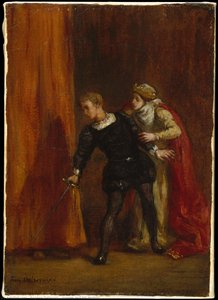
11Liberty Leading the People (detail) (1830) by Eugène DelacroixLiberty Leading the People (detail)1830 · The Louvre 12Christ on the Sea of Galilee (1841) by Eugène DelacroixChrist on the Sea of Galilee1841 · Nelson-Atkins Museum of Art 13Female Nude Reclining on a Divan (1825) by Eugène DelacroixFemale Nude Reclining on a Divan1825 · The Louvre 14Horse Frightened by a Storm (1824) by Eugène DelacroixHorse Frightened by a Storm1824 · Szépművészeti Múzeum 15Lioness Stalking Its Prey (also known as Lioness Standing by a Tree) (1852) by Eugène DelacroixLioness Stalking Its Prey (also known as Lioness Standing by a Tree)1852 · Musée d'Orsay 16Summer: Diana Surprised at her Bath by Actaeon (1822) by Eugène DelacroixSummer: Diana Surprised at her Bath by Actaeon1822 · Museum of Fine Arts 17The Death of Sardanapalus (detail) (1827) by Eugène DelacroixThe Death of Sardanapalus (detail)1827 · The Louvre 18Hamlet and His Mother (1849) by Eugène DelacroixHamlet and His Mother1849 · Metropolitan Museum of Art 19Death of Sardanapalus (1844) by Eugène DelacroixDeath of Sardanapalus1844 · Philadelphia Museum of Art 20Daniel dans la fosse aux lions (1849) by Eugène DelacroixDaniel dans la fosse aux lions1849 · Musée Fabre 21The Abduction of Rebecca (1858) by Eugène DelacroixThe Abduction of Rebecca1858 · The Louvre 22Self-Portrait with Cap (1832) by Eugène DelacroixSelf-Portrait with Cap1832 · The Louvre 23Christ on the Cross (sketch) (1845) by Eugène DelacroixChrist on the Cross (sketch)1845 · Museum Boijmans Van Beuningen 24The Death of Sardanapal, Louvre (1827) by Eugène DelacroixThe Death of Sardanapal, Louvre1827 25Christ on the Cross (1853) by Eugène DelacroixChrist on the Cross1853 · National Gallery 26Madame Henri François Riesener (Félicité Longrois, 1786–1847) (1835) by Eugène DelacroixMadame Henri François Riesener (Félicité Longrois, 1786–1847)1835 · Metropolitan Museum of Art 27The Good Samaritan (1852) by Eugène DelacroixThe Good Samaritan1852 · Victoria and Albert Museum 28The Barque of Dante by Eugène DelacroixThe Barque of Dante 29Lion Hunt (1861) by Eugène DelacroixLion Hunt1861 · Art Institute of Chicago 30Study for "The Death of Sardanapalus" (1850) by Eugène DelacroixStudy for "The Death of Sardanapalus"1850 · National Museum of Western Art 31The Death of Lara (1847) by Eugène DelacroixThe Death of Lara1847 32A Vase of Flowers on a Console (1849) by Eugène DelacroixA Vase of Flowers on a Console1849 · Musée Ingres Bourdelle 33Medea about to Kill her Children (1838) by Eugène DelacroixMedea about to Kill her Children1838 · The Louvre 34Christ on the Sea of Galilee (1853) by Eugène DelacroixChrist on the Sea of Galilee1853 · Foundation E.G. Bührle Collection 35The Death of Ophelia (1838) by Eugène DelacroixThe Death of Ophelia1838 · Neue Pinakothek 36St Michael defeats the Devil (1854) by Eugène DelacroixSt Michael defeats the Devil1854 · Saint-Sulpice 37Saint Stephen Borne Away by His Disciples (1862) by Eugène DelacroixSaint Stephen Borne Away by His Disciples1862 · Barber Institute of Fine Arts 38The Massacre at Chios d1 by Eugène DelacroixThe Massacre at Chios d1 39Lion Devouring a Rabbit (1851) by Eugène DelacroixLion Devouring a Rabbit1851 · The Louvre 40Women of Algiers in Their Apartmente (1849) by Eugène DelacroixWomen of Algiers in Their Apartmente1849 · Musée Fabre 41Mlle Rose (1817) by Eugène DelacroixMlle Rose1817 · The Louvre 42The Good Samaritan (1849) by Eugène DelacroixThe Good Samaritan1849 43The Death of Lara (1858) by Eugène DelacroixThe Death of Lara1858 44The Road to Calvary (1847) by Eugène DelacroixThe Road to Calvary1847 45Massakern pa Chios - - (1824) by Eugène DelacroixMassakern pa Chios - -1824 46Heliodoros Driven from the Temple (detail) (1854) by Eugène DelacroixHeliodoros Driven from the Temple (detail)1854 · Saint-Sulpice 47Still Life with Flowers and Fruit (1848) by Eugène DelacroixStill Life with Flowers and Fruit1848 · Philadelphia Museum of Art 48Sketch for The Death of Sardanapalus (1827) by Eugène DelacroixSketch for The Death of Sardanapalus1827 · The Louvre 49The Agony in the Garden, Eugène Delacroix, 1851 (1851) by Eugène DelacroixThe Agony in the Garden, Eugène Delacroix, 18511851 · Rijksmuseum 50The Lamentation (1849) by Eugène DelacroixThe Lamentation1849 51Ugolino and His Sons in the Tower (1856) by Eugène DelacroixUgolino and His Sons in the Tower1856 52Jewish Bride (1832) by Eugène DelacroixJewish Bride1832 · The Louvre 53Christ on the Cross (1839) by Eugène DelacroixChrist on the Cross1839 · Кунстхалле Бремен 54Liberty Leading the People - Eugène Delacroix (2026) by Eugène DelacroixLiberty Leading the People - Eugène Delacroix2026 55Aeneas and Anchises (1815) by Eugène DelacroixAeneas and Anchises1815 · Kunstpalast 56View of the Port of Dieppe (1854) by Eugène DelacroixView of the Port of Dieppe1854 57Self-Portrait as Ravenswood (1821) by Eugène DelacroixSelf-Portrait as Ravenswood1821 · Musée Eugène Delacroix 58Portrait of Alfred Bruyas (1853) by Eugène DelacroixPortrait of Alfred Bruyas1853 · Musée Fabre 59Horses at a Fountain (1862) by Eugène DelacroixHorses at a Fountain1862 · Philadelphia Museum of Art 60Women of Algiers (1832) by Eugène DelacroixWomen of Algiers1832 61The Lamentation (1847) by Eugène DelacroixThe Lamentation1847 · Museum of Fine Arts 62Count de Mornay's Apartment (1832) by Eugène DelacroixCount de Mornay's Apartment1832 · The Louvre 63Paganini (1831) by Eugène DelacroixPaganini1831 · The Phillips Collection 64Lioness Ready to Spring (1863) by Eugène DelacroixLioness Ready to Spring1863 · The Louvre 65Interior of a Dominican Convent in Madrid (1831) by Eugène DelacroixInterior of a Dominican Convent in Madrid1831 · Philadelphia Museum of Art 66La barca di Dante. . (1822) by Eugène DelacroixLa barca di Dante. .1822 67The Women of Algiers by Eugène DelacroixThe Women of AlgiersMusée d'art et d'histoire de Saint-Brieuc 68Liberty Leading the People (detail) (1830) by Eugène DelacroixLiberty Leading the People (detail)1830 · The Louvre 69Faust Trying to Seduce Margarete (detail) (1828) by Eugène DelacroixFaust Trying to Seduce Margarete (detail)1828 · Musée Eugène Delacroix 70Women of Algiers (1833) by Eugène DelacroixWomen of Algiers1833 71The Return of Christopher Columbus (1839) by Eugène DelacroixThe Return of Christopher Columbus1839 · Toledo Museum of Art 72Apollo Slays Python (1850) by Eugène DelacroixApollo Slays Python1850 · Van Gogh Museum 73Mephistopheles Aloft (1826) by Eugène DelacroixMephistopheles Aloft1826 74Charles VI and Odette de Champdivers (1824) by Eugène DelacroixCharles VI and Odette de Champdivers1824 75Horses Fighting in a Stable (1860) by Eugène DelacroixHorses Fighting in a Stable1860 · Musée d'Orsay 76The Lion Hunt (1858) by Eugène DelacroixThe Lion Hunt1858 · Museum of Fine Arts 77Capture of Constantinople by the Crusaders in the fourth crusade (1840) by Eugène DelacroixCapture of Constantinople by the Crusaders in the fourth crusade1840 · Condé Museum 78Apollo Slays Python (1850) by Eugène DelacroixApollo Slays Python1850 · The Louvre 79Still-Life with Lobster (1826) by Eugène DelacroixStill-Life with Lobster1826 · The Louvre 80Summer - Diana and Actaeon (1856) by Eugène DelacroixSummer - Diana and Actaeon1856 · Museu de Arte de São Paulo Assis Chateaubriand 81The Lion Hunt (1859) by Eugène DelacroixThe Lion Hunt1859 82Horse Frightened by a Storm (1824) by Eugène DelacroixHorse Frightened by a Storm1824 · Szépművészeti Múzeum 83Two Studies of a Standing Indian from Calcutta (1824) by Eugène DelacroixTwo Studies of a Standing Indian from Calcutta1824 · National Gallery of Art 84Marocan and his Horse by Eugène DelacroixMarocan and his Horse 85African on Horseback by Eugène DelacroixAfrican on Horseback 86The Women of Algiers (detail) (1834) by Eugène DelacroixThe Women of Algiers (detail)1834 · The Louvre 87Macbeth Consulting the Witches by Eugène DelacroixMacbeth Consulting the Witches 88Study for Marphisa (1850) by Eugène DelacroixStudy for Marphisa1850 · Michael C. Carlos Museum 89Eugene The Massacre of Chios by Eugène DelacroixEugene The Massacre of Chios 90Frédéric chopin, louvre (1838) by Eugène DelacroixFrédéric chopin, louvre1838 91Odalisque (1857) by Eugène DelacroixOdalisque1857 92The Riding Lesson (1854) by Eugène DelacroixThe Riding Lesson1854 93Arabs Skirmishing in the Mountains, - (92.5x74.) (1863) by Eugène DelacroixArabs Skirmishing in the Mountains, - (92.5x74.)1863 94Tiger Hunt (1854) by Eugène DelacroixTiger Hunt1854 · The Louvre 95Folio 11, Costume of a Jewish woman from Tangier (1832) by Eugène DelacroixFolio 11, Costume of a Jewish woman from Tangier1832 · Château de Chantilly 96King Roderick (1833) by Eugène DelacroixKing Roderick1833 · Kunsthalle Bremen 97The Descent from the Cross by Eugène DelacroixThe Descent from the CrossMuseum of Fine Arts 98Study of Horses (1900) by Eugène DelacroixStudy of Horses1900 · Artizon Museum 99Women of Algiers by Eugène DelacroixWomen of Algiers 100A Mad Woman (1822) by Eugène DelacroixA Mad Woman1822

Eugène Delacroix's famous paintings, period by period

The subjects that held Eugène Delacroix's eye

The four subjects that come back most often in these originals, each with its finest example.

The museums that keep Eugène Delacroix's originals

The 8 museums that hold the most of the paintings on this page.

Museum City Works by Eugène Delacroix Paintings from this list
The Louvre, ParisThe Louvre Paris 42 Liberty Leading the People, The Massacre at Chios, The Death of Sardanapalus
Museum of Fine Arts, BostonMuseum of Fine Arts Boston 4 Summer: Diana Surprised at her Bath by Actaeon, The Lamentation, The Lion Hunt
Philadelphia Museum of Art, PhiladelphiaPhiladelphia Museum of Art Philadelphia 4 Death of Sardanapalus, Still Life with Flowers and Fruit, Horses at a Fountain
Metropolitan Museum of Art, New YorkMetropolitan Museum of Art New York 12 The Abduction of Rebecca, Hamlet and His Mother, Madame Henri François Riesener (Félicité Longrois, 1786–1847)
Musée Fabre, MontpellierMusée Fabre Montpellier 9 Daniel dans la fosse aux lions, Women of Algiers in Their Apartmente, Portrait of Alfred Bruyas
Musée Eugène Delacroix, ParisMusée Eugène Delacroix Paris 26 Self-Portrait as Ravenswood, Faust Trying to Seduce Margarete (detail)
Szépművészeti Múzeum, BudapestSzépművészeti Múzeum Budapest 4 Horse Frightened by a Storm, Horse Frightened by a Storm
Musée d'Orsay, ParisMusée d'Orsay Paris 4 Lioness Stalking Its Prey (also known as Lioness Standing by a Tree), Horses Fighting in a Stable

Eugène Delacroix across the decades: one unique original for each

Works per decade

Pick a decade to see the original that defines it.

Eugène Delacroix's paintings: questions for the gallery

What is the single most famous work of Eugène Delacroix?Reveal the answer

Liberty Leading the People (1831), The Louvre, Paris. The Massacre at Chios (1824) and The Death of Sardanapalus (1827) come next.

At what age did Eugène Delacroix create Liberty Leading the People?Reveal the answer

33 years old: Liberty Leading the People dates from 1831, and Eugène Delacroix was born in 1798.

Which ten paintings by Eugène Delacroix are the most famous?Reveal the answer

Liberty Leading the People, The Massacre at Chios, The Death of Sardanapalus, The Barque of Dante, Algerian Women in Their Apartments, - (180x229), Greece on the Ruins of Missolonghi, Orphan Girl at the Cemetery, Arab Horses Fighting in a Stable, The Abduction of Rebecca and Frédéric Chopin. The ranking above gives each one's year and museum.

How many works by Eugène Delacroix are known?Reveal the answer

Our catalog holds 604 works by Eugène Delacroix, dated from 1815 to 1863.

Where can the most famous Eugène Delacroix originals be seen?Reveal the answer

Mostly in The Louvre (Paris), Museum of Fine Arts (Boston) and Philadelphia Museum of Art (Philadelphia). The museum table above lists them all.

During which period did Eugène Delacroix create the best-known paintings?Reveal the answer

In 1850s: 23 of the 100 works on this page were made then, Lioness Stalking Its Prey (also known as Lioness Standing by a Tree) among them.

Which famous Eugène Delacroix painting is the earliest, and which the latest?Reveal the answer

On this page, the earliest is Aeneas and Anchises (1815) and the latest Lioness Ready to Spring (1863).

What subjects did Eugène Delacroix favour?Reveal the answer

Drama (17), Mythology (11) and Violence (8), across the 100 works on this page.

What materials did Eugène Delacroix paint with most?Reveal the answer

Oil On Canvas, for 64 of the 100 works on this page.

Which movement does the work of Eugène Delacroix belong to?Reveal the answer

Romanticism, judging by the originals on this page.

What Eugène Delacroix originals can I see at the The Louvre?Reveal the answer

Liberty Leading the People, The Massacre at Chios and The Death of Sardanapalus: the The Louvre, Paris holds 22 of the works on this page.

Eugène Delacroix: a portrait of the artist

The Life and Art of Eugène Delacroix

The air in Charenton-Saint-Maurice near Paris is heavy with the weight of a changing era when Ferdinand Victor Eugène Delacroix enters the world on 26 April 1798. He does not merely inhabit the 19th century; he defines its emotional pulse. As the leader of the French Romantic school, Eugène Delacroix rejects the cold, calculated lines of the previous generation. He seeks something more volatile. His brush moves with a restless energy that mirrors the societal upheavals of France, trading academic restraint for a raw, individualistic expression of the human condition.

His career is a series of intense collisions between vision and reality. He navigates a landscape of political rebellion and personal passion, often finding himself at the center of the era's most turbulent moments. By the time he reaches the end of his life on 13 August 1863, he has fundamentally altered the trajectory of European painting. He leaves behind a legacy of movement and color that challenges the very foundations of classical tradition.

Early Life, Family and Training

The lineage of Eugène Delacroix is rooted in a blend of craftsmanship and diplomacy. His mother, Victoire Oeben, was the daughter of the cabinetmaker Jean-François Oeben. His father, Charles-François Delacroix, moved in influential circles, a fact reflected in the family's social standing. Eugène grew up alongside three much older siblings: Charles-Henri, Henriette, and Henri. This age gap created a household of established adults rather than a nursery of peers.

Education follows a path through the French academic system. He attended the Lycée Louis-le-Grand and the Lycée Pierre Corneille in Rouen. These years of study provided the intellectual foundation for his later explorations. The transition from student to artist begins under Pierre-Narcisse Guérin. A prominent neoclassical painter, Guérin provided the formal training necessary for the Parisian art world. While Guérin emphasized the strictures of Neoclassicism, the seeds of a different, more emotional approach were already being sown through this rigorous academic instruction.

Patrons and Artistic Protectors

The trajectory of Delacroix’s career finds its anchor in the shadow of Charles-Maurice de Talleyrand-Périgord. A man of immense political weight, Talleyrand was a close friend of the family and a figure who claimed a paternal connection to the young artist. This relationship provided more than mere social standing; it offered a direct conduit to the highest echelons of French influence. As Talleyrand navigated the shifting political tides, serving both the Restoration and King Louis-Philippe, he ensured Delacroix remained positioned within the center of Parisian life. Through him, the artist received numerous anonymous commissions, allowing his work to circulate through elite circles under a veil of discretion.

Protection extended into the political machinery of the mid-nineteenth century. Charles Auguste Louis Joseph, duc de Morny, acted as another vital shield for the painter. This support system allowed Delacroix to navigate a landscape of shifting aesthetic values and political upheaval. While the artist’s style often challenged the established order, his access to powerful patrons provided the stability necessary to pursue his specific vision of Romanticism. These connections bridged the gap between the studio and the state, ensuring that his presence in the art world remained constant despite the turbulence of the era.

The Transformative Journey to North Africa

The year 1832 marks a sudden shift in Delacroix's trajectory. He travels to North Africa as part of a diplomatic mission to the Sultan of Morocco. This is no mere sightseeing trip; it is a period of intense observation. While in Algeria, the landscape and its people leave a lasting impression on him. He moves through these territories, absorbing the light and the customs of a world vastly different from the Parisian salons.

The scale of his output during these months is immense. He produces over 100 paintings and drawings, capturing the essence of the region through rapid sketches and finished works. These studies do more than document a trip; they help shape Orientalism. His vision of the East is built from these direct encounters, transforming the way European art perceives North African life. The sketches and paintings from this period provide the visual language for a new movement.

Technique and Expressive Style

The canvas becomes a site of friction. Delacroix rejects the rigid, clean lines of Neoclassicism, opting instead for loose brushwork and heavy, rich textures. He prioritizes chromatic intensity and emotional expression over the precision of draftsmanship. Light and shadow do not merely illuminate; they sculpt. Through the use of chiaroscuro, he carves forms out of darkness, creating a sense of depth and psychological weight. This approach moves away from the academic requirement for perfect contours, favoring instead the immediate impact of color.

His influence extends into the mechanics of sight. By studying the optical effects of color, he develops a language of light that later shapes the work of the Impressionists. This focus on how the eye perceives shifting hues marks a departure from the static compositions of his predecessors. Beyond the large-scale oils, his hand is equally precise in other mediums. As a fine lithographer, he translates complex narratives into striking graphic works, illustrating the writings of William Shakespeare and Johann Wolfgang von Goethe.
Key Works and Iconic Masterpieces

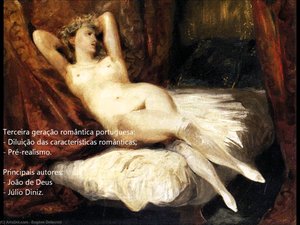
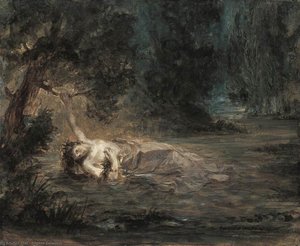
The year 1825 marks a sudden shift in his output. He produces The Execution of Doge Marino Faliero and The Odalisque, works that signal a departure from the rigid constraints of the previous era. These pieces prioritize emotional intensity and a departure from academic precision. Chaos and passion begin to define his canvas.
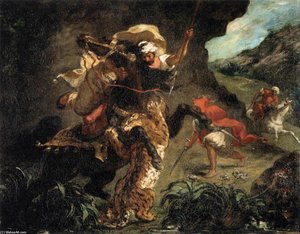
The scale of his ambition expands with The Death of Sardanapalus. Inspired by Lord Byron, the scene erupts in a spectacle of decadent destruction. It is a monumental work of turmoil. By 1830, the focus turns toward the political pulse of France. Liberty Leading the People captures the July Revolution, using an allegorical figure to embody the spirit of rebellion and national identity. The composition is dynamic, pulling the viewer into the center of the struggle.

His gaze eventually turns toward the North African landscape. In 1834, he completes The Women of Algiers. This work reflects the influence of his travels, capturing a sense of atmosphere through a specific use of light and color. His brushwork remains loose, favoring the expression of a mood over the meticulous detail of his predecessors.

Legacy and Lasting Influence

The shift in European painting finds its roots in his brushwork. By prioritizing the optical effects of color over the rigid precision of line, he dismantled the dominance of Neoclassicism. This departure created the necessary friction for the emergence of Impressionism and Post-Impressionism. His experiments with chromatic intensity and loose, expressive strokes provided a blueprint for those who would later seek to capture light and atmosphere through pure color.

His fascination with the exotic and the "other" triggered a ripple effect through the late 19th century. This passion for North African landscapes and traditions provided the essential spark for the Symbolist movement. The echoes of his vision reach far into the modern era, influencing a lineage of artists including Henri Matisse, Wassily Kandinsky, and Paul Klee. He remains a bridge between eras, often categorized as one of the last old Masters of painting.

Where to See the Works Today

The traces of Delacroix’s life remain anchored in Paris. At the Musée national Eugène Delacroix, the atmosphere shifts from the public eye to the private sphere. This museum occupies the artist's last apartment, preserving the very studio where he worked. Visitors walk through the space where his palettes and easels once sat, surrounded by his drawings and the personal artifacts collected during his time in North Africa.

Beyond this intimate setting, his presence dominates the halls of the Musée du Louvre. Here, the scale of his vision expands. The museum holds many of his major works, including the massive canvases that defined the Romantic movement. Across the Atlantic, the Metropolitan Museum of Art in New York maintains a significant presence of his output, ensuring his influence reaches far beyond the borders of France. In the United Kingdom, the Fitzwilliam Museum in Cambridge houses The Odalisque, a piece that highlights his fascination with the exotic.

The reach of his brush extends to other specialized collections as well. At the Musée Fabre in Montpellier, the Portrait of Alfred Bruyas remains on view, offering a glimpse into the social circles of his era. To see his work is to encounter the physical remnants of a life spent chasing light and color across continents.