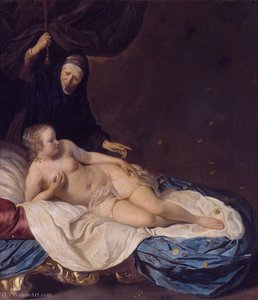
Portrait of Jacob van Loo

Jacob van Loo Paintings: The 51 Most Famous, Through a Gallery's Eye

Updated October 2026 · ranked by our popularity score (searches, visits and orders for each work) · 53 works by Jacob van Loo in our catalogue

In short

To the gallery's eye, Jacob van Loo's most famous painting is Allegory of Fortune (1655), whose original hangs in the Bavarian State Painting Collections, Munich. Bacchus and Ariadne (1650) and Portrait of Thomas Corneille (1660) complete the trio every eye recognises. Of the 53 works by Jacob van Loo in our catalog, the gallery presents the 51 most famous below, each original with its year, its museum and what makes it unique.

1614 – 1670, Sluis Baroque Most works: Rijksmuseum

The gallery's top 10 Jacob van Loo paintings

1
Allegory of Fortune (1655) by Jacob van Loo

Allegory of Fortune

In Allegory of Fortune, Jacob van Loo presents a dense gathering of figures within a dark, lush woodland. The scene is a complex arrangement of movement and light, where the shadows of the forest press against the illuminated bodies of the subjects. At the heart of this chaotic abundance, a central nude figure appears to float or dance, caught in a moment of weightless grace. This figure anchors a composition…

2
Bacchus and Ariadne (1650) by Jacob van Loo

Bacchus and Ariadne

1650 · Oil On Canvas · Yale University Art Gallery, New Haven

In Bacchus and Ariadne, Jacob van Loo captures a sudden collision of myth and flesh. Created about 1650, the oil painting freezes the precise moment of a mythological encounter. Bacchus lunges from the left, his movement driven by a sudden discovery. He reaches toward the reclining Ariadne, whose form rests upon the right. The scene is a flash of passion caught against a dark, turbulent sky.

3
Portrait of Thomas Corneille (1660) by Jacob van Loo

Portrait of Thomas Corneille

1660 · Oil On Canvas · Condé Museum, Chantilly

The gaze of an elderly man meets us in the Portrait of Thomas Corneille, a work that captures a quiet moment of contemplation. Created by the artist Jacob van Loo, this oil on canvas presents a single subject, an aged male whose presence fills the frame. His long, wispy hair and weathered features suggest a life of significant experience, frozen here in a moment of serene stillness. The portraiture genre…

4
Portrait of a Young Girl (1650) by Jacob van Loo

Portrait of a Young Girl

1650 · Oil On Panel · Minneapolis Institute of Art, Minneapolis

The Portrait of a Young Girl by Jacob van Loo brings a quiet presence into the room. Painted about 1650, this work captures a moment of stillness in the life of a child. The subject sits with a poised dignity, her gaze meeting the viewer from across the centuries. There is a sense of a life paused, a single breath held in the soft light of the Dutch Golden Age.

5
Amorous Couple (1650) by Jacob van Loo

Amorous Couple

1650 · Oil On Canvas · Mauritshuis, The Hague

The work before us is titled Amorous Couple, a painting by the Dutch artist Jacob van Loo. Created around 1650, this oil on canvas captures a quiet, private moment between two figures. It is a piece that reflects the artist's specific interest in the nuances of human interaction and the subtle play of light across different textures.

6
Susannah and the Elders (1658) by Jacob van Loo

Susannah and the Elders

1658 · Oil On Canvas · Kelvingrove Art Gallery and Museum, Glasgow

The scene unfolds in a moment of profound tension within the painting titled Susannah and the Elders. Created by the artist Jacob van Loo, this oil on canvas captures a heavy, dramatic instance of religious art. The work is signed and dated in the bottom right corner, where the hand of the painter leaves the mark "J; van Loo fecit 1658."

7
Portrait of a Lady (1647) by Jacob van Loo

Portrait of a Lady

1647 · Oil On Canvas · Mauritshuis, The Hague

The oil on canvas work titled Portrait of a Lady was executed by the artist Jacob van Loo in 1647. This half-length portrait depicts a woman seated in a high-backed chair. The subject is positioned against a dark, indistinct background that emphasizes her presence and the details of her attire. The composition focuses on the sitter from the waist up, establishing a direct connection through her orientation toward the viewer.

8
Family Portrait of Rutger van Weert and Maria Beels (1644) by Jacob van Loo

Family Portrait of Rutger van Weert and Maria Beels

1644 · Oil On Canvas

Jacob van Loo’s Family Portrait of Rutger van Weert and Maria Beels presents a formal and dignified arrangement of seven family members within an outdoor setting. The subjects are organized in a loose pyramidal structure, a composition that establishes a sense of stability and familial unity. This group portrait relies on a rhythmic pattern created by the sharp contrast between somber, dark tones—primarily blacks and deep browns in the clothing—and…

9
Diana and her nymphs, resting after the hunt (1648) by Jacob van Loo

Diana and her nymphs, resting after the hunt

1648 · Oil On Canvas · Gemäldegalerie, Berlin

Jacob van Loo painted "Diana and her nymphs, resting after the hunt" about 1648. The oil painting depicts a group of women situated within a mythological setting. These figures are identified as the goddess Diana and her nymphs. The scene captures a specific moment of repose following a hunt, moving away from the active pursuit of prey toward a state of rest.

10
Allegory of Wealth (1650) by Jacob van Loo

Allegory of Wealth

1650 · Oil On Canvas · Condé Museum, Chantilly

The scene unfolds within the Allegory of Wealth, an oil on canvas created by the Dutch painter Jacob van Loo. This work emerges from around 1650, capturing a moment of profound abundance. The figures exist in a space defined by their interactions, a hallmark of the artist's approach to narrative painting. Every gesture and glance contributes to the unfolding story of prosperity and its allure.

Jacob van Loo paintings, ranked 11 to 51

11Portrait of Sophia Huydecoper, née Coymans (1655) by Jacob van LooPortrait of Sophia Huydecoper, née Coymans1655 12Portrait of Joan Huydecoper (1655) by Jacob van LooPortrait of Joan Huydecoper1655 13Portrait of Jan Hinlopen and Leonora Huydecoper (1657) by Jacob van LooPortrait of Jan Hinlopen and Leonora Huydecoper1657 · Szépművészeti Múzeum 14Boy with a Top and Dog (1650) by Jacob van LooBoy with a Top and Dog1650 15A Glass and Coral Factory (1649) by Jacob van LooA Glass and Coral Factory1649 · Statens Museum For Kunst 16Allegory of feeding the poor (1657) by Jacob van LooAllegory of feeding the poor1657 · Amsterdam Museum 17Group portrait of the regents of the Aalmoezeniers, Arm- and Werkhuis in Haarlem, 1659 (1659) by Jacob van LooGroup portrait of the regents of the Aalmoezeniers, Arm- and Werkhuis in Haarlem, 16591659 · Frans Hals Museum 18Portrait of Lodewijk Huygens (1631-1699) (1649) by Jacob van LooPortrait of Lodewijk Huygens (1631-1699)1649 19Young Man Reading (1650) by Jacob van LooYoung Man Reading1650 20Musician with a wine-glass (1651) by Jacob van LooMusician with a wine-glass1651 · Wallraf-Richartz-Museum 21Portrait of a boy with a dog (1658) by Jacob van LooPortrait of a boy with a dog1658 · Musee Baron Martin 22Mother with two children (1657) by Jacob van LooMother with two children1657 · Gemäldegalerie 23Three Men in a Wine Cellar (1664) by Jacob van LooThree Men in a Wine Cellar1664 24Portrait of Michel Corneille (1661-1664) (1663) by Jacob van LooPortrait of Michel Corneille (1661-1664)1663 25Portrait of a woman (1662) by Jacob van LooPortrait of a woman1662 · Frederik Muller & Co 26Diana resting and bathing with her nymphs (1665) by Jacob van LooDiana resting and bathing with her nymphs1665 · Herzog Anton Ulrich Museum 27Amarillis crowning Blueberry. by Jacob van LooAmarillis crowning Blueberry. 28Indulgent Old Lady (1654) by Jacob van LooIndulgent Old Lady1654 · Hermitage Museum 29Venus and Cupid (1649) by Jacob van LooVenus and Cupid1649 · Statens Museum For Kunst 30Concert (1650) by Jacob van LooConcert1650 · Hermitage Museum 31Self Portrait, circa 1660, Jacob van Loo, 1655 - 1665 (1665) by Jacob van LooSelf Portrait, circa 1660, Jacob van Loo, 1655 - 16651665 · Rijksmuseum 32Young Woman Going to Bed by Jacob van LooYoung Woman Going to BedGrand Palais 33Danae (1660) by Jacob van LooDanae1660 · The Kremer Collection 34Amaryllis of the Annunciation (1649) by Jacob van LooAmaryllis of the Annunciation1649 · Gemäldegalerie 35Portrait of a Man, thought to be Christoffel van Gangelt, Second Husband of Lucretia Boudaen, Jacob van Loo (attributed to), 1640 - 1670 (1670) by Jacob van LooPortrait of a Man, thought to be Christoffel van Gangelt, Second Husband of Lucretia Boudaen, Jacob van Loo (attributed to), 1640 - 16701670 · National Museum in Warsaw 36Portrait of Scientist by Jacob van LooPortrait of ScientistThe Art Museum RIGA BOURSE 37interior - a nude woman - Rhodope by Jacob van Loointerior - a nude woman - Rhodope 38A Bacchanal by Jacob van LooA Bacchanal 39Ariadne. by Jacob van LooAriadne. 40Portrait of Lucretia Boudaen by Jacob van LooPortrait of Lucretia Boudaen 41Melancholy by Jacob van LooMelancholy 42Lovers. by Jacob van LooLovers.Rijksmuseum 43Portrait of a Woman, thought to be Lucretia Boudaen (1616-1663), Wife of Jean Ortt and Second Wife of Christoffel van Gangelt, Jacob van Loo (attributed to), 1640 - 1670 (1670) by Jacob van LooPortrait of a Woman, thought to be Lucretia Boudaen (1616-1663), Wife of Jean Ortt and Second Wife of Christoffel van Gangelt, Jacob van Loo (attributed to), 1640 - 16701670 · Rijksmuseum 44Diana and Her Nymphs (1654) by Jacob van LooDiana and Her Nymphs1654 · Statens Museum For Kunst 45Portrait of a Gentleman by Jacob van LooPortrait of a Gentleman 46Group portrait of the regentesses of Aalmoezeniers by Jacob van LooGroup portrait of the regentesses of AalmoezeniersFrans Hals Museum 47Danae by Jacob van LooDanae 48Portrait of Johan Ort by Jacob van LooPortrait of Johan Ort 49Study of a woman by Jacob van LooStudy of a woman 50Bacchic scene by Jacob van LooBacchic sceneRijksmuseum 51Portrait of the Meebeeck Cruywagen family near the gate of their country home on the Uitweg near Amsterdam. by Jacob van LooPortrait of the Meebeeck Cruywagen family near the gate of their country home on the Uitweg near Amsterdam.

The subjects that held Jacob van Loo's eye

The four subjects that come back most often in these originals, each with its finest example.

The museums that keep Jacob van Loo's originals

The 8 museums that hold the most of the paintings on this page.

Museum City Works by Jacob van Loo Paintings from this list
Rijksmuseum, AmsterdamRijksmuseum Amsterdam 4 Self Portrait, circa 1660, Jacob van Loo, 1655 - 1665, Lovers., Portrait of a Woman, thought to be Lucretia Boudaen (1616-1663), Wife of Jean Ortt and Second Wife of Christoffel van Gangelt, Jacob van Loo (attributed to), 1640 - 1670
Gemäldegalerie, BerlinGemäldegalerie Berlin 3 Diana and her nymphs, resting after the hunt, Mother with two children, Amaryllis of the Annunciation
Statens Museum For Kunst, CopenhagenStatens Museum For Kunst Copenhagen 3 A Glass and Coral Factory, Venus and Cupid, Diana and Her Nymphs
Condé Museum, ChantillyCondé Museum Chantilly 2 Portrait of Thomas Corneille, Allegory of Wealth
Mauritshuis, The HagueMauritshuis The Hague 2 Amorous Couple, Portrait of a Lady
Frans Hals Museum, HarenFrans Hals Museum Haren 2 Group portrait of the regents of the Aalmoezeniers, Arm- and Werkhuis in Haarlem, 1659, Group portrait of the regentesses of Aalmoezeniers
Hermitage Museum, Saint PetersburgHermitage Museum Saint Petersburg 2 Indulgent Old Lady, Concert
Bavarian State Painting Collections, MunichBavarian State Painting Collections Munich 1 Allegory of Fortune

Jacob van Loo, one signature painting per decade

Works per decade

Pick a decade to see the original that defines it.

Jacob van Loo's paintings: the gallery answers

Which Jacob van Loo painting is the most famous of all?Reveal the answer

Allegory of Fortune (1655), Bavarian State Painting Collections, Munich. Bacchus and Ariadne (1650) and Portrait of Thomas Corneille (1660) come next.

How old was Jacob van Loo on completing Allegory of Fortune?Reveal the answer

41 years old: Allegory of Fortune dates from 1655, and Jacob van Loo was born in 1614.

Which are Jacob van Loo's top 10 paintings?Reveal the answer

Allegory of Fortune, Bacchus and Ariadne, Portrait of Thomas Corneille, Portrait of a Young Girl, Amorous Couple, Susannah and the Elders, Portrait of a Lady, Family Portrait of Rutger van Weert and Maria Beels, Diana and her nymphs, resting after the hunt and Allegory of Wealth. The ranking above gives each one's year and museum.

How many works did Jacob van Loo create?Reveal the answer

Our catalog holds 53 works by Jacob van Loo, dated from 1644 to 1670.

Where do Jacob van Loo's most famous originals hang?Reveal the answer

Mostly in Rijksmuseum (Amsterdam), Gemäldegalerie (Berlin) and Statens Museum For Kunst (Copenhagen). The museum table above lists them all.

When did Jacob van Loo create the most famous paintings?Reveal the answer

In 1650s: 19 of the 51 works on this page were made then, Allegory of Fortune among them.

Which are Jacob van Loo's earliest and latest famous works?Reveal the answer

On this page, the earliest is Family Portrait of Rutger van Weert and Maria Beels (1644) and the latest Portrait of a Man, thought to be Christoffel van Gangelt, Second Husband of Lucretia Boudaen, Jacob van Loo (attributed to), 1640 - 1670 (1670).

Which subjects did Jacob van Loo return to most?Reveal the answer

Woman (15), Man (12) and Dark background (9), across the 51 works on this page.

Which medium did Jacob van Loo work in most?Reveal the answer

Oil On Canvas, for 21 of the 51 works on this page.

Which movement is Jacob van Loo associated with?Reveal the answer

Baroque, judging by the originals on this page.

Which Jacob van Loo originals does the Rijksmuseum hold?Reveal the answer

Self Portrait, circa 1660, Jacob van Loo, 1655 - 1665, Lovers. and Portrait of a Woman, thought to be Lucretia Boudaen (1616-1663), Wife of Jean Ortt and Second Wife of Christoffel van Gangelt, Jacob van Loo (attributed to), 1640 - 1670: the Rijksmuseum, Amsterdam holds 4 of the works on this page.

Jacob van Loo: the artist

Jacob van Loo: The Master of Conversational Groupings

Born in Sluis, a bustling port town in the Dutch Republic in 1614, Jacob van Loo’s life was one inextricably linked to the vibrant artistic currents of his time. His early years were shaped by his father, Jan van Loo, a painter who instilled in him a foundational understanding of technique and artistry. While details surrounding his formative years remain somewhat obscured due to wartime destruction of city archives, it's clear that Van Loo’s artistic journey began within the rich tapestry of the Dutch Golden Age – an era renowned for its innovative painting styles and prolific artists. His family history is significant; his father was a painter, and this lineage would ultimately establish a dynasty of painters, forever impacting European art.

Amsterdam quickly became Van Loo’s adopted home in 1635, immersing him within a dynamic artistic circle that included luminaries like Rembrandt, Frans Hals, and Bartholomeus van der Helst. This environment fostered intense competition and collaboration, pushing the boundaries of artistic expression. The city's bustling atmosphere undoubtedly fueled his creativity, providing a constant stream of inspiration and challenging him to refine his skills. He married Anna Lengele in 1642, a union that brought stability and contributed to the family’s growing influence within the art world. Their household flourished with six children, including talented painters Jean-Baptiste van Loo and Louis-Abraham van Loo – establishing a legacy that would extend far beyond his own lifetime.

A Revolutionary Approach to Composition

Van Loo distinguished himself through his masterful command of ‘conversational groupings,’ a technique that revolutionized the history painting genre. Unlike earlier depictions, which often presented mythological or biblical scenes as static and formal events, Van Loo populated his canvases with lively, engaging figures caught in moments of interaction – dialogues, gestures, and expressions that breathed life into the narrative. This approach wasn’t merely decorative; it imbued the paintings with a sense of immediacy and realism, drawing viewers directly into the scene.

His skill extended particularly to his depictions of nudes, a subject often considered daring for its time. While Rembrandt's female figures were celebrated for their psychological depth and emotional resonance, Van Loo’s nudes gained considerable popularity among audiences. Some contemporary critics even suggested that his female forms were more favored than those of his Amsterdam rival. This preference speaks to the public’s appreciation for his technical virtuosity and the idealized beauty he captured on canvas. Notably, during his lifetime, his female figures were considered superior and more popular than those of Rembrandt.

Influences and Artistic Development

Van Loo's artistic development was undoubtedly shaped by several key influences. Early connections with Thomas de Keyser and Jacob Adriaensz Backer provided him with a solid foundation in classical techniques and composition. These encounters exposed him to the principles of Renaissance art, which he skillfully integrated into his own style. The Baroque movement, originating in Rome, also exerted a significant impact, contributing to the dramatic lighting, rich colors, and dynamic poses characteristic of his work.

His time in Paris proved pivotal, marking a shift towards greater elegance and refinement. He was accepted into the Académie royale de peinture et de sculpture in 1663, solidifying his position within the French artistic establishment. This move signaled not only a professional advancement but also a deepening of his engagement with the evolving tastes and conventions of the Parisian art world.

Legacy and Dynasty

Jacob van Loo’s influence extended far beyond his own lifetime. His success established the ‘Van Loo family of painters,’ a dynasty that profoundly impacted European painting for centuries. His son, Jean-Baptiste van Loo, continued the family tradition, producing works of exceptional quality and establishing a distinct artistic style. His grandson, Charles-André van Loo, further expanded the family’s legacy, becoming one of the most celebrated French painters of the 18th century.

The Van Loo dynasty's influence can be seen in the works of subsequent generations, demonstrating a continuous evolution and adaptation of their father’s innovative techniques. Jacob van Loo’s pioneering approach to composition, his masterful handling of nudes, and his establishment of a lasting artistic lineage cemented his place as a pivotal figure in Dutch and French art history. His paintings continue to be studied and admired for their beauty, dynamism, and enduring appeal.

Notable Works

  • Diana and Her Nymphs (1648): A prime example of Van Loo’s conversational groupings, showcasing his ability to capture a lively scene with engaging figures. View Artwork
  • Self Portrait, circa 1660: A striking depiction of the artist himself, revealing his refined style and confident demeanor. View Artwork
  • Group Portrait of the Meebeeck Cruywagen Family at the Gate of their Country Home on the Uitweg near Amsterdam (attributed to): Demonstrates his ability to capture a social scene with detail and realism. View Artwork

Further information about Jacob van Loo can be found on the Artists Database and a detailed Wikipedia entry: Wikipedia.