Introduction: Defining Idealized Beauty Across Art History
The pursuit of beauty is arguably as old as consciousness itself, yet its definition has proven remarkably elusive. Throughout art history, the concept of “idealized beauty” – a representation not merely of what *is*, but of what *should be* – has served as both a guiding principle and a source of endless debate. It’s a notion deeply intertwined with philosophical ideals, societal values, and the technical prowess of artists striving to capture perfection on canvas or in stone. From the harmonious proportions of ancient Greek sculpture to the ethereal grace of Renaissance portraits, idealized beauty isn't simply about physical attractiveness; it’s about embodying virtue, nobility, and a sense of transcendent order. This exploration delves into the historical evolution of this captivating concept, tracing its roots, examining its manifestations across pivotal art movements, and considering its enduring legacy in contemporary artistic expression.
The Classical Roots: Ancient Greece and Rome's Influence on Aesthetic Ideals
The foundations of Western aesthetic ideals are firmly planted in the civilizations of ancient Greece and Rome. For the Greeks, beauty was inextricably linked to mathematical harmony and proportion – a belief embodied in sculptures like the Doryphoros (Spear-Bearer) by Polykleitos. This statue wasn’t merely a representation of a handsome athlete; it was an attempt to codify the perfect human form based on precise ratios and symmetrical balance. The Romans, inheriting Greek artistic traditions, further emphasized realism but also incorporated notions of power and authority into their depictions of beauty. Portraits of emperors often presented idealized features designed to project strength and divine legitimacy. This emphasis on order, symmetry, and proportion would become a cornerstone of Western art for centuries, resurfacing powerfully during the Renaissance as artists sought to revive the glories of antiquity.
Renaissance Perfection: Botticelli, Raphael, and the Pursuit of Harmony
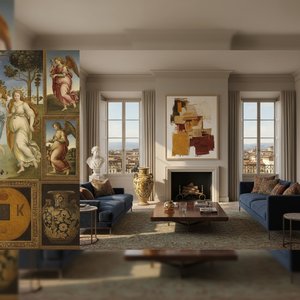
Luxury arts of the Renaissance included gold, precious stones, woven narratives, armor, music, and were used by elites to maintain social order.
The Italian Renaissance witnessed an extraordinary rebirth of interest in classical learning and artistic techniques. Humanism, with its focus on human potential and earthly beauty, fueled a fervent desire to recreate the aesthetic ideals of ancient Greece and Rome. Sandro Botticelli’s “Primavera” exemplifies this pursuit. While steeped in mythological symbolism – Venus, Flora, Zephyrus – the painting is equally remarkable for its graceful figures and delicate rendering of form. The elongated limbs, flowing draperies, and ethereal expressions create a sense of otherworldly beauty that transcends mere physical representation. Raphael, perhaps even more explicitly than Botticelli, embodied Renaissance ideals of harmony and grace in his depictions of the Virgin Mary and other religious subjects. His “The Virgin and Child with Saint John the Baptist” showcases a serene composition, balanced colors, and idealized figures radiating piety and tenderness. These artists weren’t simply copying classical models; they were refining them, imbuing them with a new sense of emotional depth and spiritual significance.
Mannerism & Beyond: Challenging and Reinterpreting Ideal Forms (Pontormo, Salvi)
As the High Renaissance gave way to Mannerism in the mid-16th century, artists began to question and challenge the established conventions of idealized beauty. Jacopo Pontormo, a key figure in this movement, introduced elongated figures, distorted perspectives, and heightened emotional intensity into his work. While still demonstrating technical mastery, his paintings often eschewed classical harmony in favor of a more unsettling and ambiguous aesthetic. “Pallas & Centaur,” for example, presents a dynamic composition with an unusual tension between Diana’s graceful form and the centaur's wildness. This departure from traditional ideals wasn’t necessarily a rejection of beauty altogether, but rather a reinterpretation – a move towards greater psychological complexity and expressive freedom. Giovanni Battista Salvi da Sassoferrato, working in the Baroque period, offered a different response to the Mannerist challenge. He consciously emulated Raphael's style, creating serene Madonnas and elegant portraits that harkened back to the classical ideals of harmony and grace, providing a counterpoint to the more dramatic and emotionally charged works of his contemporaries.
The 19th Century Revival: Brockhurst and the Neo-Classical Embrace of Beauty
The 19th century saw a renewed interest in classical art and architecture, giving rise to the Neoclassical movement. Artists like Gerald Leslie Brockhurst embraced idealized beauty as a means of expressing moral virtue and refined sensibility. His portraits, often depicting women with exquisite detail and delicate features, evoke a sense of timeless elegance and aristocratic grace. Brockhurst’s work demonstrates a meticulous attention to form and composition, reminiscent of Renaissance masters but infused with a distinctly Victorian aesthetic. He skillfully blended realism with Old Master influences, creating images that celebrated beauty as a symbol of social status and cultural refinement. His subjects are not simply beautiful; they embody an idealized vision of womanhood – poised, elegant, and intellectually accomplished.
Contemporary Perspectives: The Legacy of Idealized Beauty in Modern Art
While modern art often rejected traditional notions of beauty in favor of abstraction and subjective expression, the legacy of idealized beauty continues to resonate. Artists today grapple with questions of representation, identity, and societal standards of attractiveness, often challenging conventional norms and exploring alternative definitions of beauty. The very act of questioning these ideals acknowledges their enduring power. The influence can be seen in photography, digital art, and even performance art – a constant dialogue between the past and present. Ultimately, the pursuit of idealized beauty remains a fundamental aspect of human creativity, evolving with each generation but never truly disappearing. At OriginalUniqueArt
, we offer high-quality reproductions of masterpieces from across these eras, allowing you to experience the enduring allure of idealized beauty firsthand – whether it’s the harmonious grace of Botticelli or the refined elegance of Brockhurst. Explore our collection and discover the artwork that speaks to your own sense of aesthetic perfection.