Famous painters by country

Great Russian Painters

The masters our own painters keep coming back to. Russian painting moved in one century from icon workshops and the Imperial Academy to the realism of the Peredvizhniki and then to the avant-garde of Kandinsky and Natalia Goncharova. Here are 24 of them, each with three works that still teach painters today and the museum where they can be seen.

Wassily Kandinsky (1866–1944), Ivan Shishkin (1831–1898) and Vladimir Tatlin (1885–1953) head the 24 great Russian masters who inspire our artists, all born in Russia, each with three key works.

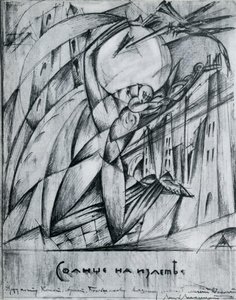
  1. Composition VIII by Wassily Kandinsky1Wassily Kandinsky
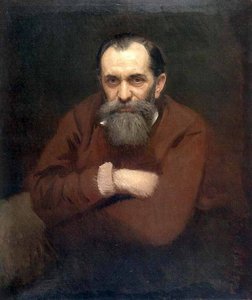
  2. Morning in a Pine Forest by Ivan Shishkin2Ivan Shishkin
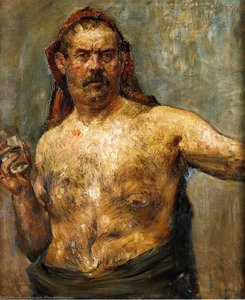
  3. Artist's model by Vladimir Tatlin3Vladimir Tatlin
  • 24Painters on this list
  • 1799–1891Years of birth
  • 711Artists born in Russia in our catalogue
  • 17,046Of their works in our catalogue

The list

The 24 great Russian painters

1of 24

Wassily Kandinsky

Born in Moscow ['Expressionism', 'Abstract painting', 'Der Blaue Reiter']

Wassily Kandinsky

By about 1896, he had moved to Munich to begin formal studies in art. He sought out the Anton Ažbe School and the Academy of Fine Arts to learn the mechanics of his chosen craft.

Where to see His canvases are scattered across several major institutions, inviting a close look at how his use of color and form evolved.

Signature works · The 100 signature works

2of 24

Ivan Shishkin

Born in Yelabuga Realism, Peredvizhniki

Ivan Shishkin

After his early schooling, Shishkin moved to the Saint Petersburg Imperial Academy of Arts, where he studied from 1857 to 1860. In 1861, he visited Munich, Germany, to observe the works of established artists.

Where to see To experience the quiet presence of Shishkin’s forests, one can visit several significant collections across Russia.

Signature works · The 100 signature works

3of 24

Vladimir Tatlin

Born in Moscow Constructivism

Vladimir Tatlin

Vladimir Yevgrafovich Tatlin, born in Kharkiv, Ukraine in 1885, was more than just an artist; he was a philosophical architect of a new world order, a pivotal figure who shattered the conventions of early 20th-century art and laid the foundations for Constructivism. The ripples of his ideas were felt in Germany’s Bauhaus school, where similar explorations of form, function, and materials took place, as well as in various other forms of modern design.

Signature works · The 100 signature works

4of 24

Natalia Goncharova

Born in Nagaevo-Karbonier Rayonism, Cubo-Futurism

Natalia Goncharova

In 1915, she began a fruitful collaboration with Sergei Diaghilev's Ballets Russes, designing costumes and sets that brought a new level of visual spectacle to the stage. Following the Russian Revolution, Goncharova settled in Paris in 1921, continuing to work as a designer and painter. This period witnessed Goncharova’s early engagement with the Russian art world, marked by participation in exhibitions and recognition—a silver medal for sculpture in 1903 signaled her rising talent.

Signature works · The 100 signature works

5of 24

Aleksandr Rodchenko

Born in Saint Petersburg

Aleksandr Rodchenko

Early Influences: Rodchenko was profoundly impacted by the avant-garde movements of Cubism and Futurism, which shaped his abstract and austere style. His artistic journey involved a constant questioning of traditional art forms and a search for new modes of expression suited to the modern age. He initially experimented with painting, exploring various styles before finding his unique voice.

Signature works · The 100 signature works

6of 24

Nicholas Roerich

Born in Saint Petersburg Symbolism, Modernism

Nicholas Roerich

His work often employs an illustrative quality, utilizing flat planes of color rather than traditional realistic modeling. This approach creates a graphic aesthetic where lines function primarily to define outlines. In 1935, he spearheaded the creation of the Roerich Pact, an international treaty designed to safeguard cultural objects.

Where to see In the United States, the Nicholas Roerich Museum in New York City remains a primary destination.

Pupil of Arkhip Kuindzhi #12

Signature works · The 100 signature works

8of 24

El Lissitzky

Born in Pochinok ['Suprematism', 'Constructivism', 'Proun']

El Lissitzky

He sought to bridge the gap between the physical world and the abstract, often exploring how technology and the human experience might intersect through visual form. This was most evident in his Proun works, which functioned as a complex fusion of graphic arts, architectural forms, photography, and painting. To ensure this history remained intact, the Lissitzky Foundation was established in 2014 by the artist's heirs, the Van Abbemuseum, and various scholars.

Where to see The physical traces of his vision are scattered across many continents, held within institutions that sought to preserve the radical energy of the early twentieth century.

Signature works · The 100 signature works

9of 24

Ivan Kramskoi

Born in Ostrogozhsk Realism

Ivan Kramskoi

His repertoire is characterized by a remarkable versatility that ranges from the deeply introspective to the symbolically grand: Self-Portraiture: In works such as Self-Portrait 1, Kramskoy utilizes a somber and introspective Realist style. Religious and Symbolic Mastery: His masterpiece, Christ in the Desert (1872), serves as a poignant exploration of solitude and faith. Under the guidance of mentors like Mikhail Borisovich Tulinov, who recognized his burgeoning genius, Kramskoy began to forge a path that would eventually lead him to become a cornerstone of the Peredvizhniki, or the Wanderers movement.

Signature works · The 100 signature works

10of 24

Vasily Vereshchagin

Born in Cherepovets Peredvizhniki

Vasily Vereshchagin

His travels through Turkestan and Samarkand allowed him to capture an era and a landscape that were rapidly changing under the weight of empire. He possessed a rare ability to balance the monumental with the intimate, rendering the architectural grandeur of sites like the Shah-i-Zinda Mausoleum or the Sher-Dor Madrassah with a vibrant, luminous palette. The historical significance of Vasily Vereshchagin lies in his refusal to look away.

Signature works · The 100 signature works

11of 24

Alexej von Jawlensky

Born in Torzhok Expressionism

Alexej von Jawlensky

He was a key member of the Neue Künstlervereinigung München, a group that pushed the boundaries of what art could be. He began to strip away the unnecessary, focusing on the essential shapes and colors that define his unique visual language. 1908: View of Murnau Village. 1909: The Yellow House. Alexej von Jawlensky left behind a body of work that helped define the direction of Expressionism.

Where to see Finding the traces of Jawlensky's life requires traveling through several European cities where his presence remains felt.

Signature works · The 100 signature works

12of 24

Arkhip Kuindzhi

Born in Mariupol uyezd Realism, Impressionism

Arkhip Kuindzhi

However, Kuindzhi soon transcended purely social commentary, embarking on a path of “pure poetry,” as some critics described it. His breakthrough came with " Ukrainian Night " (1876), followed by the breathtaking “Birch Grove” (1879) and the iconic “Moonlit Night on the Dnieper” (1880). Petersburg Academy of Arts, achieving professorship in 1892 and heading the landscape workshop by 1894.

Teacher of Nicholas Roerich #6

Signature works · The 100 signature works

14of 24

Karl Bryullov

Born in Saint Petersburg

Karl Bryullov

He felt a strong pull towards Italy from an early age, and his artistic development was significantly shaped by Italian Renaissance masters. After completing his studies, he moved to Rome in 1821, where he spent over a decade honing his skills. His work demonstrates influences from artists like Raphael, Michelangelo, and Caravaggio, particularly in their dramatic use of light and shadow and mastery of anatomical detail.

Signature works · The 100 signature works

15of 24

Vasily Perov

Born in Tobolsk Critical Realism

Vasily Perov

Perov’s artistic vision was deeply rooted in a commitment to portraying Russian society with unflinching honesty. His paintings are not merely representations of reality; they are powerful social commentaries that expose the hardships, injustices, and spiritual emptiness prevalent in 19th-century Russia. His works are now housed in prominent collections, including the Tropinin and Contemporary Moscow Artists Museum, ensuring that his vision continues to resonate with audiences worldwide.

Signature works · The 100 signature works

16of 24

Lovis Corinth

Born in Gvardeysk Impressionism & Expressionism

Lovis Corinth

Paintings like “In the Slaughterhouse” (1878), with its unflinching depiction of animal carcasses, demonstrate this commitment to realistic representation, yet even here, a nascent emotional intensity begins to surface. This synthesis would eventually position him as a bridge between Impressionism and Expressionism, two movements that defined the artistic landscape of the early 20th century. A pivotal moment in Corinth’s life – and arguably in his artistic development – was a stroke he suffered in December 1911.

Signature works · The 100 signature works

17of 24

Valentin Serov

Born in Saint Petersburg Impressionism, Art Nouveau

Valentin Serov

While he continued to receive commissions from Russia’s aristocracy – portraits of Grand Duke Pavel Alexandrovich, S.M. From 1900 onwards, Serov’s work began to reflect a growing engagement with modernism, though he never fully abandoned his commitment to realism. Serov’s early period is marked by an extraordinary sensitivity to light and atmosphere, evident in works like Girl with Peaches (1887) and Girl Covered by the Sun (1888).

Signature works · The 100 signature works

18of 24

Vasily Surikov

Born in Krasnoyarsk Realism

Vasily Surikov

His work bridged the gap between academic tradition and a new, visceral realism that sought to document the struggles and triumphs of the common people alongside the grand narratives of the Tsars.

Signature works · The 100 signature works

19of 24

Jean Béraud

Born in Saint Petersburg Impressionism

Jean Béraud

His portraits were never mere likenesses; they were studies in character, capturing the subtle nuances of the intellectuals, artists, and socialites who defined the French cultural landscape. As the 19th century gave way to the 20th, Béraud’s work remained a steadfast anchor for the aesthetic values of his time.

Signature works · The 100 signature works

20of 24

Boris Kustodiev

Born in Astrakhan Realism, Art Nouveau

Boris Kustodiev

In 1904, a grant from the Imperial Academy of Arts allowed him to step beyond the borders of Russia. His work also carried the light-filled qualities of Impressionism and the deeper, more suggestive moods of Symbolism. The influence of Boris Mikhailovich Kustodiev reached far beyond the canvas, as he moved through the shifting tides of the Modernist period.

Where to see In the city of Saint Petersburg, the Brodsky House Museum preserves his presence, offering a glimpse into the intimate atmosphere he once inhabited.

Signature works · The 100 signature works

21of 24

Alexander Ivanov

Born in Saint Petersburg Neoclassicism and early Russian Realism

Alexander Ivanov

In the grand tapestry of nineteenth-century art, few figures embody the intense, almost agonizing pursuit of perfection quite like Alexander Andreyevich Ivanov. Petersburg, Ivanov was destined for the brush; his father, Andrey Ivanov, was a respected professor at the Imperial Academy of Arts. The defining chapter of Ivanov’s career—and perhaps one of the most poignant stories in art history —is his twenty-year struggle with his magnum opus, The Appearance of Christ Before the People.

Signature works · The 100 signature works

22of 24

Nikolai Ge

Born in Voronezh Realism, Symbolism

Nikolai Ge

Alexander Andreyevich Ivanov's Impact: In Rome, he encountered Alexander Andreyevich Ivanov, whose work became a strong influence on Ge’s future style and thematic choices.

Signature works · The 100 signature works

23of 24

Mikhail Nesterov

Born in Ufa Symbolism, Religious art

Mikhail Nesterov

This purchase afforded him the opportunity to travel extensively throughout Europe—Austria, Germany, France, and Italy—broadening his horizons and exposing him to diverse artistic traditions. Mikhail Nesterov passed away in Moscow on October 18th, 1942, leaving behind a rich artistic legacy that continues to inspire awe and reflection.

Signature works · The 100 signature works

24of 24

Marianne von Werefkin

Born in Tula Expressionism, Symbolism

Marianne von Werefkin

The influence of artists like Paul Gauguin and Louis Anquetin, with their emphasis on flattened forms and bold color, became increasingly apparent in her work. In 1909, she co-founded the Neue Künstlervereinigung München (NKVM), a group that served as a crucial precursor to the more famous Blue Rider collective. She was not merely an associate of Kandinsky and Jawlensky; she was a driving force behind the movement’s intellectual and aesthetic innovations, a pioneering theorist who fostered artistic exchange through her influential salon in Munich.

Signature works · The 100 signature works

Figures

Where they were born, when, and where to see them

City of birth
Saint Petersburg6
Moscow2
Yelabuga1
Nagaevo-Karbonier1
Lopyal1
Pochinok1
Ostrogozhsk1
Cherepovets1
Century of birth
18th century1
19th century23
Museums holding their key works
Tretyakov Gallery12
The State Russian Museum3
Centre Pompidou1
Solomon R. Guggenheim Museum1
Kiev National Picture Gallery1
Museu Coleção Berardo1
Hermitage Museum1
Lenbachhaus1

Questions and answers

Great Russian painters: questions and answers

How this list is ranked Our ranking draws on Wikipedia, the manual rank our editors give each artist and artwork, and the visits each page receives every month.