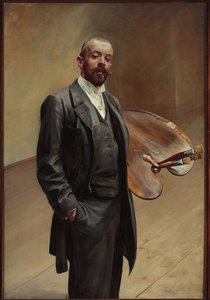
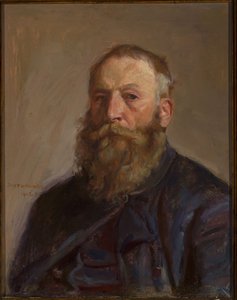
Famous painters by country

Great Polish Painters

The masters our own painters keep coming back to. Polish painting told the history of a country without a state: the vast historical canvases of Jan Matejko, the Young Poland movement around 1900, and modernists from Tamara de Lempicka to Zdzisław Beksiński. Here are 24 of them, each with three works that still teach painters today and the museum where they can be seen.

Jan Matejko (1838–1893), Tamara de Lempicka (1898–1980) and Zdzisław Beksiński (1929–2005) head the 24 great Polish masters who inspire our artists, all born in Poland, each with three key works.

  1. Stańczyk during a ball at the court of Queen Bona in the face of the loss of Smolensk by Jan Matejko1Jan Matejko
  2. Self-Portrait in the Green Bugatti by Tamara de Lempicka2Tamara de Lempicka
  3. Untitled by Zdzisław Beksiński3Zdzisław Beksiński
  • 24Painters on this list
  • 1726–1941Years of birth
  • 950Artists born in Poland in our catalogue
  • 9,041Of their works in our catalogue

The list

The 24 great Polish painters

1of 24

Jan Matejko

Born in Free City of Kraków Romanticism, History painting

Jan Matejko

In the city of Kraków, Poland, the child Jan Matejko entered a world shaped by the quiet rhythms of music and the heavy weight of history. Ann's High School, the rigors of formal schooling proved difficult, and he left the institution in 1851 after struggling with his grades. He was remembered as Poland's most famous painter, a man who earned the title of "national painter" by turning the heavy weight of history into something the people could see and feel.

Where to see To follow the traces of his brush is to travel through the great halls of Europe, where his visions of the past remain held in trust.

Teacher of Jacek Malczewski #7, Stanisław Wyspiański #15

Signature works · The 100 signature works

2of 24

Tamara de Lempicka

Born in Warsaw Art Deco, Cubism

Tamara de Lempicka

Her success was cemented during the 1925 Exposition Internationale des Arts Décoratifs et Industriels Modernes in Paris, an event that helped push the Art Deco aesthetic into the mainstream. She moved through the high-society circles of Paris and later the celebrity landscapes of the United States, always maintaining a sense of controlled, architectural grace. The outbreak of World War II necessitated a move to the United States in 1939, where her work, so deeply tied to the pre-war European aesthetic, faced a changing artistic landscape.

Signature works · The 100 signature works

3of 24

Zdzisław Beksiński

Born in Sanok Surrealism

Zdzisław Beksiński

Born in 1929 in Sanok, Poland, Beksiński emerged as one of the most profound architects of the subconscious, crafting a visual language that transcends mere horror to touch upon the existential dread of the human condition. He tapped into a collective psyche, reflecting the anxieties of a post-war Europe and the deeper, more primal fears of mortality and oblivion.

Signature works · The 100 signature works

4of 24

Sigmar Polke

Born in Oleśnica ['Capitalist Realism', 'Neo-Expressionism']

Sigmar Polke

His early life was marked by displacement; as a child, he fled with his family first to Thuringia and then, seeking refuge from Communist rule, to West Germany in 1953. He stands as one of the most important and influential artists of the postwar era, bridging Pop art, Conceptual art, and Neo-Expressionism.

Signature works · The 100 signature works

5of 24

Adolph von Menzel

Born in Wrocław Realism

Adolph von Menzel

While largely self-taught, Menzel was not immune to artistic influences. However, he forged a distinctly German path, rejecting the overt romanticism prevalent in some contemporary circles in favor of a more objective, analytical approach. He admired the Dutch Masters —their mastery of light and shadow, their ability to elevate everyday life to artful significance—and elements of this influence can be seen in his compositions and use of color.

Signature works · The 100 signature works

6of 24

Stanisław Ignacy Witkiewicz

Born in Warsaw Symbolism, Surrealism

Stanisław Ignacy Witkiewicz

Born in Warsaw in 1885 into an artistic family—his father, Stanisław Witkiewicz, was a noted painter, architect, and theorist—the younger Witkiewicz inherited not only a creative lineage but also a fertile intellectual environment that would profoundly shape his multifaceted career. Returning to Poland after the war, he settled in Zakopane, a mountain resort town already steeped in artistic innovation thanks to his father’s pioneering “Zakopane Style” architecture which blended local traditions with Art Nouveau influences.

Signature works · The 100 signature works

8of 24

Aleksandra Ekster

Born in Białystok Cubo-Futurism, Constructivism

Aleksandra Ekster

Aleksandra Ekster, a name synonymous with the dynamism of the early 20th-century avant-garde, was far more than simply a painter; she was a cultural architect, seamlessly connecting artistic currents between Russia and Europe. She continued to teach, establishing studios at the Académie de l'Art Moderne and later at the Académie d'Art Contemporain Fernand Léger, sharing her expertise with a new generation of artists.

Signature works · The 100 signature works

9of 24

Józef Chełmoński

Born in Boczki Realism, Positivism

Józef Chełmoński

Notable works from this period include Partridge on the Snow and The Storks Before Thunderstorm, both exemplifying his ability to convey mood and emotion through masterful brushwork and composition. His earlier work, such as Midnight Ride (1873), remains a powerful testament to his skill in depicting movement and intensity – a sleigh charging through the snow, radiating power and drama. The later years of Chełmoński’s life were marked by personal solitude following the end of his marriage in 1894.

Pupil of Wojciech Gerson #21

Signature works · The 100 signature works

10of 24

Józef Brandt

Born in Szczebrzeszyn

Józef Brandt

Scenes of Polish peasant life also found their way onto his canvases, offering glimpses into the everyday existence that underpinned the nation’s heroic narratives. While adhering to academic standards through studio work, he also undertook field studies in Poland and Ukraine, ensuring the authenticity of his landscapes and figures. These paintings, along with others like “Zaporozhian Camp” and " Call to Arms ", are not merely historical records; they are powerful statements about identity, courage, and resilience.

Signature works · The 100 signature works

12of 24

Otto Mueller

Born in Lubawka Expressionism

Otto Mueller

Mueller’s artistic process was as distinctive as his vision. His subject matter consistently revolved around several key themes: serene landscapes often reminiscent of starry nights, expressive nudes embodying both sensuality and melancholy, and, most notably, depictions of Romani people. Tragically, his work fell victim to the ideological purges of the Nazi regime in 1937, with over three hundred pieces confiscated from German museums and labeled as “degenerate art.” Despite this suppression, Mueller’s artistic legacy endured.

Signature works · The 100 signature works

13of 24

Olga Boznańska

Born in Kraków Impressionism

Olga Boznańska

Her technical repertoire was as diverse as her emotional range, encompassing several key elements of her artistic language: The Use of Tonalism: Rather than relying on high-contrast colors, she utilized a sophisticated range of mid-tones to create atmosphere and depth. Psychological Portraiture: Her subjects often possess an introspective gaze, inviting the viewer into their private emotional landscapes. Her studio in Paris and later her return to Kraków served as more than just workspaces; they were intellectual crucibles where the boundaries of modern portraiture were pushed and redefined.

Signature works · The 100 signature works

15of 24

Stanisław Wyspiański

Born in Kraków Polish Symbolism, Young Poland

Stanisław Wyspiański

Stanisław Wyspiański was not merely a painter; he was a polymath, a visionary whose creative spirit breathed life into the Young Poland movement. His work began to pulse with a new kind of energy, one that drew heavily from the vibrant folk motifs of the Polish countryside and the intricate, organic lines characteristic of the Secessionist style. Art Nouveau Innovation: His use of flowing, organic lines and expressive color palettes helped define the Polish iteration of the Art Nouveau movement.

Pupil of Jan Matejko #1

Signature works · The 100 signature works

16of 24

Cyprian Norwid

Born in Głuchy Late Romanticism / Early Modernism

Cyprian Norwid

Born in 1821 in the small Polish village of Laskowo-Głuchy, his early life was marked by the sudden shadows of orphanhood, an experience that perhaps forged the resilient, self-taught intellect he would carry throughout his wandering years. In Paris, the epicenter of much of his creative struggle, he lived a life of extreme duality: surrounded by the greatest minds of the age, such as Frédéric Chopin and Adam Mickiewicz, yet often relegated to the margins of society, working manual jobs to stave off the starvation that accompanied his progressive deafness and blindness.

Signature works · The 100 signature works

18of 24

Aleksander Gierymski

Born in Warsaw Realism, Impressionism

Aleksander Gierymski

Aleksander Gierymski, born in Warsaw in 1850, emerged as a pivotal figure in Polish painting during a period of significant social and artistic transformation. His formal training began with brief stints at the Kraków Academy of Fine Arts, followed by private lessons under the tutelage of Jan Matejko, a celebrated Polish historical painter. As the 1880s gave way to the 1890s, Gierymski’s artistic style began a subtle yet significant evolution.

Signature works · The 100 signature works

19of 24

Daniel Nikolaus Chodowiecki

Born in Gdańsk Zopfstil

Daniel Nikolaus Chodowiecki

His prints offer invaluable glimpses into the life of the middle class—the very backbone of the society depicted. By becoming the director of the Berlin Academy of Arts in 1797, he cemented his role as an institutional pillar.

Signature works · The 100 signature works

20of 24

Moïse Kisling

Born in Kraków Post-Impressionism, Expressionism

Moïse Kisling

However, the outbreak of World War I proved a turning point. The elegance of rounded forms became a hallmark of his work, frequently echoing the influence of Amedeo Modigliani – a close friend whose elongated necks, almond-shaped eyes, and delicately rendered lips resonated within Kisling’s own portraits. Large Nude Josan on Red Couch, painted in 1953, stands as a powerful example of his mature style – a sensual masterpiece showcasing vibrant colors and expressive brushwork.

Signature works · The 100 signature works

22of 24

Władysław Podkowiński

Born in Warsaw ['Impressionism', 'Symbolism']

Władysław Podkowiński

He worked as an illustrator for Tygodnik Ilustrowany magazine. Symbolist Turn: Towards the end of his life, Podkowiński's artistic style evolved toward Symbolism, reflecting a more introspective and emotionally charged approach. Early Career: Following his graduation, Podkowiński contributed illustrations to leading Warsaw art journals.

Signature works · The 100 signature works

24of 24

Albert Chmielowski

Born in Igołomia ['Realism', 'Symbolism']

Albert Chmielowski

As an artist, Chmielowski emerged as a significant representative of the Realism movement during the 1870s, with his work later anticipating the subtle, emotive tendencies of Symbolism. Some of his most notable paintings include: Ecce Homo, a celebrated and unfinished masterpiece depicting the mocked Christ, which remains a testament to his spiritual depth.

Signature works · The 100 signature works

Figures

Where they were born, when, and where to see them

City of birth
Warsaw6
Kraków3
Free City of Kraków1
Sanok1
Oleśnica1
Wrocław1
Radom1
Białystok1
Century of birth
18th century1
19th century21
20th century2
Museums holding their key works
National Museum in Warsaw12
National Museum in Kraków8
Warsaw National Museum2
Royal Castle1
Kunsthaus Zürich1
Hamburger Kunsthalle1
Nationalgalerie1
Museum of Art in Łódź1

Questions and answers

Great Polish painters: questions and answers

How this list is ranked Our ranking draws on Wikipedia, the manual rank our editors give each artist and artwork, and the visits each page receives every month.