Famous painters by country

Great Czech Painters

The masters our own painters keep coming back to. Czech painters shaped two modern styles: the Art Nouveau of Alphonse Mucha, and the early abstraction of František Kupka in Paris. Here are 24 of them, each with three works that still teach painters today and the museum where they can be seen.

Alphonse Mucha (1860–1939), Anton Raphael Mengs (1728–1779) and František Kupka (1871–1957) head the 24 great Czech masters who inspire our artists, all born in the Czech Republic, each with three key works.

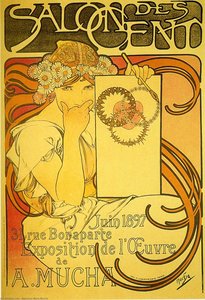
  1. Salon des Cent, 1897 by Alphonse Mucha1Alphonse Mucha
  2. Charles IV as Prince by Anton Raphael Mengs2Anton Raphael Mengs
  3. Disks of Newton 1 by František Kupka3František Kupka
  • 24Painters on this list
  • 1002–1902Years of birth
  • 593Artists born in the Czech Republic in our catalogue
  • 2,854Of their works in our catalogue

The list

The 24 great Czech painters

1of 24

Alphonse Mucha

Born in Ivančice Art Nouveau

Alphonse Mucha

Notable Works: The Slavonic Uprising - Showcases blending traditional Czech motifs with modern Art Nouveau elements. Paintings inspired by works like The Daughters of Tespio by Gustave Moreau, and La Ribambelle des Gobelins by Piero Dorazio. Influenced by Czech artistic traditions and modern European art movements.

Signature works · The 100 signature works

2of 24

Anton Raphael Mengs

Born in Ústí nad Labem Neoclassical painting

Anton Raphael Mengs

While rooted in the Baroque tradition – evident in his dramatic use of light and shadow and his mastery of illusionistic techniques – Mengs courageously embraced the emerging principles of Neoclassicism, paving the way for artists like Jacques-Louis David and Antonio Canova.

Signature works · The 100 signature works

3of 24

František Kupka

Born in Opočno ['Realism', 'Symbolism', 'Orphism', 'Cubism', 'Abstraction']

František Kupka

The move to Paris in 1894 changed the direction of his work. The paintings from this era show a departure from the representational style he had practiced in Prague and Vienna. His creative output is often viewed alongside the works of Piet Mondrian and Wassily Kandinsky, marking a shift toward a visual language that prioritized the interaction of color and shape over the depiction of the physical world.

Where to see To see his canvases in person, one might travel to New York City.

Signature works · The 100 signature works

4of 24

Josef Capek

Born in Hronov Cubism

Josef Capek

While history often remembers his brother, Karel Čapek, for introducing the concept of the robot to the world, it was Josef who provided the aesthetic soul to much of this era's avant-garde movement. His early training at the School of Applied Arts instilled in him a rigorous understanding of form, yet his spirit could not be contained by traditional boundaries. Josef Čapek passed away in April 1945 in Bergen-Belsen, leaving behind a legacy that continues to inspire awe.

Signature works · The 100 signature works

5of 24

Adalbert Stifter

Born in Horní Planá Biedermeier, Landscape

Adalbert Stifter

His writing style is notable for its meticulous detail and understated elegance, reflecting his Biedermeier sensibilities—a movement emphasizing simplicity, realism, and a focus on everyday life. Despite suffering from declining health in his later years – culminating in a tragic suicide in 1868 – Adalbert Stifter’s legacy endures.

Signature works · The 100 signature works

6of 24

Joseph Maria Olbrich

Born in Tropea Vienna Secession, Art Nouveau

Joseph Maria Olbrich

This iconic structure wasn't merely a building; it was a manifesto, a physical embodiment of the ideals championed by the Vienna Secession – a group of artists who rebelled against the conservative artistic establishment. Otto Wagner instilled in him a commitment to functionalism and a rejection of excessive ornamentation, while his collaboration with Gustav Klimt and other members of the Vienna Secession fostered a shared aesthetic language characterized by geometric forms, decorative elements, and a sense of playful experimentation.

Signature works · The 100 signature works

7of 24

Gabriel von Max

Born in Prague Secessionist, Mystical Allegories

Gabriel von Max

Gabriel Cornelius Ritter von Max (1840-1915) was a profoundly singular figure in 19th-century Austrian art, an artist whose work defies easy categorization. Born in Prague to a sculptor father and a musician mother, his early life fostered a deep appreciation for both artistic expression and intellectual curiosity. Beyond his own artistic explorations, Max was deeply influenced by the Blue Rider movement, though he maintained a distinct identity within this broader circle of artists.

Signature works · The 100 signature works

9of 24

Josef Mánes

Born in Prague Realism

Josef Mánes

He was a painter who found meaning in the details of the natural world and the people who inhabited it. Rather than focusing on mere scenery, his Romantic landscapes aim to capture the soul of the Czech countryside. The respect for his contribution to art led to the creation of the Mánes Union of Fine Arts in 1887, an organization established in his honor.

Signature works · The 100 signature works

10of 24

Bohumil Kubišta

Born in Praskačka Cubism, Expressionism, Fauvism

Bohumil Kubišta

Initially moved by the emotional intensity of Post-Impressionism, particularly the works of Vincent van Gogh and Paul Cézanne, he soon found himself drawn toward the psychological depths of Expressionism. This shift was catalyzed by the transformative 1905 exhibition of Edvard Munch in Prague, which ignited a fascination with the symbolic power of color and the depiction of internal human struggle. As a founding member of the influential group Osma (The Eight), alongside artists like Emil Filla and Antonín Procházka, he helped establish an artistic platform that stood in bold opposition to academic traditions.

Signature works · The 100 signature works

12of 24

Alfred Kubin

Born in Litoměřice Symbolism & Expressionism

Alfred Kubin

Psychological Torment: Works such as Self-Reflection (c. 1902) utilize headless figures and fragmented bodies to mirror the disintegration of the self. Beyond his graphic mastery, Kubin was also a gifted writer, most notably composing the single novel The Other Side (Die andere Seite). Throughout his career, Kubin achieved international recognition, illustrating the works of legendary authors such as Fyodor Dostoevsky and Edgar Allan Poe.

Signature works · The 100 signature works

13of 24

Václav Brožík

Born in Brožíkova

Václav Brožík

Brozik’s oeuvre is dominated by scenes of pastoral life. His paintings are not idealized romanticizations, however; they possess an earthy realism that grounds them in tangible experience. Artists like Jean-François Millet, known for their sympathetic portrayals of peasant life, could have served as inspiration.

Signature works · The 100 signature works

14of 24

Jakub Schikaneder

Born in Prague Romanticism, Realism, Symbolism

Jakub Schikaneder

Schikaneder’s contribution to the Czech national identity was notably realized through his participation in the decoration of the National Theatre in Prague in 1881. Working alongside Emanuel Krescenc Liška, he contributed to a project that represented a vital national revival of Czech culture.

Signature works · The 100 signature works

16of 24

Mikoláš Aleš

Born in Mirotice Bohemian Art

Mikoláš Aleš

Though his fame was largely contained within the borders of Bohemia during his lifetime, his ability to weave folklore, history, and meticulous observation into a singular aesthetic has secured his place as one of the most beloved figures in Czech art history. Mikoláš Aleš, born in 1852 in the quiet town of Mirovice, was far more than a mere painter; he was a chronicler of Bohemian identity.

Signature works · The 100 signature works

17of 24

Georg Flegel

Born in Olomouc Mannerism and early Baroque

Georg Flegel

The historical significance of Georg Flegel lies in his role as a pioneer who helped carve out a space for the still life as a respected, independent genre. Symbolic Depth: Integrating complex Renaissance humanist thought into the arrangement of everyday objects.

Signature works · The 100 signature works

18of 24

Otto Pilny

Born in Zurich Orientalism

Otto Pilny

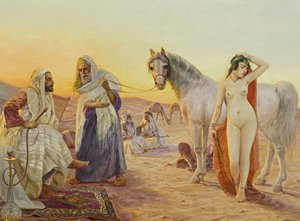
Between 1889 and 1892, Pilny returned to Egypt, finding himself deeply embedded in the vibrant, bustling atmospheres of Alexandria and Cairo. It was during this era that his talent garnered significant recognition; his ability to render the nuances of Eastern life so authentically earned him the prestigious appointment as a Court Painter under the Ottoman authorities. Even as he settled in Zürich in 1895 and eventually embraced Swiss citizenship, the echoes of his North African travels remained the primary pulse of his creativity.

Signature works · The 100 signature works

19of 24

Emil Orlík

Born in Prague Secession

Emil Orlík

His artistic journey was deeply rooted in the vibrant intellectual atmosphere of Central Europe, moving between the creative hubs of Prague, Austria, and Berlin. His formative years were marked by rigorous training, notably at the Academy of Fine Arts in Munich during the 1890s. In Berlin, his collaborative spirit led him to work with Max Reinhardt at the Deutsches Theater, where he contributed to the visual language of the stage.

Signature works · The 100 signature works

20of 24

Emil Filla

Born in Chropyně Cubism

Emil Filla

His life, which concluded on October 7, 1953, spanned the most turbulent decades of European history, yet his commitment to artistic progress remained unshakable. Leadership in the Avant-Garde: His pivotal role in founding groups like Skupina výtvarných umělců (Group of Visual Artists) and promoting modern discourse through publishing. He leaves behind a body of work that serves as a roadmap for the development of Czech modernism, characterized by: The Integration of International Movements: His ability to synthesize French Cubism and Surrealism with a distinct Central European sensibility.

Signature works · The 100 signature works

21of 24

Max Kurzweil

Born in Bzenec Vienna Secession

Max Kurzweil

Born amidst the evocative landscapes of Bisenz, Bohemia, Maximilian Franz Viktor Zdenko Marie Kurzweil carried the romantic sensibilities of his youth into the heart of the Austro-Hungarian Empire. Yet, it was his immersion in the light-drenched ateliers of Paris, particularly the Académie Julian, that truly ignited his creative spirit. While he achieved significant professional milestones—including being awarded the prestigious Villa Romana prize in 1905 and serving as a respected professor at the Frauenkunstschule —his personal existence was often shadowed by an innate sense of melancholy.

Signature works · The 100 signature works

22of 24

Toyen

Born in Smíchov Surrealism

Toyen

Born into the vibrant, artistic heartbeat of Prague in 1902, Marie Čermívaná was destined to transcend the boundaries of conventional portraiture. As the daughter of a sculptor, her early years were saturated with an appreciation for form and the physical essence of art, providing a sturdy foundation for her later explorations of the intangible.

Signature works · The 100 signature works

Figures

Where they were born, when, and where to see them

City of birth
Prague5
Olomouc2
Ivančice1
Ústí nad Labem1
Opočno1
Hronov1
Horní Planá1
Tropea1
Century of birth
11th century1
16th century1
17th century1
18th century3
19th century17
20th century1
Museums holding their key works
National Gallery Prague9
Bavarian State Painting Collections3
Prague City Gallery1
Museo del Prado1
Hermitage Museum1
Museum Kampa1
Austrian Gallery Belvedere1
Italia Liberty1

Questions and answers

Great Czech painters: questions and answers

How this list is ranked Our ranking draws on Wikipedia, the manual rank our editors give each artist and artwork, and the visits each page receives every month.