Preview

 Send
 Share
 Details
 Guide


 Download
 Similars
 X-Ray
 Diaporama
 Q&A
 Stats
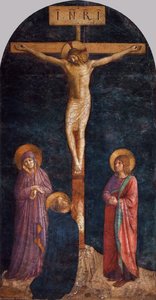
St Lawrence Distributing Alms (detail)


 Read More
Giclée / Art Print
Museum-quality giclée or canvas print with fast production and flexible finish options. ( Buy Hand Made Painting Switch to Digital Image)




P118B $10

P118H $10

P118W $10

P438Z $10

P508JH $12

P508YH $12

P805H $10

P805Z $10

P919BZ $10

P919G $10

P919XJ $10

P959ZH $10

P968JZ $12

W106C $8

W218G $10

W218JH $8

W218Y $10

W307PJ $10

W316G $10

W316PJ $8

W316Y $10

W398PJ $8

W4111J $10

W500HY $15

W500JH $15

W692G $12

W849H $8

W940BG $15

W953PJ $8




Pick from our preset sizes that match the artwork's original proportions.

Type the width and the height you need, to fit your frame or your wall. A print can only be cut, never made bigger than the picture, so a size with a different shape loses a part of the image. We send you a digital mockup to approve before we print anything. The picture shown on this page does not show the real cut — only the mockup does.
Worldwide Delivery () in 2 weeks instead of standard 4/5 weeks. (17 November)

Free Worldwide Express Shipping

High-Quality Linen Canvas

Full Shipping Insurance

Customs Tax Refund Guarantee

True Color Matching Guarantee

100-Day Return Policy (Defects Only)

100% Money-Back Guarantee

Bulk Discount Offer
 Glass option is only available in size under 110 CM

St Lawrence Distributing Alms (detail)
Giclée / Art Print
Reproduction Size
-


Total Price
$ 81
A Beacon of Charity: Examining Fra Angelico’s ‘St Lawrence Distributing Alms’
Fra Angelico’s fresco, “St Lawrence Distributing Alms,” transcends mere depiction; it embodies the very essence of Renaissance piety and offers a profound meditation on compassion. Painted in 1447 during his prolific period in Rome – a city grappling with papal ambition and artistic innovation – this artwork stands as a testament to Angelico’s unwavering commitment to humanist ideals blended seamlessly with Christian faith.
- Subject Matter: The scene portrays St. Lawrence, revered for his selfless sacrifice during Roman persecution, distributing alms to the impoverished citizens of Rome. This narrative choice immediately establishes a moral core – generosity and concern for the vulnerable are presented as virtues worthy of emulation.
- Style & Technique: Angelico’s masterful application of tempera on plaster exemplifies the High Renaissance style's meticulous attention to detail and luminous realism. The fresco utilizes sfumato—a subtle blending of tones—creating an ethereal glow that imbues the figures with a palpable sense of serenity and spiritual grace. Notice how light dances across Lawrence’s robe, highlighting its texture and conveying warmth despite the solemn occasion.
The composition itself is carefully balanced, guiding the viewer's gaze from St. Lawrence to the child bearing the bag of coins – a symbol of tangible charity—and extending outwards towards the supplicating faces of the poor. Two birds perched on branches flanking the central figure further enrich the visual vocabulary, representing divine providence and offering a visual counterpoint to earthly suffering.
Historical Context:Painted during Lorenzo Valla’s papal reign, “St Lawrence Distributing Alms” reflects the humanist revival that was reshaping European thought. The rediscovery of classical texts fueled an interest in moral philosophy and civic virtue—themes powerfully conveyed through Angelico's depiction of saintly compassion.
- Symbolism: Beyond its immediate narrative, the fresco speaks to broader spiritual concepts. St. Lawrence’s martyrdom symbolizes purification through suffering – a cornerstone of Christian theology. The act of distributing alms embodies Christ’s love for humanity and underscores the importance of alleviating poverty and injustice.
Emotionally, “St Lawrence Distributing Alms” resonates with viewers on multiple levels. Its tranquil atmosphere invites contemplation—a reminder that true beauty lies not only in visual splendor but also in moral integrity. The luminous colors and delicate brushstrokes evoke a feeling of reverence and inspire us to strive for compassion and generosity in our own lives. It’s a piece destined to captivate anyone who appreciates the sublime power of art to communicate profound spiritual truths.
Questions & Answers
Can I see an X-ray view of "St Lawrence Distributing Alms (detail)" by Fra Angelico?
"St Lawrence Distributing Alms (detail)" can be examined layer by layer on the artwork's X-Ray page, a viewer inspired by a conservator's light bench with eleven optical readings of the image.
Is "St Lawrence Distributing Alms (detail)" by Fra Angelico a light or a dark artwork?
The recorded values for "St Lawrence Distributing Alms (detail)" by Fra Angelico are: brilliant brightness, gentle luminance luminance.
Which color stands out most in "St Lawrence Distributing Alms (detail)"?
The color that stands out most in "St Lawrence Distributing Alms (detail)" is putty (#dccbc2). The dominant color is useful when matching an artwork to an interior.
Artist Biography
Early Life and Spiritual Formation
Born Guido di Pietro in the Mugello, the man who would become known as Fra Angelico began his life in the Tuscan hills near Florence. Around 1395, he was known as Giovanni da Fiesole. His early years were shaped by the quiet landscape of this region. Eventually, the young Giovanni entered the Dominican Order at Fiesole. This choice moved him from the life of a layman into the disciplined, contemplative environment of the monastery. It was within these walls that he took his vows and received the name Fra Angelico, a title that marked his commitment to the order.
Before he ever approached a large wall to paint a fresco, he spent his time working with much smaller, more delicate tasks. He trained as a manuscript illuminator. This work required a steady hand and a focus on minute details. He learned to apply pigment to parchment, working closely with the text to bring the holy stories to life through small, precise illustrations. This early habit of meticulousness stayed with him as his work grew in scale.
The Blossoming of a Unique Style
His early works carry the traces of Lorenzo Monaco, showing the elegant linearity and decorative patterns common to the era. These early habits of the brush reveal a hand accustomed to the meticulous precision of manuscript illumination. As he moved into painting larger surfaces, he began to blend these decorative traditions with a growing naturalism. He did not use the new rules of perspective merely to show depth or to mimic the physical world. Instead, he used these spatial tools to create a sense of immersion, drawing the viewer into a quiet, spiritual space. The geometry of a room or the receding lines of a landscape became a way to make the sacred feel present and reachable.
Every choice on the panel was tied to his life as a Dominican friar. His art was not a separate pursuit from his religious duties; it was an extension of his faith. The way he placed a figure or chose a color was guided by a need to make the divine visible through prayerful work. This connection between his monastic life and his brushwork meant that his paintings functioned as visual meditations. He sought a clarity that reflected the stillness of the monastery, focusing on the quiet dignity of his subjects rather than dramatic tension.
- The Annunciation (c. 1440–1445)
- The Deposition from the Cross (c. 1437)
- The Coronation of the Virgin (c. 1432)
Technique and Artistic Mastery
His hands learned the precision of manuscript illumination long before they met the large scale of a wall. This early training left a lasting mark on his way of seeing, instilling a deep respect for the smallest details. He understood how to use pigment to guide a viewer through a story, making complex narratives legible through careful composition. His palette relies on clear, bright colors—deep blues, steady golds, and sharp reds—that seem to hold a light of their own. He did not use these colors merely for decoration, but to create a sense of celestial clarity within the space of the painting.
He was a pioneer in the use of linear perspective, moving away from the flat, static arrangements of the past. By applying a more rational treatment of pictorial space, he introduced a sense of depth and volume that made his figures feel present. He used tempera and fresco to achieve this, often working with a light that emphasizes the form of the human body and the architecture surrounding it. In his works, the physical world and the spiritual realm meet through the careful management of light and shadow.
- The Annunciation (c. 1440–1445)
- St. Francis Receiving the Stigmata (1440)
- Coronation of the Virgin (c. 1434–1435)
Patrons and Major Commissions
Much of his work emerged from the needs of the Dominican Order. He spent significant time decorating the convent of San Marco in Florence, where he painted frescoes for the cloister, the chapter house, and the entrances to the cells. These commissions were supported by the patronage of Cosimo de' Medici, who helped fund the rebuilding of the convent. The work was intended to act as a visual sermon for the monks living within the walls.
His reach extended beyond the monastery walls and into the halls of religious power. In Rome, he received commissions under the authority of Popes Eugene IV and Nicholas V. These projects brought his hand to the service of the papacy, expanding his presence outside of the Tuscan hills. He also worked on the Strozzi Altarpiece for the church of Santa Trinita, a task that required him to complete a large-scale commission originally started by another artist.
- The Strozzi Altarpiece, Santa Trinita
- Frescoes for the Convent of San Marco, Florence
Legacy and Lasting Influence
The impact of his work reached far beyond the walls of the Dominican convent. His approach to painting left a mark on the generations of artists who followed him during the Early Renaissance. Even the early biographers of the era recognized the unique quality of his creations, noting that his skill was something that words could not fully capture. He moved through the world of the fifteenth century not as a mere professional, but as a man whose brush was an extension of his prayer.
His life was marked by a devotion that eventually moved from the canvas to the official recognition of the Church. In 1982, Pope John Paul II beatified him, acknowledging the holiness of his life. This recognition continued in 1984, when the same Pope declared him the patron of artists. His presence remains felt in the quiet spaces of the monasteries where he once lived and worked, leaving behind a visual language of faith that continues to be studied and admired.
Where to Experience His Art Today
To see his work in the place it was meant to be, one must visit the Museo Nazionale di San Marco in Florence. The monastery holds a large collection of his paintings and frescoes, many of which were created for the very walls where he lived and prayed. Walking through the space, you encounter the quiet, steady presence of his hand in the cloisters and the cells. It is a place where the art and the architecture remain tied together.
Other significant pieces have traveled far from the Tuscan hills. In Paris, the Louvre Museum houses several of his important paintings. The National Gallery in London also holds a selection of his works, allowing for a close look at his use of color and light. In Madrid, the Museo del Prado contains his Annunciation, a work that shows his ability to organize a sacred scene within a structured space. For those traveling further north, the Hermitage Museum in Saint Petersburg holds the Madonna of Humility, which dates to about 1418.
- Annunciation, Museo del Prado, Madrid
- Madonna of Humility, Hermitage Museum, Saint Petersburg
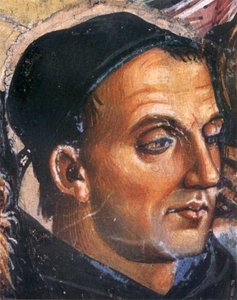
Fra Angelico
1395 - 1455 , Italy
Quick Facts
- Artistic Movement Or Style: Early Renaissance
- Artists Or Movements Influenced By This Artist: ['Early Renaissance']
- Artists Who Influenced This Artist:
- Lorenzo Monaco
- Masaccio
- Full Name: Giovanni da Fiesole
- Nationality: Italian
- Notable Artworks:
- Madonna of Humility
- Crucifixion
- San Domenico Altarpiece
- Madonna and Child of the Grapes
- The Annunciation
- Christ Glorified in the Court of Heaven
- Coronation of the Virgin
- St Francis Receiving the Stigmata
- Place Of Birth: Rupesana, Italy
- Date Of Birth: 1395
- Date Of Death: 1455
Related Articles

Divine Beauty: The 25 Most Iconic Masterpieces by Fra Angelico
Immerse yourself in the ethereal beauty of Fra Angelico. Explore 25 iconic Renaissance masterpieces, from sacred frescoes to divine panel paintings. Find inspiration for museum-quality art reproductions and timeless decor. Discover all masterpieces on OriginalUniqueArt.com.

Divine Beauty: The Top 25 Masterpieces by Fra Angelico
Immerse yourself in the divine beauty of Fra Angelico. Explore 25 iconic Renaissance masterpieces, from ethereal frescoes to sacred panel paintings. Find inspiration for museum-quality art reproductions and timeless decor. Discover all masterpieces on OriginalUniqueArt.com.

Divine Beauty: The 25 Most Iconic Masterpieces by Fra Angelico
Journey through the divine beauty of Fra Angelico's finest works. Explore 25 iconic Renaissance masterpieces, from ethereal frescoes to sacred panel paintings. Find inspiration for museum-quality art reproductions and decor. Discover all masterpieces on OriginalUniqueArt.com.

Divine Masterpieces: The Top 25 Artworks by Fra Angelico
Explore 25 iconic Fra Angelico masterpieces of the Early Renaissance. Discover the divine beauty of these gems on OriginalUniqueArt.com.

Divine Beauty: The Top 25 Masterpieces by Fra Angelico
Immerse yourself in the divine beauty of the Italian Renaissance. Explore 25 iconic Fra Angelico masterpieces, from ethereal frescoes to sacred panel paintings. Find inspiration and museum-quality art reproductions for your decor. Discover all masterpieces on OriginalUniqueArt.com.