Early Renaissance · 1430
The Annunciation (Fra Angelico, 1430)
Fra Angelico (1395–1455) made The Annunciation. It dates from 1430. It belongs to the Early Renaissance movement. It is made in acrylic on canvas. It is kept at Museo del Prado in Madrid, Spain. It measures 154 × 194 cm.
- 1430
- Acrylic On Canvas
- 154 × 194 cm
- Museo del Prado, Madrid

 Preview

 Hand Made Oil Painting
 Send
 Share
 Fact sheet


 Download
 Similars
 X-Ray
 Diaporama
 Q&A

 Stats
The Annunciation, in brief
- Title
- The Annunciation
- Artist
- Fra Angelico (1395–1455)
- Artist born in
- Vicchio, Italy
- Date
- 1430
- Medium
- Acrylic On Canvas
- Dimensions
- 154 × 194 cm
- Where to see it
- Museo del Prado, Madrid, Spain
- Movement
- Early Renaissance
- Period
- Renaissance
- Subject
- annunciation, religious art, angel gabriel, mary, renaissance, tempera painting
What does The Annunciation depict?
A Divine Encounter: Fra Angelico’s *The Annunciation*
Fra Angelico's *The Annunciation*, painted in 1430, is a masterpiece of the Early Renaissance—a work that seamlessly blends profound religious devotion with burgeoning artistic innovation. Measuring 154 x 194 cm and currently housed at the prestigious Museo del Prado in Madrid, this tempera painting offers a captivating glimpse into a pivotal moment in Christian theology: the Archangel Gabriel’s announcement to Mary that she would conceive and bear the Son of God.Composition & Spatial Harmony
The composition is masterfully structured around an arched colonnade, creating a sense of depth and drawing the viewer's eye into the sacred space. Gabriel stands gracefully on the left, wings outstretched in divine proclamation, while Mary occupies the right side, poised with humility and acceptance. The architectural setting isn’t merely background; it actively participates in the narrative, framing the encounter and suggesting both earthly enclosure and spiritual openness. Several figures subtly populate the scene – witnesses to this holy event—adding layers of complexity without distracting from the central focus. A small bird soaring above symbolizes the Holy Spirit and divine grace.Color, Light & Symbolism
Angelico’s palette is deliberate and deeply symbolic. Mary's rose-pink garments represent purity and blossoming womanhood, while Gabriel’s azure wings evoke divinity and heavenly power. The use of light isn’t simply descriptive; it *is* a theological statement. Light streams in from the left, illuminating the figures and emphasizing their spiritual significance. This carefully orchestrated illumination highlights the sacredness of the moment and draws attention to Mary's face, conveying her serene acceptance of God’s will. The enclosed garden visible through the arches symbolizes Mary’s virginity and innocence—a *hortus conclusus*.Technique & Artistic Innovation
Fra Angelico was a pioneer in utilizing tempera paint to achieve remarkable detail and luminosity. This medium, made with pigments mixed with egg yolk, allowed for precise lines, vibrant colors, and subtle gradations of tone. His meticulous brushwork creates a sense of volume and texture, particularly evident in the folds of drapery and the delicate features of the figures. While employing perspective—a hallmark of Renaissance art—Angelico maintains a certain degree of flatness, characteristic of the period’s transition from medieval to modern artistic conventions.Historical Context & Fra Angelico's Legacy
Born around 1395 in Italy, Fra Angelico (originally Giovanni da Fiesole) was not only a gifted painter but also a Dominican friar. His art was deeply rooted in his faith, and he believed that painting should be a form of prayer. He worked extensively in Florence, particularly at the Convent of San Marco, where he created stunning frescoes. The *Museo del Prado*’s collection represents one of the world's most comprehensive holdings of European art, showcasing works spanning centuries. This particular *Annunciation* is part of a series of similar paintings by Fra Angelico, each subtly different in its composition and details—testament to his exploration of this central religious theme.Emotional Resonance & Enduring Appeal
*The Annunciation* transcends mere representation; it evokes a profound sense of reverence, peace, and spiritual contemplation. The serene expressions on the faces of Mary and Gabriel invite viewers into a moment of divine grace. This painting continues to resonate with audiences today not only for its artistic beauty but also for its powerful message of hope, faith, and the transformative power of belief. It’s a work that invites quiet reflection and offers a timeless vision of spiritual awakening.Collecting & Interior Design
A high-quality reproduction of Fra Angelico's *The Annunciation* can bring a sense of tranquility and artistic sophistication to any space. Its muted color palette complements both traditional and contemporary interiors, while its subject matter adds a layer of intellectual and spiritual depth. Consider placing it in a study, library, or meditation room to create an atmosphere conducive to contemplation and inspiration.Which museum holds The Annunciation?
Museo del Prado
Madrid, Spain
The History of Museo del Prado The origins of the Museo del Prado are tied to the Royal Collection of Spain, tracing back to the 18th century. What began as a vision for a Natural History Cabinet under Ferdinand VII eventually shifted toward a dedicated sanctuary for painting and sculpture. This transition transformed a scientific endeavor into a repository for the Spanish Crown's most significant treasures.


High-resolution images of The Annunciation

Fra Angelico, The Annunciation (1430), Museo del Prado. Public domain.
Colours matched to the original by a digital expert, the file finely retouched, faithful to the artist's brushwork.
Own the high-resolution fileQuestions on The Annunciation, answered
Where is "The Annunciation" by Fra Angelico on display today?
"The Annunciation" by Fra Angelico is on display at the Museo del Prado, Madrid, Spain. The museum listing refers to the original work, not to reproductions.
When was "The Annunciation" made?
"The Annunciation" by Fra Angelico was created in 1430.
What is "The Annunciation" made with?
"The Annunciation" is executed in acrylic on canvas.
What size is "The Annunciation" by Fra Angelico in real life?
"The Annunciation" measures 154 x 194 cm in its original form. Original dimensions are a useful reference when choosing a reproduction size.
What subjects appear in "The Annunciation" by Fra Angelico?
The subjects of "The Annunciation" are annunciation, religious art, angel gabriel, mary, renaissance, tempera painting, archway, divine communication.
Is "The Annunciation" free of copyright?
The copyright answer for "The Annunciation" by Fra Angelico: the work is in the public domain - its copyright has expired. This determines whether reproductions of the image may be freely made.
Who created "The Annunciation"?
"The Annunciation" is attributed to Fra Angelico.
What style does "The Annunciation" belong to?
The movement associated with "The Annunciation" by Fra Angelico is Early Renaissance. This classification situates the work among related artists and artworks.
Which period of Fra Angelico's career does "The Annunciation" belong to?
"The Annunciation" belongs to the Early Renaissance of Fra Angelico's career. This classification relates the work to the artist's development.
About the artist, Fra Angelico
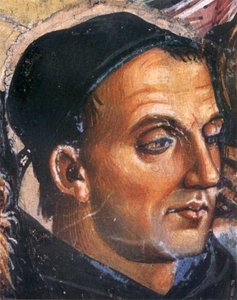
1395–1455, Italy
Fra Angelico
Early Life and Spiritual Formation Born Guido di Pietro in the Mugello, the man who would become known as Fra Angelico began his life in the Tuscan hills near Florence. Around 1395, he was known as Giovanni da Fiesole. His early years were shaped by the quiet landscape of this region. Eventually, the young Giovanni entered the Dominican Order at Fiesole.
Also by Fra Angelico
 Madonna with the Child, Saints and Crucifixion
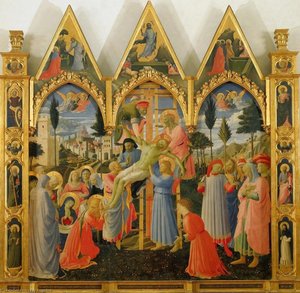 The Deposition
 Last Judgment1431
 The Cortona Altarpiece (The Annunciation)1433

Essays around The Annunciation
 Sacred Narratives: Decoding the Iconography and Artistry of the AnnunciationExplore the profound symbolism and mastery behind Renaissance Annunciation paintings. Discover the secrets of these sacred masterpieces now.
 DIA's Masterpieces: Explore 25 Iconic Artworks & Bring Detroit's Spirit HomeJourney through 25 iconic artworks at the Detroit Institute of Arts! Explore Van Gogh, Monet, Rembrandt & more. Discover art history, stunn…
 Divine Beauty: The 25 Most Iconic Masterpieces by Fra AngelicoImmerse yourself in the ethereal beauty of Fra Angelico. Explore 25 iconic Renaissance masterpieces, from sacred frescoes to divine panel p…