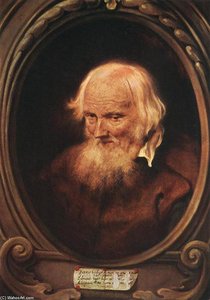
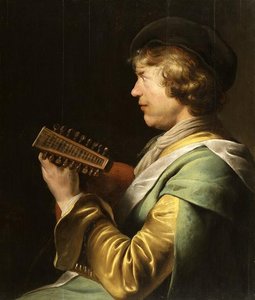
Portrait of Jan Lievens

Jan Lievens Paintings: The 100 Most Famous, Through a Gallery's Eye

Updated October 2026 · ranked by our popularity score (searches, visits and orders for each work) · 171 works by Jan Lievens in our catalogue

In short

To the gallery's eye, Jan Lievens's most famous painting is The Lamentation of Christ (1640), whose original hangs in the Alte Pinakothek, Munich. Portrait of Maarten Harpertszoon Tromp (1598-1653) (copy) (1650) and Saint John the Evangelist (1626) complete the trio every eye recognises. Of the 171 works by Jan Lievens in our catalog, the gallery presents the 100 most famous below, each original with its year, its museum and what makes it unique.

1607 – 1674, Leiden Baroque Most works: Bavarian State Painting Collections

The gallery's top 10 Jan Lievens paintings

1
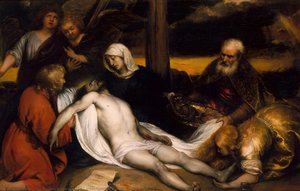
The Lamentation of Christ (1640) by Jan Lievens

The Lamentation of Christ

1640 · Oil On Canvas · Alte Pinakothek, Munich

Jan Andrea Lievens’ “The Lamentation of Christ,” painted around 1640, isn't merely a depiction of sorrow; it’s an immersion into the profound grief that permeated Renaissance and Baroque Europe. This powerful scene, rendered in rich oil on canvas measuring 141 x 216 cm, transcends simple mourning to become a meditation on loss, faith, and the ultimate sacrifice. Lievens, working within the shadow of Rembrandt's influence – both stylistic and perhaps…

2
Portrait of Maarten Harpertszoon Tromp (1598-1653) (copy) (1650) by Jan Lievens

Portrait of Maarten Harpertszoon Tromp (1598-1653) (copy)

1650 · Oil On Canvas · Amsterdam Museum, Amsterdam

The air in the room feels heavy, thick with the scent of old oil and the silent gravity of a man who has weathered many storms. Maarten Harpertszoon Tromp sits before us, his presence commanding the space despite the dark, indistinct void that surrounds him. He does not look away; his gaze is fixed directly forward, meeting the viewer with a resolute, unyielding expression that speaks of a life spent…

3
Saint John the Evangelist (1626) by Jan Lievens

Saint John the Evangelist

A heavy, reddish-brown drapery clings to the shoulder of the figure, a weight of fabric that anchors the composition. Saint John the Evangelist leans into the silence, his head resting upon a hand in a gesture of profound contemplation. The light is a sharp, singular force, carving his features out of a deep, shadowy background through the use of chiaroscuro. This illumination catches the curve of a cheek and the…

4
Old Woman Reading (1622) by Jan Lievens

Old Woman Reading

1622 · Oil On Panel · Philadelphia Museum of Art, Philadelphia

The room falls away into a deep, atmospheric darkness, leaving only the subject in a pool of soft, directional light. An elderly woman sits in a moment of profound stillness, her attention entirely consumed by the pages of a book. The light, streaming from the upper left, catches the delicate, thin wire of her spectacles and the weathered texture of her skin. Every wrinkle tells a story of years passed,…

5
Bust of an Old Man (1630) by Jan Lievens

Bust of an Old Man

1630 · Oil On Canvas · Staatliches Museum Schwerin, Schwerin

A somber portrait of an elderly man emerges from a deep, atmospheric darkness. The composition focuses on a close-up bust, centering on the weathered anatomy of a face marked by time. Light enters from the upper left, casting heavy shadows across the right side of the neck and face. This directional lighting creates a strong sense of three-dimensional volume, sculpting the subject out of the gloom. The subject's gaze is…

6
St. Paul writing to the Thessalonians (1629) by Jan Lievens

St. Paul writing to the Thessalonians

1629 · Oil On Canvas · Kunsthalle Bremen, Bremen

An elderly man sits in a state of intense concentration, his weathered face illuminated by a singular, unseen light source. He is captured in a moment of profound intellectual and spiritual labor, poised with a quill above a parchment. The composition follows a sharp diagonal, drawing the eye from the bright, illuminated writing materials up to the textures of his flowing white beard and the deep creases of his skin.…

7
Self Portrait (1650) by Jan Lievens

Self Portrait

1650 · Oil On Canvas · National Gallery, London

The man meets our eye with an air of quiet confidence, his presence filling the space with a certain swagger. He sits in a three-quarter pose, slightly off-center, creating a sense of movement even in his stillness. A strong light source strikes him from the upper left, carving out the sharp line of his cheekbone and illuminating the smooth texture of his skin. His dark hair falls in wavy, flowing…

8
Portrait of a Young Man in Flower Garland (1643) by Jan Lievens

Portrait of a Young Man in Flower Garland

1643 · Oil On Panel · Kunsthistorisches Museum, Vienna

A central figure of a young man occupies the middle of this oil on panel painting. His face and upper torso are framed by a dense, circular garland of botanical elements. The subject possesses light skin tones and a direct gaze. He wears dark clothing that blends into a deep brown and black background. A strong light source from the side illuminates his profile and the foreground petals, while much…

9
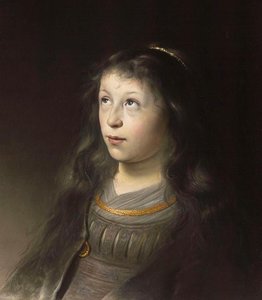
A Child's Head (1632) by Jan Lievens

A Child's Head

1632 · Oil On Panel · Museum Boijmans Van Beuningen, Rotterdam

A soft, luminous glow emerges from a deep, dark background, catching the fullness of a young child's cheek. The light strikes the right side of the face, tracing the bridge of a small nose and the delicate curves of a youthful profile. Every curl of the voluminous hair seems to hold a fragment of gold, rendered with thick, tactile applications of paint that catch the light in a way that…

10
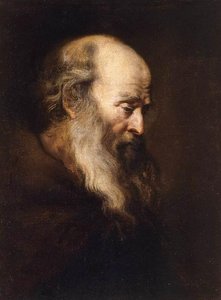
Old Man (1625) by Jan Lievens

Old Man

1625 · Oil On Canvas · Kunsthistorisches Museum, Vienna

An elderly man is captured in profile, his features emerging from a deep, indistinct darkness. The lighting is highly directional, striking the forehead, ear, and bridge of the nose from the upper left. This technique creates a sculptural depth, casting the back of the head and neck into heavy shadow. The skin appears weathered, marked by visible wrinkles and folds that suggest the passage of time.

Jan Lievens paintings, ranked 11 to 100

11Young Man with Red Beret (1629) by Jan LievensYoung Man with Red Beret1629 · Norton Simon Museum 12The Violin Player (1625) by Jan LievensThe Violin Player1625 · Museum de Lakenhal 13Head of an Old Man (1640) by Jan LievensHead of an Old Man1640 14Bust of a bearded grey-haired man (1629) by Jan LievensBust of a bearded grey-haired man1629 · Herzog Anton Ulrich Museum 15Old Man in Oriental Garb (1628) by Jan LievensOld Man in Oriental Garb1628 · Schloss Sanssouci 16Self-Portrait (1640) by Jan LievensSelf-Portrait1640 · Bavarian State Painting Collections 17Portrait of a Young Man (1640) by Jan LievensPortrait of a Young Man1640 · Bavarian State Painting Collections 18Studies after the Model (1660) by Jan LievensStudies after the Model1660 · Kunstpalast 19Profile Head of an Old Woman (“Rembrandt’s Mother”) (1629) by Jan LievensProfile Head of an Old Woman (“Rembrandt’s Mother”)1629 · Agnes Etherington Art Center 20Tronie of an Old Woman (1633) by Jan LievensTronie of an Old Woman1633 21An Unknown Woman in a Green Velvet Hood (1628) by Jan LievensAn Unknown Woman in a Green Velvet Hood1628 · Castle Ward 22Still-Life with Books (1628) by Jan LievensStill-Life with Books1628 · Bavarian State Painting Collections 23Saint Jerome as a hermit (1631) by Jan LievensSaint Jerome as a hermit1631 · Museum de Lakenhal 24Portrait of a young man with floppy pleated lace collar (1629) by Jan LievensPortrait of a young man with floppy pleated lace collar1629 · Richard Green Fine Paintings 25Portrait of a boy, head and shoulders, wearing a gorget (1626) by Jan LievensPortrait of a boy, head and shoulders, wearing a gorget1626 · Wallraf-Richartz-Museum 26A soldier with a wineglass and pipe (1627) by Jan LievensA soldier with a wineglass and pipe1627 · Gemäldegalerie 27Bearded Old Man with a Brown Cloak (1631) by Jan LievensBearded Old Man with a Brown Cloak1631 28English The Raising of Lazarus (1631) by Jan LievensEnglish The Raising of Lazarus1631 29Head of an Old Man in thought (1640) by Jan LievensHead of an Old Man in thought1640 · Gebruder Douwes 30Fighting Cardplayers and Death (1638) by Jan LievensFighting Cardplayers and Death1638 31The Visitation (1650) by Jan LievensThe Visitation1650 32Portrait of a Girl (1660) by Jan LievensPortrait of a Girl1660 · Museum der bildenden Künste 33Portrait of a man (1650) by Jan LievensPortrait of a man1650 · National Gallery of Armenia 34Nicolaas Calkoen (1612-1687) (1654) by Jan LievensNicolaas Calkoen (1612-1687)1654 35Elisabeth Danckerts (1613-1670) (1654) by Jan LievensElisabeth Danckerts (1613-1670)1654 36Portrait of Maerten Harpertsz. Tromp (1598-1653) (1653) by Jan LievensPortrait of Maerten Harpertsz. Tromp (1598-1653)1653 · Het Scheepvaartmuseum 37Self-portrait (1662) by Jan LievensSelf-portrait1662 · Wawel Royal Castle 38Saint Mark the Evangelist (1626) by Jan LievensSaint Mark the Evangelist1626 · Bavarian State Painting Collections 39Christ Washing the Disciples' Feet (1632) by Jan LievensChrist Washing the Disciples' Feet1632 · Art Institute of Chicago 40'Tronie' of an Old Man (1650) by Jan Lievens'Tronie' of an Old Man1650 · Mauritshuis 41Saint Matthew the Evangelist (1626) by Jan LievensSaint Matthew the Evangelist1626 · Bavarian State Painting Collections 42A Magus at a Table (1631) by Jan LievensA Magus at a Table1631 · Upton House 43Samson and Delilah (1635) by Jan LievensSamson and Delilah1635 · Rijksmuseum 44Self-Portrait (1635) by Jan LievensSelf-Portrait1635 · Statens Museum For Kunst 45Old man in a skullcap (1623) by Jan LievensOld man in a skullcap1623 · National Museum in Warsaw 46Robert Kerr, 1st Earl of Ancram, 1578 - 1654. Courtier and politician (1654) by Jan LievensRobert Kerr, 1st Earl of Ancram, 1578 - 1654. Courtier and politician1654 · Scottish National Portrait Gallery 47The Violin Player (1625) by Jan LievensThe Violin Player1625 · Stedelijk Museum De Lakenhal 48Card Players (1625) by Jan LievensCard Players1625 · The Leiden Collection 49Portrait of Petrus Egidius de Morrion (1637) by Jan LievensPortrait of Petrus Egidius de Morrion1637 · Szépművészeti Múzeum 50The Four Elements and Ages of Man: Fire and Childhood (1668) by Jan LievensThe Four Elements and Ages of Man: Fire and Childhood1668 · Staatliche Museen 51Portrait of a Girl (1630) by Jan LievensPortrait of a Girl1630 · Szépművészeti Múzeum 52The Sacrifice of Isaac (1638) by Jan LievensThe Sacrifice of Isaac1638 · Herzog Anton Ulrich Museum 53A young girl (1632) by Jan LievensA young girl1632 · Yale University Art Gallery 54Saint Luke (1626) by Jan LievensSaint Luke1626 · Bavarian State Painting Collections 55Untitled (AQQCHJ) (1631) by Jan LievensUntitled (AQQCHJ)1631 · Getty Center 56An old man (Rabbi). (1630) by Jan LievensAn old man (Rabbi).1630 · National Museum in Warsaw 57Bust of an Old Man (1650) by Jan LievensBust of an Old Man1650 · Museum der bildenden Künste 58The Four Elements and Ages of Man: Air and Youth (1668) by Jan LievensThe Four Elements and Ages of Man: Air and Youth1668 · Staatliche Museen 59The Four Elements and Ages of Man: Earth and Maturity (1668) by Jan LievensThe Four Elements and Ages of Man: Earth and Maturity1668 · Staatliche Museen 60Boy in a Cape and Turban (Portrait of Prince Rupert of the Palatinate) (1631) by Jan LievensBoy in a Cape and Turban (Portrait of Prince Rupert of the Palatinate)1631 · The Leiden Collection 61Saint Mark the Evangelist (1600) by Jan LievensSaint Mark the Evangelist1600 · Birmingham Museum of Art 62Head of an Old Woman: (1628) by Jan LievensHead of an Old Woman:1628 · The Leiden Collection 63Untitled (AQQCJ2) (1622) by Jan LievensUntitled (AQQCJ2)1622 64Trees in the evening (1632) by Jan LievensTrees in the evening1632 65Untitled (AQQCH2) (1628) by Jan LievensUntitled (AQQCH2)1628 66Untitled (AQQCHU) (1629) by Jan LievensUntitled (AQQCHU)1629 67Job (1631) by Jan LievensJob1631 68Portrait of an Old Man (1630) by Jan LievensPortrait of an Old Man1630 69Guy of Lusignan and Saladin (1625) by Jan LievensGuy of Lusignan and Saladin1625 70English Saladin and Guy de Lusignan Nederlands Saladin en Guy de Lusignan (1625) by Jan LievensEnglish Saladin and Guy de Lusignan Nederlands Saladin en Guy de Lusignan1625 71Head of a Young Girl (1631) by Jan LievensHead of a Young Girl1631 · Szépművészeti Múzeum 72Man Kindling a Torch (1625) by Jan LievensMan Kindling a Torch1625 · Muzeum Palacu Króla Jana Iii w Wilanowie 73Study of an Old Man (1630) by Jan LievensStudy of an Old Man1630 74Study of an Old Man (1630) by Jan LievensStudy of an Old Man1630 75Untitled (AQQCHW) (1624) by Jan LievensUntitled (AQQCHW)1624 76Bust of a Young Girl (1630) by Jan LievensBust of a Young Girl1630 77Rembrandt van Rijn with Gorget (1629) by Jan LievensRembrandt van Rijn with Gorget1629 78Prince Charles Louis with His Tutor, as Alexander Instructed by Aristotle (1631) by Jan LievensPrince Charles Louis with His Tutor, as Alexander Instructed by Aristotle1631 79Dune landscape with trees (1642) by Jan LievensDune landscape with trees1642 · Museum Boijmans Van Beuningen 80River Landscape with a Resting Traveller (1640) by Jan LievensRiver Landscape with a Resting Traveller1640 · Agnes Etherington Art Center 81Untitled (AQQCHE) (1640) by Jan LievensUntitled (AQQCHE)1640 82Landscape with Willows (1642) by Jan LievensLandscape with Willows1642 · Fondation Custodia 83Hilly Landscape with Resting Peasants (1644) by Jan LievensHilly Landscape with Resting Peasants1644 · Kremer Collection 84A Wooded Walk (1650) by Jan LievensA Wooded Walk1650 85Evening Landscape (1650) by Jan LievensEvening Landscape1650 · Gemäldegalerie 86Portrait of Ephraim Bueno (1650) by Jan LievensPortrait of Ephraim Bueno1650 87Quintus Fabius Maximus (1656) by Jan LievensQuintus Fabius Maximus1656 · Royal Palace Amsterdam 88De Oorlog (War ) (1664) by Jan LievensDe Oorlog (War )1664 89Landscape, with the Rest on the Flight to Egypt (1645) by Jan LievensLandscape, with the Rest on the Flight to Egypt1645 · Thyssen-Bornemisza Museum 90Young Man in a Yellow Robe (1630) by Jan LievensYoung Man in a Yellow Robe1630 · National Gallery of Scotland 91The Lute Player (1629) by Jan LievensThe Lute Player1629 · Walters Art Museum 92Portrait of Ephraim Bonus, physician by Jan LievensPortrait of Ephraim Bonus, physician 93Landscape with figures by Jan LievensLandscape with figures 94St. Jerome by Jan LievensSt. Jerome 95The Third Oriental Head by Jan LievensThe Third Oriental Head 96Landscape with a Shepherd and His Flock by Jan LievensLandscape with a Shepherd and His Flock 97Daniel Heinsius by Jan LievensDaniel Heinsius 98Card Players and Death by Jan LievensCard Players and Death 99Portrait of an Old Man Seen from the Front by Jan LievensPortrait of an Old Man Seen from the Front 100The Raising of Lazarus by Jan LievensThe Raising of Lazarus

Jan Lievens's famous paintings, period by period

The subjects that held Jan Lievens's eye

The four subjects that come back most often in these originals, each with its finest example.

The museums that keep Jan Lievens's originals

The 8 museums that hold the most of the paintings on this page.

Museum City Works by Jan Lievens Paintings from this list
Bavarian State Painting Collections, MunichBavarian State Painting Collections Munich 7 Saint John the Evangelist, Self-Portrait, Portrait of a Young Man
The Leiden Collection, New York CityThe Leiden Collection New York City 4 Card Players, Boy in a Cape and Turban (Portrait of Prince Rupert of the Palatinate), Head of an Old Woman:
Szépművészeti Múzeum, BudapestSzépművészeti Múzeum Budapest 3 Portrait of Petrus Egidius de Morrion, Portrait of a Girl, Head of a Young Girl
Staatliche Museen, KasselStaatliche Museen Kassel 3 The Four Elements and Ages of Man: Fire and Childhood, The Four Elements and Ages of Man: Air and Youth, The Four Elements and Ages of Man: Earth and Maturity
Kunsthistorisches Museum, ViennaKunsthistorisches Museum Vienna 2 Portrait of a Young Man in Flower Garland, Old Man
Museum Boijmans Van Beuningen, RotterdamMuseum Boijmans Van Beuningen Rotterdam 2 A Child's Head, Dune landscape with trees
Museum de Lakenhal, LeidenMuseum de Lakenhal Leiden 2 The Violin Player, Saint Jerome as a hermit
Herzog Anton Ulrich Museum, BrunswickHerzog Anton Ulrich Museum Brunswick 2 Bust of a bearded grey-haired man, The Sacrifice of Isaac

Jan Lievens, one signature painting per decade

Works per decade

Pick a decade to see the original that defines it.

Jan Lievens's paintings: the gallery answers

Which Jan Lievens painting is the most famous of all?Reveal the answer

The Lamentation of Christ (1640), Alte Pinakothek, Munich. Portrait of Maarten Harpertszoon Tromp (1598-1653) (copy) (1650) and Saint John the Evangelist (1626) come next.

How old was Jan Lievens on completing The Lamentation of Christ?Reveal the answer

33 years old: The Lamentation of Christ dates from 1640, and Jan Lievens was born in 1607.

Which are Jan Lievens's top 10 paintings?Reveal the answer

The Lamentation of Christ, Portrait of Maarten Harpertszoon Tromp (1598-1653) (copy), Saint John the Evangelist, Old Woman Reading, Bust of an Old Man, St. Paul writing to the Thessalonians, Self Portrait, Portrait of a Young Man in Flower Garland, A Child's Head and Old Man. The ranking above gives each one's year and museum.

How many works did Jan Lievens create?Reveal the answer

Our catalog holds 171 works by Jan Lievens, dated from 1622 to 1668.

Where do Jan Lievens's most famous originals hang?Reveal the answer

Mostly in Bavarian State Painting Collections (Munich), The Leiden Collection (New York City) and Szépművészeti Múzeum (Budapest). The museum table above lists them all.

When did Jan Lievens create the most famous paintings?Reveal the answer

In 1620s: 30 of the 100 works on this page were made then, Saint John the Evangelist among them.

Which are Jan Lievens's earliest and latest famous works?Reveal the answer

On this page, the earliest is Old Woman Reading (1622) and the latest The Four Elements and Ages of Man: Fire and Childhood (1668).

Which subjects did Jan Lievens return to most?Reveal the answer

Man (27), Dark background (16) and Beard (13), across the 100 works on this page.

Which medium did Jan Lievens work in most?Reveal the answer

Oil On Canvas, for 23 of the 100 works on this page.

Which movement is Jan Lievens associated with?Reveal the answer

Baroque, judging by the originals on this page.

Which Jan Lievens originals does the Bavarian State Painting Collections hold?Reveal the answer

Saint John the Evangelist, Self-Portrait and Portrait of a Young Man: the Bavarian State Painting Collections, Munich holds 7 of the works on this page.

Jan Lievens: the artist

Rise to Prominence and Early Success

The precocity of Jan Lievens was evident almost from the start. By the age of twelve, he had already established himself as an independent artist in Leiden, a remarkable feat for a child of such years. This early independence was not merely a matter of technical skill, but a sign of a talent that demanded immediate recognition. His ability to navigate the competitive art scene of the Netherlands was cemented when his work began to catch the eyes of the highest levels of Dutch nobility.

A copy of Democriet & Herakliet by Cornelis van Haarlem drew the attention of Maurice of Nassau, Prince of Orange. This royal interest was furthered by a portrait of his mother, Machtelt Jans van Noortzant, which also reached the Prince's notice. Such early patronage provided a foundation of prestige that would follow him throughout his career. His reputation grew steadily, moving beyond the local circles of Leiden to reach international heights. By the age of thirty-one, his standing was such that he received an invitation to the British court, marking his transition from a local talent to a figure of European significance.

Collaborations and Workshop in Amsterdam

The early years of Lievens's career were defined by a profound creative proximity to Rembrandt van Rijn. After their training in Amsterdam, the two artists shared a studio for about five years, a period of intense mutual influence that lasted until 1631. This was a time of shared ambition and technical experimentation. Their partnership was not merely a matter of proximity; it was a functional collaboration that saw them producing over two dozen paintings, drawings, and etchings together. The sheer volume of their joint output created a complex history for many works from this era, as the boundaries between their individual hands often blurred.

Lievens frequently turned to his friend and colleague to serve as a model, using the familiar features of his peer to explore character and expression. This intimacy in the studio allowed for a rapid exchange of ideas regarding composition and light. While their collaboration was productive, it was also a period of intense competition. The two men worked side by side, each striving to refine a style that would eventually carry them toward different paths in London, Antwerp, and beyond. Their time in Amsterdam remains a significant chapter of shared development, marked by the high energy of two young talents finding their footing in the Dutch Golden Age.

Patrons, Commissions and International Career

Lievens’s talent attracted a level of attention that necessitated a life of movement. His early success in Leiden, marked by the admiration of Maurice of Nassau, Prince of Orange, set a precedent for a career defined by high-level patronage. This early recognition opened doors to the upper echelons of European society, leading him away from the familiar circles of Amsterdam toward a more cosmopolitan existence. He was a sought-after figure for those who required both formal portraiture and grand historical narratives.

His professional trajectory was marked by significant shifts across major European centers. He traveled to London and Antwerp, eventually finding himself serving as a court painter in both The Hague and Berlin. These appointments brought him into the service of royalty, mayors, and various city halls, securing his position within the political and social fabric of the era. His ability to adapt to the demands of these diverse patrons allowed him to maintain a steady stream of commissions throughout his travels.

The breadth of his work reflected the varied tastes of his clientele. Whether working for the nobility in Berlin or fulfilling civic duties in the Netherlands, Lievens navigated the complexities of international demand. His presence in these different courts ensured that his style was not confined to a single regional tradition, but rather shaped by the shifting cultural currents of the cities in which he resided.

Technique and Artistic Style

Lievens possessed a technical facility that allowed him to navigate the shifting aesthetics of the seventeenth century. His work frequently merged the grounded details of realism with the dramatic flourishes of the Baroque. He was particularly adept at utilizing chiaroscuro, a method that employed sharp contrasts between light and shadow to create a sense of volume and psychological presence. This approach, heavily influenced by the Caravaggisti, allowed him to sculpt faces and textures out of deep, atmospheric darkness. His ability to handle light was not merely for dramatic effect; it was a tool used to define the very essence of his subjects.

In his execution, Lievens was a master of the oil medium. He utilized sophisticated glazing techniques to build up layers of color, achieving a luminous quality and subtle gradations of tone that gave his surfaces a sense of depth. This meticulousness extended to his ability to work on a grand scale, demonstrating a talent for painting in life-size dimensions. Whether rendering the soft sheen of a fabric or the weathered skin of an elderly man, his hand remained precise and controlled. His compositions often sought a sense of harmony and balance, even when dealing with the intense lighting characteristic of his era.

Notable Works and Masterpieces

Lievens’s early output reveals a musician’s grace, captured through the quietude of his subjects. In 1625, he produced The Violin Player, a work that reflects the technical precision of his formative years. By 1629, his interest in such themes continued with The Lute Player. These compositions demonstrate an ability to handle light and form long before his name became widely recognized across Europe.

The year 1631 marked a period of intense creative competition and stylistic experimentation. His oil-on-canvas depiction of The Raising of Lazarus remains a significant achievement from this era. The painting is characterized by a somber palette and a sense of mystery, utilizing pale light to pierce through deep darkness. It is a work of restraint, focusing on the spiritual tension of the scene rather than grand, sweeping gestures.

In his later years, Lievens turned toward more complex allegorical themes. The series The Four Elements and Ages of Man includes Fire and Childhood, dated 1668, which shows a continued command of texture and atmosphere. His ability to adapt his style to meet the demands of various patrons allowed him to maintain a presence in the art world from the streets of Leiden to the courts of Berlin.

Legacy and Historical Influence

Jan Lievens occupied a singular position within the Dutch Golden Age, a period defined by intense artistic competition and rapid stylistic evolution. His career was inextricably linked to the shadow of Rembrandt van Rijn, a relationship that proved both professionally fruitful and historically complicated. While their early collaboration in Leiden and Amsterdam helped shape the visual language of the era, the proximity of their talents created a lasting ambiguity in the art historical record. For centuries, the distinction between their hands was often blurred, leading to a significant decline in his individual recognition after his death.

This loss of identity was largely due to the misattribution of his canvases. Many of his works were claimed by other masters, most notably Rembrandt, as collectors and heirs sought to maximize the value of their holdings. Such confusion meant that Lievens’s specific contributions were frequently subsumed into the broader narrative of his contemporaries. It was not until the middle of the nineteenth century that his distinct hand was rediscovered by those seeking to untangle the complex web of seventeenth-century Dutch painting. This re-evaluation allowed for a clearer understanding of his ability to navigate between the realism of the Netherlands and the sensuous influences of the Flemish and Venetian traditions.

Where to See His Works Today

The physical presence of Lievens's art remains scattered across several international institutions, reflecting a career that once moved between the major centers of the Dutch Golden Age. In the Netherlands, his hand is visible in the Mauritshuis, where his contributions to the era's visual language are preserved. His presence in the country is further felt through various museum collections that hold his paintings and drawings, maintaining a connection to his Leiden roots.

In the United States, his work is held in several prominent collections. The Leiden Collection in New York City maintains a significant number of his pieces, offering a concentrated look at his output. Elsewhere, the Norton Simon Museum in Pasadena houses his landscape work, specifically a view of a town. These holdings allow for a study of his ability to handle both intimate portraiture and expansive scenery.

Other significant works have found permanent homes in specialized galleries. The Brighton Museum & Art Gallery is the keeper of his 1631 depiction of the Raising of Lazarus, a work that once shared a studio space with his most famous contemporary. To see his range, one might look to these specific locations: