
Leonardo da Vinci is the best-known artist with works in the Louvre; next come Rembrandt, Michelangelo and Albrecht Dürer.
Our catalogue lists 2,610 works of the Louvre by 695 artists; the 25 best known are ranked below, each with the works the museum holds.
The masters of the originals
The 10 masters whose originals hang in the Louvre
For each master: where and when they were born, their movement, how many originals the museum keeps in our catalogue, a note from their life, and the originals to see.
-

High Renaissance
1. Leonardo da Vinci 1452–1519
1452–1519 Born in Anchiano, Italy High Renaissance 30 originals at the Louvre
Leonardo da Vinci was born on 15 April 1452 near the Tuscan hill town of Vinci. At the age of fourteen, Leonardo da Vinci entered the workshop of Andrea del Verrocchio. This period of service was not a single continuous stretch, as he returned to Milan between 1508 and 1513. Leonardo da Vinci’s later years were defined by a shift in geography that mirrored his restless intellectual movement.
Originals at the Louvre
-
Baroque
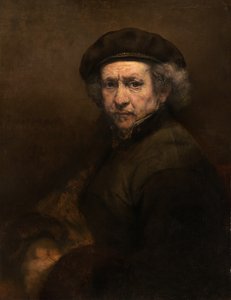
2. Rembrandt 1606–1669
1606–1669 Born in Leiden, Netherlands Baroque 16 originals at the Louvre
Born on 15 July 1606 in Leiden, in the Dutch Republic, Rembrandt van Rijn entered a world of modest means. By the time he died on 4 October 1669, he had left behind a vast legacy that includes about 300 paintings, 300 etchings, and several hundred drawings. By 1625, the young artist had moved beyond his apprenticeship and opened a studio in Leiden. A significant shift occurred in 1631 when he moved to Amsterdam.
Originals at the Louvre
-

High Renaissance
3. Michelangelo 1475–1564
1475–1564 Born in Caprese Michelangelo, Italy High Renaissance 17 originals at the Louvre
Born in 1475, Michelangelo di Lodovico Buonarroti Simoni spent his early years near Settignano, where his father owned a quarry. There, among the ancient Greek and Roman fragments, he studied how light falls across muscle and bone. By the time he reached Rome in 1496, he was already carving figures that possessed a heavy, palpable presence.
Originals at the Louvre
-
Northern Renaissance
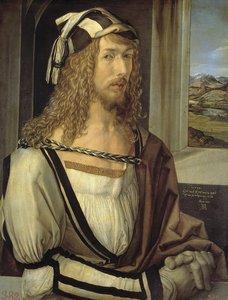
4. Albrecht Dürer 1471–1528
1471–1528 Born in Nuremberg, Germany Northern Renaissance 8 originals at the Louvre
While his father might have envisioned a life spent working with precious metals, the boy possessed a different kind of hunger. Even as a child, his talent was evident, appearing in early works such as a silverpoint self-portrait from about 1484. In the bustling streets of Nuremberg, the boy Albrecht was shaped by the steady, disciplined rhythm of his father's workshop.
Originals at the Louvre
-

Baroque
5. Caravaggio 1571–1610
1571–1610 Born in Milan, Italy Baroque 6 originals at the Louvre
Italian Baroque painter of dramatic tenebrism, using violent light and shadow to capture the grit of laborers and outcasts in Rome. The momentum of his life is a series of frantic movements.
Originals at the Louvre
-

High Renaissance
6. Raphael 1483–1520
1483–1520 Born in Urbino, Italy High Renaissance 5 originals at the Louvre
Upon his arrival in Florence in 1504, the young painter entered a city defined by the presence of giants. Between 1504 and 1507, he produced a series of Madonnas that demonstrated a growing mastery of composition and emotional clarity. Following the death of Donato Bramante in 1514, he was appointed architect in charge of St. Peter's, a position that reflected the immense trust placed in his ability to organize and execute complex, large-scale projects.
Originals at the Louvre
-

Proto-Renaissance
7. Giotto 1267–1337
1267–1337 Born in Vicchio, Italy Proto-Renaissance 3 originals at the Louvre
While his full name carries the weight of his lineage, he was often known simply as Giotto. Born in Florence, Italy, he was the son of a blacksmith named Bondone. By the end of the thirteenth century, Giotto’s presence moved beyond the Florentine sphere. Between 1297 and 1300, he worked in Rome, a period that saw him engaging with the monumental scale of the city's religious centers.
Originals at the Louvre
-

Baroque
8. Peter Paul Rubens 1577–1640
1577–1640 Born in Siegen, Germany Baroque 22 originals at the Louvre
Born on 28 June 1577 in Siegen, Germany, his early years were shaped by the religious instability of the era. By the time he began working with Otto van Veen between 1594 and 1598, Rubens had already acquired the technical vocabulary necessary to move beyond simple representation into the realm of sophisticated narrative art. In 1600, Rubens left the Low Countries for Italy, a move that fundamentally altered his visual language.
Originals at the Louvre
-
Dutch Golden Age
9. Johannes Vermeer 1632–1675
1632–1675 Born in Delft, Netherlands Dutch Golden Age 6 originals at the Louvre
In October 1632, a child was born in Delft, Netherlands. Johannes Vermeer entered a household where the textures of fine materials and the commerce of art were part of the daily rhythm. The family's religious and social ties were marked by a baptism in the Nieuwe Kerk in Delft on 31 October 1632. The stability of his early years shifted when his father died in October 1652.
Originals at the Louvre
-

Mannerism
10. El Greco 1541–1614
1541–1614 Born in Heraklion, Greece Mannerism 4 originals at the Louvre
Doménikos Theotokópoulos, known to history as El Greco, began his life in 1541 on the island of Crete. At that time, the island was a Venetian possession, a fact that would later allow him to bridge the gap between Eastern and Western traditions. By the age of twenty-six, he moved to Venice, seeking to expand his understanding of the natural world.
Originals at the Louvre


The masters, continued
No. 11 to No. 25: more masters of the Louvre
-

Venetian Renaissance master of color and light, known for expressive brushwork, rich textures, and sensual mythological scenes.
- Woman with a Mirror (1514)
- Man with a Glove (1520)
- The Supper at Emmaus (1560)
-
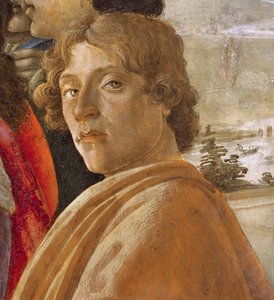
12. Sandro Botticelli
Early Renaissance
1445–1510 · born in Florence, Italy · 5 originals at the Louvre
Italian Early Renaissance painter of lyrical grace and ethereal figures with flowing contours, known for mythological and religious scenes.
-

13. Eugène Delacroix
Romanticism
1798–1863 · born in Saint-Maurice, France · 42 originals at the Louvre
French Romantic leader known for dramatic color, loose brushwork, and intense emotional energy in scenes of revolution and North African life.
- Liberty Leading the People (1831)
- The Massacre at Chios (1824)
- The Death of Sardanapalus (1827)
-

French Realist known for thick impasto and unvarnished depictions of manual labor and nature, from stone breakers to rugged landscapes.
- Self-Portrait (1871)
- Courbet in his Cell at Sainte-Pélagie (1871)
-

French Classicist of geometric, rational compositions and mythological scenes, using wax figures and light boxes to plan every detail.
- Et in Arcadia Ego (1637)
- The Rape of the Sabine Women (1637)
- The Poet's Inspiration (1630)
-

16. Hieronymus Bosch
Northern Renaissance
1450–1516 · born in 's-Hertogenbosch, Netherlands · 4 originals at the Louvre
Netherlandish painter of grotesque demons and surreal symbolism in intricate oil triptychs, capturing human folly through vivid, hybrid beings.
-

Venetian Mannerist known for rapid brushwork and dramatic chiaroscuro in intense religious scenes, often featuring muscular figures in motion.
- Paradise (1579)
- Self-Portrait (1588)
-

18. Pieter Brueghel the Elder
Northern Renaissance
1525–1569 · born in Breda, Netherlands · 2 originals at the Louvre
Flemish Renaissance painter of vast landscapes and boisterous peasant scenes, known for capturing the intricate rhythms of rural village life.
-
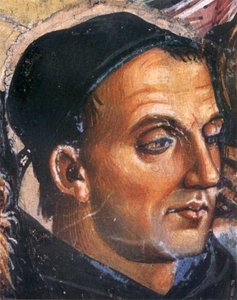
Italian Renaissance Dominican friar known for luminous frescoes and serene religious narratives painted with manuscript illumination precision.
-

20. Jacques-Louis David
Neoclassicism
1748–1825 · born in Paris, France · 35 originals at the Louvre
French Neoclassical painter of rigorous contours and dramatic historical scenes, from the Oath of the Horatii to the Death of Marat.
-

21. Jean-Antoine Watteau
Rococo
1684–1721 · born in Valenciennes, France · 19 originals at the Louvre
French Rococo painter of dreamlike fêtes galantes and theatrical scenes, known for a feathery, sketchlike technique and wistful melancholy.
- The Embarkation for Cythera (1717)
- Gilles (1719)
- Pilgrimage to Cythera (1717)
-

22. Jean-Auguste-Dominique Ingres
Neoclassicism
1780–1867 · born in Montauban, France · 29 originals at the Louvre
French Neoclassical painter of precise contours and idealized nudes, known for the flowing, sculptural lines of his famous odalisques.
- The Grande Odalisque (1814)
- The Turkish Bath (1863)
- Roger Freeing Angelica (1819)
-

23. Andrea Mantegna
Renaissance
1431–1506 · born in Isola Mantegna, Italy · 11 originals at the Louvre
Italian Renaissance master of sculptural precision and illusionistic perspective, known for his monumental Triumphs of Caesar and frescoes.
-
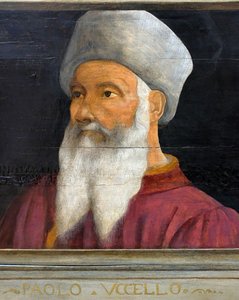
24. Paolo Uccello
Early Renaissance
1397–1475 · born in Pratovecchio, Italy · 2 originals at the Louvre
Italian Renaissance painter obsessed with mathematical perspective and the geometry of space, known for his complex battle scenes and birds.
-

25. Hans Holbein the Younger
Northern Renaissance
1497–1543 · born in Augsburg, Germany · 3 originals at the Louvre
Northern Renaissance portraitist known for hyper-realistic detail and symbolic objects, serving the Tudor court of Henry VIII in England.
- Portrait of Nikolaus Kratzer (1528)
- Erasmus (1523)
- Triumph of Wealth (1533)
Famous artists in the Louvre, No. 26 to 50
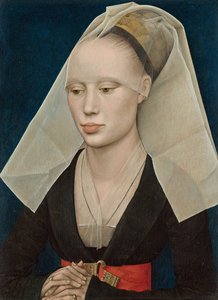 Rogier van der Weyden1400–1464 · 9 originals at the Louvre
 Théodore Géricault1791–1824 · 19 originals at the Louvre
 Jean-François Millet1814–1875 · 9 originals at the Louvre
 Jean-Baptiste-Camille Corot1796–1875 · 34 originals at the Louvre
 Frans Hals1580–1666 · 4 originals at the Louvre
 John Constable1776–1837 · 2 originals at the Louvre
 Élisabeth Louise Vigée Le Brun1755–1842 · 7 originals at the Louvre
 Cimabue1240–1302 · 2 originals at the Louvre
 Claude Lorrain1600–1682 · 5 originals at the Louvre
 Georges de la Tour1593–1652 · 7 originals at the Louvre
 Paolo Veronese1528–1588 · 11 originals at the Louvre
 Giuseppe Arcimboldo1527–1593 · 10 originals at the Louvre
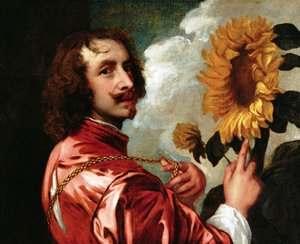 Anthony van Dyck1599–1641 · 3 originals at the Louvre
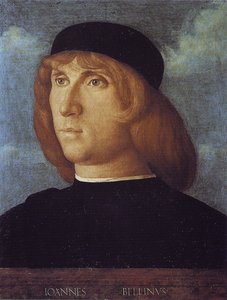 Giovanni Bellini1430–1516 · 3 originals at the Louvre
 Domenico Ghirlandaio1448–1494 · 3 originals at the Louvre
 Lucas Cranach the Elder1472–1553 · 2 originals at the Louvre
 Bartolomé Esteban Murillo1617–1682 · 10 originals at the Louvre
 Pietro Perugino1448–1523 · 18 originals at the Louvre
 Bronzino1503–1572 · 2 originals at the Louvre
 Giovanni Battista Tiepolo1696–1770 · 4 originals at the Louvre
 François Boucher1703–1770 · 8 originals at the Louvre
 Jean-Honoré Fragonard1732–1806 · 14 originals at the Louvre
 Gustave Moreau1826–1898 · 2 originals at the Louvre
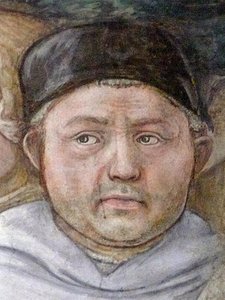 Filippo Lippi1406–1469 · 2 originals at the Louvre
 Guido Reni1575–1642 · 19 originals at the Louvre
The house in figures
The masters of the Louvre, in figures
The masters with the most originals at the Louvre
Masters with two originals or more, by century of birth
Masters with two originals or more, by country of birth
Masters with two originals or more, by movement
Women masters
The women whose originals hang in the Louvre
10 women masters, 21 originals, in our catalogue of the Louvre.
-
Élisabeth Louise Vigée Le Brun
1755–1842 · born in Paris, France · 7 originals at the Louvre
-

Louise Moillon
1610–1696 · born in Paris, France · 5 originals at the Louvre
-

Rosalba Carriera
1675–1757 · born in Venice, Italy · 2 originals at the Louvre
-

Judith Leyster
1609–1660 · born in Haarlem, Netherlands · 1 originals at the Louvre
- Carousing Couple (1630)
-

Marie-Guillemine Benoist
1768–1826 · born in Paris, France · 1 originals at the Louvre
- Portrait of a Negress (1800)
-

Adélaïde Labille-Guiard
1749–1803 · born in Paris, France · 1 originals at the Louvre
-

Anne Vallayer-Coster
1744–1818 · born in Paris, France · 1 originals at the Louvre
-

Barbara Longhi
1552–1638 · born in Ravenna, Italy · 1 originals at the Louvre
- Virgin and Child with Saint (1595)
Two houses
The Louvre or the Musée d'Orsay: whose originals are where
The Louvre
- Masters in our catalogue
- 695
- Originals
- 2,610
- The masters to know
- Leonardo da Vinci, Rembrandt, Michelangelo, Albrecht Dürer
- Most originals by
- Pierre-Henri de Valenciennes (101), Eustache Le Sueur (56), Eugène Delacroix (42)
The Musée d'Orsay
- Masters in our catalogue
- 343
- Originals
- 1,507
- The masters to know
- Vincent van Gogh, Claude Monet, Paul Cézanne, Henri Matisse
- Most originals by
- Claude Monet (106), Pierre-Auguste Renoir (79), Paul Cézanne (60)
Asked of us
Questions on the masters of the Louvre
Open a question to read the answer.
Who is the best-known artist of the Louvre?
Leonardo da Vinci (1452–1519): our catalogue holds 30 works by Leonardo da Vinci at the Louvre, among them Mona Lisa (La Gioconda), The Virgin and Child with Saint Anne and Saint John the Baptist. Rembrandt and Michelangelo follow.
How many Leonardo da Vinci paintings are in the Louvre?
30 works by Leonardo da Vinci at the Louvre are in our catalogue: Mona Lisa (La Gioconda) (1519), The Virgin and Child with Saint Anne (1510), Saint John the Baptist (1515) and La belle Ferronière (1490) among them.
What did Rembrandt paint that hangs in the Louvre?
16 works by Rembrandt at the Louvre are in our catalogue: Philosopher in Meditation (1632), A Woman with a Little Child on her Lap (1635), Supper at Emmaus (1648) and Hendrickje Stoffels (1654) among them.
What did Michelangelo paint that hangs in the Louvre?
17 works by Michelangelo at the Louvre are in our catalogue: Nude Man Turned to the Right (1510), Slave (rebelling) (1513), Group of Three Male Nudes (recto) (1503) and Resurrection of Christ (1530) among them.
Which famous artists are displayed in the Louvre?
By fame: Leonardo da Vinci (30), Rembrandt (16), Michelangelo (17), Albrecht Dürer (8), Caravaggio (6), Raphael (5), Giotto (3), Peter Paul Rubens (22), Johannes Vermeer (6) and El Greco (4).
Who has the most paintings in the collection of the Louvre?
Pierre-Henri de Valenciennes (—), with 101 works in our catalogue of the Louvre, ahead of Eustache Le Sueur (56), Eugène Delacroix (42) and Hubert Robert (42).
Is Pablo Picasso in the Louvre?
Our catalogue lists no work by Pablo Picasso at the Louvre.
Are there Vincent van Gogh works in the Louvre?
Our catalogue lists no work by Vincent van Gogh at the Louvre. The Musée d'Orsay holds 29.
Which women artists are in the Louvre?
Our catalogue lists 10 women artists with works at the Louvre: Élisabeth Louise Vigée Le Brun (7), Louise Moillon (5), Rosalba Carriera (2), Judith Leyster (1), Marie-Guillemine Benoist (1) and Adélaïde Labille-Guiard (1).
Should I visit the Louvre or the Musée d'Orsay for the painters?
The Louvre holds works by 695 artists of our catalogue, the Musée d'Orsay by 343. The best-known artists of the Louvre are Leonardo da Vinci, Rembrandt and Michelangelo; of the Musée d'Orsay, Vincent van Gogh, Claude Monet and Paul Cézanne.
Are the artists in the Louvre mostly French, Italian or Dutch?
Counting the artists with two works or more, the Louvre holds painters born mostly in France (152), Italy (82), Netherlands (48), Belgium (28) and United Kingdom (12).
From which period are the artists of the Louvre?
The 17th century leads with 93 artists born then. In this ranking, Giotto (1267–1337) is the earliest born and Gustave Courbet (1819–1877) the latest.
The house
The Louvre, Paris, in a few lines
The Origins and History of the Louvre
The history of the Louvre begins with its role as a grim medieval stronghold. Built in 1190, this fortress served to guard the edges of Paris. Its primary function was defensive, providing a fortified position on the Right Bank of the Seine to protect the city's perimeter. The transition from a military structure to a site of royal residence occurred through several centuries of change. In 1546, Francis I converted the fortress into the primary residence of the French kings. This shift marked the beginning of the site's evolution from a defensive bastion into the Louvre Palace. The purpose of the buildings shifted from protection to habitation, and eventually to the preservation of art. The museum was founded after the site's purpose transitioned from a royal home to a public institution. This evolution reflects the changing needs of the French state and the shifting landscape of the city.
The Architecture of the Louvre Palace
Originally built in the late 12th to 13th century under Philip II, the site began as a grim medieval stronghold. These rugged military walls were constructed to guard the edges of Paris. The architecture reflects a collision of human history and royal opulence, as the fortress was eventually replaced by the grandeur of a palace. The scale of the site is immense, making it the largest museum in the world. Located in Paris, France, the building sits adjacent to the Tuileries Gardens. The transition from a military structure to a royal residence occurred through centuries of change, moving from a defensive bastion to a site of habitation and eventually to the preservation of art.
The famous originals of the LouvreThe Louvre: the full page, 2,833 originalsThe museums of Paris
How the masters of the originals are ranked
The masters with two originals or more of the Louvre in our catalogue are ranked by fame: the Wikipedia language editions that describe them, the visits to their OriginalUniqueArt.com page and our studio's ranking. Originals are counted in our catalogue — one entry per work, without details, studies or copies — not in the museum's inventory. Every date, birthplace and movement is the catalogue's; the notes are drawn from the master's biography.
Go on