Portrait of Emanuel de Witte

The 98 Most Famous Emanuel de Witte Paintings, Each One of a Kind

Updated October 2026 · ranked by our popularity score (searches, visits and orders for each work) · 99 works by Emanuel de Witte in our catalogue

In short

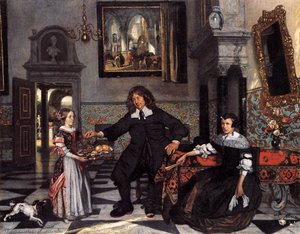
Portrait of a Family in an Interior (detail) (1678) is the Emanuel de Witte painting that draws the most eyes; the original belongs to the Alte Pinakothek, Munich. After it, the eye goes to The Interior of a Dutch Church (1680) and Interior of the Nieuwe Kerk in Delft (1664). Among the 99 works of Emanuel de Witte in our catalog, these 98 are the most famous, each a unique original presented with its year, its museum and the reason it endures.
1617 – 1692, Alkmaar Dutch golden age Most works: Museum Boijmans Van Beuningen

Top 10 paintings by Emanuel de Witte, through the gallery's eye

1
Portrait of a Family in an Interior (detail) (1678) by Emanuel de Witte

Portrait of a Family in an Interior (detail)

1678 · Oil On Canvas · Alte Pinakothek, Munich

Emanuel de Witte's “Portrait of a Family in an Interior” (1678) isn’t merely a depiction of a wealthy household; it’s a carefully constructed tableau vivant, a frozen moment brimming with quiet dignity and subtle narrative. Painted during the height of the Dutch Golden Age, this oil on canvas offers a rare glimpse into the lives of a prosperous family within their richly appointed home—a space designed to project status, comfort,…

2
The Interior of a Dutch Church (1680) by Emanuel de Witte

The Interior of a Dutch Church

1680 · Oil On Canvas · Scottish National Gallery, Edinburgh

The Interior of a Dutch Church is an oil on canvas by Emanuel de Witte. Created about 1680, the work reflects the artist's specialization in the architectural spaces of the Netherlands. De Witte, who was born in Alkmaar, Netherlands, spent much of his career capturing the specific atmosphere and light within these sacred environments.

3
Interior of the Nieuwe Kerk in Delft (1664) by Emanuel de Witte

Interior of the Nieuwe Kerk in Delft

1664 · Oil On Canvas · Residenzgalerie, Salzburg

To stand before an interior scene like this depiction of the Nieuwe Kerk in Delft is to step across a threshold, leaving the clamor of the outside world behind. The artwork does not merely show us a church; it envelops us within its monumental silence. Emanuel de Witte masterfully captures that unique atmosphere found only in grand, aged sacred architecture—a place where history seems palpable in the very dust motes…

4
Rest During the Flight (1654) by Emanuel de Witte

Rest During the Flight

The oil painting titled Rest During the Flight by Emanuel de Witte depicts a specific narrative from religious history. Created about 1654, the work presents a scene likely representing the Flight into Egypt. This biblical event is rendered through a composition centered on a nocturnal landscape where light and shadow define the primary figures.

5
The Interior of the Oude Kerk, Amsterdam, during a Sermon (1658) by Emanuel de Witte

The Interior of the Oude Kerk, Amsterdam, during a Sermon

1658 · Oil On Canvas · National Gallery, London

To stand before this depiction of The Interior of the Oude Kerk in Amsterdam is to step across the threshold of time itself. This painting, executed in 1658 by Emanuel de Witte, is far more than a mere record of an architectural space; it is a meticulously crafted meditation on faith, community, and the sublime interplay between human life and divine structure. The high-angle perspective immediately envelops the viewer, drawing…

6
Portrait of a woman (1648) by Emanuel de Witte

Portrait of a woman

1648 · Oil On Canvas · Museum Boijmans Van Beuningen, Rotterdam

A single female figure occupies the center of this oval vignette, presented in a bust-length view. She wears a dark garment, accented by a prominent white collar with scalloped edges and a small black bow. The composition draws the eye directly to her face, where a calm and composed expression suggests a dignified emotional tone. Light originates from the upper left, casting gentle shadows across the right side of her…

7
Portrait of a man (1648) by Emanuel de Witte

Portrait of a man

1648 · Oil · Museum Boijmans Van Beuningen, Rotterdam

is an oil painting by the Dutch artist Emanuel de Witte. Executed about 1648, the work represents a significant example of the artist's early engagement with portraiture before his later specialization in church interiors. The sitter is presented in a bust-length composition, positioned slightly off-center to create a sense of depth and presence.

8
Interior of a Protestant Gothic Church (1669) by Emanuel de Witte

Interior of a Protestant Gothic Church

1669 · Oil On Canvas · Rijksmuseum, Amsterdam

Emanuel de Witte's "Interior of a Protestant Gothic Church," painted in 1669, isn’t merely a depiction of a sacred space; it’s an immersive experience. This remarkable work transcends the simple act of recording architecture, instead capturing the very *feeling* of being within a grand, dimly lit cathedral – a testament to de Witte's unique artistic vision. Unlike his contemporary Pieter Saenredam, who meticulously documented architectural details with photographic precision, de…

9
Danaë and the Shower of Gold (1641) by Emanuel de Witte

Danaë and the Shower of Gold

1641 · Oil On Panel

The air in the chamber feels heavy, thick with the scent of warm linen and the sudden, electric presence of the divine. A woman reclines upon a bed of white fabric, her body catching a sudden, brilliant light that seems to emanate from the very heavens. She is Danaë, caught in a moment of profound transformation. Above her, the darkness of the room is pierced by a descent of sparkling…

10
Vertumnus and Pomona (1644) by Emanuel de Witte

Vertumnus and Pomona

1644 · Oil On Panel · Museum Boijmans Van Beuningen, Rotterdam

In Vertumnus and Pomona, Emanuel de Witte explores the subtle complexities of desire through a classical mythological lens. The work centers on the god of the seasons, Vertumnus, and his persistent efforts to court the nymph Pomona. Rather than a straightforward encounter, the artist presents a scene of strategic transformation. Vertumnus employs a clever ruse, appearing first in the guise of an old woman to sing praises of love and…

Emanuel de Witte's famous paintings, numbers 11 to 98

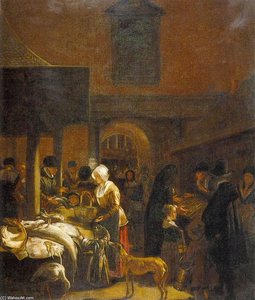
11Philemon and Baucis (1647) by Emanuel de WittePhilemon and Baucis1647 · Het Prinsenhof 12DECAYING Old church in Delft, (1659) by Emanuel de WitteDECAYING Old church in Delft,1659 · Groninger Museum 13Interior of the Old Church at Delft (1654) by Emanuel de WitteInterior of the Old Church at Delft1654 · Allen Memorial Art Museum 14View of the Choir of the Janskerk in Utrecht (1654) by Emanuel de WitteView of the Choir of the Janskerk in Utrecht1654 · Fondation Custodia 15Interior with a Woman playing a Virginal (1660) by Emanuel de WitteInterior with a Woman playing a Virginal1660 · Montreal Museum of Fine Arts 16Interior of the Oude Kerk in Amsterdam (1661) by Emanuel de WitteInterior of the Oude Kerk in Amsterdam1661 · Amsterdam Museum 17Holy Family (1650) by Emanuel de WitteHoly Family1650 18Vertumnus and Pomona (1661) by Emanuel de WitteVertumnus and Pomona1661 19Interior of the Oude Kerk in Amsterdam (1659) by Emanuel de WitteInterior of the Oude Kerk in Amsterdam1659 · Amsterdam Museum 20Interior of a Gothic Church (1650) by Emanuel de WitteInterior of a Gothic Church1650 · Museum of Fine Arts Ghent (MSK) 21Interior of a Protestant Classical Church (1669) by Emanuel de WitteInterior of a Protestant Classical Church1669 · National Gallery of Ireland 22Protestant church interior (1670) by Emanuel de WitteProtestant church interior1670 23Interior of the Oude Kerk in Amsterrdam (1665) by Emanuel de WitteInterior of the Oude Kerk in Amsterrdam1665 · Rose-Marie and Eijk van Otterloo Collection 24The Fish Market (1672) by Emanuel de WitteThe Fish Market1672 · Museum Boijmans Van Beuningen 25Church interior with a gravedigger (1669) by Emanuel de WitteChurch interior with a gravedigger1669 26Interior of an Imagined Catholic Church (1675) by Emanuel de WitteInterior of an Imagined Catholic Church1675 · Stedelijk Museum 27Interior of the Nieuwe Kerk, Amsterdam (1677) by Emanuel de WitteInterior of the Nieuwe Kerk, Amsterdam1677 · Museum of Fine Arts 28Church interior (1680) by Emanuel de WitteChurch interior1680 · Museum Boijmans Van Beuningen 29The Interior of the Oude Kerk, Amsterdam (1660) by Emanuel de WitteThe Interior of the Oude Kerk, Amsterdam1660 · National Gallery of Art 30Square in front of the Palace in an Italian Town (1664) by Emanuel de WitteSquare in front of the Palace in an Italian Town1664 · Hermitage Museum 31Interior of a Protestant Gothic Church (1669) by Emanuel de WitteInterior of a Protestant Gothic Church1669 · Rijksmuseum 32The Oude Kerk in Amsterdam during a Service (1654) by Emanuel de WitteThe Oude Kerk in Amsterdam during a Service1654 · Mauritshuis 33The Interior of the Oude Kerk, Amsterdam (1660) by Emanuel de WitteThe Interior of the Oude Kerk, Amsterdam1660 · National Gallery 34The Old Fish Market on the Dam, Amsterdam (1650) by Emanuel de WitteThe Old Fish Market on the Dam, Amsterdam1650 · Thyssen-Bornemisza Museum 35Portrait of a Family in an Interior (1678) by Emanuel de WittePortrait of a Family in an Interior1678 · Alte Pinakothek 36Interior of the Oude Kerk at Delft during a Sermon (1651) by Emanuel de WitteInterior of the Oude Kerk at Delft during a Sermon1651 · Wallace Collection 37Interior of the Oude Kerk, Delft (1650) by Emanuel de WitteInterior of the Oude Kerk, Delft1650 · Metropolitan Museum of Art 38Interior of an Imaginary Catholic Church (1668) by Emanuel de WitteInterior of an Imaginary Catholic Church1668 · Mauritshuis 39Interior of the Oude Kerk, Delft (1680) by Emanuel de WitteInterior of the Oude Kerk, Delft1680 · Art Institute of Chicago 40Interior of a Church by Emanuel de WitteInterior of a Church 41The Nieuwe Kerk in Delft with the Tomb of William the Silent (1651) by Emanuel de WitteThe Nieuwe Kerk in Delft with the Tomb of William the Silent1651 · Museum Briner und Kern 42Interior of a church (1642) by Emanuel de WitteInterior of a church1642 43interior of a church (1642) by Emanuel de Witteinterior of a church1642 44The Nieuwe Kerk at Delft with the Tomb of Willem the Silent (1650) by Emanuel de WitteThe Nieuwe Kerk at Delft with the Tomb of Willem the Silent1650 · Detroit Institute of Arts 45Church Interior with Gravedigger (1655) by Emanuel de WitteChurch Interior with Gravedigger1655 46View of a church Interior (1650) by Emanuel de WitteView of a church Interior1650 · Pushkin State Museum 47Interior of a Protestant Gothic Church (1654) by Emanuel de WitteInterior of a Protestant Gothic Church1654 48Interior of the Oude Kerk, Amsterdam (1654) by Emanuel de WitteInterior of the Oude Kerk, Amsterdam1654 · Los Angeles County Museum of Art 49Interior of the New Church in Amsterdam (1656) by Emanuel de WitteInterior of the New Church in Amsterdam1656 · Museum Boijmans Van Beuningen 50Interior of the Oude Kerk in Amsterdam (1650) by Emanuel de WitteInterior of the Oude Kerk in Amsterdam1650 · Amsterdam Museum 51The Interior of the Oude Kerk, Amsterdam, during a Sermon (1660) by Emanuel de WitteThe Interior of the Oude Kerk, Amsterdam, during a Sermon1660 · National Gallery 52Tomb of William the Silent in the Nieuwe Kerk, Delft, with an Illusionistic Curtain (1653) by Emanuel de WitteTomb of William the Silent in the Nieuwe Kerk, Delft, with an Illusionistic Curtain1653 · Los Angeles County Museum of Art 53Interior of the Portuguese Synagogue in Amsterdam (1680) by Emanuel de WitteInterior of the Portuguese Synagogue in Amsterdam1680 · Rijksmuseum 54Interior of a Renaissance Church (1666) by Emanuel de WitteInterior of a Renaissance Church1666 55Interior of a Catholic Church (1670) by Emanuel de WitteInterior of a Catholic Church1670 56Kitchen Interior (1665) by Emanuel de WitteKitchen Interior1665 · Museum of Fine Arts 57Interior of a Gothic Church (1668) by Emanuel de WitteInterior of a Gothic Church1668 · Gemäldegalerie 58The Interior of the Nieuwe Kerk, Amsterdam, with a Sermon in Progress (1665) by Emanuel de WitteThe Interior of the Nieuwe Kerk, Amsterdam, with a Sermon in Progress1665 · Harvard Art Museums 59Adriana van Heusden and her Daughter at the New Fishmarket in Amsterdam (1662) by Emanuel de WitteAdriana van Heusden and her Daughter at the New Fishmarket in Amsterdam1662 60Interior of a Protestant Church (1677) by Emanuel de WitteInterior of a Protestant Church1677 · Detroit Institute of Arts 61Interior of a Church (1680) by Emanuel de WitteInterior of a Church1680 · Cleveland Museum of Art 62Interior of the Synagogue in Amsterdam (1680) by Emanuel de WitteInterior of the Synagogue in Amsterdam1680 · Israel Museum 63Interior of the Oude Kerk, Amsterdam, during a Sermon (1680) by Emanuel de WitteInterior of the Oude Kerk, Amsterdam, during a Sermon1680 · Statens Museum For Kunst 64Interior of the Nieuwe Kerk in Amsterdam (1680) by Emanuel de WitteInterior of the Nieuwe Kerk in Amsterdam1680 · Gemäldegalerie 65The Tomb of Michiel de Ruyter in the Nieuwe Kerk, Amsterdam, Emanuel de Witte, 1683 (1683) by Emanuel de WitteThe Tomb of Michiel de Ruyter in the Nieuwe Kerk, Amsterdam, Emanuel de Witte, 16831683 · Rijksmuseum 66Interior of a Church (1674) by Emanuel de WitteInterior of a Church1674 · Wallraf-Richartz-Museum 67Interior of a church (1688) by Emanuel de WitteInterior of a church1688 68The Nieuwe Vismarkt (New Fish Market) in Amsterdam, Emanuel de Witte, 1655 - 1692 (1692) by Emanuel de WitteThe Nieuwe Vismarkt (New Fish Market) in Amsterdam, Emanuel de Witte, 1655 - 16921692 · Rijksmuseum 69Interior of the Oude Kerk, Delft (detail) (1650) by Emanuel de WitteInterior of the Oude Kerk, Delft (detail)1650 · Metropolitan Museum of Art 70Old Church in Delft (1642) by Emanuel de WitteOld Church in Delft1642 · Hermitage Museum 71The Birdmarket, Amsterdam by Emanuel de WitteThe Birdmarket, AmsterdamNationalmuseum 72Interior of the Oude Kerk, Delft (1650) by Emanuel de WitteInterior of the Oude Kerk, Delft1650 · Metropolitan Museum of Art 73Interior of a Baroque Church (1660) by Emanuel de WitteInterior of a Baroque Church1660 · Staatliche Museen zu Berlin 74A Sermon in the Oude Kerk, Delft (1651) by Emanuel de WitteA Sermon in the Oude Kerk, Delft1651 · National Gallery of Canada 75Interior of a protestant church by Emanuel de WitteInterior of a protestant churchRoyal Museum of Fine Arts Antwerp 76Interior of a church with visitors by Emanuel de WitteInterior of a church with visitors 77Intérieur d'église gothique by Emanuel de WitteIntérieur d'église gothiqueMusée Des Beaux 78Intérieur d'un temple protestant by Emanuel de WitteIntérieur d'un temple protestant 79Interior with a Woman at the Virginals (1665) by Emanuel de WitteInterior with a Woman at the Virginals1665 · Museum Boijmans Van Beuningen 80Interior of a Church (1660) by Emanuel de WitteInterior of a Church1660 · Hermitage Museum 81Interior of the Oude Kerk in Amsterdam (1686) by Emanuel de WitteInterior of the Oude Kerk in Amsterdam1686 · Detroit Institute of Arts 82Interior of the Oude Kerk, Delft (1651) by Emanuel de WitteInterior of the Oude Kerk, Delft1651 · Wallace Collection 83Interior of a Protestant Gothic Church with Motifs from the Oude and Nieuwe Kerk in Amsterdam, Emanuel de Witte, 1677 (1677) by Emanuel de WitteInterior of a Protestant Gothic Church with Motifs from the Oude and Nieuwe Kerk in Amsterdam, Emanuel de Witte, 16771677 · Rijksmuseum 84Interior of a Protestant Gothic Church (detail) (1669) by Emanuel de WitteInterior of a Protestant Gothic Church (detail)1669 · Rijksmuseum 85Interior of a Gothic church by Emanuel de WitteInterior of a Gothic churchMuseum Boijmans Van Beuningen 86Church Interior by Emanuel de WitteChurch InteriorRijksmuseum Twenthe 87Adriana van Heusden and Daughter at the Fishmarket by Emanuel de WitteAdriana van Heusden and Daughter at the FishmarketNational Gallery 88View of the Tomb of Willem the Silent in the New Church in by Emanuel de WitteView of the Tomb of Willem the Silent in the New Church inPalais des Beaux-Arts de Lille 89Intérieur de la Oude Kerk d'Amsterdam Intérieur d'église by Emanuel de WitteIntérieur de la Oude Kerk d'Amsterdam Intérieur d'égliseMusée Des Beaux 90Intérieur de la Nieuwe Kerk de Delft avec le tombeau de Guillaume le Taciturne by Emanuel de WitteIntérieur de la Nieuwe Kerk de Delft avec le tombeau de Guillaume le Taciturne 91Interior of a Church by Emanuel de WitteInterior of a ChurchPushkin State Museum 92Interior of the Oude Kerk, Amsterdam by Emanuel de WitteInterior of the Oude Kerk, AmsterdamThe Barber Institute of Fine Arts 93Interior of the Nieuwe Kerk, Amsterdam (1657) by Emanuel de WitteInterior of the Nieuwe Kerk, Amsterdam1657 · Timken Museum of Art 94Church Service in Delft by Emanuel de WitteChurch Service in DelftNational Museum in Wrocław 95Interior of a Protestant Gothic Church with Motifs from the Oude and Nieuwe Kerk in Amsterdam, Emanuel de Witte, 1660 - 1680 (1680) by Emanuel de WitteInterior of a Protestant Gothic Church with Motifs from the Oude and Nieuwe Kerk in Amsterdam, Emanuel de Witte, 1660 - 16801680 · Rijksmuseum 96Interior of a Protastant Gothic Church by Emanuel de WitteInterior of a Protastant Gothic ChurchMuseum Boijmans Van Beuningen 97Interior with a Lady Playing the Virginal (1665) by Emanuel de WitteInterior with a Lady Playing the Virginal1665 · Museum Boijmans Van Beuningen 98The Courtyard of the Old Exchange in Amsterdam (1653) by Emanuel de WitteThe Courtyard of the Old Exchange in Amsterdam1653 · Museum Boijmans Van Beuningen

Emanuel de Witte's famous paintings, period by period

The subjects that held Emanuel de Witte's eye

The four subjects that come back most often in these originals, each with its finest example.

The museums that keep Emanuel de Witte's originals

The 8 museums that hold the most of the paintings on this page.

Museum City Works by Emanuel de Witte Paintings from this list
Museum Boijmans Van Beuningen, RotterdamMuseum Boijmans Van Beuningen Rotterdam 11 Portrait of a woman, Portrait of a man, Vertumnus and Pomona
Rijksmuseum, AmsterdamRijksmuseum Amsterdam 8 Interior of a Protestant Gothic Church, Interior of a Protestant Gothic Church, Interior of the Portuguese Synagogue in Amsterdam
National Gallery, LondonNational Gallery London 4 The Interior of the Oude Kerk, Amsterdam, during a Sermon, The Interior of the Oude Kerk, Amsterdam, The Interior of the Oude Kerk, Amsterdam, during a Sermon
Amsterdam Museum, AmsterdamAmsterdam Museum Amsterdam 3 Interior of the Oude Kerk in Amsterdam, Interior of the Oude Kerk in Amsterdam, Interior of the Oude Kerk in Amsterdam
Hermitage Museum, Saint PetersburgHermitage Museum Saint Petersburg 3 Square in front of the Palace in an Italian Town, Old Church in Delft, Interior of a Church
Metropolitan Museum of Art, New YorkMetropolitan Museum of Art New York 3 Interior of the Oude Kerk, Delft, Interior of the Oude Kerk, Delft (detail), Interior of the Oude Kerk, Delft
Detroit Institute of Arts, DetroitDetroit Institute of Arts Detroit 3 The Nieuwe Kerk at Delft with the Tomb of Willem the Silent, Interior of a Protestant Church, Interior of the Oude Kerk in Amsterdam
Alte Pinakothek, MunichAlte Pinakothek Munich 2 Portrait of a Family in an Interior (detail), Portrait of a Family in an Interior

Emanuel de Witte across the decades: one unique original for each

Works per decade

Pick a decade to see the original that defines it.

Emanuel de Witte's paintings: questions for the gallery

What is the single most famous work of Emanuel de Witte?Reveal the answer

Portrait of a Family in an Interior (detail) (1678), Alte Pinakothek, Munich. The Interior of a Dutch Church (1680) and Interior of the Nieuwe Kerk in Delft (1664) come next.

At what age did Emanuel de Witte create Portrait of a Family in an Interior (detail)?Reveal the answer

61 years old: Portrait of a Family in an Interior (detail) dates from 1678, and Emanuel de Witte was born in 1617.

Which ten paintings by Emanuel de Witte are the most famous?Reveal the answer

Portrait of a Family in an Interior (detail), The Interior of a Dutch Church, Interior of the Nieuwe Kerk in Delft, Rest During the Flight, The Interior of the Oude Kerk, Amsterdam, during a Sermon, Portrait of a woman, Portrait of a man, Interior of a Protestant Gothic Church, Danaë and the Shower of Gold and Vertumnus and Pomona. The ranking above gives each one's year and museum.

How many works by Emanuel de Witte are known?Reveal the answer

Our catalog holds 99 works by Emanuel de Witte, dated from 1641 to 1692.

Where can the most famous Emanuel de Witte originals be seen?Reveal the answer

Mostly in Museum Boijmans Van Beuningen (Rotterdam), Rijksmuseum (Amsterdam) and National Gallery (London). The museum table above lists them all.

During which period did Emanuel de Witte create the best-known paintings?Reveal the answer

In 1650s: 27 of the 98 works on this page were made then, Rest During the Flight among them.

Which famous Emanuel de Witte painting is the earliest, and which the latest?Reveal the answer

On this page, the earliest is Danaë and the Shower of Gold (1641) and the latest The Nieuwe Vismarkt (New Fish Market) in Amsterdam, Emanuel de Witte, 1655 - 1692 (1692).

What subjects did Emanuel de Witte favour?Reveal the answer

People (24), Architecture (21) and Church interior (20), across the 98 works on this page.

What materials did Emanuel de Witte paint with most?Reveal the answer

Oil On Canvas, for 31 of the 98 works on this page.

Which movement does the work of Emanuel de Witte belong to?Reveal the answer

Dutch golden age, judging by the originals on this page.

What Emanuel de Witte originals can I see at the Museum Boijmans Van Beuningen?Reveal the answer

Portrait of a woman, Portrait of a man and Vertumnus and Pomona: the Museum Boijmans Van Beuningen, Rotterdam holds 11 of the works on this page.

Emanuel de Witte: a portrait of the artist

A Life in Perspective: The World of Emanuel de Witte

Emanuel de Witte, a name perhaps less instantly recognizable than some of his Dutch Golden Age contemporaries, nevertheless occupies a significant and fascinating niche within the pantheon of 17th-century masters. Born in Alkmaar in 1617, De Witte’s artistic journey was one marked by both remarkable talent and considerable personal turmoil – a duality that seems to subtly infuse itself into the very atmosphere of his paintings. He wasn't driven by meticulous architectural documentation like Pieter Saenredam; instead, he sought to capture the *feeling* of space, the quality of light, and the subtle drama unfolding within sacred interiors. His canvases aren’t merely representations of churches; they are immersive experiences, inviting viewers into a world of quiet contemplation and spiritual resonance.

From Delft Training to Amsterdam's Embrace

De Witte’s early life provided a solid foundation for his artistic pursuits. His father, a schoolmaster, instilled in him an appreciation for learning and intellectual curiosity – qualities that would later manifest in his careful observation of perspective and light. He formally entered the art world by joining the Guild of St Luke in Alkmaar in 1636, but it was his subsequent apprenticeship with Evert van Aelst in Delft that proved particularly formative. Van Aelst, a renowned still-life painter, imparted to De Witte a keen eye for detail and a masterful command of light and shadow – skills that would become hallmarks of his mature style. Initially, De Witte explored various genres—portraits, mythological scenes, religious narratives—but it was upon relocating to Amsterdam in 1651 that he truly found his calling. The city’s wealth of magnificent churches provided an inexhaustible source of inspiration, and he began to specialize in depicting their awe-inspiring interiors.

Master of Atmosphere and Imaginary Spaces

Amsterdam proved pivotal for De Witte's artistic development. He didn’t simply replicate existing church spaces; rather, he skillfully synthesized elements from different buildings, creating idealized interiors that felt both familiar and subtly otherworldly. The Oude Kerk in Amsterdam became a frequent subject, appearing repeatedly on his canvases from various vantage points. But these weren’t straightforward depictions. De Witte manipulated perspective, played with light and shadow, and populated the spaces with carefully arranged figures to evoke a specific mood or atmosphere. As Walter Liedtke observed, his primary interest lay not in the architecture itself but in “the space itself – its light, color, sheer extent, and mood.” This emphasis on atmospheric effect distinguishes him from more rigidly topographical painters of the era. He wasn’t concerned with precise accuracy; he was interested in creating a *feeling* of grandeur, reverence, and spiritual depth.

A Life Marked by Shadows

Despite his artistic success, De Witte's personal life was plagued by hardship. The death of his first wife brought profound grief, and subsequent legal troubles involving his second wife and daughter cast a long shadow over his later years. Financial difficulties led him to the humiliating position of indentured servitude to an art dealer, Joris de Wijs, a situation he ultimately breached, leading to further complications. Contemporary accounts paint a picture of a volatile temperament – a man prone to shouting at clients and engaging in disputes. This inner turmoil perhaps contributed to the unevenness of his later work, but it also adds another layer of complexity to our understanding of the artist and his creations. Tragically, De Witte’s life came to a devastating end in 1692 when he reportedly attempted suicide by hanging himself from a canal bridge; the rope broke, and he drowned. It was a grim finale for a man who had dedicated his life to capturing the beauty and serenity of sacred spaces.

Legacy and Enduring Influence

Emanuel de Witte stands as an important figure in the last phase of architectural painting in the Netherlands, bridging the gap between meticulous documentation and atmospheric interpretation. His innovative use of light and perspective influenced subsequent generations of artists, and his paintings continue to offer valuable insights into 17th-century Dutch religious life and social customs. Today, works by De Witte are held in prestigious collections worldwide – at the Metropolitan Museum of Art, the National Gallery of Art, and the Rijksmuseum, among others—testifying to his enduring legacy as a master of perspective, atmosphere, and emotional resonance. He reminds us that art is not merely about what we see but how we *feel* when we look.