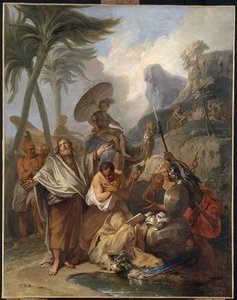
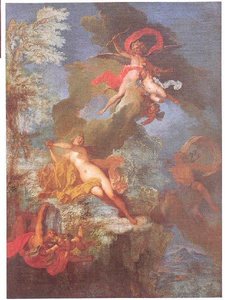
Portrait of Nicolas Bertin

The 42 Most Famous Nicolas Bertin Paintings, a Gallery Selection

Updated October 2026 · ranked by our popularity score (searches, visits and orders for each work) · 43 works by Nicolas Bertin in our catalogue

In short

Of all the originals Nicolas Bertin left, the most famous is The Good Samaritan (1701), in the collection of the Bavarian State Painting Collections, Munich. Close behind it come Christ and the Canaanite Woman (1701) and Christ and the Samaritan Woman (1701). Our catalog holds 43 works by Nicolas Bertin; the gallery has kept the 42 the world admires most, each shown with its date, its museum and its story.

1667 – 1736, Paris Baroque Most works: Bavarian State Painting Collections

Nicolas Bertin's top 10 paintings: the gallery's choice

1
The Good Samaritan (1701) by Nicolas Bertin

The Good Samaritan

This monochromatic painting, dated 1701, depicts a scene from the biblical parable of the Good Samaritan. The composition centers on a man assisting an injured individual onto a horse. To the left, a stone archway provides a structured architectural element, while the background is filled with the dense, detailed textures of foliage and trees. The entire work is rendered in a grayscale palette, utilizing a wide range of tonal values…

3
Christ and the Samaritan Woman (1701) by Nicolas Bertin

Christ and the Samaritan Woman

In this 1701 oil painting, two figures are positioned within a wooded landscape near a stone well. Christ is depicted with an outstretched arm, a gesture directed toward the Samaritan woman. She reacts to his presence with a specific hand gesture, creating a diagonal tension between their bodies. The composition follows a triangular arrangement, guiding the eye from the seated or leaning figure of Christ toward the woman and then…

4
Hercules Delivering Prometheus (1703) by Nicolas Bertin

Hercules Delivering Prometheus

1703 · Oil On Canvas

A heavy, muscular tension pulls at the center of the canvas. Hercules moves with a sudden, diagonal force, his body a study in strained anatomy and heroic intent. He reaches toward Prometheus, whose torso is pale against the encroaching shadows of the rocky landscape. The scene is a collision of flesh and stone, a moment of violent rescue frozen in oil. Red drapery cuts through the earthy browns of the…

5
Saint Gregory the Great (1707) by Nicolas Bertin

Saint Gregory the Great

1707 · Oil

In this intimate oil painting, we encounter Saint Gregory the Great, a figure of profound spiritual weight. The portrait, executed by the French painter Nicolas Bertin, captures the subject in a moment of quiet, upward contemplation. It is a work that invites a closer look at the individual's character and the divine connection suggested by his expression.

6
Venus Orders Vulcan to Make Arms for Aeneas (1704) by Nicolas Bertin

Venus Orders Vulcan to Make Arms for Aeneas

1704 · Oil · Opera House, Versailles

The scene unfolds within a rugged, outdoor workshop or grotto, where heavy textures define the rocky background and the foliage of large trees. In the center-left, Venus is depicted as a luminous, seated figure, her body angled as she gestures toward Vulcan. Vulcan is positioned with his back to the viewer, his muscular frame leaning over an anvil as he engages in his craft. The arrangement of the figures follows…

7
Hercules fighting Achelous. (1710) by Nicolas Bertin

Hercules fighting Achelous.

1710 · Oil · National Museum in Warsaw, Warsaw

The canvas captures a violent collision between the hero Hercules and the river god Achelous. Two muscular male figures dominate the foreground, locked in a physical struggle that defines the composition. Their limbs form energetic, diagonal lines, guiding the eye through the chaos of the combat. Above the fray, a winged female figure floats amidst the clouds, holding a laurel wreath as a symbol of divine oversight or impending triumph.…

8
Bacchanalia. (1710) by Nicolas Bertin

Bacchanalia.

1710 · Oil · National Museum in Warsaw, Warsaw

Nicolas Bertin’s Bacchanalia. presents a scene of exuberant revelry set within a dark, cavernous environment. The composition is dynamic, centering on a group of figures engaged in celebration. On the left, a male figure is captured in mid-motion, his back partially turned to the viewer as he raises a golden goblet toward the others. To the right, three figures—two women and a man—recline together upon a draped surface. The arrangement…

9
Hercules Delivering Prometheus (1703) by Nicolas Bertin

Hercules Delivering Prometheus

1703 · Oil On Canvas · Birmingham Museum of Art, Birmingham

A heavy, muscular tension pulls the eye upward. Hercules moves in a powerful diagonal, his body a study of strained anatomy and light. He reaches toward the suffering figure of Prometheus, whose flesh is pale against the dark, craggy shadows of the rock. The air feels thick with the scent of dust and the heat of a struggle. Every muscle is a knot of effort, carved by light that strikes…

10
The Infant Zeus among Nymphs (1710) by Nicolas Bertin

The Infant Zeus among Nymphs

The Infant Zeus among Nymphs by Nicolas Bertin depicts a mythological scene set within a lush, pastoral landscape. The composition is organized in a dynamic, pyramidal structure that directs the viewer's eye toward the center of the grouping. At this focal point, an infant Zeus is surrounded by a group of nymphs. These figures are positioned in various poses of movement and service, creating a sense of activity within the…

The Nicolas Bertin selection continues, 11 to 42

11Bacchus with Four Putti (1716) by Nicolas BertinBacchus with Four Putti1716 · Bavarian State Painting Collections 12Saturn Clipping the Wings of Eros (1716) by Nicolas BertinSaturn Clipping the Wings of Eros1716 · Bavarian State Painting Collections 13Amor Leaves Psyche (1716) by Nicolas BertinAmor Leaves Psyche1716 · Bavarian State Painting Collections 14Prophets and Kings of the Old Testament Adoring the Name of Jehovah (1718) by Nicolas BertinProphets and Kings of the Old Testament Adoring the Name of Jehovah1718 · Museum of Fine Arts 15The Resurrection of Christ (1730) by Nicolas BertinThe Resurrection of Christ1730 · Carnavalet Museum 16Christ Washing the Feet of His Disciples (1725) by Nicolas BertinChrist Washing the Feet of His Disciples1725 · Art Institute of Chicago 17Daniel in the Lions' Den (1736) by Nicolas BertinDaniel in the Lions' Den1736 · Musée Des Beaux 18Susanna and the Elders (1699) by Nicolas BertinSusanna and the Elders1699 · Rijksmuseum 19Phaethon on the Chariot of Apollo (1720) by Nicolas BertinPhaethon on the Chariot of Apollo1720 · The Louvre 20PROMETHEE DELIVRE PAR HERCULE by Nicolas BertinPROMETHEE DELIVRE PAR HERCULEThe Louvre 21Saint Philippe baptisant l'eunuque de la reine Candace by Nicolas BertinSaint Philippe baptisant l'eunuque de la reine CandaceThe Louvre 22Vertumnus and Pomona (1706) by Nicolas BertinVertumnus and Pomona1706 · Opera House 23Joseph and Potiphar"s Wife, Nicolas Bertin, 1690 - 1710 (1710) by Nicolas BertinJoseph and Potiphar"s Wife, Nicolas Bertin, 1690 - 17101710 · Rijksmuseum 24Jupiter and Danaë by Nicolas BertinJupiter and DanaëMusee National du Chateau de Compiegne 25The Finding of the Money in Benjamin's Sack by Nicolas BertinThe Finding of the Money in Benjamin's SackNational Gallery of Ireland 26Bacchus and Ariadne by Nicolas BertinBacchus and AriadneNationalmuseum 27Nicolas Bertin - Apollon et les Muses by Nicolas BertinNicolas Bertin - Apollon et les Muses 28La Lapidation de saint Etienne by Nicolas BertinLa Lapidation de saint Etienne 29Hercule délivrant Prométhée by Nicolas BertinHercule délivrant Prométhée 30Jupiter et Léda by Nicolas BertinJupiter et LédaMusee National du Chateau de Compiegne 31Acis et Galathée by Nicolas BertinAcis et GalathéeMusee National du Chateau de Compiegne 32Moïse et les filles de Jethro by Nicolas BertinMoïse et les filles de Jethro 33Persée délivrant Andromède by Nicolas BertinPersée délivrant AndromèdeMusee National du Chateau de Compiegne 34LE TRIOMPHE DE DAVID by Nicolas BertinLE TRIOMPHE DE DAVID 35Jupiter et Danaë by Nicolas BertinJupiter et Danaë 36Vénus et l'Amour by Nicolas BertinVénus et l'Amour 37Anacréon et l'Amour by Nicolas BertinAnacréon et l'Amour 38PHAETON CONDUISANT LE CHAR DU SOLEIL by Nicolas BertinPHAETON CONDUISANT LE CHAR DU SOLEILThe Louvre 39La résurrection de Lazare by Nicolas BertinLa résurrection de Lazare 40Moïse et les filles de Jéthro by Nicolas BertinMoïse et les filles de Jéthro 41Psyché abandonnée par l'Amour by Nicolas BertinPsyché abandonnée par l'AmourMusee National du Chateau de Compiegne 42Hercule assommant les soldats de Busiris Hercule et les Nymphes (Titre ancien) Hercule et les filles de Stymphalos (Titre ancien) by Nicolas BertinHercule assommant les soldats de Busiris Hercule et les Nymphes (Titre ancien) Hercule et les filles de Stymphalos (Titre ancien)

The subjects that held Nicolas Bertin's eye

The four subjects that come back most often in these originals, each with its finest example.

The museums that keep Nicolas Bertin's originals

The 8 museums that hold the most of the paintings on this page.

Museum City Works by Nicolas Bertin Paintings from this list
Bavarian State Painting Collections, MunichBavarian State Painting Collections Munich 6 The Good Samaritan, Christ and the Canaanite Woman, Christ and the Samaritan Woman
Musee National du Chateau de Compiegne, CompiegneMusee National du Chateau de Compiegne Compiegne 5 Jupiter and Danaë, Jupiter et Léda, Acis et Galathée
The Louvre, ParisThe Louvre Paris 4 Phaethon on the Chariot of Apollo, PROMETHEE DELIVRE PAR HERCULE, Saint Philippe baptisant l'eunuque de la reine Candace
Opera House, VersaillesOpera House Versailles 2 Venus Orders Vulcan to Make Arms for Aeneas, Vertumnus and Pomona
National Museum in Warsaw, WarsawNational Museum in Warsaw Warsaw 2 Hercules fighting Achelous., Bacchanalia.
Rijksmuseum, AmsterdamRijksmuseum Amsterdam 2 Susanna and the Elders, Joseph and Potiphar"s Wife, Nicolas Bertin, 1690 - 1710
Birmingham Museum of Art, BirminghamBirmingham Museum of Art Birmingham 1 Hercules Delivering Prometheus
National Museum of Art, Architecture and Design, OsloNational Museum of Art, Architecture and Design Oslo 1 The Infant Zeus among Nymphs

Nicolas Bertin decade by decade: the original that defines each

Works per decade

Pick a decade to see the original that defines it.

Collectors' questions about Nicolas Bertin's paintings

Which work is Nicolas Bertin most famous for?Reveal the answer

The Good Samaritan (1701), Bavarian State Painting Collections, Munich. Christ and the Canaanite Woman (1701) and Christ and the Samaritan Woman (1701) come next.

What age was Nicolas Bertin when The Good Samaritan was made?Reveal the answer

34 years old: The Good Samaritan dates from 1701, and Nicolas Bertin was born in 1667.

What are the ten most famous Nicolas Bertin paintings?Reveal the answer

The Good Samaritan, Christ and the Canaanite Woman, Christ and the Samaritan Woman, Hercules Delivering Prometheus, Saint Gregory the Great, Venus Orders Vulcan to Make Arms for Aeneas, Hercules fighting Achelous., Bacchanalia., Hercules Delivering Prometheus and The Infant Zeus among Nymphs. The ranking above gives each one's year and museum.

How many paintings did Nicolas Bertin leave?Reveal the answer

Our catalog holds 43 works by Nicolas Bertin, dated from 1699 to 1736.

In which museums do Nicolas Bertin's masterpieces hang?Reveal the answer

Mostly in Bavarian State Painting Collections (Munich), Musee National du Chateau de Compiegne (Compiegne) and The Louvre (Paris). The museum table above lists them all.

In which years did Nicolas Bertin paint the most famous works?Reveal the answer

In 1700s: 8 of the 42 works on this page were made then, The Good Samaritan among them.

What are the first and the last famous originals of Nicolas Bertin?Reveal the answer

On this page, the earliest is Susanna and the Elders (1699) and the latest Daniel in the Lions' Den (1736).

Which subjects did Nicolas Bertin choose most often?Reveal the answer

Man (12), Drapery (8) and Woman (6), across the 42 works on this page.

Which technique did Nicolas Bertin use most?Reveal the answer

Oil, for 10 of the 42 works on this page.

To which art movement does Nicolas Bertin belong?Reveal the answer

Baroque, judging by the originals on this page.

Which Nicolas Bertin works hang at the Bavarian State Painting Collections?Reveal the answer

The Good Samaritan, Christ and the Canaanite Woman and Christ and the Samaritan Woman: the Bavarian State Painting Collections, Munich holds 6 of the works on this page.

Nicolas Bertin: life and work

Early Life and Artistic Foundations

Nicolas Bertin, born in Paris in 1667, emerged from a family steeped in the artistic traditions of late 17th-century France. Though his father was a sculptor who sadly passed away when Nicolas was just four years old, the seeds of creativity were clearly sown early on. His formal training began in 1678 with an apprenticeship under Guy-Louis Vernansal, a respected figure in Parisian artistic circles. This initial grounding proved pivotal, but Bertin’s education didn't stop there; he soon found himself studying under the tutelage of Jean Jouvenet and later Louis Boullongne, both influential painters who would significantly shape his developing style. These masters instilled in him not only technical skill but also a deep appreciation for narrative power and dramatic composition—qualities that would become hallmarks of his own work.

The Prix de Rome and Italian Inspiration

Bertin’s talent quickly became apparent, culminating in a remarkable achievement in 1685: winning the prestigious *Prix de Rome* with his painting “Construction of Noah's Ark.” This award was the highest honor an aspiring French artist could receive, granting him the invaluable opportunity to study at the Académie de France in Rome. He arrived in Italy towards the end of that year and remained until the winter of 1688-89, immersing himself in the artistic heritage of the ancient world and the Renaissance masters. During his time abroad, he was profoundly influenced by the works of Raphael, the Carracci family, and Correggio, absorbing their techniques and compositional approaches. Notably, Bertin also participated in a student protest against the teaching methods at the Académie de France, demonstrating an independent spirit that would continue to inform his artistic choices throughout his career.

A Rising Star in Parisian Artistic Circles

Upon returning to Paris after a brief sojourn in Lyon, Bertin steadily gained recognition within the French art establishment. He was formally received as a member of the Académie Royale de Peinture et de Sculpture in 1703, presenting “Hercules Delivering Prometheus” as his *morceau de réception*—a work required for full membership. This acceptance solidified his position among the leading painters of his generation and opened doors to important commissions. In 1715, he was appointed a professor at the Académie Royale, further cementing his influence on aspiring artists.

Mythological Narratives and Religious Scenes

Bertin’s oeuvre is characterized by a captivating blend of mythological and religious subjects, often rendered with Baroque grace and meticulous detail. Early works like “Mercury Killing Argus” (now lost) reveal the stylistic influences of the Boullogne brothers—graceful figures and clear, Flemish-derived colors. However, Bertin soon began to forge his own path, developing a distinctive approach to storytelling through paint. His paintings of around the turn of the century, such as “Joseph and Potiphar’s Wife” and “Susanna and the Elders,” exemplify this shift. These intimate religious scenes were particularly popular with private collectors, offering ambiguous narratives that allowed for both sacred and secular interpretations. He wasn't merely illustrating biblical tales; he was exploring themes of temptation, desire, and morality with a nuanced sensibility. Other notable works include "The Flight into Egypt" and “Mars and Venus,” each demonstrating his mastery of composition, color, and emotional expression.

Legacy and Historical Significance

Nicolas Bertin’s work embodies the transition between the late Baroque period and the emerging Rococo style. While rooted in the dramatic intensity and technical precision of the Baroque, his paintings also exhibit a growing emphasis on elegance, refinement, and narrative depth—qualities that would become central to the Rococo aesthetic. His ability to blend sacred themes with secular undertones appealed to a wide audience, securing him a prominent place among the most sought-after painters in France during his lifetime. Today, Bertin’s paintings are held in major European and American collections, continuing to captivate viewers with their beauty, complexity, and enduring artistic merit. His legacy lies not only in the exquisite quality of his work but also in his ability to capture the spirit of a changing era—a time of both religious devotion and burgeoning secularism.