Romanticism · 1807
Daniel Wadsworth (Thomas Sully, 1807)
Thomas Sully (1783–1872) made Daniel Wadsworth. It dates from 1807. It belongs to the Romanticism movement. It is made in acrylic on canvas. It is kept at Wadsworth Atheneum Museum of Art in Hartford, États-Unis d'Amérique.
- 1807
- Acrylic On Canvas
- Wadsworth Atheneum Museum of Art, Hartford

 Preview

 Hand Made Oil Painting
 Send
 Share
 Fact sheet


 Download
 Similars
 X-Ray
 Diaporama
 Q&A

 Stats
Daniel Wadsworth, in brief
- Title
- Daniel Wadsworth
- Artist
- Thomas Sully (1783–1872)
- Artist born in
- Horncastle, United Kingdom
- Date
- 1807
- Medium
- Acrylic On Canvas
- Where to see it
- Wadsworth Atheneum Museum of Art, Hartford, États-Unis d'Amérique
- Movement
- Romanticism
- Subject
- portraiture, gentleman, buffgloves, travel, patronage, 1807
What does Daniel Wadsworth depict?
A Portrait of Refinement: Daniel Wadsworth by Thomas Sully
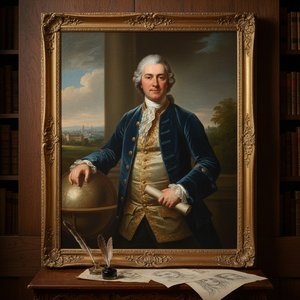
Thomas Sully’s “Daniel Wadsworth” is more than just a likeness; it's a carefully constructed tableau of 19th-century American society, imbued with the quiet dignity and understated elegance characteristic of the era. Painted in 1807, this portrait captures not merely the physical appearance of Daniel Wadsworth, but also his status as a prominent art patron and a man deeply engaged with the burgeoning world of artistic endeavor. The painting immediately draws the eye to Wadsworth’s composed demeanor – a subtle seriousness conveyed through the direct gaze he offers the viewer, an invitation into a private moment of contemplation.
Sully's masterful technique is evident in every detail. He employs a refined tonal palette, favoring muted browns, creams, and grays that lend the scene a sense of understated luxury. The artist’s attention to texture is remarkable; observe the intricate detailing of Wadsworth’s buff leather gloves, stitched with a vibrant red thread – a deliberate flourish suggesting his travels and connections across continents. The folds of his dark suit are rendered with meticulous precision, hinting at wealth and social standing, while the subtle sheen on his cravat speaks to the fashionable sensibilities of the time. Sully's skill in capturing light and shadow creates a remarkable sense of depth and realism, imbuing the portrait with a palpable atmosphere.
The Patron and the Pursuit of Beauty
Daniel Wadsworth’s life was inextricably linked to art. He wasn’t simply a collector; he actively fostered the careers of emerging artists, recognizing their potential and providing them with opportunities to develop their skills. His invitation to Thomas Sully to paint this portrait underscores his commitment to supporting artistic talent. Wadsworth himself was an amateur artist, driven by a passion for capturing beautiful scenes – a pursuit reflected in his travels throughout Europe and America. This dual role as patron and aspiring artist shaped his worldview and informed the choices he made regarding art and culture.
The backdrop of the bookshelf is not merely decorative; it’s symbolic of Wadsworth's intellectual pursuits and his appreciation for knowledge and beauty. Books, representing a vast repository of ideas and artistic inspiration, frame the sitter, suggesting that he was surrounded by a world of learning and refinement. The inclusion of this element speaks to the importance of education and culture within the context of 19th-century American society – a period marked by rapid growth and increasing emphasis on social progress.
A Window into an Era
“Daniel Wadsworth” offers a fascinating glimpse into the world of early America, where wealth, status, and artistic patronage intertwined. The portrait reflects the values and aspirations of a rising elite – individuals who sought to cultivate their own tastes, support the arts, and contribute to the cultural landscape of a young nation. The painting’s meticulous detail and refined aesthetic are hallmarks of Neoclassical portraiture, a style that emphasized order, reason, and classical ideals.
Interestingly, research reveals that Wadsworth was instrumental in establishing the Wadsworth Atheneum Museum of Art in Hartford, Connecticut – a testament to his enduring legacy as a champion of art. His vision extended beyond simply collecting; he sought to create an institution dedicated to promoting artistic excellence and making art accessible to the public. The painting itself serves as a tangible link to this ambitious endeavor, embodying the spirit of innovation and cultural enrichment that defined Wadsworth’s life.
Collecting a Masterpiece: A High-Quality Reproduction
OriginalUniqueArt offers meticulously crafted reproductions of “Daniel Wadsworth” by Thomas Sully, allowing you to bring this captivating portrait into your home or office. Our high-resolution digital prints are produced on archival-quality canvas and stretched over premium wooden frames, ensuring that the artwork’s beauty and detail endure for generations. Whether you're an art enthusiast, a collector, or simply seeking to add a touch of elegance to your space, a OriginalUniqueArt reproduction of “Daniel Wadsworth” is a timeless investment – a celebration of artistic skill and American heritage.
Which museum holds Daniel Wadsworth?
Wadsworth Atheneum Museum of Art
Hartford, États-Unis d'Amérique
Un Voyage à Travers le Temps et l'Expression Artistique : Le Musée d’Athenes Wadsworth Au cœur de Hartford, dans le Connecticut, se dresse le Musée d’Athenes Wadsworth, un monument culturel qui témoigne de la passion américaine pour l'art depuis plus de 175 ans. Fondé en 1842, il est fier de porter le titre du plus ancien musée d'art public des États-Unis, une distinction qui résonne avec les échos de générations d’amateurs d’art et de mécènes visionnaires. Loin d'être un simple conservatoire d'objets anciens, le Wadsworth Atheneum est un organisme vivant, en constante évolution, dont l'architecture elle-même raconte une histoire fascinante.


High-resolution images of Daniel Wadsworth

Thomas Sully, Daniel Wadsworth (1807), Wadsworth Atheneum Museum of Art. Public domain.
Questions on Daniel Wadsworth, answered
Where is "Daniel Wadsworth" by Thomas Sully on display today?
The original "Daniel Wadsworth" by Thomas Sully is held at the Wadsworth Atheneum Museum of Art, Hartford, États-Unis d'Amérique. A reproduction allows the work to be displayed at home.
When was "Daniel Wadsworth" made?
"Daniel Wadsworth" dates from 1807. The date places the work within Thomas Sully's career and its era.
What medium is "Daniel Wadsworth" by Thomas Sully executed in?
"Daniel Wadsworth" is executed in acrylic on canvas.
What does "Daniel Wadsworth" by Thomas Sully depict?
"Daniel Wadsworth" by Thomas Sully depicts: portraiture, gentleman, buffgloves, travel, patronage, 1807, wadsworth.
Can the image of "Daniel Wadsworth" by Thomas Sully be freely reproduced?
The copyright answer for "Daniel Wadsworth" by Thomas Sully: the work is in the public domain - its copyright has expired. This determines whether reproductions of the image may be freely made.
Who created "Daniel Wadsworth"?
The artist behind "Daniel Wadsworth" is Thomas Sully. The work is catalogued under Thomas Sully's name.
Which artistic current is "Daniel Wadsworth" by Thomas Sully part of?
"Daniel Wadsworth" is a work of Romanticism. The movement indicates the artistic tradition the work is part of.
What stage of Thomas Sully's development does "Daniel Wadsworth" represent?
Within Thomas Sully's career, "Daniel Wadsworth" falls in the Early Period. The phase helps compare it with the artist's other works.
At what age did Thomas Sully make "Daniel Wadsworth"?
Thomas Sully made "Daniel Wadsworth" at the age of 24. The artist was born in 1783 and the work is dated 1807.
About the artist, Thomas Sully

1783–1872, United Kingdom
Thomas Sully
A Transatlantic Brushstroke: The Life and Art of Thomas Sully Born under the skies of Horncastle, Lincolnshire in 1783, Thomas Sully’s journey was one of remarkable transatlantic passage – not merely geographical, but artistic and cultural. His story isn't simply that of a painter; it is a reflection of the burgeoning American identity finding its voice through portraiture. The son of actors, Matthew and Sarah Chester Sully, young Thomas experienced an itinerant childhood when his family emigrated to Charleston, South Carolina in 1792, seeking new opportunities on the American stage. This early exposure to performance, to capturing fleeting expressions and embodying character, would profoundly shape his artistic sensibility.
Also by Thomas Sully
 Queen Victoria1838
 Thomas Jefferson (1743-1826), LL.D. 17861823
 George Washington1840
 Dr. Edward Hudson1810

Essays around Daniel Wadsworth
 Timeless Elegance: The Soul of Victorian Portraiture Reimagined through Impressionist LightDiscover the enduring beauty of Victorian portraiture reimagined through Impressionist light. Explore exquisite hand-painted oil reproducti…
 British Neoclassical paintersBritish Neoclassical painters like Joshua Reynolds, George Romney, and Thomas Lawrence define an era. Find museum-quality reproductions on …
 Thomas Hudson: A Study in 18th-Century Portraiture & British Artistic IdentityExplore the life & work of Thomas Hudson, a leading 18th-century British portraitist. Discover his mastery of the 'Grand Manner,' influenti…