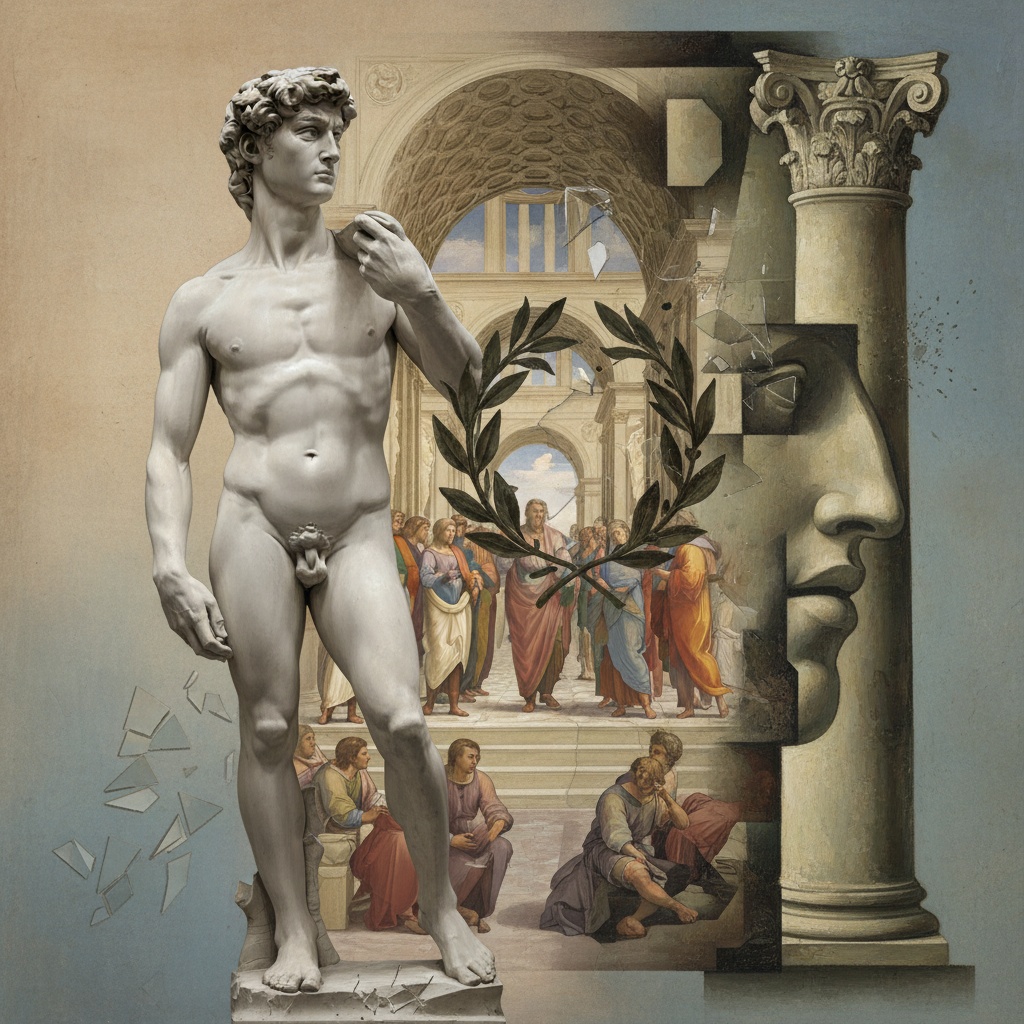
The Classical Foundation: Ancient Greece & Rome's Enduring Influence
Ancient Greek art is the visual and applied arts, as well as the architecture, produced by the Hellenes or Greek peoples from the start of the Iron Age to the Hellenistic period, ending with Roman conquest of Greece at the Battle of Corinth in 146 BC...
The story of Western art is, in many ways, a continuous conversation with its past—a dialogue initiated most powerfully with the civilizations of ancient Greece and Rome. From roughly the 8th century BCE to the fall of the Roman Empire, these cultures cultivated an aesthetic that prioritized human form, rational order, and idealized beauty. It wasn’t merely imitation; rather, it was a foundational philosophy expressed through visual means. The Greeks, particularly, sought to represent the perfect human body – not as it *was*, but as it *could be*. Sculptors like Phidias and Praxiteles moved beyond simple representation, imbuing their works with a sense of divine proportion and harmonious balance. This pursuit of perfection wasn’t arbitrary; it reflected a broader worldview that emphasized reason, civic virtue, and the inherent dignity of humankind. Roman art, while heavily influenced by its Greek predecessor, expanded upon these principles, focusing on realism in portraiture and monumental scale to celebrate imperial power. The architectural innovations – arches, domes, concrete – demonstrated a practical mastery alongside aesthetic ambition. This legacy wasn’t simply preserved; it was actively studied and revered throughout the Middle Ages, awaiting a moment of fervent rediscovery.
Renaissance Revival: Reclaiming Antiquity Through Art & Humanism
Renaissance art (1350 – 1620) is the painting, sculpture, and decorative arts of the period of European history known as the Renaissance, which emerged as a distinct style in Italy in about AD 1400, in parallel with developments which occurred in phi...
The 14th century witnessed a profound shift in European thought – the Renaissance. More than just a stylistic change, it was a rebirth of classical learning and values after centuries of medieval focus. Artists began to look beyond Gothic conventions, turning instead to ancient texts and artifacts for inspiration. This wasn’t simply about copying Roman statues or Greek vases; it was about understanding the *principles* that underpinned them. Figures like Leon Battista Alberti, a polymath architect and writer, codified these principles in treatises on perspective and proportion, providing artists with the tools to recreate classical realism. The rediscovery of linear perspective revolutionized painting, allowing for a more convincing illusion of depth and space – mirroring the rational order prized by ancient thinkers. Simultaneously, Humanism—a philosophical movement emphasizing human potential and achievement—fueled a renewed interest in portraying individuals with dignity and psychological complexity. Piero della Francesca’s “Baptism of Christ,” for example, exemplifies this blend: classical architectural settings, mathematically precise perspective, and figures imbued with serene grace. The focus shifted from solely religious iconography to include portraits celebrating individual patrons, reflecting the growing importance of human agency.
Neoclassicism’s Order: Reason, Virtue, and the Return to Form
By the mid-18th century, a reaction against the perceived excesses of Baroque and Rococo styles led to the emergence of Neoclassicism. This movement wasn't merely an aesthetic preference; it was deeply intertwined with Enlightenment ideals of reason, order, and civic virtue. Artists looked directly to ancient Greece and Rome for models of moral rectitude and artistic purity. Jacques-Louis David’s paintings, such as “The Oath of the Horatii,” embody this spirit: stark compositions, precise draftsmanship, and subjects drawn from Roman history emphasizing self-sacrifice and patriotism. Neoclassical sculpture, exemplified by Antonio Canova's works, sought to emulate the idealized forms of classical antiquity, often depicting mythological figures with a restrained emotionality. The emphasis was on clarity, balance, and formal perfection—a deliberate rejection of Baroque drama and Rococo frivolity. This wasn’t simply about recreating ancient art; it was about using it as a vehicle for conveying moral messages and promoting civic responsibility.
Romantic Echoes: Idealization and the Classical Past in a New Light
The rise of Romanticism in the late 18th and early 19th centuries presented a complex relationship with classical tradition. While rejecting Neoclassicism’s strict adherence to form, Romantics didn't abandon the past entirely. Instead, they reinterpreted it through a lens of emotion, imagination, and individual experience. Artists like Eugène Delacroix drew inspiration from classical mythology and history but infused their works with dramatic intensity and subjective feeling. The idealized forms of Greek sculpture were often used to express longing for a lost golden age or to explore themes of heroism and tragedy. This period saw a fascination with ruins—not as symbols of decay, but as evocative reminders of past glory and the passage of time. The classical past became less about rational order and more about emotional resonance, serving as a source of inspiration for exploring the power of nature, the complexities of human passion, and the search for spiritual meaning.
Modernist Interpretations: Fragmentation, Memory, and the Legacy of Classicism
The 20th century witnessed radical experimentation in art, challenging traditional notions of representation and form. Modernist movements like Cubism and Surrealism often fragmented classical forms or recontextualized them to explore new psychological and philosophical territories. Even as artists rejected representational accuracy, the underlying principles of classical composition—balance, harmony, proportion—continued to exert a subtle influence. Artists such as Pablo Picasso frequently referenced classical sculpture in his work, deconstructing and reimagining ancient motifs. The concept of *ideal form* persisted, albeit transformed into abstract shapes and symbolic representations. Furthermore, the classical past served as a source of memory and cultural identity, prompting artists to grapple with questions of history, tradition, and modernity. The enduring power of classical mythology and archetypes continued to resonate in works that explored universal themes of love, loss, and human existence.
Collecting the Classics Today: Preserving & Reinterpreting Timeless Beauty
The fascination with classical art continues unabated in the 21st century. Whether through acquiring museum-quality reproductions, commissioning custom portraits inspired by Renaissance masters, or simply studying the works of antiquity, individuals seek to connect with a rich artistic heritage. At OriginalUniqueArt, we believe that access to great art should be universal. Our handmade oil paintings and prints offer an opportunity to bring the beauty and inspiration of classical masterpieces into your home. From Zurbaran’s evocative depictions of religious scenes to Raphael's harmonious compositions, our collection spans centuries of artistic achievement. Beyond simply acquiring artwork, collecting represents a commitment to preserving cultural memory and fostering appreciation for timeless values. Whether you are drawn to the rational order of Neoclassicism or the emotional intensity of Romanticism, exploring classical art offers a profound journey through human history and imagination—a conversation that continues to evolve with each generation.