Early Renaissance · 1482
Primavera (Sandro Botticelli, 1482)
Sandro Botticelli (1445–1510) made Primavera. It dates from 1482. It belongs to the Early Renaissance movement. It is made in oil on canvas. It is kept at Galleria degli Uffizi in Florence, Italy. It measures 203 × 314 cm.
- 1482
- Oil On Canvas
- 203 × 314 cm
- Galleria degli Uffizi, Florence

 Preview

 Hand Made Oil Painting
 Send
 Share
 Guide


 Download
 Similars
 X-Ray
 Diaporama
 Q&A

 Stats
 Top100
Primavera: the essentials
- Title
- Primavera
- Artist
- Sandro Botticelli (1445–1510)
- Artist born in
- Florence, Italy
- Date
- 1482
- Medium
- Oil On Canvas
- Dimensions
- 203 × 314 cm
- Where to see it
- Galleria degli Uffizi, Florence, Italy
- Movement
- Early Renaissance
- Period
- Renaissance
- Subject
- renaissance mythology, venus goddess beauty, springtime celebration, botticelli’s primavera, classical figures”, “floral renaissance”
What does Primavera depict?
An Icon of Renaissance Splendor
Sandro Botticelli's "Primavera" is one of the most celebrated masterpieces of the Italian Renaissance, embodying the era's fascination with classical mythology and natural beauty. Painted in 1482, this exquisite work is a testament to Botticelli's mastery of composition, line, and color, making it a must-have for art lovers and collectors alike.
Subject and Composition
The painting depicts a lively scene filled with mythological figures set against a lush, verdant backdrop. The central figure is widely believed to be Venus, the Roman goddess of love and beauty, standing gracefully on a large scallop shell. Surrounding her are various nymphs, goddesses, and cherubs, each engaged in dynamic interactions that create a sense of movement and harmony.
Style and Technique
Botticelli's style is characterized by elegant linearity and a delicate use of color. "Primavera" showcases his ability to blend Gothic influences with the emerging Renaissance ideals of classical beauty and proportion. The painting employs tempera or oil on a wooden panel, a common technique of the period, which allows for intricate detailing and a luminous quality.
Historical Context
Created during the height of the Florentine Renaissance, "Primavera" reflects the cultural and intellectual flourishing of the time. Commissioned by the Medici family, it is believed to have been part of a series of works intended for the Villa di Castello near Florence. The painting's mythological themes align with the humanist ideals of the era, celebrating beauty, love, and the natural world.
Symbolism and Emotional Impact
The painting is rich in symbolism, with each figure and element contributing to a deeper narrative. The golden oranges scattered throughout the scene may represent abundance, fertility, or the fleeting nature of time. The overall composition conveys a sense of joy, celebration, and divine beauty, inviting viewers to immerse themselves in its enchanting world.
Why Choose This Reproduction?
For art lovers, collectors, and interior designers seeking to add a touch of Renaissance elegance to their spaces, a high-quality reproduction of "Primavera" is an excellent choice. Its vibrant colors, intricate details, and timeless themes make it a versatile addition to any setting, from classical interiors to modern spaces.
Which museum holds Primavera?
Galleria degli Uffizi
Florence, Italy
The History and Origins of Galleria degli Uffizi The Galleria degli Uffizi is located in Florence, Italy. The institution was established in 1560, a period when the building was originally conceived by Giorgio Vasari for Florentine magistrates. The construction of the structure took place between 1560 and 1580.


Primavera in high resolution

Sandro Botticelli, Primavera (1482), Galleria degli Uffizi. Public domain.
A digital expert checks the colors against the original painting and retouches the file, faithful to the artist's brushwork.
Buy the high-resolution imageQuestions about Primavera
Which artist and which style stand behind "Primavera"?
Behind "Primavera" stand Sandro Botticelli and the Early Renaissance movement.
Are the colors of "Primavera" by Sandro Botticelli vivid or muted?
"Primavera" by Sandro Botticelli is recorded with a subtle color saturation and a monochromatic intensity.
What luminance does "Primavera" by Sandro Botticelli have?
The colors of "Primavera" show a dark luminance.
Is there a factsheet about "Primavera" by Sandro Botticelli for students?
What colors dominate "Primavera" by Sandro Botticelli?
"Primavera" is defined by an earthy palette led by driftwood (#997659).
What does "Primavera" by Sandro Botticelli bring to an interior?
The ethereal atmosphere of "Primavera" by Sandro Botticelli matches its recommended space: a living room.
What is "Primavera" about?
The subjects of "Primavera" are renaissance mythology, venus goddess beauty, springtime celebration, botticelli’s primavera, classical figures”, “floral renaissance”, “italian art”.
What are the medium and dimensions of "Primavera" by Sandro Botticelli?
The medium of "Primavera" by Sandro Botticelli is oil on canvas, and its recorded dimensions are 203 x 314 cm.
What is the creation date of "Primavera" by Sandro Botticelli?
The creation of "Primavera" by Sandro Botticelli is dated 1482.
About the artist, Sandro Botticelli
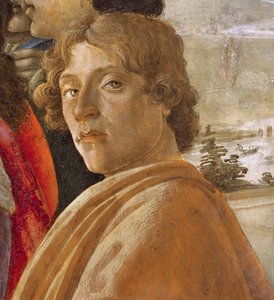
1445–1510, Italy
Sandro Botticelli
The Life of Sandro Botticelli Sandro Botticelli lived his life within the narrow, busy streets of Florence, Italy. Born Alessandro di Mariano di Vanni Filipepi around 1445, he was the son of a tanner. His family lived in the neighborhood of Ognissanti, a place he remained close to throughout his years. He eventually became known by the name Botticelli, a nickname taken from the word botticello, which refers to a small wine cask or little barrel.
Also by Sandro Botticelli
 The Birth Of Venus1485
 Venus and Mars1483
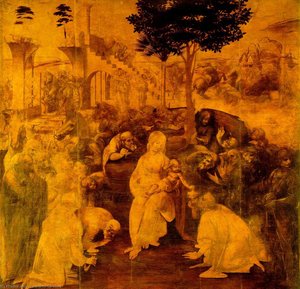
 Adoration Of The Magi
 Calumny of Apelles1495

Essays around Primavera
 25 Masterpieces by Sandro Botticelli: The Ultimate Guide to Renaissance BeautyJourney through the ethereal beauty of the Italian Renaissance with our curated list of 25 Sandro Botticelli masterpieces. From myth to gra…
 25 Must-See Masterpieces at the Uffizi Gallery: A Journey Through Renaissance BrillianceEmbark on a breathtaking journey through the Uffizi Gallery's finest. From Botticelli to Da Vinci, explore 25 iconic Renaissance masterpiec…
 Early Netherlandish Painting vs. Italian Renaissance: A Comparative StudyMaster the differences between Netherlandish detail and Renaissance perspective. Explore this expert comparative study now.