High Renaissance · 1507
Theological Virtues (Raphael, 1507)
Raphael (1483–1520) made Theological Virtues. It dates from 1507. It belongs to the High Renaissance movement. It is made in oil on panel. It measures 44 × 16 cm.
- 1507
- Oil On Panel
- 44 × 16 cm

 Preview

 Hand Made Oil Painting
 Send
 Share
 Fact sheet


 Download
 Similars
 X-Ray
 Diaporama
 Q&A

 Stats
Theological Virtues, in brief
- Title
- Theological Virtues
- Artist
- Raphael (1483–1520)
- Artist born in
- Urbino, Italy
- Date
- 1507
- Medium
- Oil On Panel
- Dimensions
- 44 × 16 cm
- Movement
- High Renaissance
- Period
- Renaissance
- Subject
- theology, virtues, faith, hope, charity, wisdom
What does Theological Virtues depict?
Theological Virtues: A Renaissance Masterpiece by Raphael
- Title: Theological Virtues
- Artist: Raphael (Raffaello Sanzio Da Urbino)
- Date: 1507
- Style: High Renaissance
Composition and Symbolic Representation
“Theological Virtues” is a remarkable series of four panels painted by the celebrated Italian artist Raphael. This work, created in 1507, exemplifies the artistic ideals of the High Renaissance—a period characterized by balance, harmony, and meticulous detail. Each panel embodies one of the core theological virtues: Faith, Hope, Charity, and Wisdom. Raphael masterfully populates each scene with figures that eloquently represent these abstract concepts.
The panel representing Faith features two angels alongside a depiction of Christ, symbolizing unwavering belief. The Hope panel showcases an angel holding a cross and another bearing a book, conveying the promise of salvation and knowledge. Charity is portrayed with three angelic figures, one tenderly cradling a baby—a powerful symbol of selfless love and compassion. Finally, the Wisdom panel depicts an angel holding a scroll, representing divine understanding and guidance.
Artistic Techniques and Visual Harmony
Raphael’s exceptional skill in employing light and shadow is immediately apparent. He utilizes chiaroscuro—the dramatic contrast between light and dark—to create depth and dimensionality within the composition, drawing the viewer's eye through each scene. The subtle application of sfumato softens the figures, lending them an ethereal quality and enhancing their emotional resonance.
The color palette is carefully chosen to evoke a sense of serenity and spiritual elevation. Warm tones dominate, creating a welcoming atmosphere while highlighting the divine nature of the subjects. The meticulous attention to detail in rendering fabrics, facial expressions, and anatomical forms demonstrates Raphael’s mastery of technique and his commitment to realism within an idealized framework.
Historical Context and Influence
Painted during the Cinquecento Art Movement, a period of significant cultural and artistic flourishing in Italy, "Theological Virtues" reflects the era's embrace of humanism and classical ideals. Raphael’s work embodies these values through its balanced composition, harmonious proportions, and celebration of human potential within a spiritual context.
This masterpiece has had an enduring influence on subsequent art movements. Its principles of balance and harmony inspired Neoclassicism, while his innovative use of light and shadow influenced Baroque and Impressionist artists. Raphael’s legacy continues to inspire generations of artists and art enthusiasts alike.
Emotional Impact and Enduring Appeal
“Theological Virtues” is more than just a visually stunning work; it's an emotionally resonant exploration of fundamental human values. The serene expressions on the figures’ faces, combined with Raphael’s masterful use of light and color, evoke feelings of peace, hope, and spiritual contemplation.
This painting serves as a timeless reminder of the importance of faith, hope, charity, and wisdom—qualities that remain essential to human flourishing. Its enduring appeal lies in its ability to transcend time and culture, offering viewers a glimpse into the profound beauty and meaning of the human spirit.
High-resolution images of Theological Virtues

Raphael, Theological Virtues (1507). Public domain.
Questions on Theological Virtues, answered
What is the creation date of "Theological Virtues" by Raphael?
"Theological Virtues" dates from 1507. The date places the work within Raphael's career and its era.
What medium is "Theological Virtues" by Raphael executed in?
"Theological Virtues" is executed in oil on panel.
What size is "Theological Virtues" by Raphael in real life?
The recorded dimensions of "Theological Virtues" by Raphael are 44 x 16 cm. Reproductions can be ordered in other sizes while keeping the same proportions.
What is "Theological Virtues" about?
"Theological Virtues" by Raphael depicts: theology, virtues, faith, hope, charity, wisdom, renaissance, angels.
Is "Theological Virtues" free of copyright?
The copyright answer for "Theological Virtues" by Raphael: the work is in the public domain - its copyright has expired. This determines whether reproductions of the image may be freely made.
Which artist is "Theological Virtues" attributed to?
"Theological Virtues" was created by Raphael. The information on this page describes Raphael's original work.
What style does "Theological Virtues" belong to?
The movement associated with "Theological Virtues" by Raphael is High Renaissance. This classification situates the work among related artists and artworks.
Where does "Theological Virtues" fall in Raphael's career?
"Theological Virtues" represents the Mature Period of Raphael.
How old was Raphael when creating "Theological Virtues" in 1507?
Raphael was 24 years old when creating "Theological Virtues" in 1507. The age is computed from the artist's birth year, 1483.
About the artist, Raphael

1483–1520, Italy
Raphael
The Life and Identity of Raphael Raphael, known to history by several names including Raffaello Sanzio, Raffaello Santi, and Raffaello Sanzio da Urbino, was a central figure of the Italian High Renaissance. His life was defined by a dual mastery of painting and architecture, a versatility that allowed him to move seamlessly between the intimate scale of a portrait and the monumental demands of papal construction. He was born in Urbino, Italy, on April 6, 1483, into a world of intellectual and artistic activity. His career was marked by an immense productivity that required the management of a large workshop to meet the needs of his patrons.
Also by Raphael
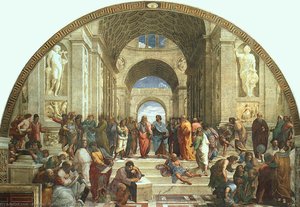 School of Athens1511
 The Sistine Madonna1513
 The Transfiguration1520
 Marriage of the Virgin1504
Essays around Theological Virtues
 Masterpieces of Raphael: The Top 25 Essential Artworks of the High RenaissanceExplore 25 iconic Raphael masterpieces of the High Renaissance. Discover timeless beauty and curated art on OriginalUniqueArt.com.
 Illuminating Belief: Faith & Symbolism Across Art History's CanvasExplore the rich history of faith through art! Discover religious symbolism, Renaissance masterpieces & iconic artists. Expert analysis for…
 High Renaissance Masterpieces: Iconic Art for Your Home |Journey through the High Renaissance! Explore 10 iconic masterpieces by Leonardo da Vinci, Michelangelo & Raphael. Discover art history, te…