Introduction
To gaze upon the masterpieces of the High Renaissance is to encounter a moment in time where human potential seemed limitless, and artistic expression reached unprecedented heights. This wasn’t merely a stylistic shift; it was a cultural blossoming—a rebirth of classical ideals interwoven with burgeoning scientific understanding and an unwavering focus on the dignity of humankind.
Emerging from the Early Renaissance's foundations in Florence during the late 15th century, the High Renaissance (roughly 1490-1527) flourished primarily in Rome under the patronage of ambitious popes like Julius II and Leo X. This era witnessed a convergence of artistic genius—Leonardo da Vinci, Michelangelo, Raphael, Titian, and others—who redefined painting, sculpture, and architecture. The rediscovery of ancient texts and art fueled a fascination with proportion, perspective, and anatomical accuracy, but these masters didn’t simply copy the past; they synthesized it with their own observations and innovations.
The cultural climate was one of intellectual curiosity and exploration. The invention of the printing press democratized knowledge, while voyages of discovery expanded horizons and challenged established beliefs. This spirit of inquiry permeated art, leading to a deeper engagement with realism, emotion, and narrative complexity. Artists sought not just to depict beauty but to capture the very essence of human experience—faith, love, loss, power, and mortality.
Centuries later, these artworks continue to resonate profoundly because they speak to universal truths about our existence. They offer glimpses into a world grappling with similar questions we face today: the search for meaning, the nature of beauty, the complexities of human relationships, and the enduring power of the spirit. The technical brilliance is undeniable, but it’s the emotional depth and intellectual rigor that truly captivate.
Over the following pages, we will embark on a journey through ten exceptional works that epitomize the High Renaissance—paintings and sculptures that not only defined an era but continue to inspire awe and wonder. Prepare to be transported back in time, to witness the birth of modern art and encounter the enduring legacy of these extraordinary masters.
Mona Lisa (La Gioconda) - Leonardo da Vinci
 Mona Lisa (La Gioconda) - Leonardo da Vinci
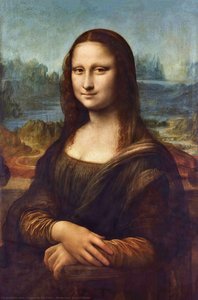
Before us hangs a mystery cloaked in subtle smiles—Leonardo da Vinci’s Mona Lisa (La Gioconda), completed around 1519. More than just a portrait, this work embodies the High Renaissance's pursuit of ideal beauty and psychological realism, securing its place as arguably the most famous painting in the world.
Commissioned during Leonardo’s time in Florence, the Mona Lisa represents Lisa Gherardini, wife of a local merchant. However, it is not her identity that captivates, but rather the revolutionary way she is depicted. Da Vinci abandoned the stiff formality of earlier portraiture, presenting Lisa with an unprecedented sense of intimacy and inner life. The half-length pose, gently turned towards the viewer, invites connection.
The painting’s enduring allure lies in Leonardo’s masterful use of sfumato —a technique employing countless layers of translucent glazes to create soft transitions and blurred outlines. This ‘smoky’ effect lends a dreamlike quality, softening features and imbuing the figure with an ethereal presence. Notice how light delicately models her face, highlighting the subtle curve of her lips and the enigmatic expression in her eyes.
The distant landscape, rendered with atmospheric perspective, further enhances the painting's depth and mystery. Winding paths and hazy mountains evoke a sense of timelessness and perhaps even symbolize Lisa’s inner journey. The Mona Lisa isn’t simply observed; it is experienced—a testament to Leonardo da Vinci’s genius and the enduring power of High Renaissance art to transform our perception of beauty, emotion, and the human spirit.
The Creation of Adam - Michelangelo Buonarroti
 The Creation of Adam - Michelangelo Buonarroti
Look up—way up—and you encounter a moment suspended in eternity: Michelangelo’s The Creation of Adam , painted on the ceiling of the Sistine Chapel around 1512. This isn't simply an illustration of scripture; it is a profound meditation on human potential and our divine connection, rightfully earning its place among the High Renaissance’s greatest achievements.
Commissioned by Pope Julius II, this fresco transcends traditional religious iconography. Michelangelo doesn’t depict Adam receiving a fully-formed blessing, but rather the *imminent* spark of life—the almost-touching fingers representing not just physical creation, but the transmission of intellect and spirit. The languid curve of Adam's body, poised on the precipice of consciousness, is a testament to Michelangelo’s unparalleled understanding of anatomy.
Notice how light dramatically sculpts the figures, illuminating their musculature and emphasizing the tension in the outstretched hands. God, surrounded by swirling forms—perhaps souls awaiting embodiment—reaches towards Adam with an energy that seems to vibrate across the centuries. The rich earth tones of the palette, contrasted with cooler blues in the background, create a sense of depth and awe.
The Creation of Adam is more than just a painting; it’s an experience—a visual embodiment of the humanist spirit that defined the Renaissance. It reminds us of our inherent dignity, our capacity for greatness, and the enduring power of art to capture the most profound mysteries of existence.
The School of Athens (detail 1) (Stanza della Segnatura) - Raphael
 The School of Athens (detail 1) (Stanza della Segnatura) - Raphael
A quiet moment of intellectual communion—this detail from Raphael’s “The School of Athens,” painted within the Stanza della Segnatura, encapsulates the High Renaissance's profound reverence for classical learning. More than a depiction of ancient philosophers, it is a visual celebration of human intellect and the enduring pursuit of knowledge.
Observe Plato and Aristotle—the central figures in this fragment—engaged in discourse. Raphael’s masterful technique, executed with precision using the *fresco* method, creates an atmosphere of serene harmony. Note the subtle use of sfumato , softening lines and lending a dreamlike quality to their forms. The muted, earthy palette—ochres, browns, and reddish-oranges—enhances the sense of timelessness.
Plato gestures upwards, representing his Theory of Forms—the belief in a higher realm of perfect ideals—while Aristotle points towards the earth, emphasizing empirical observation. This isn’t contradiction, but rather a harmonious representation of two essential paths to understanding reality: abstract thought and concrete experience. The architectural setting, inspired by Roman baths, further grounds the scene in classical tradition.
This detail from “The School of Athens” transcends its historical context, offering a timeless meditation on knowledge, wisdom, and the power of human reason—a legacy that continues to inspire contemplation and sophistication today.
Vitruvian Man - Leonardo da Vinci
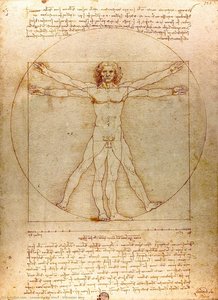 Vitruvian Man - Leonardo da Vinci
Before us lies a testament to human potential—Leonardo da Vinci’s Vitruvian Man , a drawing that transcends mere anatomical study and embodies the spirit of the High Renaissance. More than an image, it is a visual manifesto celebrating humanity's place within the universe.
Dating back to around 1490, this work was inspired by the writings of Vitruvius, who proposed that the ideal human body could be perfectly inscribed within both a circle and a square. Da Vinci meticulously translated these principles into visual form, depicting a nude male figure in two superimposed positions—a remarkable feat of artistic and scientific precision.
Observe the delicate lines and subtle shading, conveying both physical realism and intellectual rigor. The aged parchment adds to its historical authenticity, while the muted palette evokes a sense of timelessness. Note how the circle represents heaven and the cosmos, while the square symbolizes the earthly realm—and how the human form bridges these two worlds.
The Vitruvian Man isn’t simply *in* these shapes; it *defines* them, asserting that humans are “the measure of all things.” It remains a potent symbol of Renaissance humanist belief and continues to inspire awe and contemplation—a reminder of our inherent dignity and capacity for understanding.
Lady with an Ermine - Leonardo da Vinci
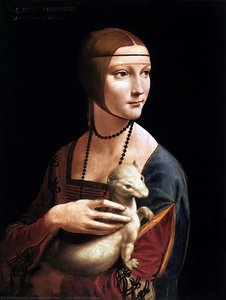 Lady with an Ermine - Leonardo da Vinci
A quiet intelligence—that is what draws us to Leonardo da Vinci’s Lady with an Ermine , painted around 1490. More than a portrait of Cecilia Gallerani, it's a psychological study rendered with breathtaking artistry and subtlety, securing its place among the High Renaissance’s most enduring masterpieces.
Da Vinci’s mastery of *sfumato* is on full display here—notice how forms gently melt into one another, devoid of harsh lines. The delicate fur of the ermine she holds mirrors the softness of her gaze, creating a harmonious connection between subject and symbol. Executed in oil on walnut panel, the painting showcases an unparalleled luminosity achieved through meticulous layering of glazes.
The inclusion of the ermine—a symbol of purity and moderation—adds layers of intrigue. It’s not merely decorative; it alludes to Cecilia's virtue and her connection to Ludovico Sforza, Duke of Milan. The painting captures a fleeting moment of intimacy, revealing the inner life of a remarkable woman.
Today, we can experience this same sense of wonder in our own homes with faithful reproductions from . These hand-painted canvases preserve the emotion and texture of Da Vinci’s original—allowing you to connect with the beauty and brilliance of the High Renaissance firsthand.
The Tempest - Giorgione
 The Tempest - Giorgione
A world suspended between reality and dream—that is what draws us to Giorgione’s The Tempest , painted during the High Renaissance. More than a depiction of a scene, it's an evocation of mood, mystery, and the power of nature, securing its place as one of the most debated and beloved works of Italian art.
Observe the two figures set against a dramatic landscape—a woman cradling what appears to be a deceased infant, her expression conveying profound sorrow. Beside her stands a man, leaning on a staff, observing with melancholic resignation. The symbolism remains open to interpretation, inviting contemplation on themes of love, loss, and fate.
Giorgione’s mastery of color and atmosphere is on full display here—notice how soft transitions and an ethereal quality are achieved through the technique of *sfumato*. The muted palette of browns, greens, and blues further enhances the melancholic mood. This artwork exemplifies the distinctive qualities of Venetian painting, prioritizing color over line.
Today, The Tempest continues to captivate with its enigmatic beauty—a reminder that art can evoke profound emotions without offering easy answers. It’s a testament to Giorgione's genius and the enduring power of the High Renaissance to transport us to another world.
Last Judgment - Michelangelo Buonarroti
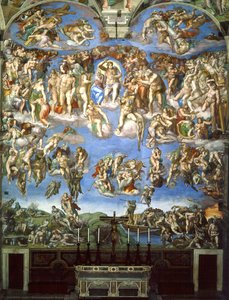 Last Judgment - Michelangelo Buonarroti
Imagine a moment of profound reckoning—a vision of divine justice rendered with unparalleled intensity. That is what awaits you before Michelangelo’s Last Judgment , adorning the altar wall of the Sistine Chapel. Completed in 1537, this monumental fresco isn't merely a depiction of biblical prophecy; it’s a powerful statement on humanity’s fate.
Departing from the earlier serenity of his ceiling frescoes, Michelangelo embodies a more expressive and turbulent style—elongated figures swirl in a complex composition divided into zones of heaven, hell, and earthly judgment. At the center stands Christ as Judge, powerfully depicted with both authority and mercy.
Observe the hundreds of nude figures stripped bare before God’s gaze, devoid of earthly possessions. Saint Bartholomew famously holds a flayed skin—a poignant self-portrait reflecting on mortality. Every gesture, expression, and placement carries profound theological meaning.
Last Judgment remains a testament to Michelangelo's genius and the enduring power of art to provoke contemplation on our own lives and beliefs. It reminds us that even in moments of darkness, there is hope for redemption—a message that continues to resonate across centuries.
Portrait of Bindo Altoviti - Raphael
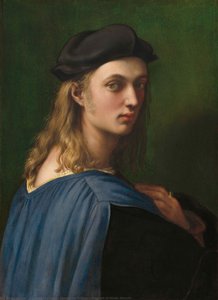 Portrait of Bindo Altoviti - Raphael
A quiet contemplation—that is what draws us to Raphael’s Portrait of Bindo Altoviti , painted in 1515. More than a likeness, it's an evocation of inner life and refined elegance, securing its place among the High Renaissance’s most treasured masterpieces.
Raphael presents Bindo Altoviti—a prominent Florentine banker—in profile, exuding an air of intellectual depth. Notice how the artist employs *chiaroscuro*, creating striking contrasts between light and dark to emphasize the three-dimensionality of his form. The smooth, flowing lines and delicate brushwork bring a sense of realism and harmony.
The muted palette of deep greens and soft blues adds a calming sophistication, while the simplicity of the background focuses attention on Altoviti’s thoughtful expression—suggesting themes of wisdom and introspection. This portrait isn't merely a representation of an individual; it is a symbol of the humanist ideals that defined the Renaissance.
Today, Portrait of Bindo Altoviti continues to inspire with its serene beauty—a reminder that art can evoke profound emotions and create a timeless connection between past and present. It’s a testament to Raphael's genius and the enduring power of High Renaissance artistry.
Sleeping Venus - Giorgione
 Sleeping Venus - Giorgione
A whisper of serenity—that is what greets you before Giorgione’s Sleeping Venus , an iconic work that embodies the essence of High Renaissance artistry. More than a depiction of classical beauty, it's a harmonious blend of naturalism and poetic tranquility.
Observe the reclining figure of Venus, rendered with exquisite detail and soft, warm hues. The muted earthy tones of the landscape—rolling hills and distant buildings—enhance the overall sense of peace. Giorgione’s masterful use of layered brushstrokes creates a depth that draws you into this idyllic world.
This painting isn't merely an image; it is an evocation of inner life, a symbol of beauty and connection to nature. The soft palette and flowing lines continue to inspire today—reflected in modern interiors seeking calm and sophistication.
Sleeping Venus remains a testament to Giorgione’s genius and the enduring power of High Renaissance art to evoke profound emotions and create a timeless sense of harmony.
Madonna and Child (The Tempi Madonna) - Raphael
 Madonna and Child (The Tempi Madonna) - Raphael
A silence imbued with tenderness—that is what greets you before Raphael’s Madonna and Child (The Tempi Madonna) , a pinnacle of High Renaissance artistry. More than just a depiction of divine motherhood, it's a harmonious blend of grace, emotion, and innovation that transcends eras.
Observe the balanced pyramidal composition—a testament to Raphael’s mastery—drawing your eye to the tender interaction between Mary and Jesus. The soft, earthy tones of reds, blues, and greens create a warm and inviting atmosphere, while meticulous brushwork brings the figures to life with intricate detail.
This painting isn't merely an image; it is an evocation of love, protection, and divine care. Its clarity of form and ease of composition continue to inspire today—reflected in modern interiors seeking calm and sophistication. The gentle play of light and shadow invites a moment of quiet reflection.
The Tempi Madonna remains a testament to Raphael’s genius and the enduring power of High Renaissance art to evoke profound emotions and create a timeless sense of harmony.
Conclusion
As the light fades on these ten masterpieces, we are reminded that they are not merely relics of a distant past—but living presences, continuing to move hearts and shape our world centuries later. Each brushstroke holds a whisper of human emotion, each composition a testament to enduring ideals of beauty, grace, and truth.
These artworks transcend their historical context, offering moments of quiet contemplation, profound connection, and timeless inspiration. They invite us into a dialogue with the masters—a conversation that enriches our lives and expands our understanding of what it means to be human.
At , we believe in making these treasures accessible—not as distant reproductions, but as vibrant embodiments of artistic spirit. We partner with interior designers, architects, and collectors to transform spaces into statements of refined elegance and personal expression. From custom collections tailored to your vision to art mockups that bring your ideas to life, our team is dedicated to helping you create an environment that resonates with beauty and meaning.
Whether envisioning a grand hotel lobby or a private villa sanctuary, we offer museum-quality reproductions—hand-painted by skilled artisans—that capture the essence of these iconic works. Explore our full collection and discover how these timeless masterpieces can elevate your project into an artistic statement.
Thank you for joining us on this journey through the High Renaissance. May these artworks continue to inspire, uplift, and remind us of the enduring power of human creativity.