Introduction
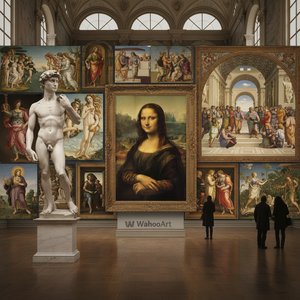
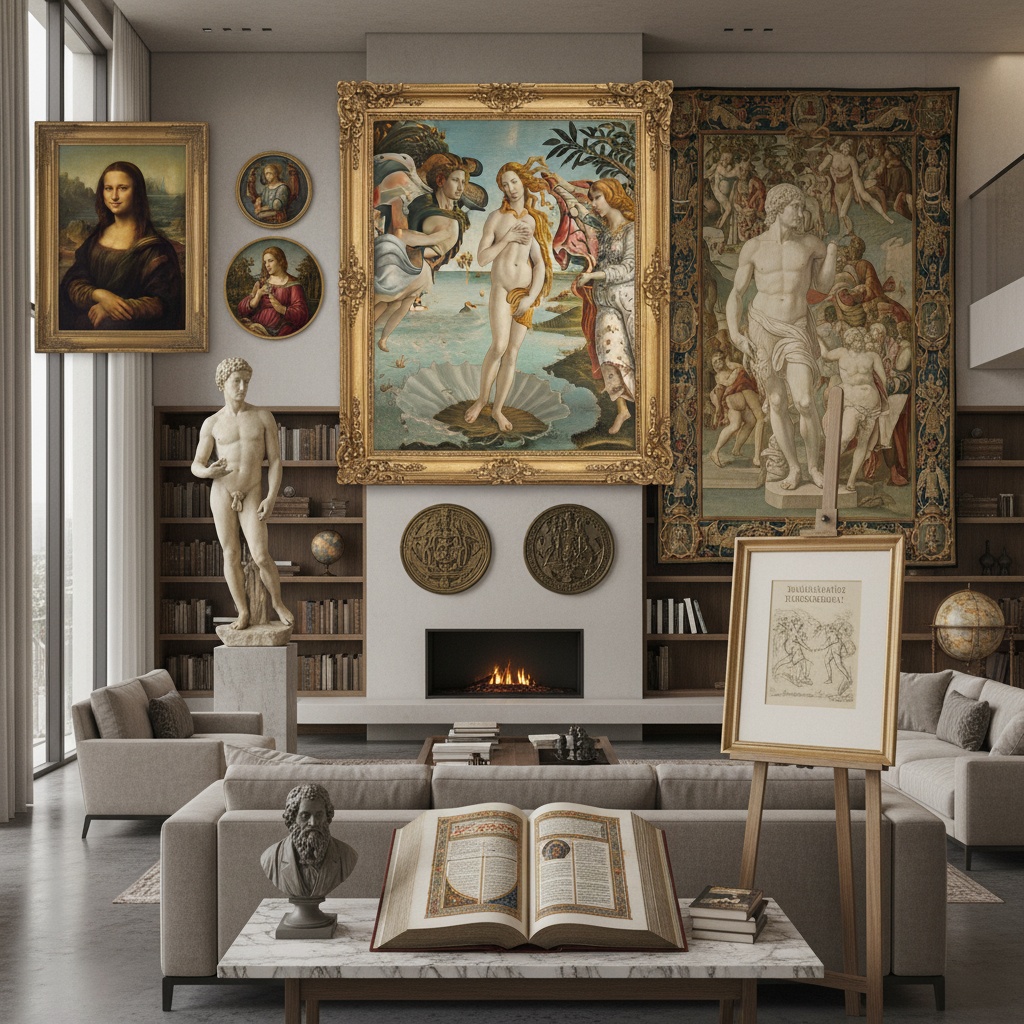
Imagine stepping into a world reborn – a time when humanity itself became the focal point, celebrated not just as a creation, but as a creator. This is the essence of Renaissance Humanism, an intellectual and artistic blossoming that swept across Europe from the 14th to the 16th centuries. It wasn’t merely a revival of classical art and literature; it was a fundamental shift in perspective, a turning inward to explore the potential, beauty, and complexities of the human experience.
Following the Middle Ages, where religious dogma often dominated artistic expression, Renaissance Humanism championed reason, individualism, and observation. Scholars rediscovered ancient Greek and Roman texts, unlocking new ways of thinking about philosophy, science, and art. This rediscovery fueled a desire to depict the world – and people within it – with unprecedented realism and emotional depth. Artists began to move away from stylized representations towards anatomical accuracy, perspective, and naturalism.
The artworks born from this era weren’t simply beautiful objects; they were statements about human dignity, intellectual curiosity, and the power of individual achievement. They reflected a growing belief in earthly life as valuable in itself, not just as preparation for the afterlife. Think of the subtle emotions playing across a subject's face, the meticulous detail capturing the texture of fabric, or the innovative use of light and shadow to create a sense of volume and presence – these were all hallmarks of this revolutionary movement.
But why do these masterpieces continue to resonate with us centuries later? Because they speak to something fundamental within the human spirit. They explore universal themes of love, loss, ambition, faith, and mortality in ways that transcend time and culture. They remind us of our capacity for both great beauty and profound suffering, for intellectual brilliance and moral failings.
Over the following pages, we will embark on a journey through ten exceptional artworks that epitomize Renaissance Humanism. Each piece offers a unique window into this transformative period, revealing not only the artistic innovations of the time but also the enduring power of human expression. Prepare to be captivated by stories etched in paint and sculpted in stone – tales of genius, passion, and the relentless pursuit of knowledge.
An Allegory of Prudence - Titian Ramsay Peale II
 An Allegory of Prudence - Titian Ramsay Peale II
“An Allegory of Prudence,” completed by Titian Ramsay Peale II in 1550, is more than a portrait; it’s a whispered conversation across centuries, echoing the Renaissance fascination with classical ideals and humanist philosophy. This remarkable work demonstrates how these principles took root and flourished even within the nascent artistic scene of America.
Peale, son of renowned artist Charles Willson Peale, deliberately embraced the Venetian tradition – the rich colors, atmospheric perspective, and symbolic depth championed by masters like Giorgione and Tintoretto. The painting features portraits of Peale himself alongside his son Orazio, but it’s the striking triple-headed beast—a wolf, lion, and dog—that truly captivates. This creature isn't merely decorative; it embodies prudence itself: foresight (the wolf), courage (the lion), and unwavering loyalty (the dog).
The inclusion of “An Allegory of Prudence” in our Top 10 reflects its unique ability to synthesize artistic skill with profound intellectual meaning. It’s a testament to the power of art to not only depict beauty but also to communicate complex moral truths, reminding us of the enduring value of wisdom and self-awareness.
At OriginalUniqueArt, we believe that great art should live within our spaces, enriching our daily lives. A reproduction of “An Allegory of Prudence” offers a chance to bring this timeless message – and Peale’s exquisite craftsmanship – into your home or office, fostering an atmosphere of contemplation and refined beauty. It's more than decor; it’s a connection to the Renaissance spirit, a celebration of human potential, and a daily invitation to embrace prudence in all its forms.
Nahshon (detail) - Michelangelo Buonarroti
 Nahshon (detail) - Michelangelo Buonarroti
Imagine a quiet moment within the vast expanse of the Sistine Chapel – a single figure, bathed in ethereal light, gazing into a mirror. This is the essence of Michelangelo’s *Nahshon (detail)*, a fragment that encapsulates the Renaissance spirit of introspection and artistic brilliance. Created in 1511, this fresco isn't merely a depiction of a woman; it’s an invitation to contemplate the complexities of self-awareness.
Michelangelo, a master sculptor, painter, and architect, possessed an unparalleled ability to convey emotion through form. In *Nahshon*, he achieves this with breathtaking subtlety – the delicate gradations of flesh tones, the meticulous rendering of drapery, and the woman’s upward gaze all contribute to a sense of solemn dignity. The mirror itself becomes a potent symbol, reflecting not just her physical image but also an inner journey, perhaps even divine judgment.
The inclusion of this detail in our Top 10 highlights its profound impact on artistic expression. It demonstrates how Michelangelo moved beyond mere representation to explore the psychological depths of his subjects, a hallmark of Renaissance Humanism.
At OriginalUniqueArt, we believe that art should inspire and uplift. A reproduction of *Nahshon (detail)* offers a chance to bring this quiet contemplation into your home – fostering an atmosphere of serenity and reflection. It’s more than just decor; it's a connection to the Renaissance masters, a reminder of our own inner landscapes, and a celebration of the human spirit.
Madonna of the Pomegranate - Sandro Botticelli
 Madonna of the Pomegranate - Sandro Botticelli
Sandro Botticelli’s Madonna of the Pomegranate is more than a painting; it's a tender whisper of faith and beauty, rendered in luminous pigment and shimmering gold. Created around 1487, this circular tempera panel embodies the heart of Renaissance Humanism – a delicate balance between religious devotion and an emerging appreciation for earthly grace.
The scene depicts the Virgin Mary cradling the Christ Child, surrounded by a chorus of ethereal angels. Botticelli masterfully balances symmetry with fluid lines, creating a composition that feels both harmonious and deeply moving. But it’s the symbolism woven throughout that truly captivates – the pomegranate itself, held gently in Mary's hand, representing Christ’s Passion and resurrection through its numerous seeds.
The inclusion of Madonna of the Pomegranate in our Top 10 reflects Botticelli’s unique ability to infuse religious iconography with a distinctly human sensibility. His linearity and grace – hallmarks of his style – elevate this work beyond mere depiction, inviting contemplation on themes of love, sacrifice, and eternal hope.
At OriginalUniqueArt, we believe that art should enrich our lives, fostering moments of serenity and reflection. A reproduction of Madonna of the Pomegranate offers a chance to bring this timeless beauty into your home – creating a personal sanctuary where faith and artistry converge. It’s more than decor; it's a connection to the Renaissance spirit, a celebration of maternal love, and a reminder of the enduring power of hope.
The aortic valve - Leonardo da Vinci
 The aortic valve - Leonardo da Vinci
Imagine holding a fragment of Leonardo da Vinci’s mind – a sheet from his notebooks revealing an obsession with the very engine of life, the human heart. “The aortic valve,” created in 1512, isn't merely an anatomical drawing; it embodies the Renaissance humanist spirit—a relentless pursuit of knowledge through observation and meticulous experimentation.
Da Vinci’s rendering surpasses contemporary understanding, detailing the leaflets, chordae tendinae, and papillary muscles with astonishing accuracy. His signature *sfumato* technique creates a sense of volume and texture, while his mirror writing hints at a methodical intellect. This work stands as a cornerstone of anatomical illustration, influencing artists and scientists for centuries.
The inclusion of “The aortic valve” in our Top 10 reflects Da Vinci’s unique ability to blend art and science. He didn't just depict the heart; he *understood* it – even creating glass models to visualize blood flow, transforming sculptural skill into physiological insight.
At OriginalUniqueArt, we believe that art should inspire curiosity and contemplation. A reproduction of this anatomical marvel offers a chance to bring Da Vinci’s genius into your home—fostering an atmosphere of intellectual exploration and refined beauty. It's more than decor; it’s a connection to the Renaissance spirit, a celebration of human ingenuity, and a reminder of the enduring power of observation.
R: The viscera of a horse - Leonardo da Vinci
 R: The viscera of a horse - Leonardo da Vinci
Hold a fragment of Leonardo da Vinci’s relentless curiosity – “R: The viscera of a horse,” executed around 1490, is more than an anatomical study; it's a profound meditation on life itself. This remarkably detailed drawing, aged with the patina of centuries, offers an intimate glimpse into the mind of a polymath driven by an almost obsessive desire to understand the interconnectedness of form and function.
While the subject—a dissected horse’s organs—might seem stark, it represented a vital step in Leonardo’s anatomical investigations. He wasn't merely illustrating; he was meticulously documenting, comparing animal anatomy to the human form – a crucial element in his pursuit of understanding our own complexities.
The inclusion of this work in our Top 10 reflects Da Vinci’s unique ability to blend art and science with philosophical depth. He grappled with fundamental questions about creation itself, layering symbolism into every channel and organ depicted. This drawing isn't just a scientific exercise; it’s a window into the Renaissance mind.
At OriginalUniqueArt, we believe that art should provoke thought and inspire wonder. A reproduction of “R: The viscera of a horse” offers a chance to bring Da Vinci’s intellectual curiosity into your home – fostering an atmosphere of exploration and refined beauty. It's more than decor; it’s a connection to the Renaissance spirit, a celebration of human ingenuity, and a reminder of the enduring power of observation.
The Elephant Hanno - Raphael
 The Elephant Hanno - Raphael
Imagine a moment of wonder – Pope Leo X gazing upon Hanno, an Asian elephant gifted from Portugal, a spectacle that captivated Renaissance Rome. Raphael’s fresco depicting this encounter isn't merely a portrait of an animal; it embodies the humanist spirit of exploration and diplomatic exchange.
Created in 1516, the artwork captures not only Hanno’s magnificent form but also the palpable emotion surrounding his arrival. Raphael’s masterful brushwork – employing *sfumato* to create subtle gradations of tone – lends the elephant an ethereal quality that transcends mere representation. The meticulous detail speaks to a Renaissance commitment to scientific observation alongside artistic expression.
The inclusion of “The Elephant Hanno” in our Top 10 reflects its unique ability to synthesize art, politics, and cultural curiosity. It’s a testament to the power of art to capture pivotal moments in history – moments that reflect humanity's enduring fascination with the exotic and the unknown.
At OriginalUniqueArt, we believe that art should inspire awe and contemplation. A reproduction of this fresco offers a chance to bring Raphael’s vision into your home—fostering an atmosphere of grandeur and intellectual curiosity. It’s more than decor; it's a connection to the Renaissance spirit, a celebration of human ingenuity, and a reminder of the enduring power of exploration.
Recto: The fetus in the womb. Verso: Notes on reproduction, with sketches of a fetus in utero, etc. - Leonardo da Vinci
 Recto: The fetus in the womb. Verso: Notes on reproduction, with sketches of a fetus in utero, etc. - Leonardo da Vinci
Imagine a whisper of life – Leonardo da Vinci’s “The Fetus in the Womb,” executed in 1511, is more than an anatomical drawing; it's a profound meditation on creation itself. This quiet elegance belies the intellectual depth contained within its lines and subtle shading.
Da Vinci’s meticulous rendering of the embryo nestled within the uterus was remarkably innovative for his time, fueled by a fascination with anatomy and a desire to understand the intricacies of human biology. His signature *sfumato* technique creates a hazy, atmospheric effect that softens contours and imbues the image with an ethereal quality.
The inclusion of this work in our Top 10 reflects Da Vinci’s unique ability to blend art and science—a testament to his conviction that observation and experimentation were paramount to unlocking the secrets of nature. It embodies the Renaissance humanist spirit, a reverence for the natural world and a belief in human potential.
At OriginalUniqueArt, we believe that art should inspire contemplation and wonder. A reproduction of “The Fetus in the Womb” offers a chance to bring Da Vinci’s genius into your home—fostering an atmosphere of serenity and intellectual curiosity. It's more than decor; it’s a connection to the Renaissance spirit, a celebration of life, and a reminder of the enduring power of observation.
Recto: The skull sectioned. Verso: The cranium - Leonardo da Vinci
 Recto: The skull sectioned. Verso: The cranium - Leonardo da Vinci
To gaze upon Leonardo da Vinci’s “Recto: The skull sectioned. Verso: The cranium” is to confront mortality itself, rendered with the same meticulous artistry he devoted to capturing life's beauty. Executed in 1489, this drawing isn’t merely an anatomical study; it’s a profound exploration of the vessel that houses our thoughts, emotions, and very essence.
Da Vinci dissected human skulls with unparalleled precision, seeking not just to understand their structure but also to unlock the secrets of perception. He located the *senso commune* – the supposed seat of the senses – at a precise point within the cranium, revealing his belief in the interconnectedness of mind and body.
The inclusion of this work in our Top 10 reflects Da Vinci’s unique ability to blend art, science, and philosophy. It embodies the Renaissance humanist spirit—a relentless pursuit of knowledge driven by a desire to understand what it means to be human.
At OriginalUniqueArt, we believe that art should provoke contemplation and inspire awe. A reproduction of “Recto: The skull sectioned. Verso: The cranium” offers a chance to bring Da Vinci’s intellectual curiosity into your home—fostering an atmosphere of serenity and refined beauty. It's more than decor; it’s a connection to the Renaissance spirit, a celebration of human ingenuity, and a reminder of our own fleeting existence.
MARS ET VENUS DIT LE PARNASSE - Andrea Mantegna
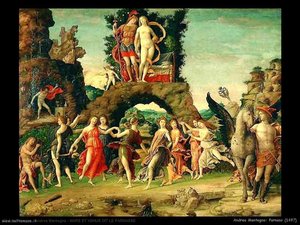 MARS ET VENUS DIT LE PARNASSE - Andrea Mantegna
Imagine stepping into a world reborn – a private chamber dedicated to scholarly pursuits, where classical ideals and artistic ambition converged. This is the essence of Andrea Mantegna’s *Mars et Venus dit Le Parnasse*, completed in 1497 for Isabella d'Este.
This monumental painting isn’t merely a depiction of Roman gods; it’s an immersive experience into a worldview profoundly shaped by rediscovered antiquity. Mantegna’s masterful technique – employing oil paint and *trompe l'oeil* – creates an architectural space that appears to extend beyond the canvas, mirroring the grandeur of Roman ruins.
The inclusion of this work in our Top 10 reflects its unique ability to synthesize art, literature, and intellectual ambition. It embodies the Renaissance humanist spirit—a relentless pursuit of knowledge driven by a desire to revive the glories of Rome – a symbol of reason, order, and civic virtue.
At OriginalUniqueArt, we believe that art should transform spaces and inspire contemplation. A reproduction of *Mars et Venus* offers a chance to bring Mantegna’s vision into your home—fostering an atmosphere of grandeur and refined beauty. It's more than decor; it’s a connection to the Renaissance spirit, a celebration of human ingenuity, and a reminder of our enduring fascination with classical ideals.
Study - Leonardo da Vinci
 Study - Leonardo da Vinci
Imagine a moment suspended between tenderness and violence – Leonardo da Vinci’s “Study,” executed around 1478, is more than a drawing; it's a profound meditation on the complexities of human relationships.
This monochrome work offers a glimpse into Da Vinci’s meticulous observation of anatomy and gesture—a cornerstone of his artistic approach—yet simultaneously confronts viewers with an unsettling tableau of physical aggression. The stark simplicity belies its intellectual depth, inviting contemplation on themes of dominance and protection.
The inclusion of this work in our Top 10 reflects Da Vinci’s unique ability to capture the full spectrum of human emotion—a testament to the Renaissance humanist spirit. It embodies a relentless pursuit of understanding what it means to be human, challenging medieval conventions and pushing boundaries of artistic realism.
At OriginalUniqueArt, we believe that art should provoke contemplation and inspire awe. A reproduction of “Study” offers a chance to bring Da Vinci’s vision into your home—fostering an atmosphere of intellectual curiosity and refined beauty. It's more than decor; it’s a connection to the Renaissance spirit, a celebration of human ingenuity, and a reminder of our own complex emotions.
Conclusion
As the light fades on these ten masterpieces, we are left not with relics of a distant past, but with living presences—echoes of human ingenuity and emotion that continue to resonate across centuries. They remind us that art is not merely about beauty or skill, but about capturing the very essence of what it means to be alive.
These paintings are more than just images; they are windows into the souls of those who created them—and, perhaps, into our own. From Da Vinci’s anatomical studies to Mantegna’s classical revivals, each work embodies a profound reverence for human potential and a relentless pursuit of knowledge.
At OriginalUniqueArt, we believe in making these timeless treasures accessible – not as mere reproductions, but as invitations to begin your own artistic journey. We partner with interior designers, architects, and collectors to transform spaces into statements of refined beauty and intellectual curiosity. Whether you envision a grand hotel lobby inspired by Renaissance grandeur or a private villa echoing the spirit of Isabella d'Este’s studiolo, our team is dedicated to bringing your vision to life.
Explore our full collection and discover how these masterpieces—and countless others—can inspire calm, sophistication, and a deeper connection to the human story. Let us help you curate an artistic statement that transcends time and speaks to the heart.