Surrealism · 1938
Bird's hell (Max Beckmann, 1938)
Max Beckmann (1884–1950) made Bird's hell. It dates from 1938. It belongs to the Surrealism movement. It is made in oil on canvas.
- 1938
- Oil On Canvas

 Preview

 Hand Made Oil Painting
 Send
 Share
 Fact sheet


 Download
 Similars
 X-Ray
 Diaporama
 Q&A

 Stats
Bird's hell, in brief
- Title
- Bird's hell
- Artist
- Max Beckmann (1884–1950)
- Artist born in
- Leipzig, Germany
- Date
- 1938
- Medium
- Oil On Canvas
- Movement
- Surrealism
- Subject
- surrealism, crowd scene, birds, chaos, clutter, figurative
What does Bird's hell depict?
A Symphony of Chaos: Exploring Max Beckmann's "Bird's Hell"
To stand before Max Beckmann’s Bird's Hell is not merely to observe a painting; it is to be enveloped by an atmosphere—a vibrant, unsettling confluence of human drama and avian frenzy. This masterpiece from 1938 captures a moment suspended in time, yet vibrating with palpable energy. The scene unfolds within what appears to be an over-furnished, almost claustrophobic interior space. It is a tableau vivant of disarray, where the mundane objects of daily life—bowls, cups, bottles, and vases—seem to have accumulated until they form part of the very psychological landscape.
The sheer density of figures is breathtaking. Dozens of people are interwoven into the composition, some engaged in quiet contemplation, others caught mid-gesture, creating a sense of collective, yet individualized, turmoil. This teeming humanity, coupled with the riotous presence of numerous birds fluttering and perching everywhere, transforms the room into something mythic and deeply unsettling. It speaks to an overstimulation, a sensory overload that mirrors the anxieties of the era in which it was conceived.
Style, Technique, and Beckmann's Vision
Beckmann’s technique here is masterful in its ability to convey both meticulous detail and utter chaos. While his early work might have leaned toward academic precision, Bird's Hell showcases a mature style that channels the distorted energy of modernism. His influences—from the stained-glass narratives of medieval art to the emotional depth of Van Gogh—are visible in how he renders light and shadow across the cluttered surfaces. The application of paint is rich, giving weight to every discarded object while allowing the movement of the birds to suggest an almost ephemeral quality.
The composition itself is a masterclass in controlled pandemonium. Nothing feels accidental; every scattered item, every entangled limb, contributes to a narrative tension that pulls the viewer deeper into its depths. For those considering bringing this powerful aesthetic home through a reproduction, understanding this balance between meticulous rendering and emotional abandon is key—it promises drama without sacrificing artistic integrity.
Symbolism of Disorder and Humanity
The symbolism within Bird's Hell is notoriously rich and open to interpretation, which only enhances its enduring power. The birds, often symbols of the spirit or freedom, here seem almost predatory in their numbers, adding a layer of wildness to the human predicament. Coupled with the sheer accumulation of domestic clutter—the bowls, the cups—the painting suggests a critique of modern existence itself: a life so saturated with material possessions and social interaction that it verges on collapse. It is a meditation on excess, on the beautiful burden of too much being.
The sense of disorder does not equate to meaninglessness; rather, Beckmann elevates this chaos into a profound commentary on the human condition—a place where individual souls struggle against overwhelming societal pressures and sensory input. It invites us to pause our own hurried lives and examine what we are accumulating, both materially and emotionally.
Emotional Resonance for the Modern Collector
For the art lover or interior designer seeking a piece with undeniable narrative weight, Bird's Hell offers an unparalleled emotional anchor. It is not a painting meant to soothe; it is one designed to provoke thought, conversation, and deep introspection. Reproducing this work allows one to harness its dramatic energy within a contemporary setting. Imagine the visual impact of such a complex, emotionally charged piece anchoring a room—it becomes the focal point around which all other design elements must orbit.
Owning or displaying a reproduction of Bird's Hell is an embrace of complexity. It suggests that beauty can be found not just in serene perfection, but within the vibrant, messy, and utterly compelling reality of shared human experience.
High-resolution images of Bird's hell

Max Beckmann, Bird's hell (1938). Public domain.
Colours matched to the original by a digital expert, the file finely retouched, faithful to the artist's brushwork.
Own the high-resolution fileQuestions on Bird's hell, answered
What is the creation date of "Bird's hell" by Max Beckmann?
"Bird's hell" by Max Beckmann was created in 1938.
What technique was used for "Bird's hell" by Max Beckmann?
Max Beckmann used the oil on canvas technique for "Bird's hell". The technique defines the material nature of the original work.
What does "Bird's hell" by Max Beckmann depict?
The themes present in "Bird's hell" by Max Beckmann include surrealism, crowd scene, birds, chaos, clutter, figurative, disorder. Together they summarize the artwork's subject matter.
Is "Bird's hell" by Max Beckmann in the public domain?
Regarding copyright, "Bird's hell" is in the public domain - its copyright has expired.
Which artist is "Bird's hell" attributed to?
"Bird's hell" was created by Max Beckmann. The information on this page describes Max Beckmann's original work.
What style does "Bird's hell" belong to?
"Bird's hell" by Max Beckmann belongs to the Surrealism movement. This movement provides the stylistic context of the work.
What stage of Max Beckmann's development does "Bird's hell" represent?
"Bird's hell" represents the Later life of Max Beckmann.
How old was Max Beckmann when creating "Bird's hell" in 1938?
When "Bird's hell" was created in 1938, Max Beckmann - born in 1884 - was 54 years old.
Is "Bird's hell" by Max Beckmann in the public domain, and why?
"Bird's hell" by Max Beckmann is in the public domain - its copyright has expired. Copyright duration runs from the artist's death, which occurred in 1950.
About the artist, Max Beckmann

1884–1950, Germany
Max Beckmann
The Life and Art of Max Beckmann Max Beckmann was a man of many disciplines, working as a painter, draftsman, printmaker, sculptor, and writer. He entered the world on February 12, 1884, in Leipzig, Saxony. He grew up in an upper-middle-class family as the youngest of three children. His early years were shaped by the quiet stability of his home until 1894, when his father, Carl Beckmann, a grain merchant, passed away.
Also by Max Beckmann
 The Night1919
 Great Scene of Agony1906
 The Iron Bridge (View of Frankfurt)1922
 Columbine1950

Essays around Bird's hell
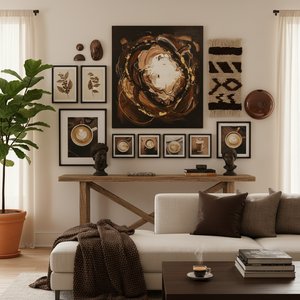 Espresso Tones in Art: 10 Masterpieces for a Richly Layered Home DecorDelve into 10 famous paintings with captivating 'espresso tones'! Explore masterpieces by Rembrandt, Caravaggio & Vermeer. Find museum-qual…
 Beyond the Bowl: The Symbolic Depth and Formal Precision of Still Life PaintingExplore the symbolic depth of still life from Baroque vanitas to Cézanne. Discover the evolution of the genre now.
 Feathered Masterpieces: The Enchanting World of Impressionist Bird ArtDiscover the ethereal beauty of Impressionist bird art. Explore how masters like Monet and Renoir captured light and motion through feather…