Preview
 Send
Send Share
Share
 Details

 Download
 Similars
 X-Ray
X-Ray Diaporama
Vita somnium breve
 Acrylic On Canvas
- WallArt
- Art Nouveau Modern
 1906
1906 163.0 x 143.0 cm
 National Museum in Kraków
 Read More
Giclée / Art Print
Museum-quality giclée or canvas print with fast production and flexible finish options. ( Buy Hand Made Painting Buy Image)




P118B $10

P118H $10

P118W $10

P438Z $10

P508JH $12

P508YH $12

P805H $10

P805Z $10

P919BZ $10

P919G $10

P919XJ $10

P959ZH $10

P968JZ $12

W106C $8

W218G $10

W218JH $8

W218Y $10

W307PJ $10

W316G $10

W316PJ $8

W316Y $10

W398PJ $8

W4111J $10

W500HY $15

W500JH $15

W692G $12

W849H $8

W940BG $15

W953PJ $8




Pick from our preset sizes that match the artwork's original proportions.

You may enter your own dimensions to fit a specific frame or space. If your selected size does not match the original image's proportions, we will either crop the artwork or extend the image with a mirrored or solid-fill edge. A digital mockup will be sent for your approval before production begins.
Please note that the on-screen preview does not reflect the actual cropping or extension. Only the mockup will accurately show the final composition.
While custom sizes are available, we recommend selecting a dimension from the predefined list to preserve the original proportions.
Worldwide Delivery () in 2 weeks instead of standard 4/5 weeks. (18 August)

Free Worldwide Express Shipping

High-Quality Linen Canvas

Full Shipping Insurance

Customs Tax Refund Guarantee

True Color Matching Guarantee

60-Day Return Policy (Defects Only)

100% Money-Back Guarantee

Bulk Discount Offer
 Glass option is only available in size under 110 CM

Vita somnium breve
Giclée / Art Print
Reproduction Size
-


Total Price
$ 81
Collectible Description
Vita Somnium Breve: A Fragment of Polish Symbolism Illuminated
“Vita somnium breve,” meaning “Life is a short dream,” encapsulates the essence of Józef Mehoffer’s masterpiece – a stunning stained glass window created in 1906 that embodies the spirit of Art Nouveau and delves into profound themes of mortality and remembrance. Commissioned by Krakowski Zakład Witrażów i Mozaiki S.G. Żeleński, founded in 1902, this monumental artwork stands as a testament to Polish artistic ambition during the Young Poland movement.
The Artist’s Vision: Henri Matisse – A Legacy of Color
Józef Mehoffer (1869-1946) emerged from a surprisingly late embrace of painting, initially pursuing legal studies before discovering his true vocation through a gift of paints. Influenced profoundly by the artistic principles championed by Henri Matisse—whose “A Life Painted in Color” served as inspiration—Mehoffer skillfully blended academic training with avant-garde experimentation. This fusion resulted in an oeuvre characterized by bold color palettes and fluid forms, reflecting the broader stylistic trends shaping European art at the turn of the century.
Style and Technique: Art Nouveau’s Delicate Embrace
The window's design firmly establishes itself within the Art Nouveau style, a movement that prioritized organic shapes, flowing lines, and intricate ornamentation. Mehoffer meticulously crafted each element—trees, figures, and architectural details—to achieve an ethereal beauty reminiscent of Japanese woodblock prints and Celtic art. The technique employed was painstaking: skilled artisans painstakingly cut and fused colored glass panes into delicate tracery, utilizing lead came to bind the pieces together and create a luminous effect.
Symbolism Within the Landscape
Beyond its aesthetic grandeur, “Vita somnium breve” resonates with symbolic significance. The depiction of figures amidst a stylized forest speaks to themes of human vulnerability against the backdrop of nature’s permanence. The woman and child figures likely represent innocence and fragility—a poignant reminder of life's fleeting beauty. Furthermore, the window’s overall composition suggests contemplation on mortality and the cyclical nature of existence – concepts central to Polish Symbolist thought.
A Window Into Remembrance: Emotional Impact
The vibrant hues employed by Mehoffer—primarily greens, blues, and golds—contribute significantly to the artwork's emotional impact. These colors evoke feelings of serenity, melancholy, and reverence for the natural world. Viewing “Vita somnium breve” is akin to stepping into a tranquil sanctuary where beauty transcends time, prompting reflection on life’s ephemeral nature and honoring the enduring legacy of artistic vision.
Artist Biography
Henri Matisse: A Life Painted in Color
Henri Matisse, a name synonymous with vibrant color and fluid form, stands as one of the most pivotal figures in 20th-century art. Born in Le Cateau, France, in December 1869, his artistic journey began not with fervent ambition but with a surprising late interest – a revelation sparked by a box of paints gifted to him during convalescence. Initially drawn to the structured world of law, Matisse ultimately abandoned this path, embracing instead the intoxicating freedom of creative expression. His career spanned nearly six decades, witnessing and profoundly shaping the evolution of modern art, leaving behind an astonishingly diverse body of work that continues to captivate audiences worldwide.
Early Years and Artistic Foundations
Matisse’s early artistic training was decidedly conventional. He enrolled in the Académie Julian in Paris, studying under William-Adolphe Bouguereau, a master of academic realism. This period instilled in him a respect for traditional techniques and composition. However, Matisse quickly recognized that he sought something beyond mere imitation. He experimented with various styles – from Neo-Impressionism, influenced by Paul Signac’s pointillist approach, to Symbolism, absorbing the evocative moods of artists like Gustave Moreau. Crucially, his time in Paris exposed him to a vibrant artistic landscape, fostering an openness to new ideas and movements. It was during this period that he began to develop his distinctive palette and explore ways to convey emotion through color alone – a radical departure from prevailing artistic norms.
The Fauvist Revolution
Around 1905, Matisse’s artistic trajectory underwent a dramatic transformation. He joined forces with Paul Gauguin and André Derain in Collioure, on the French Riviera, where they collectively spearheaded what became known as the Fauvist movement – “Fauves” meaning “wild beasts.” This revolutionary style prioritized intense, non-naturalistic color, often applied in arbitrary and jarring combinations. Matisse’s paintings of this period, such as *Woman with a Hat* and *The Joy of Life*, exemplify this bold approach. He deliberately rejected the subtle gradations of tone favored by earlier artists, opting instead for flat planes of saturated hues that pulsed with energy and emotion. This deliberate disregard for realism was initially met with criticism, but it ultimately paved the way for future developments in modern art.
Mature Style and Artistic Evolution
Following the intensity of the Fauvist period, Matisse’s style evolved into a more refined and controlled aesthetic. He moved to Nice in 1917, seeking inspiration from the Mediterranean light and landscape. During this time, he developed a distinctive approach characterized by flattened forms, simplified shapes, and an economy of line – a deliberate move away from the illusionistic depth of earlier painting. His use of color remained central, but it was now employed with greater precision and restraint, creating a sense of harmony and balance. Works like *The Red Studio* (1913) demonstrate this shift towards geometric abstraction while retaining his signature vibrant palette. Later in his career, Matisse turned to the medium of paper cutouts – intricate designs created by cutting shapes from colored paper, a technique that allowed him to explore new forms of composition and spatial relationships.
Legacy and Historical Significance
Henri Matisse’s impact on the art world is immeasurable. He not only spearheaded the Fauvist movement but also profoundly influenced generations of artists who followed, including Pablo Picasso, André Derain, and many others. His emphasis on color as a primary means of expression revolutionized painting, demonstrating its power to evoke emotion and create visual experiences beyond mere representation. His work continues to be celebrated for its beauty, innovation, and enduring appeal. Matisse’s legacy extends far beyond the canvas; his approach to art—characterized by joy, spontaneity, and an unwavering belief in the transformative potential of color—remains a powerful inspiration today.

józef mehoffer
1869 - 1946
Quick Facts
- Artistic Movement Or Style:
- Fauvism
- Modernism
- Artists Or Movements Influenced By This Artist: ['Pablo Picasso']
- Artists Who Influenced This Artist:
- William-Adolphe Bouguereau
- Paul Cézanne
- Date Of Birth: December 31, 1869
- Date Of Death: November 3, 1954
- Full Name: Henri-Émile-Benoît Matisse
- Nationality: French
- Notable Artworks:
- The Red Studio
- Dance (Matisse)
- Blue Nude
- Place Of Birth: Le Cateau, Picardy, France
Related Articles
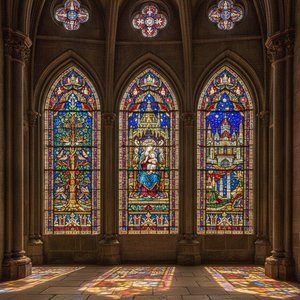
Luminous Masterpieces: The Captivating Beauty and Timeless Elegance of Stained Glass Artworks
Embark on a visual journey through the luminous world of stained glass art. Discover the exquisite craftsmanship, historical significance, and captivating beauty of masterworks from Art Nouveau to the Gothic era, curated for the discerning fine art enthusiast.
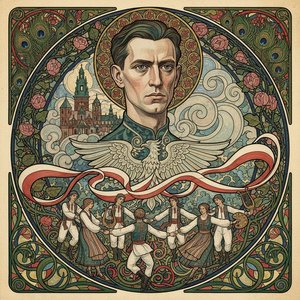
Stanisław Wyspiański: Symbolism, National Identity & the Polish Secession
Explore the life & work of Stanisław Wyspiański, a pivotal figure in Polish Symbolism and the Young Poland movement. Discover his iconic paintings, dramas, and stained glass designs reflecting national identity & artistic innovation.
Jan Matejko: Historical Narrative & National Identity in 19th-Century Polish Painting
Explore the powerful historical paintings of Jan Matejko, Poland's national artist. Discover his iconic works & learn how he shaped Polish identity in the 19th century. High-quality reproductions available.
Art Nouveau's Golden Age: 10 Masterpieces for Your Home |
Journey into Art Nouveau's golden age! Explore 10 masterpieces by Klimt, Mucha & more. Discover captivating stories behind iconic paintings, floral motifs & flowing lines. Find museum-quality art reproductions for your home at .
The Flowing Line & Flourishing Form: Exploring Art Nouveau's Aesthetic Legacy
Explore the captivating world of Art Nouveau! Discover its origins, key artists like Horta & Mucha, regional styles, innovative techniques, and lasting influence on architecture & design. A comprehensive guide for art enthusiasts.