The Genesis of a New Aesthetic: Art Nouveau's Rejection of Tradition
The late 19th century was a period of profound upheaval, a time when the rigid structures of Victorian society and academic art were beginning to feel stifling. A yearning for authenticity, for a connection with nature, and for a new visual language began to stir within artistic circles across Europe. This discontent culminated in the birth of Art Nouveau – literally “New Art” – a movement that sought to break free from historical imitation and embrace originality, dynamism, and a celebration of organic forms. It wasn’t merely a stylistic shift; it was a philosophical rebellion against the industrial age and its perceived dehumanizing effects. Artists felt constrained by the revivalist styles prevalent at the time—Neoclassicism, Gothic Revival, and various iterations of historicism—and sought inspiration not in past masters but in the natural world around them.
The roots of this rebellion can be traced back to earlier movements like the Arts and Crafts movement championed by William Morris in Britain. Morris’s emphasis on craftsmanship, honest materials, and a rejection of mass production laid the groundwork for Art Nouveau's appreciation of skilled artistry. However, while the Arts and Crafts movement often looked backward to medieval traditions, Art Nouveau boldly embraced modernity, incorporating new technologies and materials into its designs. The initial sparks ignited in Brussels with architects like Paul Hankar and, most notably, Victor Horta, whose Hôtel Tassel (1893) is widely considered the first true Art Nouveau building. This structure wasn’t simply decorated; it *was* a work of art, where every element – from the staircase to the ironwork – flowed together in harmonious unity.
Nature's Embrace: Key Motifs and Symbolic Language in Art Nouveau Design
Art Nouveau ( AR(T) noo-VOH; French: [aʁ nuvo] ; lit. 'New Art'), Jugendstil in German, is an international style of art, architecture, and applied art, especially the decorative arts. It was often inspired by natural forms such as the sinuous curves...
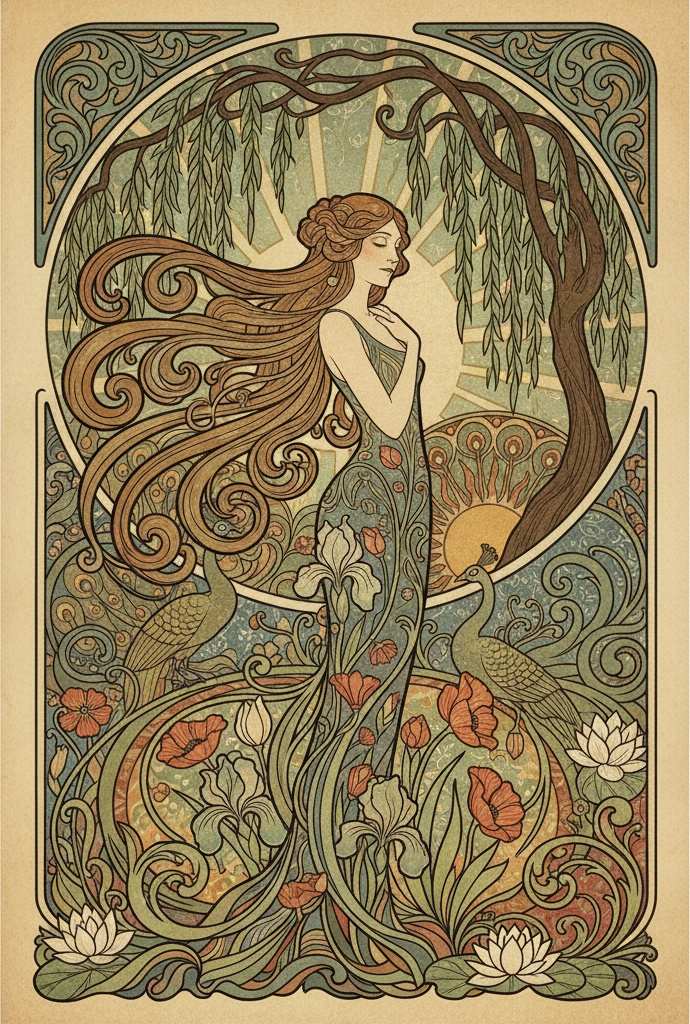
At the heart of Art Nouveau lies an undeniable fascination with nature. But this wasn’t a simple replication of botanical forms; it was a reimagining, an idealization imbued with symbolism and emotion. The sinuous curves of plants – tendrils, vines, flowers, and leaves – became ubiquitous motifs, representing growth, vitality, and the cyclical rhythms of life. Water lilies, irises, poppies, and orchids were particularly favored, often depicted in delicate detail and flowing compositions. These floral elements weren’t merely decorative; they carried deeper meanings. Lilies symbolized purity and renewal, while irises represented faith and wisdom.
Beyond flora, the animal kingdom also provided a rich source of inspiration. Dragonflies with their iridescent wings, peacocks with their opulent plumage, swans embodying grace and elegance, and even insects like butterflies and bees found their way into Art Nouveau designs. These creatures were often associated with transformation, beauty, and the ephemeral nature of existence. The “whiplash line”—a dynamic, curving stroke that evokes movement and energy—became a defining characteristic of the style, mirroring the organic forms found in nature. Artists weren’t simply copying these elements; they were distilling their essence, creating stylized representations that captured their inherent beauty and symbolic power. Alphonse Mucha's posters are prime examples, where flowing hair and floral embellishments intertwine to create captivating images.
From Brussels to Barcelona: Regional Variations of the Art Nouveau Style
Jugendstil (German pronunciation: [ˈjuːɡn̩tˌstiːl] ; "Youth Style") was an artistic movement, particularly in the decorative arts, that was influential primarily in Germany, Austria, and elsewhere in Europe to a lesser extent from about 1895 until ab...
While originating in Brussels, Art Nouveau quickly spread across Europe, adapting and evolving as it encountered different cultural contexts. Each region developed its own unique interpretation of the style, reflecting local traditions and artistic sensibilities. In France, *Style Moderne* flourished, particularly in Paris, where Hector Guimard’s iconic Métro entrances became synonymous with the movement. These cast-iron structures, adorned with flowing lines and organic motifs, transformed Parisian streetscapes.
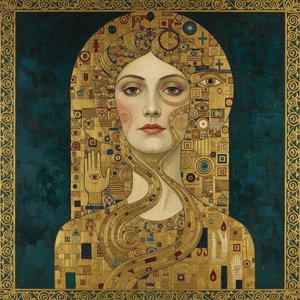
Germany and Austria saw the rise of *Jugendstil*, named after the influential art journal “Jugend.” This variation emphasized geometric forms and a more abstract approach to natural motifs, as exemplified by the work of Hermann Obrist and the artists associated with the Darmstadt Artists’ Colony. In Vienna, the Secession movement, led by Gustav Klimt, pushed Art Nouveau towards greater abstraction and symbolism, rejecting ornamentation in favor of bold patterns and psychological depth. Spain, particularly Barcelona, developed a distinctive strain of Art Nouveau known as *Modernisme*, spearheaded by Antoni Gaudí. Gaudí's architectural masterpieces—such as Casa Batlló and Sagrada Família—are characterized by their organic forms, intricate details, and innovative use of materials, creating a truly unique and breathtaking aesthetic.
Materials & Techniques: Innovation in Glass, Iron, and Ceramic Arts
The authors follow the germination, growth and flowering of a style heralded all over Europe and America in its own time as a new art form, free of the ...
Art Nouveau wasn’t just about form; it was also about pushing the boundaries of materials and techniques. Artists sought to utilize new technologies and explore unconventional methods to achieve their vision. The use of iron became particularly prominent, allowing for the creation of intricate structures with flowing lines and organic shapes. Victor Horta masterfully employed iron in his buildings, using it not as a structural element hidden behind ornamentation but as an integral part of the design.
Glass art experienced a renaissance during this period, thanks to pioneers like Louis Tiffany and Émile Gallé. Tiffany’s stained-glass lamps are renowned for their vibrant colors, intricate designs, and naturalistic motifs. Gallé, on the other hand, experimented with multilayered glass techniques, creating iridescent surfaces and incorporating botanical forms into his vases and decorative objects. Ceramics also played a significant role, with artists exploring new glazes, textures, and sculptural forms. The emphasis was on craftsmanship and artistic expression, resulting in unique and highly sought-after pieces.
Art Nouveau’s Influence Beyond Decorative Arts: Architecture, Graphic Design, and Interiors
The impact of Art Nouveau extended far beyond the realm of decorative arts. It profoundly influenced architecture, graphic design, and interior design, transforming entire environments into cohesive works of art. Architects embraced organic forms, flowing lines, and innovative materials to create buildings that were both functional and aesthetically pleasing. Interior spaces were conceived as total environments, where furniture, lighting, textiles, and artwork all harmonized in a unified style.
The Belle Époque, the period of prosperity and optimism in which Art Nouveau flourished, provided fertile ground for its development. The rise of a new middle class with disposable income created a demand for stylish and sophisticated designs. Graphic design experienced a golden age during this time, with artists like Alphonse Mucha creating iconic posters that captured the essence of the style. These posters weren’t simply advertisements; they were works of art in their own right, characterized by flowing lines, vibrant colors, and elegant typography. Art Nouveau's legacy continues to inspire designers today, reminding us of the power of nature, craftsmanship, and artistic innovation.
At OriginalUniqueArt.com, we celebrate the enduring beauty of Art Nouveau through our collection of high-quality reproductions. Explore masterpieces by Horta, Mucha, Klimt, and other leading artists, and bring the elegance and sophistication of this remarkable movement into your own home.