Preview
 Send
Send Share
Share
 Details

 Download
 Similars
 X-Ray
X-Ray Diaporama
 Stats
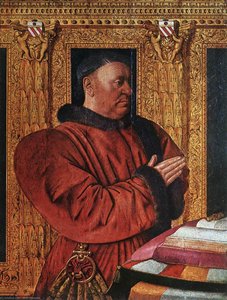
StatsSelf portrait
 Read More
Giclée / Art Print
Museum-quality giclée or canvas print with fast production and flexible finish options. ( Buy Hand Made Painting Switch to Digital Image)




































Pick from our preset sizes that match the artwork's original proportions.

You may enter your own dimensions to fit a specific frame or space. If your selected size does not match the original image's proportions, we will either crop the artwork or extend the image with a mirrored or solid-fill edge. A digital mockup will be sent for your approval before production begins.
Please note that the on-screen preview does not reflect the actual cropping or extension. Only the mockup will accurately show the final composition.
While custom sizes are available, we recommend selecting a dimension from the predefined list to preserve the original proportions.
Worldwide Delivery () in 2 weeks instead of standard 4/5 weeks. (14 September)

Free Worldwide Express Shipping

High-Quality Linen Canvas

Full Shipping Insurance

Customs Tax Refund Guarantee

True Color Matching Guarantee

100-Day Return Policy (Defects Only)

100% Money-Back Guarantee

Bulk Discount Offer
 Glass option is only available in size under 110 CM

Self portrait
Giclée / Art Print
Reproduction Size
-


Total Price
$ 81
Artist Biography
A Bridge Between Worlds: The Art of Jean Fouquet
Jean Fouquet, born around 1420 in Tours, France, occupies a pivotal and often debated position in the history of French painting. He wasn’t merely an artist of transition; he was a dynamic force who synthesized the waning elegance of Gothic traditions with the burgeoning innovations of the Italian Renaissance, forging a uniquely French visual language that would influence generations. While details surrounding his early life remain somewhat elusive—scholarly consensus has shifted away from earlier assumptions of apprenticeship under the Bedford Master towards a possible grounding in the workshop of the Jouvenal Master in Nantes—the impact of his artistic journey is undeniable. Fouquet’s story isn't simply one of stylistic evolution, but of deliberate engagement with the changing cultural currents of 15th-century Europe.Italian Echoes and French Refinement
A defining moment in Fouquet’s development was his sojourn to Italy between 1445 and 1447. This wasn't a passive observation; it was an immersive experience that fundamentally altered his artistic approach. In Rome, he encountered the works of artists like Fra Angelico and Filarete, absorbing their mastery of perspective, clarity of form, and naturalistic representation—qualities that were beginning to define the Quattrocento style. However, Fouquet didn’t simply replicate these Italian innovations. He filtered them through his own artistic sensibility, blending them with the intricate detail, rich color palettes, and decorative flourishes characteristic of late Gothic art. This fusion resulted in a style that was both strikingly modern and deeply rooted in French tradition. He brought back not just techniques but an understanding of how art could serve as a powerful tool for conveying status, piety, and political legitimacy—a lesson he would skillfully apply throughout his career.Masterpieces of Courtly Life and Spiritual Devotion
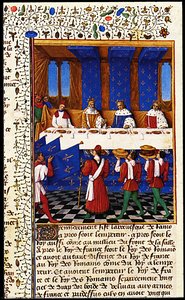
Fouquet’s artistic output was closely intertwined with the patronage of the French court, serving Charles VII, Étienne Chevalier, Guillaume Jouvenel des Ursins, and later Louis XI. This connection is vividly illustrated in some of his most celebrated works. The Melun Diptych, created around 1450, stands as a testament to his skill. The left panel portrays Étienne Chevalier alongside his patron saint, St. Stephen, while the right panel presents a hauntingly beautiful Virgin and Child surrounded by angels—a composition widely believed to be a portrait of Agnès Sorel, Charles VII’s mistress. The diptych isn't merely a religious image; it is a carefully constructed statement about power, piety, and social standing. Similarly, Charles VII as One of the Three Magi offers one of the few surviving portraits of the king, cleverly embedding royal representation within a narrative steeped in symbolic meaning. Fouquet’s illustrations for the Grandes Chroniques de France, undertaken between 1455 and 1460, provide invaluable insights into 15th-century French court life and military events, showcasing his ability to depict scenes of grandeur and action with meticulous detail. And finally, the exquisitely rendered miniatures within the Hours of Étienne Chevalier, completed in 1461, demonstrate his unparalleled expertise in this delicate art form.A Legacy of Innovation and Elegance
Beyond his panel paintings and manuscript illuminations, Fouquet is credited with pioneering the portrait miniature—a remarkably detailed portrait painted on a small scale, offering both portability and intimacy. This innovation would prove immensely popular, influencing artists for centuries to come. His meticulous attention to detail, elegant compositions, and subtle psychological insights into his subjects set him apart from his contemporaries. He wasn’t simply recording appearances; he was capturing character, emotion, and the essence of his sitters. Jean Fouquet's historical significance lies in his ability to synthesize disparate artistic influences into a cohesive and uniquely French style. He laid the groundwork for subsequent generations of artists, establishing a new aesthetic that blended Gothic refinement with Renaissance naturalism. He remains a pivotal figure in art history—a master who bridged worlds and left behind a legacy of enduring beauty and innovation.
Jean Fouquet
1420 - 1481 , France
Quick Facts
- Artistic Movement Or Style: Early Renaissance
- Artists Or Movements Influenced By This Artist: ['French Renaissance art']
- Artists Who Influenced This Artist:
- Fra Angelico
- Filarete
- Date Of Birth: c. 1420
- Date Of Death: 1481
- Full Name: Jean Fouquet
- Nationality: French
- Notable Artworks:
- Melun Diptych
- Charles VII as Magi
- Hours of Étienne Chevalier
- Place Of Birth: Tours, France