The Dawn of Self-Reflection: Introspection in Early Portraiture
Self-portraiture, or Autoportraiture is the field of art theory and history that studies the history, means of production, circulation, reception, forms, and meanings of self-portraits. Emerging in Antiquity and becoming popular from the Renaissance ...
The human impulse to capture likeness, to preserve identity beyond the fleeting nature of time, is ancient. Yet, for centuries, portraiture remained largely tethered to commission and status – a reflection of power, wealth, or piety. True introspection, the deliberate turning inward by the artist *upon themselves*, emerged gradually. While rudimentary self-representations exist in antiquity—shadows cast on cave walls hinting at presence, Egyptian depictions acknowledging the scribe—the Renaissance witnessed a pivotal shift. Artists like Dürer weren’t merely fulfilling a patron's request; they were initiating a dialogue with their own mortality, skill, and place within the burgeoning humanist worldview. His self-portraits, often imbued with a solemn dignity, are not simply faces but statements of artistic ambition and intellectual curiosity. This early exploration laid the groundwork for a practice that would become profoundly personal, a visual excavation of the soul.
Rembrandt's Inner World: Psychological Depth Through Self-Portraiture
 Self-portrait
Explore Vasily Perov's captivating Self-Portrait (1870), a masterpiece of Russian Realism. Witness the artist’s skill & emotional depth in this iconic oil painting.
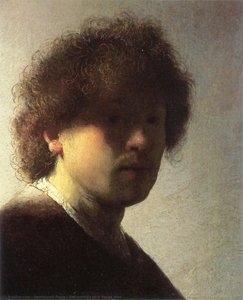
If Dürer initiated the conversation, Rembrandt van Rijn transformed it into an ongoing, deeply affecting monologue. Over his prolific career, he painted nearly one hundred self-portraits—a staggering number that transcends mere documentation and enters the realm of psychological study. Unlike earlier depictions focused on outward appearance or social standing, Rembrandt’s canvases are brutally honest explorations of aging, doubt, and resilience. He doesn't shy away from portraying himself with wrinkles, blemishes, and a palpable sense of weariness. The masterful use of chiaroscuro, the dramatic interplay of light and shadow, isn’t merely a technical feat; it’s a metaphor for the complexities within his own psyche. Each portrait is a snapshot in time, revealing not just *how* he looked but *how he felt*. Consider his later works—the unflinching gaze, the somber palette—they are testaments to a life lived fully, marked by both triumph and tragedy. He wasn't simply painting a face; he was chronicling the passage of time and the weight of human experience.
Expressionism & the Raw Emotion of the Self: Schiele and Beyond
 Self Portrait, Facing Right
Delve into Egon Schiele's 'Self Portrait, Facing Right' (1907). This Expressionist masterpiece captures intense emotion & introspection with striking light and shadow.
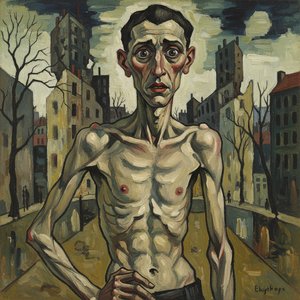
The 20th century shattered traditional notions of representation, paving the way for Expressionism—a movement that prioritized subjective emotion over objective reality. Egon Schiele stands as a defining figure in this radical shift. His self-portraits are visceral, often unsettling depictions of anxiety, sexuality, and alienation. Strikingly angular forms, distorted perspectives, and an intense emotional palette convey a sense of inner turmoil rarely seen before. Unlike Rembrandt’s subtle explorations, Schiele's work is deliberately confrontational, forcing the viewer to engage with his vulnerability—and discomfort. He wasn’t interested in flattering likenesses; he sought to expose the raw nerve endings of the human condition. This willingness to delve into the darker recesses of the psyche resonated deeply with a generation grappling with existential questions and societal upheaval. The influence of Schiele extends beyond painting, impacting photography and performance art as artists continued to explore the boundaries of self-representation.
Modern Masters & the Search for Identity: Sargent, Kahlo, and Albright
 Self Portrait
Explore John Singer Sargent's introspective 'Self Portrait' (1906), housed in Florence’s Uffizi Gallery. A masterpiece of realism & contemplation.
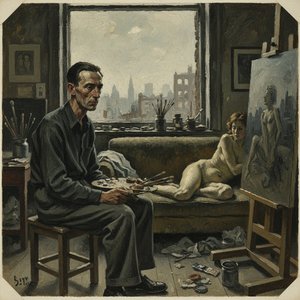
The 20th century also saw a diverse range of approaches to self-portraiture from masters like John Singer Sargent and Frida Kahlo. Sargent’s introspective ‘Self Portrait’ (1906) is a study in controlled elegance—a masterful display of technique that simultaneously reveals a sense of detachment and quiet observation. He presents himself as a sophisticated observer, subtly hinting at the complexities beneath the polished surface. In stark contrast, Frida Kahlo's self-portraits are intensely personal narratives born from physical pain and emotional trauma. Her iconic works aren’t simply representations of her appearance; they are allegorical explorations of identity, resilience, and Mexican culture. Ivan Albright, a key figure in Magic Realism, approached the genre with meticulous detail and a haunting sense of melancholy. His self-portraits often depict decay and mortality, challenging conventional notions of beauty and prompting viewers to confront their own impermanence. These artists demonstrate that self-portraiture isn’t limited by style; it's a versatile medium for exploring universal themes.
Beyond Likeness: Symbolism and Narrative in Introspective Art
The power of the self-portrait lies not just in *what* is depicted but *how*. Artists frequently employ symbolism to imbue their works with deeper meaning. A carefully chosen object, a specific setting, or even the artist’s posture can reveal hidden anxieties, aspirations, and beliefs. Consider Olga Costa's self-portraits—the orchids symbolizing femininity, the deliberate inclusion of cultural artifacts representing her heritage. These aren’t random details; they are clues to understanding her identity and worldview. Similarly, Manuel González Serrano’s use of sorrowful gazes and introspective settings invites viewers to contemplate his inner state. The act of self-portraiture becomes a form of visual storytelling—a carefully constructed narrative that transcends the limitations of mere physical representation. The artist isn't simply showing us their face; they are revealing fragments of their soul.
The Enduring Appeal of Self-Portraiture: A Legacy of Emotional Honesty
From the early explorations of Dürer to the raw emotion of Schiele and beyond, self-portraiture has remained a vital form of artistic expression. Its enduring appeal lies in its ability to connect us with the artist on a deeply personal level—to witness their vulnerabilities, anxieties, and triumphs. In an age saturated with curated images and manufactured personas, the honesty of a self-portrait is particularly compelling. It reminds us that beneath the surface of outward appearance lies a complex inner world worthy of exploration. At ArtsDot.com, we celebrate this legacy by offering high-quality reproductions of iconic self-portraits—allowing you to bring these powerful works into your own home and engage with the artists on a more intimate level. Whether you’re drawn to the technical brilliance of Sargent, the emotional depth of Rembrandt, or the raw honesty of Kahlo, we invite you to explore our collection and discover the captivating world of introspective art.