The Enduring Power of Portraiture: A Historical Perspective
For millennia, the human impulse to capture likeness has driven artistic innovation, evolving from rudimentary cave paintings to the sophisticated oil portraits that grace galleries and private collections today. But portraiture is far more than mere representation; it’s a powerful act of remembrance, a statement of identity, and a reflection of societal values. The earliest commissioned portraits were largely reserved for those in positions of power – Roman emperors, Egyptian pharaohs – serving as symbols of authority and divine right. As civilizations progressed, the practice broadened, becoming increasingly intertwined with notions of wealth, social standing, and familial lineage. The Renaissance witnessed an explosion of portraiture, fueled by a renewed interest in humanism and individual expression. Artists like Leonardo da Vinci and Raphael didn’t simply paint faces; they sought to capture the inner life of their subjects, imbuing their works with psychological depth and emotional nuance. The Baroque period, exemplified by masters such as Diego Velázquez – consider his captivating ‘La Dama del Abanico,’ a study in understated elegance and contemplative mood – further refined this approach, prioritizing realism and dramatic lighting to convey character and status. The 18th and 19th centuries saw the rise of middle-class portraiture, democratizing access to this once exclusive art form. Artists like Thomas Gainsborough and Joshua Reynolds catered to a wider clientele, solidifying the portrait’s role as a symbol of personal achievement and familial pride.
Decoding Artistic Styles: Realism, Impressionism & Abstraction in Personalized Portraits
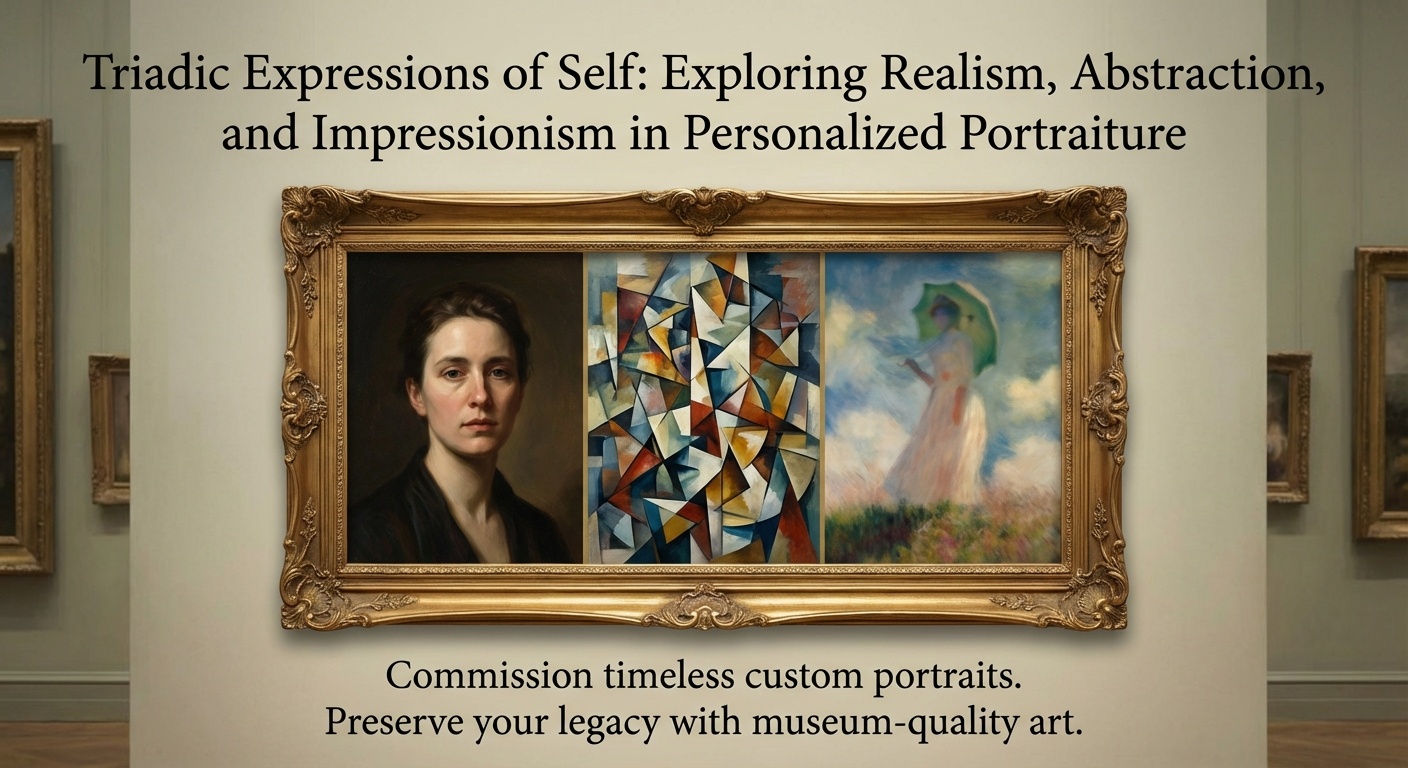
The stylistic approach chosen for a portrait fundamentally alters its narrative power. Realism, at its core, seeks to immortalize a subject’s presence with unwavering fidelity. Think of Rembrandt van Rijn's 'Departing of David and Jonathan,' where every wrinkle, the play of light on skin, and the weight of emotion in each gaze is rendered with profound psychological insight. This isn’t simply technical skill; it’s about capturing character – the history etched onto a face, the subtle nuances that define an individual. In stark contrast, Abstraction moves away from literal depiction, prioritizing form, color, and texture over precise likeness. It's not about *what* is represented but *how*. This allows for a more symbolic interpretation of personality, focusing on essential qualities rather than superficial details. Mark Rothko’s 'The Proposal,' while not a portrait in the traditional sense, exemplifies this power – its blocks of color evoke deep emotional responses and invite introspection. Impressionism occupies a fascinating middle ground, emphasizing fleeting moments and subjective perception. Artists like Vincent van Gogh used vibrant brushstrokes and dynamic color palettes to capture the *feeling* of a subject rather than their precise appearance. His 'Self-Portrait at Saint-Rémy' is not simply a depiction of his face but an emotional landscape reflecting his inner turmoil – the dominant blue contributing significantly to its psychological impact. These styles aren’t mutually exclusive; a portrait can beautifully blend elements, incorporating impressionistic brushwork with realistic detail or abstract motifs to symbolize personality traits.
Commissioning Your Legacy: The Process from Concept to Completion
Embarking on the journey of commissioning a custom portrait is an intimate collaboration between client and artist. It’s not merely about selecting an aesthetic object; it's about translating cherished memories, emotions, and personal narratives onto canvas. The process begins with careful consideration of style – will you opt for the meticulous detail of classical realism, the evocative brushstrokes of Impressionism, or a more contemporary approach? Classical realism prioritizes accuracy, creating portraits that feel timeless and formal. Impressionism emphasizes light, color, and atmosphere, resulting in paintings that are less about precise likeness and more about capturing a feeling or mood. Once a style is chosen, selecting the right photograph(s) is crucial. High-resolution images with good lighting and clarity are essential, providing the artist with ample detail to work from. Many artists prefer multiple photographs to capture different angles and expressions. The next stage often involves a digital mockup – a preliminary sketch or rendering that allows you to approve the composition, proportions, and overall aesthetic before any paint is applied. This collaborative process ensures that the final result accurately reflects your vision.
Beyond Likeness: Capturing Emotion and Personality Through Art
The true artistry of portraiture lies not merely in replicating physical features but in capturing the essence of a subject – their character, emotions, and inner life. A skilled artist doesn’t simply *see* what is before them; they perceive the subtle nuances of body language, the fleeting expressions that reveal hidden depths, and the unique energy that defines an individual. The choice of setting and props plays a crucial role in this process, adding layers of meaning to the composition. A formal pose within opulent surroundings might convey authority and status, while a more relaxed environment and personal objects could suggest intimacy and vulnerability. Color psychology also exerts a powerful influence – warm tones evoke feelings of comfort and joy, while cooler hues create a sense of serenity or melancholy. Ultimately, the emotional resonance of a portrait stems from its authenticity—its ability to connect with viewers on a deeply personal level.
Materials Matter: Ensuring Longevity and Quality in Custom Portraiture
The enduring beauty of an oil painting hinges not only on artistic skill but also on the quality of the materials used. From the canvas to the pigments, every element contributes to its longevity, vibrancy, and overall value. Traditionally, artists favored linen canvases for their strength, durability, and fine weave. While more affordable cotton canvases are available, they may be less resistant to cracking over time. The oil paints themselves are equally important – professional-grade pigments offer superior color saturation, lightfastness (resistance to fading), and archival properties. Archival inks, used in giclée prints as an alternative, provide exceptional longevity and resistance to fading when paired with high-quality canvas or paper. Reputable art studios prioritize these details, ensuring that every reproduction is crafted with the highest standards of quality and care.
Preserving Family Heritage: The Portrait as a Timeless Heirloom
Commissioning a custom portrait is an investment in preserving your family’s story for generations to come. It's a tangible connection to the past, a celebration of identity, and a legacy that will be cherished for years to come. The act of creating a portrait—from selecting the artist to choosing the setting and pose—is a deeply personal experience, imbued with meaning and emotion. The finished artwork becomes more than just a depiction of an individual; it’s a symbol of love, remembrance, and familial pride. Whether displayed in your home or passed down through generations, a custom portrait serves as a powerful reminder of those who came before us and the values they held dear.