The Dawn of Self-Representation: Antiquity & Medieval Beginnings
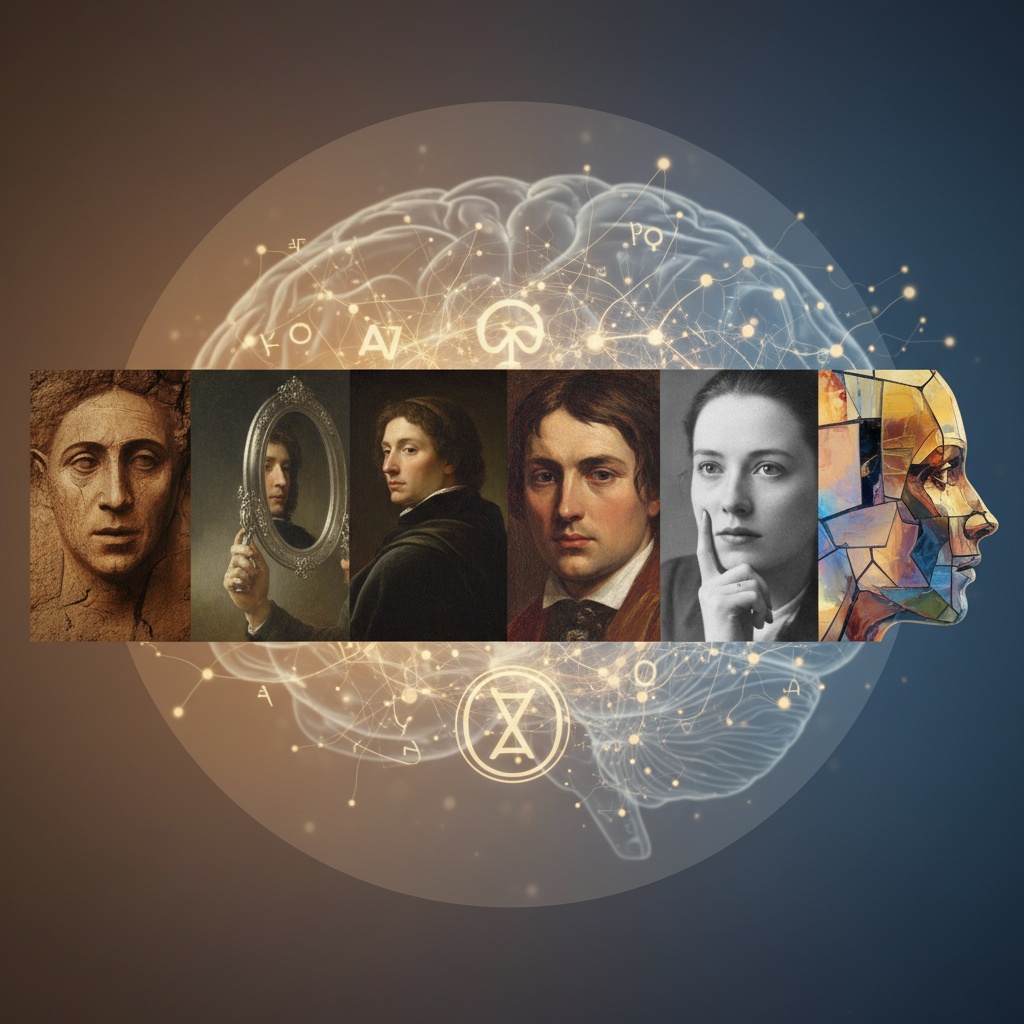
Though often perceived as a hallmark of the Renaissance, the impulse to capture one’s own likeness—to grapple with self-representation—extends far deeper into history than commonly acknowledged. While not “self-portraits” in the modern sense, the handprints adorning cave walls at Lascaux and Altamira represent an elemental assertion of presence, a primal desire to leave a mark upon the world. These aren’t attempts at realistic depiction, but rather declarations of ‘I was here.’ In ancient Egypt, while idealized depictions of pharaohs dominated official art, subtle individual features occasionally emerged in sculpted portraits, hinting at a nascent interest in capturing specific physiognomy. Roman portraiture, particularly during the Republic, moved further towards realism, though primarily focused on commemorating ancestors and civic leaders rather than introspective self-study.
The Medieval period saw a shift with the rise of religious iconography. Self-portraiture, as we understand it, was largely absent; however, artists began to subtly insert themselves into their work—a fleeting glimpse of a hand in a manuscript illumination, or a miniature likeness within a larger narrative scene. These were not acts of ego, but rather signatures of craftsmanship, acknowledgements of authorship within the devotional context. The illuminated manuscripts of the era offer fascinating glimpses into this evolving relationship between artist and self, where anonymity gradually yielded to a desire for recognition, albeit often veiled in humility.
Renaissance Portraiture: Humanism, Identity & Artistic Innovation
Art history is an academic discipline devoted to the study of artistic production and visual culture throughout human history. Art historians use a historical method or a philosophy, such as historical materialism or critical theory, to analyze artwo...
The Renaissance witnessed an explosion of interest in humanism—a philosophical movement that celebrated individual potential and earthly existence. This intellectual shift profoundly impacted the development of self-portraiture. Artists no longer solely focused on religious or commissioned subjects; they turned inward, seeking to understand and depict their own identities with unprecedented depth. Albrecht Dürer’s 1500 *Self-Portrait* is arguably the pivotal moment in this evolution. More than just a likeness, it's a statement of artistic ambition, intellectual prowess, and spiritual contemplation. The meticulous detail, the regal pose, and the intense gaze all convey a sense of self-awareness previously unseen.
Dürer’s influence extended beyond his technical mastery; he elevated the status of the artist from craftsman to intellectual—a figure worthy of study in their own right. This paved the way for other Renaissance masters like Leonardo da Vinci and Raphael, who also explored self-portraiture, though often as studies within larger compositions or sketches. The development of oil painting techniques allowed for greater realism and nuance, enabling artists to capture subtle emotions and psychological states with increasing accuracy. This period wasn’t simply about *looking* like someone; it was about *revealing* something of their inner world.
Beyond Likeness: Symbolism, Status & the Social Context of Portraits
Self-portraiture, or Autoportraiture is the field of art theory and history that studies the history, means of production, circulation, reception, forms, and meanings of self-portraits. Emerging in Antiquity and becoming popular from the Renaissance ...
The Renaissance self-portrait wasn't merely a technical exercise; it was deeply embedded within a complex social and cultural context. Artists often employed symbolism to convey information about their status, education, or aspirations. Objects held specific meanings—a lute might signify musical talent, books represented learning, and certain garments indicated wealth or profession. The very act of commissioning or creating a self-portrait became a declaration of social standing, a way for artists to assert their position within the hierarchy of society.
Consider Titian’s self-portraits—powerful statements of artistic authority and refined taste. His depictions often showcase luxurious fabrics and elegant settings, subtly communicating his success and connections within Venetian high society. Similarly, Marietta Robusti's *Self-Portrait* (1580) is remarkable not only for its skill but also as a rare example of a female artist asserting her presence in a male-dominated field. The direct gaze and confident pose challenge conventional expectations and offer a glimpse into the struggles and triumphs of a pioneering woman in art.
Rembrandt and Beyond: Exploring Interiority Through Self-Portraiture
The 17th century, particularly with Rembrandt van Rijn, saw self-portraiture reach new heights of psychological depth. Unlike earlier artists who often presented idealized versions of themselves, Rembrandt unflinchingly depicted his own aging face—wrinkles, blemishes, and all. His numerous self-portraits are not simply records of physical appearance; they’re profound explorations of the human condition—studies in light, shadow, and emotion.
Rembrandt's series of self-portraits functions as a visual diary, charting his emotional state throughout his life. He experimented with different techniques and expressions, revealing vulnerability, resilience, and a relentless pursuit of artistic truth. Following Rembrandt, artists continued to use self-portraiture as a means of introspection—exploring themes of identity, mortality, and the complexities of human experience. From Goya’s haunting self-portraits reflecting the turmoil of his time to Van Gogh’s emotionally charged depictions, the genre evolved into a powerful vehicle for personal expression.
The Modern Gaze: From Impressionism to Contemporary Reflections
The advent of photography in the 19th century initially challenged the traditional role of painting. However, rather than rendering self-portraiture obsolete, it spurred new forms of experimentation. Impressionist artists like Degas and Renoir embraced photography as a tool for capturing fleeting moments and exploring subjective perception. Self-portraits became less about precise representation and more about conveying atmosphere, emotion, and the artist’s unique perspective.
In the 20th and 21st centuries, self-portraiture has undergone further transformations—from the introspective works of Frida Kahlo to the provocative performances of Cindy Sherman. And now, with the rise of social media and the ubiquitous “selfie,” self-representation has become democratized—accessible to anyone with a smartphone. While often dismissed as superficial, selfies share a common lineage with Renaissance self-portraits—a fundamental desire to assert one’s presence, explore identity, and connect with others. The underlying psychological needs—the need for recognition, validation, and self-expression—remain remarkably consistent across the centuries. At OriginalUniqueArt.com, we celebrate this rich history of self-portraiture, offering high-quality reproductions that allow you to bring these iconic works into your own home and connect with the artists on a deeper level. Explore our collection today and discover the power of reflecting the self.