


What is the most famous night painting?
In our ranking, Starry Night by Vincent van Gogh (1889), in MOMA - Museum of Modern Art, then Fishermen at Sea by J. M. W. Turner and Two Men Contemplating the Moon by Caspar David Friedrich.
Famous paintings by subject
1626 – 1968
The masters our own painters keep coming back to. Painting the night is painting light that is not there: moonlight on water, gas lamps on a café terrace, a sky full of stars. Here are 24 masterpieces of the kind, each with its painter, its date and the museum that keeps it.
Our artists keep returning to Starry Night by Vincent van Gogh, Fishermen at Sea by J. M. W. Turner and Two Men Contemplating the Moon by Caspar David Friedrich. Here are 24 great night paintings, each with painter, date and museum.

The list
Vincent van GoghPost-Impressionism
MOMA - Museum of Modern Art, New York City1889Oil on canvas74 × 92 cm
The oil on canvas captures a specific moment of observation and memory, specifically the view from his east-facing window just before the sun rose. This acquisition was facilitated through the Lillie P. Bliss Bequest. In private correspondence with his brother Theo, the artist expressed dissatisfaction with the result, referring to the work as a failure. It has been held at the Museum of Modern Art in New York City since 1941.

J. M. W. TurnerRomanticism
Tate Gallery, London1796Oil on canvas91 × 122 cm
Fishermen at Sea, painted in 1796, is one of the earliest oil paintings exhibited by the renowned English artist Joseph Mallord William Turner. Fishermen at Sea is not only an important work in Turner's oeuvre but also a significant piece in the history of British art.
Look formoonlight effect

Gemäldegalerie, Dresden1819Oil on canvas35 × 44 cm
Two Men Contemplating The Moon is not simply a landscape; it is an emotional threshold. The two figures, positioned with their backs to us, act as Rückenfigur —a signature Friedrich device that allows the viewer to project themselves into the scene, sharing in the characters' quiet awe.

Francisco GoyaRomanticism
Museo del Prado, Madrid1797Oil on canvas43.5 × 30.5 cm
The Flight of the Witches was painted during a time when Francisco de Goya was exploring the themes of fear, superstition, and the human condition. This era was marked by a fascination with the mysterious and the irrational, which is reflected in the painting’s haunting and dreamlike quality.

Staatliche Kunstsammlungen Dresden1839Oil on canvas78 × 130 cm
The artist, Johan Christian Dahl, was born in Bergen, Norway, in 1788. The work was acquired by the collection in 1937. The painting remains in the city of Dresden, where it has been part of the institutional holdings since it was acquired in 1937.

Joan MiróAbstract Art
MACBA, Barcelona1968Oil painting
Furthermore, the painting's geometric shapes —circles, squares, and triangles—are reminiscent of Cubist influences, albeit filtered through Miró’s unique perspective. The Museu d'Art Contemporani de Barcelona (MACBA) proudly houses several examples of Miró’s oeuvre, offering visitors a comprehensive understanding of his artistic evolution.
Look forstarsred figure

Ivan AivazovskyRomanticism
1841Oil26 × 38 cm
The ocean breathes in deep, rhythmic swells under the watchful eye of a full moon. Around it, the sea is alive with movement; at least thirteen other boats of varying sizes dot the horizon, some drifting near the foreground while others vanish into the misty distance.

Edvard MunchExpressionism
Nasjonalgalleriet, Oslo1895Oil on canvas93 × 110 cm
Munch’s artistic development was significantly shaped by his time in Paris, where he encountered and drew inspiration from artists like Paul Gauguin, Vincent van Gogh, and Henri de Toulouse-Lautrec. "Moonlight" is part of Munch’s larger series known as “The Frieze of Life,” a collection exploring universal themes such as love, anxiety, jealousy, and betrayal.

Frederic RemingtonAmerican Romanticism
Crystal Bridges Museum of American Art, Bentonville1906Oil on canvas76 × 53 cm
Remington was acutely aware of the changes sweeping across the West, and “Cowpuncher” can be interpreted as a lament for a disappearing world – a poignant reminder of a romanticized past. The painting’s title itself, "Cowpuncher's Lullaby," suggests a quiet, almost mournful song accompanying this transition.
Look forearth tonestwilight scene

Pablo PicassoSurrealism
MoMA, New York City1939Oil on canvas205 × 345 cm
Night Fishing at Antibes is an oil on canvas painting from 1939. The scene depicts a fishing activity in a harbor under moonlight, set below the twin towers of the Chateau Grimaldi and town buildings. An acetylene light is used to draw fish to the surface.

National Trust, Basingstoke1841Oil on canvas112 × 142 cm
The composition focuses on the interplay between the architectural remnants and the natural movement of the water under a nocturnal sky. As an English landscape painter, Sebastian Pether focused his practice on the study of light, particularly the effects of moonlight and sunset. This work is held within the National Trust collections, preserved as part of their extensive holdings. It is currently located at The Vyne, where it remains part of the permanent collection. The painting is kept in the care of the National Trust in Basingstoke, United Kingdom.

Joan MiróSurrealist Expressionism
Museo Nacional Centro de Arte Reina Sofía1936Oil on canvas
A woman’s figure—a recurring motif in Miró's oeuvre—is positioned alongside a dog’s head, which rests upon her shoulder. “Mujer y perro cara a la luna” was executed using oil on canvas —a medium favored by Miró for its ability to capture nuanced tonal variations.

Vincent van GoghPost-Impressionism
Kröller-Müller Museum, Otterlo1890Oil on canvas92 × 73 cm
The composition balances verticality and movement, drawing the eye from the earth to the heavens in a seamless flow of energy. Created in 1890, this work exemplifies Vincent van Gogh’s distinctive Post-Impressionist style. The cypress, often associated with death and eternity, adds a contemplative layer, hinting at Van Gogh’s personal struggles and quest for meaning.
Look fordramatic cypress treesvibrant color palette

Edward HopperRealist Modernism
Des Moines Art Center1927Oil on canvas71.4 × 88.9 cm
The scene is remarkably unremarkable; a woman in a green coat occupies a table within an “automat” – a popular type of diner prevalent in New York City at the time. “Automat” was created in 1938, a year marked by economic hardship and social unrest in America.
Look forplantclocks

James McNeill WhistlerTonalist Impressionism
Detroit Institute of Arts1875Oil on panel60 × 47 cm
The painting's creation coincided with Whistler’s lawsuit against art critic John Ruskin, who famously dismissed the work as "flinging a pot of paint in the public's face." This controversy further cemented Whistler’s reputation as a rebellious artist challenging conventional artistic standards.
Look formuted tonesfireworks

Joan MiróSurrealism
Tate Collection1949Oil on canvas
At first glance, the painting presents a seemingly straightforward scene: a woman, her features deliberately ambiguous, cradles a bird on her shoulder as she gazes upwards at a luminous moon.
Look forbiomorphic shapes

MOMA - Museum of Modern Art, New York City1912Oil on canvas
The canvas vibrates with the raw power of a storm, where figures—perhaps riders caught in a sudden deluge—struggle against the elements. To understand the brilliance of this piece, one must look toward the revolutionary fervor of the Italian Futurist movement.

Nicolas PoussinBaroque Painting
Metropolitan Museum of Art, New York1626Oil61 × 49 cm
Executed in 1626, this work is an oil on copper painting. The artist's trajectory was significantly shaped by Cassiano dal Pozzo, a celebrated antiquarian and Poussin’s most influential patron. This shift toward structured form is further evident in his 1631 painting, The Garden of Flora.

Edvard MunchExpressionism
J. Paul Getty Museum, Los Angeles1893Oil on canvas59.5 × 74 cm
Imagine standing by a hotel window in the quiet coastal resort of Åsgårdstrand, looking out over the Norwegian shoreline. A dark, rounded landmass anchors the right side of the composition, providing a heavy weight against the fluid expanse of the sea and clouds.

Paul KleeAbstract Expressionism
1929Oil on cardboard37 × 36 cm
“Fire Evening,” while not directly depicting a Tunisian landscape, reflects this newfound freedom in its expressive use of color. The rectangles in “Fire Evening” can be interpreted as representing architectural elements, geological formations, or simply abstract units of space.

John Atkinson GrimshawVictorian painting
1880Oil on canvas
The scene portrays a bustling London street at night, populated by numerous individuals scattered throughout the cityscape. Pedestrians move along the sidewalks and cross the thoroughfare, contributing to the lively atmosphere of the city after dark. His interest in the atmospheric qualities of light and shadow is evident in Liverpool from Wapping (1875) and The Thames by Moonlight (1884). He later applied this attention to detail to various coastal and industrial locations, such as in Prince’s Dock, Hull (1887).

Vincent van GoghPost-Impressionism
Kröller-Müller Museum, Otterlo1889Oil on canvas73 × 92 cm
Created in 1889, this artwork exemplifies van Gogh’s distinctive Post-Impressionist style. Painted during van Gogh’s time at the Saint-Rémy asylum, this piece reflects his deep connection to nature and rural life.
Look forcontrasting warmcool colors

Musée du Petit Palais, Paris1850Oil on canvas388 × 580 cm
This monumental work of art is housed at the Musée du Petit Palais in Paris, France. The Musée du Petit Palais is an art museum located on the Avenue Winston-Churchill in Paris. It was constructed for the 1900 Exposition Universelle and now houses the City of Paris Museum of Fine Arts.

Édouard ManetImpressionism
1869Oil on canvas82 × 101 cm
Later, his focus shifted toward more intimate and atmospheric subjects, including Seascape (1873) and the portrait Woman with a Cat, Portrait of Madame Manet (1882), currently held in the Tate Gallery, London. A Bar at the Folies-Bergère (1882) captures the atmosphere of a contemporary café.
Where to see them
MACBA
The artists
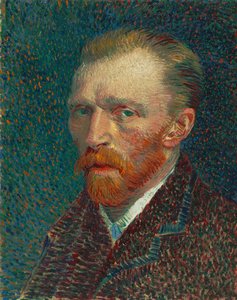
1853–1890 · Netherlands · 3
Dutch Post-Impressionist of swirling night skies and sunflowers, known for thick impasto and expressive brushwork in vibrant colors.
1. Starry Night (New York, MoMA), 13. Cypress against a Starry Sky, 22. Landscape with wheat sheaves and rising moon
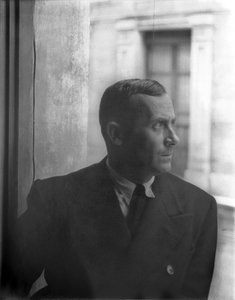
1893–1983 · Spain · 3
Spanish Surrealist known for biomorphic shapes and a symbolic, dreamlike visual language that bridges the gap between the seen and the imagined.
6. The Birth of Day, 12. Mujer y perro cara a la luna, 16. Woman and Bird in Moonlight

1863–1944 · Norway · 2
Norwegian Expressionist of soul painting and rhythmic lines, using distorted forms to capture the tremors of anxiety and existential dread.
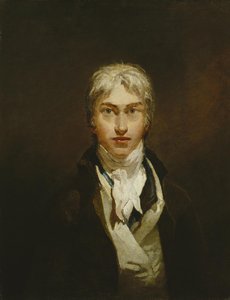
1775–1851 · United Kingdom · 1
British Romanticist of luminous landscapes and turbulent seascapes, using expressive color and light to capture the raw power of nature.


1746–1828 · Spain · 1
Spanish Romanticist of dark, visceral etchings and haunting, psychological black paintings that capture the raw suffering of war and madness.

1788–1857 · Norway · 1
Norwegian Romanticist of rugged mountains and turbulent storms, rendered with a rich impasto and a focus on the visceral power of nature.
Questions and answers
In our ranking, Starry Night by Vincent van Gogh (1889), in MOMA - Museum of Modern Art, then Fishermen at Sea by J. M. W. Turner and Two Men Contemplating the Moon by Caspar David Friedrich.
Vincent van Gogh (3), Joan Miró (3) and Edvard Munch (2), out of 24 works.
MOMA - Museum of Modern Art holds 2 of the 24 works on the list, then Kröller-Müller Museum (2), Tate Gallery (1) and Gemäldegalerie (1).
From 1626 (The Agony in the Garden by Nicolas Poussin) to 1968 (The Birth of Day by Joan Miró).
3,102 works; this page shows the 24 most famous of them, by 19 artists.
New York City, with 3 of the 24; then Otterlo (2), London (1) and Dresden (1).
Our ranking draws on Wikipedia, the manual rank our editors give each artist and artwork, and the visits each page receives every month.