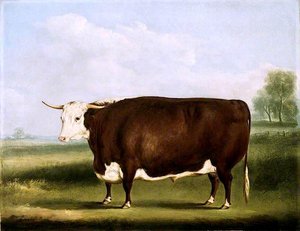
Portrait of William Henry Davis

The 27 Most Famous William Henry Davis Paintings, a Gallery Selection

Updated October 2026 · ranked by our popularity score (searches, visits and orders for each work) · 35 works by William Henry Davis in our catalogue

In short

Of all the originals William Henry Davis left, the most famous is Prize Sheep (1838). Close behind it come Three South Down Sheep (1800) and The Metropolitan Cattle Market, Copenhagen Fields, London (1855). Our catalog holds 35 works by William Henry Davis; the gallery has kept the 27 the world admires most, each shown with its date, its museum and its story.

1833 – 1914 Romanticism Most works: Attingham Park

William Henry Davis's top 10 paintings: the gallery's choice

1
Prize Sheep (1838) by William Henry Davis

Prize Sheep

1838 · Oil On Canvas

The scene unfolds through William Henry Davis's Prize Sheep, an oil on canvas that captures a quiet moment of agricultural pride. Created about 1838, the work presents a specific slice of rural life from the early 19th century. This painting resides within the collection of the Museum of Lincolnshire Life, where it remains a tangible link to the era of selective breeding and the dedication of the farmers who shaped…

2
Three South Down Sheep (1800) by William Henry Davis

Three South Down Sheep

1800 · Oil

In this quiet composition titled Three South Down Sheep, we encounter the hand of William Henry Davis. The work is dated 1800. It presents a scene of pastoral stillness, focusing on a small group of animals within a natural setting. The artist, William Henry Davis, was known for his ability to capture the essence of the English countryside through a lens of tranquility and detail.

The William Henry Davis selection continues, 11 to 27

The subjects that held William Henry Davis's eye

The four subjects that come back most often in these originals, each with its finest example.

The museums that keep William Henry Davis's originals

The 5 museums that hold the most of the paintings on this page.

Museum City Works by William Henry Davis Paintings from this list
Attingham ParkAttingham Park 7 Hereford Bull, A Pair of Horses, Hereford Cow
National Trust, DerbyNational Trust Derby 3 Changing Horses, the Exeter to London Mail Sir Henry Paton, Bt, Leading the Horse, A Grey Shorthorn Cow, A Prize Grey Shorthorn Bull by a Pond
Suffolk Punch Heavy Horse Museum, WoodbridgeSuffolk Punch Heavy Horse Museum Woodbridge 2 Stallion, Fairhead Boxer 405
Guildhall Art Gallery, LondonGuildhall Art Gallery London 1 The Metropolitan Cattle Market, Copenhagen Fields, London
Government Art Collection, LondonGovernment Art Collection London 1 Greyhound

William Henry Davis year by year: the originals that define each

From 1841 to 1859, William Henry Davis worked for 19 years: the selection follows that long career year by year, through its finest originals.

Works per year

Pick a year to see its originals.

Collectors' questions about William Henry Davis's paintings

Which work is William Henry Davis most famous for?Reveal the answer

Prize Sheep (1838). Three South Down Sheep (1800) and The Metropolitan Cattle Market, Copenhagen Fields, London (1855) come next.

What are the ten most famous William Henry Davis paintings?Reveal the answer

Prize Sheep, Three South Down Sheep, The Metropolitan Cattle Market, Copenhagen Fields, London, Greyhound, Changing Horses, the Exeter to London Mail Sir Henry Paton, Bt, Leading the Horse, 'Waterloo Spot' November 5 1816, the Property of Major W. T. Drake, RHG, Sir Henry William Paget, 1st Marquess of Anglesey Shooting Blackcock on Cannock Chase, with His Dog 'Nep', A Grey Shorthorn Cow, A Prize Grey Shorthorn Bull by a Pond and Horse. The ranking above gives each one's year and museum.

How many paintings did William Henry Davis leave?Reveal the answer

Our catalog holds 35 works by William Henry Davis, dated from 1841 to 1859.

In which museums do William Henry Davis's masterpieces hang?Reveal the answer

Mostly in Attingham Park, National Trust (Derby) and Suffolk Punch Heavy Horse Museum (Woodbridge). The museum table above lists them all.

In which years did William Henry Davis paint the most famous works?Reveal the answer

In 1851: 3 of the 27 works on this page were made then, Hereford Bull among them.

What are the first and the last famous originals of William Henry Davis?Reveal the answer

On this page, the earliest is Black Bull (1841) and the latest Hereford Cow (1859).

Which subjects did William Henry Davis choose most often?Reveal the answer

Rural landscape (5), Pastoral scene (4) and 19th century (4), across the 27 works on this page.

To which art movement does William Henry Davis belong?Reveal the answer

Romanticism, judging by the originals on this page.

Which William Henry Davis works hang at the Attingham Park?Reveal the answer

Hereford Bull, A Pair of Horses and Hereford Cow: the Attingham Park holds 7 of the works on this page.

William Henry Davis: life and work

A Life Immersed in Pastoral Beauty: Henry William Banks Davis

Henry William Banks Davis, born in Finchley in 1833 and passing away in 1914, was a quintessential English landscape and animal painter whose work captured the idyllic spirit of the Victorian era. Though not a name immediately recognized alongside the Pre-Raphaelites or Impressionists, Davis enjoyed remarkable popularity during his lifetime, exhibiting over one hundred works at the Royal Academy between 1852 and 1904. His canvases offered viewers a comforting vision of rural England – scenes populated with placid cattle, sheep grazing in sun-dappled fields, and landscapes imbued with a sense of tranquility that resonated deeply with a society undergoing rapid industrialization. Davis wasn’t merely documenting the countryside; he was crafting an idealized version of it, one steeped in nostalgia and harmony.

Early Influences and Artistic Development

Davis's artistic journey began with formal training at the Royal Academy, where he honed his skills and established himself within the London art world. His early works reveal a clear debt to the Pre-Raphaelite Brotherhood. This influence is visible in the meticulous detail, vibrant color palettes, and narrative quality of paintings like *A Spring Morning* (1866). However, Davis didn’t remain strictly bound by the tenets of the movement. Over time, his style evolved, moving away from the intensely symbolic and often dramatic compositions favored by the Pre-Raphaelites towards a broader, more expansive approach. He began working on larger scales, drawing inspiration from artists like Rosa Bonheur and Sir Edwin Landseer – masters of animal painting who achieved widespread acclaim for their realistic depictions of wildlife. This shift reflected a growing desire to capture the grandeur of nature itself, rather than using animals as allegorical figures.

The Pastoral Ideal: Themes and Techniques

Davis’s subject matter consistently revolved around landscapes with animals, particularly in Wales, Scotland, and Northern France. He possessed an exceptional eye for detail, rendering the textures of fur, the play of light on water, and the subtle nuances of the countryside with remarkable accuracy. His paintings weren't simply representations; they were carefully constructed compositions designed to evoke a specific mood – often one of peaceful contemplation or quiet joy. The artist’s technique involved building up layers of paint to create depth and luminosity, resulting in canvases that possess a tangible sense of atmosphere. He skillfully balanced realism with an underlying romantic sensibility, imbuing his scenes with a gentle warmth and inviting the viewer to step into the idyllic world he created.

Recognition and Legacy

Davis’s success was undeniable during his lifetime. His paintings commanded high prices at auction, and two works were acquired by the Chantrey Bequest in 1880 and 1899 – a testament to their artistic merit and public appeal. He was elected an Associate of the Royal Academy in 1873, further solidifying his position within the established art community. While perhaps not as widely celebrated today as some of his contemporaries, Davis’s work remains significant for its ability to capture the essence of Victorian England's pastoral ideal. His paintings offer a valuable glimpse into the aesthetic sensibilities of the era and continue to resonate with viewers who appreciate the beauty and tranquility of the natural world.

Museum Collections & Enduring Appeal

The enduring appeal of Henry William Banks Davis’s work is reflected in its presence within numerous museum collections, including: His paintings serve as a reminder of a time when the countryside was viewed not just as a source of sustenance but also as a sanctuary – a place to escape the pressures of modern life and reconnect with the simple pleasures of nature. Approaching Night* (1899), held in the Tate Gallery, exemplifies this quality, capturing the serene beauty of twilight descending upon a peaceful landscape. Davis’s legacy lies not only in his technical skill but also in his ability to evoke a sense of nostalgia and harmony that continues to captivate audiences today.