The Historical Roots of Serenity: Landscape Painting's Evolution
Landscape painting, also known as landscape art, is the depiction in painting of natural scenery such as mountains, valleys, rivers, trees, and forests, especially where the main subject is a wide view—with its elements arranged into a coherent compo...
The impulse to capture the natural world on canvas is as old as art itself, yet the recognition of landscape as a distinct genre – one capable of evoking profound serenity – unfolded gradually over centuries. Early civilizations often embedded nature within larger narratives; Egyptian tomb paintings showcased lush gardens symbolizing paradise, while Minoan frescoes celebrated the bounty of the earth. However, these were not landscapes in the modern sense, but rather settings for human activity and religious symbolism. The classical world, prioritizing the human form, largely relegated landscape to a supporting role – a backdrop for mythological dramas. It wasn't until the Renaissance that artists began to truly observe and appreciate nature’s intrinsic beauty, independent of allegorical function. Leonardo da Vinci’s meticulous studies of geological formations and atmospheric effects laid the groundwork for more realistic depictions of space and depth, hinting at the emotional resonance landscape could achieve.
The Flemish masters of the 15th century, such as Jan van Eyck, took this further, rendering incredibly detailed naturalistic environments with astonishing precision. Their work wasn’t merely representational; it captured the feeling of being immersed in nature, foreshadowing the emotional power that would characterize later traditions. As the Renaissance transitioned into the Baroque period, landscape painting continued to evolve, often intertwined with themes of aristocratic leisure and displays of power. Grand estates and meticulously manicured gardens became popular subjects, reflecting a desire for control over the natural world – a stark contrast to the untamed wilderness that would soon captivate artists’ imaginations.
The 18th and 19th centuries witnessed a burgeoning fascination with nature as a source of spiritual renewal, fueled by classical literature – particularly Virgil’s *Eclogues* and *Georgics*. The pastoral genre flourished, depicting idealized rural scenes populated by shepherds, nymphs, and idyllic farm life. Nicolas Poussin, though working earlier in the 17th century, profoundly influenced this tradition with his serene and classically-inspired landscapes, emphasizing order, balance, and a sense of moral virtue associated with rural simplicity. Claude Lorrain perfected the art of depicting golden light and atmospheric perspective, creating scenes that evoked nostalgia and tranquility.
Romantic Visions: Nature as Sublime Inspiration
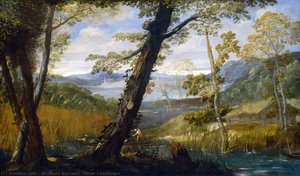 River Landscape
Annibale Carracci’s ‘River Landscape’ (1589) captures serene nature in a masterful Baroque style. Explore this detailed oil painting's beauty & historical significance – perfect for art lovers.
The desire wasn't simply to represent nature, but to convey its sublime power – a feeling of awe mixed with terror that resonated deeply with a generation grappling with industrialization and societal change. The landscape became a mirror reflecting the inner turmoil and spiritual longings of the artist. Artists like John Constable in England sought to capture the beauty of their native landscapes with greater realism and emotional intensity, rejecting idealized conventions in favor of depicting raw, unfiltered experience. This shift paved the way for even more radical departures from traditional artistic norms.
The Hudson River School emerged as a distinctly American expression of Romanticism, celebrating the vastness and untamed beauty of the New World. Thomas Cole, considered the founder of the school, imbued his landscapes with moral and spiritual significance, viewing nature as a manifestation of divine power. His paintings often depicted dramatic vistas, towering mountains, and pristine forests, inviting viewers to contemplate their place within the grand scheme of creation. Herbert Marshall continued this tradition, capturing serene dusk scenes filled with evocative beauty.
Impressionism’s Embrace of Fleeting Moments & Tranquility
 Pale Turquoise Masterpieces: 10 Famous Paintings & Their Serene Beauty | OriginalUniqueArt
Dive into serenity with 10 famous paintings dominated by pale turquoise! Explore Monet, Renoir & Van Gogh's masterpieces. Discover the stories behind these iconic artworks and find museum-quality art reproductions for your home at OriginalUniqueArt.com.
The 19th century witnessed a growing fascination with nature as a source of spiritual renewal. Artists like John Constable in England and the Barbizon School in France sought to capture the beauty of their native landscapes with greater realism and emotional intensity. They rejected the idealized conventions of the pastoral tradition, instead focusing on depicting the raw, untamed power of nature. This shift paved the way for even more radical departures from traditional artistic norms.
Impressionism was a 19th-century art movement characterized by visible brush strokes, open composition, emphasis on accurate depiction of light in its changing qualities. Artists like Claude Monet and Pierre-Auguste Renoir revolutionized landscape painting by focusing on capturing fleeting moments of light and atmosphere. Monet’s series paintings – haystacks, water lilies, Rouen Cathedral – weren't about depicting a specific scene, but rather the experience of seeing it under different conditions. Renoir’s ‘Nude in a Landscape,’ a serene Impressionist masterpiece captures beauty & tranquility. Explore light, color, & form in this iconic work.
Color and Calm: Exploring Tonal Palettes in Serene Art
The selection of color plays a crucial role in evoking feelings of serenity within landscape paintings. Artists often employ soft, muted palettes – reminiscent of dawn or dusk – to create a sense of peacefulness and tranquility. The use of analogous colors (colors that are close together on the color wheel) can further enhance this effect, creating harmonious compositions that soothe the eye. Consider the works of Jean-Baptiste-Camille Corot, whose subtle color palettes and diffused light create an almost dreamlike quality.
Beyond specific hues, tonalism – a late 19th-century American art movement – prioritized atmospheric effects and subjective impressions over precise representation. Tonalist painters like George Inness used limited color ranges and soft brushwork to evoke moods of quiet contemplation and spiritual reflection. Their paintings often feature hazy landscapes bathed in golden light, creating an atmosphere of mystery and tranquility.
Beyond Representation: Symbolism and Emotional Resonance in Peaceful Landscapes
While realism and atmospheric effects are important components of serene landscape painting, many artists also imbue their works with symbolic meaning. Trees, for example, often represent strength, growth, and resilience, while water can symbolize purity, renewal, and the flow of life. The presence or absence of human figures can also convey a sense of solitude, contemplation, or connection to nature.
Even in works that appear purely descriptive, there is often an underlying emotional current. Vincent van Gogh’s monochrome charcoal landscape, depicting a river winding through trees, reveals a different side of the artist’s genius. The stark simplicity of the medium forces a focus on form and texture, creating an evocative depiction of nature stripped down to its essentials. This work isn't joyful or exuberant; it’s melancholic and introspective, yet undeniably peaceful.
Cultivating Inner Peace: Bringing Serenity into Your Home with Art
The power of landscape painting to evoke tranquility extends beyond the museum walls. Bringing these serene visions into your home can create a calming sanctuary – a space for reflection, relaxation, and emotional well-being. When selecting artwork, consider your personal preferences and the overall aesthetic of your living space.
At OriginalUniqueArt, we offer a vast collection of museum-quality reproductions of landscape paintings from across history. From the masterpieces of Monet and Renoir to the evocative works of Constable and Corot, you’re sure to find pieces that resonate with your soul. Explore our selection today and discover how art can transform your home into a haven of peace and tranquility. We provide custom sizing options and framing services to perfectly complement your décor. Let us help you curate a collection that inspires calm and fosters a deeper connection with the natural world.