Preview
 Send
Send Share
Share
 Details

 Download
 Similars
 X-Ray
X-Ray Diaporama
 Stats
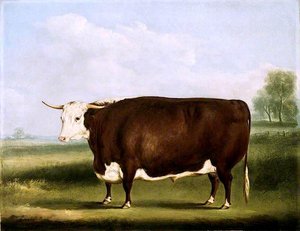
StatsStallion
 1846
1846 46.0 x 59.0 cm
 Suffolk Punch Heavy Horse Museum
 Read More
Hand Made Oil Reproduction
Hand-painted oil on canvas in your size and frame, made to order by our artists. ( Switch to Print Switch to Digital Image)




































Pick from our preset sizes that match the artwork's original proportions.

You may enter your own dimensions to fit a specific frame or space. If your selected size does not match the original image's proportions, we will either crop the artwork or extend the painting with additional hand-painted elements. A digital mockup will be sent for your approval before production begins.
Please note that the on-screen preview does not reflect the actual cropping or extension. Only the mockup will accurately show the final composition.
While custom sizes are available, we recommend selecting a dimension from the predefined list to preserve the original proportions.
After order, OriginalUniqueArt.com team will email client for instructions and provide a mockup preview
Worldwide Delivery () in 3/4 weeks instead of standard 5 weeks. (10 September). No compromise on quality.

Free Worldwide Express Shipping

High-Quality Linen Canvas

Full Shipping Insurance

Customs Tax Refund Guarantee

True Color Matching Guarantee

100-Day Return Policy (Defects Only)

100% Money-Back Guarantee

Bulk Discount Offer
 Glass option is only available in size under 110 CM

Stallion
Reproduction Medium
Reproduction Size
-


Total Price
$ 300
Artist Biography
A Life Immersed in Pastoral Beauty: Henry William Banks Davis
Henry William Banks Davis, born in Finchley in 1833 and passing away in 1914, was a quintessential English landscape and animal painter whose work captured the idyllic spirit of the Victorian era. Though not a name immediately recognized alongside the Pre-Raphaelites or Impressionists, Davis enjoyed remarkable popularity during his lifetime, exhibiting over one hundred works at the Royal Academy between 1852 and 1904. His canvases offered viewers a comforting vision of rural England – scenes populated with placid cattle, sheep grazing in sun-dappled fields, and landscapes imbued with a sense of tranquility that resonated deeply with a society undergoing rapid industrialization. Davis wasn’t merely documenting the countryside; he was crafting an idealized version of it, one steeped in nostalgia and harmony.Early Influences and Artistic Development
Davis's artistic journey began with formal training at the Royal Academy, where he honed his skills and established himself within the London art world. His early works reveal a clear debt to the Pre-Raphaelite Brotherhood. This influence is visible in the meticulous detail, vibrant color palettes, and narrative quality of paintings like *A Spring Morning* (1866). However, Davis didn’t remain strictly bound by the tenets of the movement. Over time, his style evolved, moving away from the intensely symbolic and often dramatic compositions favored by the Pre-Raphaelites towards a broader, more expansive approach. He began working on larger scales, drawing inspiration from artists like Rosa Bonheur and Sir Edwin Landseer – masters of animal painting who achieved widespread acclaim for their realistic depictions of wildlife. This shift reflected a growing desire to capture the grandeur of nature itself, rather than using animals as allegorical figures.The Pastoral Ideal: Themes and Techniques
Davis’s subject matter consistently revolved around landscapes with animals, particularly in Wales, Scotland, and Northern France. He possessed an exceptional eye for detail, rendering the textures of fur, the play of light on water, and the subtle nuances of the countryside with remarkable accuracy. His paintings weren't simply representations; they were carefully constructed compositions designed to evoke a specific mood – often one of peaceful contemplation or quiet joy. The artist’s technique involved building up layers of paint to create depth and luminosity, resulting in canvases that possess a tangible sense of atmosphere. He skillfully balanced realism with an underlying romantic sensibility, imbuing his scenes with a gentle warmth and inviting the viewer to step into the idyllic world he created.Recognition and Legacy
Davis’s success was undeniable during his lifetime. His paintings commanded high prices at auction, and two works were acquired by the Chantrey Bequest in 1880 and 1899 – a testament to their artistic merit and public appeal. He was elected an Associate of the Royal Academy in 1873, further solidifying his position within the established art community. While perhaps not as widely celebrated today as some of his contemporaries, Davis’s work remains significant for its ability to capture the essence of Victorian England's pastoral ideal. His paintings offer a valuable glimpse into the aesthetic sensibilities of the era and continue to resonate with viewers who appreciate the beauty and tranquility of the natural world.Museum Collections & Enduring Appeal
The enduring appeal of Henry William Banks Davis’s work is reflected in its presence within numerous museum collections, including:- Aberdeen Art Gallery
- Bristol City Museum and Art Gallery
- Manchester Art Gallery
- Museums Sheffield
- National Gallery of Victoria, Melbourne
- Royal Academy of Arts, London
- Tate Gallery, London
- Tunbridge Wells Museum and Art Gallery

william henry davis
1833 - 1914
Quick Facts
- Artistic Movement Or Style: Pastoral Painting
- Artists Or Movements Influenced By This Artist: ['Romanticism']
- Artists Who Influenced This Artist: ['Dutch Golden Age painters']
- Date Of Birth: 1833 Finchley
- Date Of Death: 1914
- Full Name: Henry William Banks Davis
- Nationality: English
- Notable Artworks:
- A Prize Grey Shorthorn Bull
- A Grey Shorthorn Cow
- Place Of Birth: England