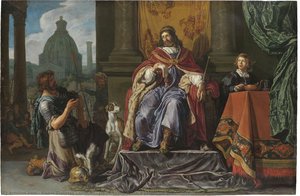
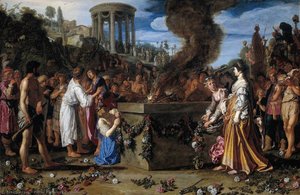
Portrait of Pieter Lastman

The 59 Most Famous Pieter Lastman Paintings, a Gallery Selection

Updated November 2026 · ranked by our popularity score (searches, visits and orders for each work) · 60 works by Pieter Lastman in our catalogue

In short

Of all the originals Pieter Lastman left, the most famous is The adoration of the kings (1608), in the collection of the Hermitage Museum, Saint Petersburg. Close behind it come Abraham and the Three Angels (1623) and The Resurrection (1612). Our catalog holds 60 works by Pieter Lastman; the gallery has kept the 59 the world admires most, each shown with its date, its museum and its story.

1583 – 1633, Amsterdam Baroque Most works: Hermitage Museum

Pieter Lastman's top 10 paintings: the gallery's choice

1
The adoration of the kings (1608) by Pieter Lastman

The adoration of the kings

1608 · Oil On Canvas · Hermitage Museum, Saint Petersburg

In 1608, Pieter Lastman painted The adoration of the kings, an oil work that captures a profound moment of religious significance. The scene depicts the biblical episode of the Adoration of the Magi, focusing on the intimate encounter between the divine and the earthly. Within this composition, the Virgin Mary and the Christ Child are the central figures, receiving the homage of the three kings: Melchior, Caspar, and Balthazar. It…

2
Abraham and the Three Angels (1623) by Pieter Lastman

Abraham and the Three Angels

1623 · Oil On Panel · Hermitage Museum, Saint Petersburg

In this 1623 oil on panel, the biblical patriarch Abraham meets a divine presence through three celestial visitors. Pieter Lastman captures the moment of profound hospitality and revelation that defines this sacred encounter. The scene unfolds with a sense of immediate spiritual weight, as the elderly Abraham kneels in reverence before the visitors. This religious art focuses on the quiet intensity of the meeting, where the mortal realm brushes against…

3
The Resurrection (1612) by Pieter Lastman

The Resurrection

1612 · Oil On Canvas · J. Paul Getty Museum, Los Angeles

The Resurrection is a significant oil painting by Pieter Pietersz Lastman, created in 1612. This work captures a pivotal biblical scene, depicting the moment of Christ's Resurrection. The composition focuses on the triumph of the divine over the earthly realm, a theme central to Lastman's narrative approach to religious subjects.

4
The beheading of S. Paul (1601) by Pieter Lastman

The beheading of S. Paul

1601 · Oil On Panel · Museum Catharijneconvent, Utrecht

The tension in The beheading of S. Paul by Pieter Lastman hangs heavy in the air. Created about 1601, this work captures a moment of profound religious and visceral intensity. We find ourselves witnessing the martyrdom of Saint Paul, a scene where the spiritual weight of faith meets the brutal reality of physical sacrifice. The air seems to thicken with the gravity of the event as the executioner prepares to…

5
The Rest on the Flight to Egypt (1608) by Pieter Lastman

The Rest on the Flight to Egypt

1608 · Oil On Canvas · Gemäldegalerie, Berlin

The shadows of a dense, dark thicket press against the left side of the canvas. Within this cool, shaded sanctuary, three figures find a brief respite. The Virgin Mary, draped in deep blue and red, cradles the Christ Child, whose skin catches a soft, luminous light. Beside them, Saint Joseph sits in the stillness. The composition forms a steady triangle, anchoring the family against the ruggedness of the landscape. To…

6
The baptism of the eunuch (1608) by Pieter Lastman

The baptism of the eunuch

1608 · Oil On Panel · Gemäldegalerie, Berlin

The baptism of the eunuch is an oil on panel by Pieter Lastman. The artist, born in Amsterdam in 1583, captured this moment on a surface measuring 85 by 115 cm. A quiet weight resides in the wood, holding the figures within its grain. Lastman lived until 1633, leaving behind this specific window into a biblical encounter.

7
The Baptism of the Moorish Chamberlain (1620) by Pieter Lastman

The Baptism of the Moorish Chamberlain

The painting titled The Baptism of the Moorish Chamberlain is an oil work by the Dutch artist Pieter Lastman. This specific piece was executed about 1620. The artist, who was born in Amsterdam in 1583, utilized a painterly technique to render this biblical scene. The composition focuses on a group of figures gathered at a water's edge, involving both individuals on foot and those on horseback.

8
Joseph Selling Corn in Egypt (1612) by Pieter Lastman

Joseph Selling Corn in Egypt

1612 · Oil On Canvas · National Gallery of Ireland, Dublin City

In this work, titled Joseph Selling Corn in Egypt, the artist Pieter Lastman presents a crowded, dramatic scene of commerce and abundance. The narrative draws from the Book of Genesis, focusing on the period when Joseph, having risen to power in Egypt, manages the distribution of grain during a time of famine. It is a moment of intense human activity, where the necessity of survival meets the organized structure of…

9
Balaam and his Ass (1622) by Pieter Lastman

Balaam and his Ass

1622 · Oil · Israel Museum, Jerusalem

In this work, titled Balaam and his Ass, Pieter Lastman captures a moment of divine interruption. Created about 1622, the painting presents a man on a donkey facing a winged angel. The scene is frozen in a state of sudden tension. A sword is held aloft, cutting through the stillness of the landscape. The figure of Balaam, draped in a deep crimson cloak, reacts to the celestial presence that blocks…

10
Entombment of Christ (1612) by Pieter Lastman

Entombment of Christ

1612 · Oil · Palais des Beaux-Arts de Lille, Lille

Pieter Lastman, born in Amsterdam in 1583, executed this oil painting titled Entombment of Christ. The work emerged during the Dutch Golden Age, a period in which Lastman established himself as a significant figure in historical and biblical narrative painting. His approach to religious subject matter focused on the psychological weight of the scene, utilizing the dramatic tension inherent in the moment of Christ's burial.

The Pieter Lastman selection continues, 11 to 59

11Hippocrates and Democritus (1622) by Pieter LastmanHippocrates and Democritus1622 · Palais des Beaux-Arts de Lille 12King David Handing the Letter to Uriah (1611) by Pieter LastmanKing David Handing the Letter to Uriah1611 · Detroit Institute of Arts 13Saint Matthew (1613) by Pieter LastmanSaint Matthew1613 · Rhode Island School of Design Museum of Art 14Paris and Oenone (1619) by Pieter LastmanParis and Oenone1619 · Worcester Art Museum 15The Raising of Lazarus (1622) by Pieter LastmanThe Raising of Lazarus1622 · Mauritshuis 16Tobias catches the fish (1613) by Pieter LastmanTobias catches the fish1613 · Fries Museum 17Haman begging Esther for mercy (1618) by Pieter LastmanHaman begging Esther for mercy1618 · National Museum in Warsaw 18Wedding Night of Tobias and Sarah (1611) by Pieter LastmanWedding Night of Tobias and Sarah1611 · Museum of Fine Arts 19Paul and Barnabas at Lystra (1617) by Pieter LastmanPaul and Barnabas at Lystra1617 · Amsterdam Museum 20Ecce Homo (1610) by Pieter LastmanEcce Homo1610 · Amsterdam Museum 21David in the temple (1618) by Pieter LastmanDavid in the temple1618 · Herzog Anton Ulrich Museum 22The meeting of Nausicaa and Ulysses: Ulysses, almost naked, comes out of the bushes; Nausicaa and her companions are startled at the sight (1609) by Pieter LastmanThe meeting of Nausicaa and Ulysses: Ulysses, almost naked, comes out of the bushes; Nausicaa and her companions are startled at the sight1609 · Herzog Anton Ulrich Museum 23The Annunciation of the birth of Samson to Manoah and his wife (Judges 13:2-3) (1617) by Pieter LastmanThe Annunciation of the birth of Samson to Manoah and his wife (Judges 13:2-3)1617 · Agnes Etherington Art Center 24The Good Samaritan tending the wounds of the traveller (1614) by Pieter LastmanThe Good Samaritan tending the wounds of the traveller1614 25Laban Searching for the Idols (1622) by Pieter LastmanLaban Searching for the Idols1622 · château-musée de Boulogne-sur-Mer 26The baptism of the Eunuch (1620) by Pieter LastmanThe baptism of the Eunuch1620 · Fondation Custodia 27St John the Baptist Preaching (1627) by Pieter LastmanSt John the Baptist Preaching1627 · Mauritshuis 28Hagar and the Angel in the Wilderness (1625) by Pieter LastmanHagar and the Angel in the Wilderness1625 · Israel Museum 29Athena and Odysseus (1625) by Pieter LastmanAthena and Odysseus1625 · Rembrandt House Museum 30Dido's Sacrifice to Juno (1630) by Pieter LastmanDido's Sacrifice to Juno1630 · Nationalmuseum 31The Baptism of the Eunuch (1623) by Pieter LastmanThe Baptism of the Eunuch1623 · Staatliche Kunsthalle Karlsruhe 32De gortenteller (1730) by Pieter LastmanDe gortenteller1730 · Amsterdam Museum 33Saint John on the Isle of Patmos (1613) by Pieter LastmanSaint John on the Isle of Patmos1613 · Museum Boijmans Van Beuningen 34The flight into Egypt (1608) by Pieter LastmanThe flight into Egypt1608 · Museum Boijmans Van Beuningen 35Jonah and the Whale (1621) by Pieter LastmanJonah and the Whale1621 · Kunstpalast 36The Angel and the Young Tobit with the Fish (1610) by Pieter LastmanThe Angel and the Young Tobit with the Fish1610 · Szépművészeti Múzeum 37The Baptism of Christ (1629) by Pieter LastmanThe Baptism of Christ1629 · Scottish National Gallery 38David Gives Uriah a Letter for Joab (1619) by Pieter LastmanDavid Gives Uriah a Letter for Joab1619 · The Leiden Collection 39LE SACRIFICE D'ABRAHAM by Pieter LastmanLE SACRIFICE D'ABRAHAMThe Louvre 40Haman begging the mercy of Esther (Esther 7:6-7) by Pieter LastmanHaman begging the mercy of Esther (Esther 7:6-7)National Museum in Warsaw 41The lamentation of abel by Pieter LastmanThe lamentation of abel 42Susanna And The Elders by Pieter LastmanSusanna And The EldersGemäldegalerie 43Christ And The Canaanite Woman by Pieter LastmanChrist And The Canaanite WomanRijksmuseum 44The Angel Raphael Takes Leave of Old Tobit and his Son Tobias (1618) by Pieter LastmanThe Angel Raphael Takes Leave of Old Tobit and his Son Tobias1618 · National Gallery of Denmark 45The Battle of Constantine and Maxentius (1613) by Pieter LastmanThe Battle of Constantine and Maxentius1613 · Kunsthalle Bremen 46The Angel And Tobias With The Fish by Pieter LastmanThe Angel And Tobias With The Fish 47Juno Discovering Jupiter With Io by Pieter LastmanJuno Discovering Jupiter With Io 48The Triumph Of Mordecai by Pieter LastmanThe Triumph Of MordecaiRembrandt House Museum 49The Angel And Tobias With The Fish (detail) by Pieter LastmanThe Angel And Tobias With The Fish (detail) 50Hagar and the Angel by Pieter LastmanHagar and the AngelLos Angeles County Museum of Art 51Orestes And Pylades Disputing At The Altar by Pieter LastmanOrestes And Pylades Disputing At The AltarRijksmuseum 52The Angel Of The Lord Preventing Abraham From Sacrificing His Son Isaac by Pieter LastmanThe Angel Of The Lord Preventing Abraham From Sacrificing His Son IsaacPlantin-Moretus Museum 53The Sacrifice Of Abraham by Pieter LastmanThe Sacrifice Of AbrahamRijksmuseum 54The Rest on the Flight into Egypt by Pieter LastmanThe Rest on the Flight into EgyptNational Gallery 55Juno discovering Jupiter with Io (1618) by Pieter LastmanJuno discovering Jupiter with Io1618 · National Gallery 56Bathsheba at her Toilette (1619) by Pieter LastmanBathsheba at her Toilette1619 · Hermitage Museum 57Annunciation by Pieter LastmanAnnunciationHermitage Museum 58Odysseus And Nausicaa by Pieter LastmanOdysseus And NausicaaBavarian State Painting Collections 59Abraham's Journey To Canaan by Pieter LastmanAbraham's Journey To CanaanHermitage Museum

Pieter Lastman's famous paintings, period by period

The subjects that held Pieter Lastman's eye

The four subjects that come back most often in these originals, each with its finest example.

The museums that keep Pieter Lastman's originals

The 8 museums that hold the most of the paintings on this page.

Museum City Works by Pieter Lastman Paintings from this list
Hermitage Museum, Saint PetersburgHermitage Museum Saint Petersburg 5 The adoration of the kings, Abraham and the Three Angels, Bathsheba at her Toilette
Gemäldegalerie, BerlinGemäldegalerie Berlin 3 The Rest on the Flight to Egypt, The baptism of the eunuch, Susanna And The Elders
Amsterdam Museum, AmsterdamAmsterdam Museum Amsterdam 3 Paul and Barnabas at Lystra, Ecce Homo, De gortenteller
Rijksmuseum, AmsterdamRijksmuseum Amsterdam 3 Christ And The Canaanite Woman, Orestes And Pylades Disputing At The Altar, The Sacrifice Of Abraham
Bavarian State Painting Collections, MunichBavarian State Painting Collections Munich 2 The Baptism of the Moorish Chamberlain, Odysseus And Nausicaa
Israel Museum, JerusalemIsrael Museum Jerusalem 2 Balaam and his Ass, Hagar and the Angel in the Wilderness
Palais des Beaux-Arts de Lille, LillePalais des Beaux-Arts de Lille Lille 2 Entombment of Christ, Hippocrates and Democritus
Mauritshuis, The HagueMauritshuis The Hague 2 The Raising of Lazarus, St John the Baptist Preaching

Pieter Lastman decade by decade: the original that defines each

Works per decade

Pick a decade to see the original that defines it.

Collectors' questions about Pieter Lastman's paintings

Which work is Pieter Lastman most famous for?Reveal the answer

The adoration of the kings (1608), Hermitage Museum, Saint Petersburg. Abraham and the Three Angels (1623) and The Resurrection (1612) come next.

What age was Pieter Lastman when The adoration of the kings was made?Reveal the answer

25 years old: The adoration of the kings dates from 1608, and Pieter Lastman was born in 1583.

What are the ten most famous Pieter Lastman paintings?Reveal the answer

The adoration of the kings, Abraham and the Three Angels, The Resurrection, The beheading of S. Paul, The Rest on the Flight to Egypt, The baptism of the eunuch, The Baptism of the Moorish Chamberlain, Joseph Selling Corn in Egypt, Balaam and his Ass and Entombment of Christ. The ranking above gives each one's year and museum.

How many paintings did Pieter Lastman leave?Reveal the answer

Our catalog holds 60 works by Pieter Lastman, dated from 1601 to 1630.

In which museums do Pieter Lastman's masterpieces hang?Reveal the answer

Mostly in Hermitage Museum (Saint Petersburg), Gemäldegalerie (Berlin) and Amsterdam Museum (Amsterdam). The museum table above lists them all.

In which years did Pieter Lastman paint the most famous works?Reveal the answer

In 1610s: 21 of the 59 works on this page were made then, The Resurrection among them.

What are the first and the last famous originals of Pieter Lastman?Reveal the answer

On this page, the earliest is The beheading of S. Paul (1601) and the latest Dido's Sacrifice to Juno (1630).

Which subjects did Pieter Lastman choose most often?Reveal the answer

Man (20), Woman (16) and People (14), across the 59 works on this page.

Which technique did Pieter Lastman use most?Reveal the answer

Oil, for 19 of the 59 works on this page.

To which art movement does Pieter Lastman belong?Reveal the answer

Baroque and Dutch golden age, judging by the originals on this page.

Which Pieter Lastman works hang at the Hermitage Museum?Reveal the answer

The adoration of the kings, Abraham and the Three Angels and Bathsheba at her Toilette: the Hermitage Museum, Saint Petersburg holds 5 of the works on this page.

Pieter Lastman: life and work

A Pioneer of Dutch Narrative: Pieter Lastman’s Enduring Legacy

Pieter Pietersz Lastman, born in Amsterdam in 1583, occupies a fascinating and pivotal position within the history of Dutch Golden Age painting. For too long overshadowed by his most celebrated pupil, Rembrandt van Rijn, Lastman was not merely a teacher but a groundbreaking artist in his own right—a pioneer who revitalized historical painting in the Netherlands and laid the foundations for the dramatic narratives that would come to define the era. His life, though relatively short, was marked by artistic ambition, a significant sojourn in Italy, and an unwavering commitment to storytelling through vivid imagery. Lastman’s early life provided a fertile ground for his burgeoning talent; his father, Pieter Segersz, while dismissed from his position as town-beadle due to religious convictions, instilled a sense of civic duty, and his mother, Barber Jacobsdr, possessed a keen eye for art as an appraiser of paintings and goods. This familial environment fostered an appreciation for both the visual arts and the world beyond the canvas. He began his artistic training under Gerrit Pietersz Sweelinck, brother to the renowned composer Jan Pieterszoon Sweelinck, receiving a solid foundation in technique before embarking on a transformative journey to Italy around 1604.

The Italian Influence and Return to Amsterdam

Lastman’s time in Italy proved crucial in shaping his artistic vision. Immersed in the vibrant art scene of Rome, he encountered the works of Caravaggio and Adam Elsheimer—artists who profoundly impacted his approach to painting. Unlike the prevailing Mannerist style, Caravaggio's naturalism and dramatic use of light resonated deeply with Lastman, while Elsheimer’s meticulous detail and focus on historical subjects provided a new direction for his own narrative ambitions. He adopted the Italian practice of signing his works as “Pietro,” demonstrating his embrace of the cultural milieu. Upon returning to Amsterdam in 1607, Lastman became a leading figure in the city's artistic community. He established himself as a history painter—a genre that had been somewhat neglected in Dutch art—and quickly gained recognition for his innovative compositions and compelling storytelling. His studio soon attracted talented apprentices, most notably Rembrandt van Rijn, who spent six formative months under Lastman’s tutelage in 1625.

A Master of Biblical Narrative

Lastman's paintings are characterized by their dramatic intensity, meticulous attention to detail, and a keen psychological insight into his subjects. He favored biblical scenes, often choosing lesser-known narratives that allowed him to explore complex themes of faith, betrayal, and redemption. Works like “The Battle of Constantine” exemplify his ability to create dynamic compositions filled with movement and emotion. The scene is not merely a depiction of historical events but a powerful exploration of human conflict and divine intervention. Similarly, paintings such as "David Gives Uriah a Letter for Joab" showcase Lastman’s willingness to tackle challenging subjects—depicting moments of moral ambiguity and psychological tension. He paid particular attention to the faces, hands, and feet of his figures, imbuing them with expressive detail that conveyed their inner turmoil. His use of color was bold and vibrant, further enhancing the emotional impact of his scenes.

Lastman’s Legacy: Shaping a Generation

The influence of Pieter Lastman extended far beyond his own artistic output. As a teacher, he played a pivotal role in shaping the next generation of Dutch painters. Rembrandt van Rijn, undoubtedly his most famous pupil, absorbed many of Lastman's techniques and narrative approaches—particularly his dramatic use of light and shadow, his focus on psychological realism, and his penchant for biblical subjects. Jan Lievens also benefited from Lastman’s guidance, developing a similar style characterized by intense emotion and dynamic compositions. Beyond these prominent figures, Lastman mentored several other artists who contributed to the flourishing of Dutch Golden Age painting. He was instrumental in establishing Amsterdam as a center for history painting, paving the way for the artistic innovations that would define the 17th century. Although he died relatively young in 1633, his impact on Dutch art remains profound—a testament to his vision, skill, and unwavering commitment to storytelling through paint.

Rediscovering Lastman: A Growing Appreciation

For centuries, Pieter Lastman’s contributions were often overshadowed by the brilliance of Rembrandt. However, recent scholarship has begun to redress this imbalance, recognizing him as a pivotal figure in Dutch art history. As more attention is paid to his individual works and his influence on other artists, a fuller appreciation for his unique talents is emerging. Museums around the world are re-evaluating their collections, showcasing Lastman’s paintings alongside those of his pupils, allowing viewers to appreciate the direct connection between his work and the masterpieces that followed. The rediscovery of Lastman is not merely an academic exercise but a vital step in understanding the complex evolution of Dutch Golden Age painting—acknowledging the contributions of a true pioneer who laid the foundations for one of the most celebrated periods in art history.