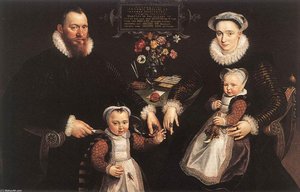
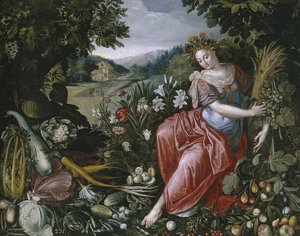
Portrait of Maerten De Vos

Maerten De Vos Paintings: The 82 Most Famous, Through a Gallery's Eye

Updated November 2026 · ranked by our popularity score (searches, visits and orders for each work) · 85 works by Maerten De Vos in our catalogue

In short

To the gallery's eye, Maerten De Vos's most famous painting is Allegory of the Seven Liberal Arts (1590). Nativity (1577) and The Rapture of Europe (1590) complete the trio every eye recognises. Of the 85 works by Maerten De Vos in our catalog, the gallery presents the 82 most famous below, each original with its year, its museum and what makes it unique.

1532 – 1603, Antwerp Mannerism Most works: Royal Museum of Fine Arts Antwerp

The gallery's top 10 Maerten De Vos paintings

1
Allegory of the Seven Liberal Arts (1590) by Maerten De Vos

Allegory of the Seven Liberal Arts

1590 · Oil On Panel

The Allegory of the Seven Liberal Arts is an oil on panel painting by Maerten De Vos. Created in 1590, this work offers a structured look at the fundamental pillars of Renaissance education. De Vos, a significant figure in the Southern Netherlands, brings a specific clarity to this assembly of figures. The scale of the piece is substantial, measuring 147 x 200 cm.

2
Nativity (1577) by Maerten De Vos

Nativity

1577 · Oil · Onze-Lieve Vrouwekathedraal, Antwerp

In this 1577 composition, we find ourselves drawn into a sacred space where the atmosphere is heavy with reverence. The scene centers on the intimate moment of the Nativity, focusing on Mary as she cradles the infant Jesus. She is surrounded by a gathering of figures, at least twelve in total, including Joseph and various onlookers who have come to witness the event. The setting, which carries the architectural weight…

3
The Rapture of Europe (1590) by Maerten De Vos

The Rapture of Europe

1590 · Oil On Panel · Bilbao Fine Arts Museum, Bilbao

The Rapture of Europe emerges from the brush of Maerten De Vos as a profound mythological painting. This work, also known by the title The Rape of Europa, captures a moment of profound transformation and movement. It exists as a vivid window into the legends of antiquity, where the boundaries between the divine and the mortal blur under a heavy, dramatic sky.

4
The Resurrection of Christ (1564) by Maerten De Vos

The Resurrection of Christ

1564 · Oil · National Gallery of Ireland, Dublin City

Maerten De Vos, born in Antwerp, Belgium, in 1532, produced The Resurrection of Christ around 1564. A significant figure in the transition from the High Renaissance to Mannerism, De Vos was a member of the Guild of Saint Luke in Antwerp. His career spanned the religious and political shifts of the Southern Netherlands until his death in 1603.

5
Scene of the legend of S. Benedict (building of a church) (1557) by Maerten De Vos

Scene of the legend of S. Benedict (building of a church)

1557 · Oil

This Renaissance-era oil painting, dating to 1557, presents a complex and multi-layered religious narrative. The composition utilizes a deep landscape perspective to establish a sense of vastness, guiding the viewer's eye from the immediate foreground toward a distant horizon. In the foreground on the left, a central figure, likely Saint Benedict, is depicted in a white robe, gesturing toward a partially constructed stone building or church. Surrounding this structure, several…

6
Christ on the Cross (1567) by Maerten De Vos

Christ on the Cross

1567 · Oil On Panel · Bavarian State Painting Collections, Munich

In this religious work, Christ on the Cross, Maerten De Vos presents a profound scene of the Crucifixion of Jesus Christ. Created about 1567, the painting captures a moment of intense spiritual gravity. The central figure of Christ is positioned on the cross, flanked by the two thieves, a traditional arrangement that anchors the biblical narrative. This composition focuses the viewer's attention on the central event of the Passion through…

7
Raising of Lazarus (1570) by Maerten De Vos

Raising of Lazarus

1570 · Oil On Canvas · Bavarian State Painting Collections, Munich

In the Raising of Lazarus, Maerten De Vos captures a moment of profound divine intervention. The scene unfolds around the miraculous event where Jesus calls Lazarus forth from the tomb. This biblical miracle, depicted in this work from about 1570, pulses with the tension of life returning to a body once claimed by death. The air feels heavy with the weight of the supernatural as the command of Christ meets…

8
The death of Adonis (1575) by Maerten De Vos

The death of Adonis

1575 · Oil On Canvas · Musee des Beaux-Arts, Blois

In 1575, Maerten De Vos captures a moment of profound tragedy in his work, The death of Adonis. The scene freezes the exact instant of a mythological catastrophe, where the mortal hunter Adonis meets his end. A heavy sense of loss hangs over the landscape as the life drains from his pale form. The air feels thick with the weight of this sudden, violent transition from life to stillness.

9
Gathering of manna (1570) by Maerten De Vos

Gathering of manna

In this large-scale oil painting, Gathering of manna by Maerten De Vos, the artist presents a densely packed scene that demands close observation. The composition is organized through a multi-layered landscape, creating a sense of immense scale. In the foreground, the space is occupied by women and children focused on the task of collecting food. This immediate layer of activity leads the eye toward a distant horizon where hazy mountains…

10
Incredulity of Saint Thomas (1574) by Maerten De Vos

Incredulity of Saint Thomas

1574 · Oil · Royal Museum of Fine Arts Antwerp, Antwerp

Maerten De Vos captures the biblical moment of physical verification of Christ's resurrection in Incredulity of Saint Thomas. Created about 1574, the work centers on the tension between human doubt and divine revelation. The scene focuses on the precise instant when Thomas reaches toward the wounds of the resurrected Christ to confirm the truth of the event.

Maerten De Vos paintings, ranked 11 to 82

11Saint Stephen (1574) by Maerten De VosSaint Stephen1574 · Royal Museum of Fine Arts Antwerp 12The Beheading of Saint John-Baptist (1574) by Maerten De VosThe Beheading of Saint John-Baptist1574 · Royal Museum of Fine Arts Antwerp 13Saint Thomas the Apostle (1574) by Maerten De VosSaint Thomas the Apostle1574 · Royal Museum of Fine Arts Antwerp 14The Baptism of Christ (1574) by Maerten De VosThe Baptism of Christ1574 · Royal Museum of Fine Arts Antwerp 15The Soldiers Fighting over Christ's Cloak (1575) by Maerten De VosThe Soldiers Fighting over Christ's Cloak1575 · Statens Museum For Kunst 16The Adoration of the Kings (1575) by Maerten De VosThe Adoration of the Kings1575 · Statens Museum For Kunst 17the Annunciation (1578) by Maerten De Vosthe Annunciation1578 18The Parable of the Labourers in the Vineyard (1575) by Maerten De VosThe Parable of the Labourers in the Vineyard1575 · Nationalmuseum 19Portrait of Antonius Anselmus, His Wife and Their Children (1577) by Maerten De VosPortrait of Antonius Anselmus, His Wife and Their Children1577 · Musées Royaux des Beaux-Arts 20Saint Luke Appearing at the Curch of Our Lady in Tripoli (1588) by Maerten De VosSaint Luke Appearing at the Curch of Our Lady in Tripoli1588 · Royal Museum of Fine Arts Antwerp 21Saint Didacus Brings the Stillborn Girl to Life (1591) by Maerten De VosSaint Didacus Brings the Stillborn Girl to Life1591 · Royal Museum of Fine Arts Antwerp 22Saint Didacus Finds a Miraculous Meal (1591) by Maerten De VosSaint Didacus Finds a Miraculous Meal1591 · Royal Museum of Fine Arts Antwerp 23Saint Didacus of Alcalà at Prayers (1591) by Maerten De VosSaint Didacus of Alcalà at Prayers1591 · Royal Museum of Fine Arts Antwerp 24The Life of Saint Didacus of Alcalá (1590) by Maerten De VosThe Life of Saint Didacus of Alcalá1590 · Royal Museum of Fine Arts Antwerp 25The Nativity (1588) by Maerten De VosThe Nativity1588 · Royal Museum of Fine Arts Antwerp 26Saint Georges delivering Saint Margaret (1590) by Maerten De VosSaint Georges delivering Saint Margaret1590 · Royal Museum of Fine Arts Antwerp 27Saint Georges delivering Saint Margaret (1590) by Maerten De VosSaint Georges delivering Saint Margaret1590 · Royal Museum of Fine Arts Antwerp 28The Emperor Constantine erecting a church dedicated to Saint George (1590) by Maerten De VosThe Emperor Constantine erecting a church dedicated to Saint George1590 · Royal Museum of Fine Arts Antwerp 29Baptism of the King of Silene (1590) by Maerten De VosBaptism of the King of Silene1590 · Royal Museum of Fine Arts Antwerp 30Christ Triumphant (1590) by Maerten De VosChrist Triumphant1590 · Royal Museum of Fine Arts Antwerp 31Henry IV of Castile and his daughter find healing at the tomb of Saint Didacus (1595) by Maerten De VosHenry IV of Castile and his daughter find healing at the tomb of Saint Didacus1595 · Royal Museum of Fine Arts Antwerp 32Adoration of the Kings (1599) by Maerten De VosAdoration of the Kings1599 · Musée des Beaux-Arts de Valenciennes 33The Temptations of Antony Abbot of Egypt (1594) by Maerten De VosThe Temptations of Antony Abbot of Egypt1594 · Royal Museum of Fine Arts Antwerp 34Abraham in Hebron (1602) by Maerten De VosAbraham in Hebron1602 · Royal Museum of Fine Arts Antwerp 35The Burial of Sarah (1602) by Maerten De VosThe Burial of Sarah1602 · Royal Museum of Fine Arts Antwerp 36The Widow's Offering (1602) by Maerten De VosThe Widow's Offering1602 · Royal Museum of Fine Arts Antwerp 37The Temple Tax (1602) by Maerten De VosThe Temple Tax1602 · Royal Museum of Fine Arts Antwerp 38Then give to Caesar what is Caesar's (1602) by Maerten De VosThen give to Caesar what is Caesar's1602 · Royal Museum of Fine Arts Antwerp 39Crucifixion (1600) by Maerten De VosCrucifixion1600 · Royal Museum of Fine Arts Antwerp 40The Tribunal of the Brabant Mint in Antwerp (1594) by Maerten De VosThe Tribunal of the Brabant Mint in Antwerp1594 · Rockox House 41The Marriage at Cana (1596) by Maerten De VosThe Marriage at Cana1596 · Onze 42Saint Luke Appears in the Church of Our Lady of Tripoli (1620) by Maerten De VosSaint Luke Appears in the Church of Our Lady of Tripoli1620 · Royal Museum of Fine Arts Antwerp 43Riverlandscape with cattle herders (1616) by Maerten De VosRiverlandscape with cattle herders1616 · Museo del Prado 44Mountain Landscape with a Castle (Christ on the Road to Emmaus) (1616) by Maerten De VosMountain Landscape with a Castle (Christ on the Road to Emmaus)1616 · Nationalmuseum 45Landscape with a Farm (1627) by Maerten De VosLandscape with a Farm1627 · Hermitage Museum 46Moses Showing the Tablets of the Law to the Israelites, with Portraits of Members of the Panhuys Family, their Relatives and Friends (1575) by Maerten De VosMoses Showing the Tablets of the Law to the Israelites, with Portraits of Members of the Panhuys Family, their Relatives and Friends1575 · Mauritshuis 47Portrait of Antonius Anselmus at the Age of Forty-Six, with a Spaniel (1571) by Maerten De VosPortrait of Antonius Anselmus at the Age of Forty-Six, with a Spaniel1571 · Israel Museum 48The Ephesians burn the exorcists' books in public Acts 19:19) (1568) by Maerten De VosThe Ephesians burn the exorcists' books in public Acts 19:19)1568 · Royal Museums of Fine Arts of Belgium 49Portrait of an unicorn (1572) by Maerten De VosPortrait of an unicorn1572 · Staatliches Museum Schwerin 50Portrait of an Old Woman (1569) by Maerten De VosPortrait of an Old Woman1569 · National Gallery of Art 51St Paul Bitten by a Viper on the Island of Malta (1567) by Maerten De VosSt Paul Bitten by a Viper on the Island of Malta1567 · The Louvre 52Saint Luke Giving three Pilgrims Alms (1588) by Maerten De VosSaint Luke Giving three Pilgrims Alms1588 · Royal Museum of Fine Arts Antwerp 53Allegory of the Choleric Temperament (1583) by Maerten De VosAllegory of the Choleric Temperament1583 · Cantor Arts Center at Stanford University 54The Temptation of St Antony (1591) by Maerten De VosThe Temptation of St Antony1591 · Koninklijk Museum voor Schone Kunsten 55The Family of St Anne (detail) (1585) by Maerten De VosThe Family of St Anne (detail)1585 · Museum voor Schone Kunsten 56The Family of Saint Anne (1585) by Maerten De VosThe Family of Saint Anne1585 · Museum of Fine Arts Ghent (MSK) 57Scene from the Life of the Virgin (1600) by Maerten De VosScene from the Life of the Virgin1600 · Cathedral 58The Emperor's Toil (1601) by Maerten De VosThe Emperor's Toil1601 · Royal Museum of Fine Arts Antwerp 59Landscape with a Lake (1616) by Maerten De VosLandscape with a Lake1616 · Hermitage Museum 60Mining Operations along a River (1620) by Maerten De VosMining Operations along a River1620 · Walters Art Museum 61Landscape with travellers (1616) by Maerten De VosLandscape with travellers1616 · Museum der bildenden Künste 62Landscape with Satyrs (1626) by Maerten De VosLandscape with Satyrs1626 · National Gallery 63Landscape with Windmill and Wayside Chapel (1628) by Maerten De VosLandscape with Windmill and Wayside Chapel1628 · Harvard Art Museums 64The Last Supper by Maerten De VosThe Last SupperThe National Museum of Western Art 65St Luke Painting the Virgin Mary (1602) by Maerten De VosSt Luke Painting the Virgin Mary1602 · Koninklijk Museum voor Schone Kunsten 66Triumph of David by Maerten De VosTriumph of DavidMusée des Beaux-Arts 67The air by Maerten De VosThe airMuseo del Prado 68The earth by Maerten De VosThe earthMuseo del Prado 69Landscape with Pan and Syrinx, after Paul Bril by Maerten De VosLandscape with Pan and Syrinx, after Paul BrilFitzwilliam Museum 70Dijon St Benigne cathedral, The Annunciation by Martin de Vos by Maerten De VosDijon St Benigne cathedral, The Annunciation by Martin de Vos 71Saint Didacus Helps with a Difficult Birth by Maerten De VosSaint Didacus Helps with a Difficult BirthRoyal Museum of Fine Arts Antwerp 72The Spanish Crown Prince Don Carlos Heals After Touching the Corpse of Saint Didacus by Maerten De VosThe Spanish Crown Prince Don Carlos Heals After Touching the Corpse of Saint DidacusRoyal Museum of Fine Arts Antwerp 73Death of Saint Didacus by Maerten De VosDeath of Saint DidacusRoyal Museum of Fine Arts Antwerp 74Saint Didacus Heals the Sick by Maerten De VosSaint Didacus Heals the SickRoyal Museum of Fine Arts Antwerp 75Saint Didacus Saves a Boy From the Oven by Maerten De VosSaint Didacus Saves a Boy From the OvenRoyal Museum of Fine Arts Antwerp 76The Story of Saint Didacus of Alcalà by Maerten De VosThe Story of Saint Didacus of AlcalàRoyal Museum of Fine Arts Antwerp 77Saint Francis of Assisi and Saint Didacus of Alcalá by Maerten De VosSaint Francis of Assisi and Saint Didacus of AlcaláRoyal Museum of Fine Arts Antwerp 78Portrait of Gillis Hooftman, Shipowner, and his Wife Margaretha van Nispen (Gilles van Eichelenberg, called Hoffman), Maerten de Vos, 1570 (1570) by Maerten De VosPortrait of Gillis Hooftman, Shipowner, and his Wife Margaretha van Nispen (Gilles van Eichelenberg, called Hoffman), Maerten de Vos, 15701570 · Rijksmuseum 79Return from the Flight to Egypt by Maerten De VosReturn from the Flight to Egypt 80Feeling by Maerten De VosFeelingHammer Museum 81Altarpiece of the Guild of the Old Arbalest (1590) by Maerten De VosAltarpiece of the Guild of the Old Arbalest1590 · Royal Museum of Fine Arts Antwerp 82Saint George and the dragon (1590) by Maerten De VosSaint George and the dragon1590

Maerten De Vos's famous paintings, period by period

The subjects that held Maerten De Vos's eye

The four subjects that come back most often in these originals, each with its finest example.

The museums that keep Maerten De Vos's originals

The 8 museums that hold the most of the paintings on this page.

Museum City Works by Maerten De Vos Paintings from this list
Royal Museum of Fine Arts Antwerp, AntwerpRoyal Museum of Fine Arts Antwerp Antwerp 35 Incredulity of Saint Thomas, Saint Stephen, The Beheading of Saint John-Baptist
Bavarian State Painting Collections, MunichBavarian State Painting Collections Munich 3 Christ on the Cross, Raising of Lazarus, Gathering of manna
Museo del Prado, MadridMuseo del Prado Madrid 3 Riverlandscape with cattle herders, The air, The earth
Statens Museum For Kunst, CopenhagenStatens Museum For Kunst Copenhagen 2 The Soldiers Fighting over Christ's Cloak, The Adoration of the Kings
Nationalmuseum, StockholmNationalmuseum Stockholm 2 The Parable of the Labourers in the Vineyard, Mountain Landscape with a Castle (Christ on the Road to Emmaus)
Hermitage Museum, Saint PetersburgHermitage Museum Saint Petersburg 2 Landscape with a Farm, Landscape with a Lake
Koninklijk Museum voor Schone Kunsten, AntwerpKoninklijk Museum voor Schone Kunsten Antwerp 2 The Temptation of St Antony, St Luke Painting the Virgin Mary
Onze-Lieve Vrouwekathedraal, AntwerpOnze-Lieve Vrouwekathedraal Antwerp 1 Nativity

Maerten De Vos, one signature painting per decade

Works per decade

Pick a decade to see the original that defines it.

Maerten De Vos's paintings: the gallery answers

Which Maerten De Vos painting is the most famous of all?Reveal the answer

Allegory of the Seven Liberal Arts (1590). Nativity (1577) and The Rapture of Europe (1590) come next.

How old was Maerten De Vos on completing Allegory of the Seven Liberal Arts?Reveal the answer

58 years old: Allegory of the Seven Liberal Arts dates from 1590, and Maerten De Vos was born in 1532.

Which are Maerten De Vos's top 10 paintings?Reveal the answer

Allegory of the Seven Liberal Arts, Nativity, The Rapture of Europe, The Resurrection of Christ, Scene of the legend of S. Benedict (building of a church), Christ on the Cross, Raising of Lazarus, The death of Adonis, Gathering of manna and Incredulity of Saint Thomas. The ranking above gives each one's year and museum.

How many works did Maerten De Vos create?Reveal the answer

Our catalog holds 85 works by Maerten De Vos, dated from 1557 to 1602.

Where do Maerten De Vos's most famous originals hang?Reveal the answer

Mostly in Royal Museum of Fine Arts Antwerp (Antwerp), Bavarian State Painting Collections (Munich) and Museo del Prado (Madrid). The museum table above lists them all.

When did Maerten De Vos create the most famous paintings?Reveal the answer

In 1590s: 19 of the 82 works on this page were made then, Allegory of the Seven Liberal Arts among them.

Which are Maerten De Vos's earliest and latest famous works?Reveal the answer

On this page, the earliest is Scene of the legend of S. Benedict (building of a church) (1557) and the latest Abraham in Hebron (1602).

Which subjects did Maerten De Vos return to most?Reveal the answer

People (17), Man (16) and Drapery (16), across the 82 works on this page.

Which medium did Maerten De Vos work in most?Reveal the answer

Oil, for 29 of the 82 works on this page.

Which movement is Maerten De Vos associated with?Reveal the answer

Mannerism, judging by the originals on this page.

Which Maerten De Vos originals does the Royal Museum of Fine Arts Antwerp hold?Reveal the answer

Incredulity of Saint Thomas, Saint Stephen and The Beheading of Saint John-Baptist: the Royal Museum of Fine Arts Antwerp, Antwerp holds 35 of the works on this page.

Maerten De Vos: the artist

Maerten De Vos: A Master of Mannerism and Portraiture

Maerten de Vos, born in Antwerp around 1530 and passing away in the same city in 1607, stands as a pivotal figure bridging the High Renaissance with the burgeoning Mannerist style. His life unfolded during a period of immense artistic ferment in the Southern Netherlands, a region grappling with religious upheaval and political change under Spanish rule. De Vos wasn’t merely a painter; he was a product of his time, reflecting its anxieties, aspirations, and evolving aesthetic sensibilities within his meticulously crafted works. He came from an established family of artists – his father, Pieter de Vos, was also a painter – providing him with early exposure to the techniques and traditions of the craft. This familial foundation proved crucial in shaping his initial artistic development, though he would soon forge his own distinct path.

Early Training and Influences

De Vos’s formal training remains somewhat shrouded in mystery, but it is widely believed that he apprenticed with Pieter Bruegel the Elder, a towering figure of Northern Renaissance painting. The influence of Bruegel is discernible in De Vos's early landscapes and genre scenes, characterized by their detailed observation of everyday life and a subtle undercurrent of social commentary. However, de Vos quickly moved beyond the rustic realism of his mentor, drawn to the more refined elegance and sophisticated compositions favored by Italian Mannerism. He absorbed these influences through engravings and prints circulating widely in Antwerp, particularly those depicting works by artists like Parmigianino and Bronzino. This fascination with Italianate style marked a turning point in his artistic career, leading him to embrace elongated figures, graceful poses, and a heightened sense of artifice. His early work also shows the impact of Jan van Scorel, another artist who brought Italian influences to Northern Europe.

A Prolific Portraitist and Historical Painter

De Vos rapidly established himself as a highly sought-after portraitist in Antwerp’s burgeoning merchant class. He possessed an exceptional ability to capture not only the physical likeness of his sitters but also their social standing, personality, and inner life. His portraits are renowned for their meticulous detail – from the intricate textures of clothing to the subtle nuances of facial expression – and a remarkable psychological depth. Beyond portraiture, de Vos excelled as a historical painter, tackling ambitious subjects drawn from classical mythology, biblical narratives, and contemporary events. He became a leading member of the Guild of Saint Luke in 1558, further solidifying his position within Antwerp’s artistic community. His large-scale compositions often featured numerous figures arranged in complex groupings, showcasing his mastery of perspective and spatial organization. A key aspect of his historical paintings was their allegorical dimension; he frequently imbued them with moral or political messages relevant to the turbulent times in which he lived.

Style and Technique

De Vos’s style is characterized by a refined elegance, meticulous detail, and a subtle interplay of color and light. He employed a sophisticated technique involving layered glazes that created a luminous effect and enhanced the richness of his palette. His figures are typically elongated and graceful, reflecting the influence of Italian Mannerism, yet they retain a distinctly Northern sensibility in their realistic rendering and attention to individual character. He was particularly adept at depicting luxurious fabrics and textures, showcasing his technical virtuosity and appealing to the tastes of his wealthy patrons. De Vos’s compositions are often complex and dynamic, featuring numerous figures arranged in carefully orchestrated groupings that draw the viewer's eye through the scene. He also demonstrated a keen understanding of symbolism, incorporating hidden meanings into his paintings that added layers of interpretation. His use of allegory was particularly prominent in his historical works, where he frequently employed classical motifs and biblical references to convey moral or political messages.

Legacy and Historical Significance

Maerten de Vos’s influence extended far beyond the borders of Antwerp, impacting artists throughout Northern Europe. His workshop produced a large number of paintings that were widely disseminated through trade networks, contributing to the spread of Mannerist style. He was also an accomplished printmaker, designing numerous engravings and etchings that further amplified his artistic reach.
  • His portraits provide invaluable insights into the lives and social customs of 16th-century Antwerp.
  • He played a crucial role in bridging the gap between the High Renaissance and Mannerism in Northern Europe.
  • De Vos’s allegorical paintings offer a fascinating glimpse into the political and religious anxieties of his time.
While later overshadowed by some of his more celebrated contemporaries, de Vos is now recognized as a master of Mannerist portraiture and historical painting. His works continue to captivate viewers with their refined elegance, meticulous detail, and subtle psychological depth, solidifying his place as a significant figure in the history of Northern Renaissance art. He represents a fascinating intersection of artistic traditions, blending the realism of Bruegel with the sophistication of Italian Mannerism to create a unique and enduring visual language.