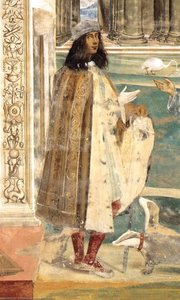
Portrait of Il Sodoma

The 69 Most Famous Il Sodoma Paintings, a Gallery Selection

Updated November 2026 · ranked by our popularity score (searches, visits and orders for each work) · 71 works by Il Sodoma in our catalogue

In short

Of all the originals Il Sodoma left, the most famous is The Rape of the Sabine Women (1506), in the collection of the Galleria Nazional d Art Antica, Rome. Close behind it come Head of Christ (1537) and The Holy Family with Saint Elizabeth and the Infant Saint John the Baptist (1527). Our catalog holds 71 works by Il Sodoma; the gallery has kept the 69 the world admires most, each shown with its date, its museum and its story.

1477 – 1549, Vercelli Renaissance Most works: National Gallery

Il Sodoma's top 10 paintings: the gallery's choice

1
The Rape of the Sabine Women (1506) by Il Sodoma

The Rape of the Sabine Women

1506 · Oil On Panel · Galleria Nazional d Art Antica, Rome

In "The Rape of the Sabine Women," Il Sodoma captures a moment of profound upheaval from the very origins of Rome. The scene unfolds with the sudden, violent abduction of Sabine women by the forces of the Etruscan king Tarquinus Superbus. This historical legend transforms the canvas into a site of intense struggle, where the stability of a burgeoning city meets the chaos of forced union. The air feels heavy…

2
Head of Christ (1537) by Il Sodoma

Head of Christ

1537 · Oil · National Gallery, London

In "Head of Christ" by Giovanni Gerolamo Savoldo, the viewer is met with a close-up portrait that focuses tightly on the face and upper shoulders. The subject is framed by long, dark, wavy hair and a full beard. A crown of thorns rests upon the brow, rendered through textured, dark lines that press against the skin. The eyes are cast downward, heavy with a sense of sadness or exhaustion. This…

3
The Holy Family with Saint Elizabeth and the Infant Saint John the Baptist (1527) by Il Sodoma

The Holy Family with Saint Elizabeth and the Infant Saint John the Baptist

1527 · Oil · Walters Art Museum, Baltimore

Within the circular confines of this tondo, a quiet intimacy unfolds. The air feels heavy with the warmth of a Mediterranean afternoon, filtered through a soft, directional light that carves the figures out of the surrounding landscape. We find ourselves watching a tender moment of familial connection, where the boundaries between the divine and the human seem to blur. The Holy Family gathers closely, their forms wrapped in heavy, tactile…

4
The Ecstasy of Saint Catherine of Siena (1532) by Il Sodoma

The Ecstasy of Saint Catherine of Siena

1532 · Oil · Yale University Art Gallery, New Haven

The spiritual intensity of The Ecstasy of Saint Catherine of Siena unfolds before us through the hand of Il Sodoma. This religious art piece captures a profound moment of divine connection, centering entirely on the figure of Catherine of Siena. The scene invites a sense of wonder as the saint experiences a celestial encounter, her presence anchoring the composition amidst a swirling, sacred atmosphere. Every brushstroke seeks to translate the…

5
The Holy Family and St. John (1477) by Il Sodoma

The Holy Family and St. John

1477 · Oil On Panel · Detroit Institute of Arts, Detroit

The Holy Family and St. John is a devotional work by the Italian artist Il Sodoma. This oil on wood panel depicts a sacred grouping of figures, centering on the intimate connection between Mary, Joseph, and the young Saint John the Baptist. The composition focuses on the quiet, tender interactions shared between the holy figures, presented in a manner that invites a sense of spiritual closeness.

6
The Madonna and Child with Saints and a Donor (1530) by Il Sodoma

The Madonna and Child with Saints and a Donor

1530 · Oil On Panel · National Gallery, London

Step closer to observe the way the light settles upon these figures. In this composition from around 1530, we find a sense of stability born from a pyramidal arrangement. At the apex sits the Virgin Mary, her presence anchoring the group. She holds the Christ Child with a natural, unforced tenderness that grounds the divine subject in something deeply human. The palette relies on deep ultramarine blue in her mantle…

7
Saint Jerome in Penitence (1540) by Il Sodoma

Saint Jerome in Penitence

1540 · Oil On Canvas · National Gallery, London

A muscular, semi-nude figure occupies the center of this 1540 oil painting, captured in a dynamic, crouching pose that cuts a diagonal path across the canvas. The subject, Saint Jerome, is immersed in a moment of intense religious devotion and physical hardship. Deep, earthy tones of brown and dark green dominate the composition, grounded by the heavy textures of a rugged, rocky landscape. A strong directional light source, characteristic of…

8
Death of Lucretia (1515) by Il Sodoma

Death of Lucretia

1515 · Oil On Panel · Galleria Sabauda, Turin

In this work, we find ourselves witnessing the final, harrowing moments of Lucretia, a woman whose life is being extinguished in a flash of steel and sorrow. The scene freezes a moment of profound tragedy, capturing the climactic end of a Roman noblewoman whose life was defined by virtue and ended by violence. The composition is thick with tension; the stillness of her form contrasts sharply with the looming presence…

9
Holy Family with St. John the Baptist as child (1525) by Il Sodoma

Holy Family with St. John the Baptist as child

1525 · Oil · Kunsthistorisches Museum, Vienna

This oil painting, dated 1525, is presented within an arched lunette format. The scene focuses on a group of four figures: the Virgin Mary, the Christ Child, Saint Joseph, and a young Saint John the Baptist. Mary is positioned centrally, wearing a red tunic beneath a deep blue mantle. Her pale skin and the skin of the infants are illuminated by a soft, directional light that emerges from the side,…

10
The Madonna and Child (1525) by Il Sodoma

The Madonna and Child

1525 · Oil On Panel · National Gallery, London

The composition centers on the Virgin Mary and the infant Jesus, set against an atmospheric landscape of distant hills and trees. A soft, directional light illuminates the faces of the subjects and the child's body, while much of the background remains in shadow. This use of chiaroscuro creates a sense of three-dimensionality, sculpting the figures through subtle gradations of tone.

The Il Sodoma selection continues, 11 to 69

11charity (1504) by Il Sodomacharity1504 · Gemäldegalerie 12Benedict Presents the Olivetan Monks with His Rule (1505) by Il SodomaBenedict Presents the Olivetan Monks with His Rule1505 13Life of St Benedict, Scene 13: Benedict Frees a Monk (1505) by Il SodomaLife of St Benedict, Scene 13: Benedict Frees a Monk1505 14Life of St Benedict, Scene 12: Benedict Receives Maurus and Placidus (1505) by Il SodomaLife of St Benedict, Scene 12: Benedict Receives Maurus and Placidus1505 15Life of St Benedict, Scene 32: Benedict Appears in the Dreams of Two Monks (1505) by Il SodomaLife of St Benedict, Scene 32: Benedict Appears in the Dreams of Two Monks1505 16Holy Family with young Saint John (1525) by Il SodomaHoly Family with young Saint John1525 17Terrestrial Venus with Eros and Celestial Venus with Anteros and Two Cupids (1525) by Il SodomaTerrestrial Venus with Eros and Celestial Venus with Anteros and Two Cupids1525 18St Sebastian (1525) by Il SodomaSt Sebastian1525 · Palazzo Pitti 19Christ Carrying the Cross (1545) by Il SodomaChrist Carrying the Cross1545 · Gemäldegalerie 20The Crucifixion (1549) by Il SodomaThe Crucifixion1549 · Cleveland Museum of Art 21The Presentation of the Virgin in the Temple (1518) by Il SodomaThe Presentation of the Virgin in the Temple1518 · Oratory of San Bernardino 22The Holy Family (1511) by Il SodomaThe Holy Family1511 · Bavarian State Painting Collections 23The Death of Lucretia (1513) by Il SodomaThe Death of Lucretia1513 · Szépművészeti Múzeum 24The Mystic Marriage of St Catherine (1539) by Il SodomaThe Mystic Marriage of St Catherine1539 · Galleria Nazional d Art Antica 25Pietà (1540) by Il SodomaPietà1540 · Galleria Borghese 26Holy Family with the Infant Saint John the Baptist (1530) by Il SodomaHoly Family with the Infant Saint John the Baptist1530 27Ecce Homo (1510) by Il SodomaEcce Homo1510 · Pinacoteca di Brera 28The Confirmation of the Olivetan Order by the Bishop of Arezzo (1503) by Il SodomaThe Confirmation of the Olivetan Order by the Bishop of Arezzo1503 29Man of Sorrow (1505) by Il SodomaMan of Sorrow1505 30Life of St Benedict, Scene 5: The Devil Destroys the Little Bell (1505) by Il SodomaLife of St Benedict, Scene 5: The Devil Destroys the Little Bell1505 31The Road to Calvary (1510) by Il SodomaThe Road to Calvary1510 · Szépművészeti Múzeum 32Life of St Benedict, Scene 6: A Priest Shares His Easter Meal with Benedict (1505) by Il SodomaLife of St Benedict, Scene 6: A Priest Shares His Easter Meal with Benedict1505 33Life of St Benedict, Scene 3: Benedict Repairs a Broken Colander through Prayer (detail) (1505) by Il SodomaLife of St Benedict, Scene 3: Benedict Repairs a Broken Colander through Prayer (detail)1505 34Deposition from the Cross (detail) (1510) by Il SodomaDeposition from the Cross (detail)1510 · Pinacoteca Nazionale 35Life of St Benedict, Scene 8: Benedict is Tempted (detail) (1505) by Il SodomaLife of St Benedict, Scene 8: Benedict is Tempted (detail)1505 36Life of St Benedict, Scene 19: Benedict Sends away the Harlots (1505) by Il SodomaLife of St Benedict, Scene 19: Benedict Sends away the Harlots1505 37Life of St Benedict, Scene 4: The Monk Romanus Dresses Benedict (detail) (1505) by Il SodomaLife of St Benedict, Scene 4: The Monk Romanus Dresses Benedict (detail)1505 38The Women of Darius's Family before Alexander the Great (1517) by Il SodomaThe Women of Darius's Family before Alexander the Great1517 · Villa Farnesina 39Life of St Benedict, Scene 19: Benedict Sends away the Harlots (detail) (1505) by Il SodomaLife of St Benedict, Scene 19: Benedict Sends away the Harlots (detail)1505 40Life of St Benedict, Scene 3: Benedict Repairs a Broken Colander through Prayer (1505) by Il SodomaLife of St Benedict, Scene 3: Benedict Repairs a Broken Colander through Prayer1505 41Life of St Benedict, Scene 15: Benedict Fishes the Pieces of a Broken Ax (detail) (1505) by Il SodomaLife of St Benedict, Scene 15: Benedict Fishes the Pieces of a Broken Ax (detail)1505 42Deposition from the Cross (1510) by Il SodomaDeposition from the Cross1510 · Pinacoteca Nazionale 43Life of St Benedict, Scene 1: Benedict Leaves His Parent's House (1505) by Il SodomaLife of St Benedict, Scene 1: Benedict Leaves His Parent's House1505 44Life of St Benedict, Scene 12: Benedict Receives Maurus and Placidus (detail) (1505) by Il SodomaLife of St Benedict, Scene 12: Benedict Receives Maurus and Placidus (detail)1505 45Life of St Benedict, Scene 11: Benedict Founds Twelve Monasteries (1505) by Il SodomaLife of St Benedict, Scene 11: Benedict Founds Twelve Monasteries1505 46Life of St Benedict, Scene 33: Benedict Gives Posthumous Absolution to Two Nuns (1505) by Il SodomaLife of St Benedict, Scene 33: Benedict Gives Posthumous Absolution to Two Nuns1505 47Life of St Benedict, Scene 31: Benedict Feeds the Monk (1505) by Il SodomaLife of St Benedict, Scene 31: Benedict Feeds the Monk1505 48Life of St Benedict, Scene 30: Benedict Foretells the Destruction of Montecassino (1505) by Il SodomaLife of St Benedict, Scene 30: Benedict Foretells the Destruction of Montecassino1505 49Life of St Benedict, Scene 30: Benedict Foretells the Destruction of Montecassino (detail) (1505) by Il SodomaLife of St Benedict, Scene 30: Benedict Foretells the Destruction of Montecassino (detail)1505 50Life of St Benedict, Scene 7: Benedict Instructs the Peasants (1505) by Il SodomaLife of St Benedict, Scene 7: Benedict Instructs the Peasants1505 51Saint George and the Dragon (1518) by Il SodomaSaint George and the Dragon1518 · National Gallery of Art 52The Beheading of Niccolò di Tuldo (1526) by Il SodomaThe Beheading of Niccolò di Tuldo1526 · San Domenico 53View of the Oratory (1520) by Il SodomaView of the Oratory1520 · Oratory of San Bernardino 54View of the Cappella di Santa Caterina (1526) by Il SodomaView of the Cappella di Santa Caterina1526 · San Domenico 55Wedding of Alexander and Roxane (detail) (1517) by Il SodomaWedding of Alexander and Roxane (detail)1517 · Villa Farnesina 56The Death of Lucretia (1535) by Il SodomaThe Death of Lucretia1535 · Szépművészeti Múzeum 57Cupid in a Landscape (1510) by Il SodomaCupid in a Landscape1510 · Hermitage Museum 58Flagellation of Christ (1510) by Il SodomaFlagellation of Christ1510 · Szépművészeti Múzeum 59Mary Magdalene by Il SodomaMary Magdalene 60Christ Carrying the Cross by Il SodomaChrist Carrying the CrossPalazzo d'Arco 61St George and the Dragon by Il SodomaSt George and the DragonNational Gallery of Art 62A Scene from the Vita of Saint Catherine of Siena / The Execution of Niccolò Tuldo by Il SodomaA Scene from the Vita of Saint Catherine of Siena / The Execution of Niccolò TuldoGemäldegalerie 63self-portrait by Il Sodomaself-portrait 64Allegory of Celestial Love by Il SodomaAllegory of Celestial LoveChigi Saracini Collection 65Christ Presented to the People (Ecce Homo) (1544) by Il SodomaChrist Presented to the People (Ecce Homo)1544 · Metropolitan Museum of Art 66Wedding of Alexander and Roxane (1517) by Il SodomaWedding of Alexander and Roxane1517 · Villa Farnesina 67Man of Sorrows (1500) by Il SodomaMan of Sorrows1500 68Holy Family with Saint John the Baptist and an Angel (1530) by Il SodomaHoly Family with Saint John the Baptist and an Angel1530 · Musée Des Beaux 69Pietà (1533) by Il SodomaPietà1533

Il Sodoma's famous paintings, period by period

The subjects that held Il Sodoma's eye

The four subjects that come back most often in these originals, each with its finest example.

The museums that keep Il Sodoma's originals

The 8 museums that hold the most of the paintings on this page.

Museum City Works by Il Sodoma Paintings from this list
National Gallery, LondonNational Gallery London 4 Head of Christ, The Madonna and Child with Saints and a Donor, Saint Jerome in Penitence
Szépművészeti Múzeum, BudapestSzépművészeti Múzeum Budapest 4 The Death of Lucretia, The Road to Calvary, The Death of Lucretia
Gemäldegalerie, BerlinGemäldegalerie Berlin 3 charity, Christ Carrying the Cross, A Scene from the Vita of Saint Catherine of Siena / The Execution of Niccolò Tuldo
Villa Farnesina, RomeVilla Farnesina Rome 3 The Women of Darius's Family before Alexander the Great, Wedding of Alexander and Roxane (detail), Wedding of Alexander and Roxane
Galleria Nazional d Art Antica, RomeGalleria Nazional d Art Antica Rome 2 The Rape of the Sabine Women, The Mystic Marriage of St Catherine
Oratory of San Bernardino, SienaOratory of San Bernardino Siena 2 The Presentation of the Virgin in the Temple, View of the Oratory
Pinacoteca Nazionale, SienaPinacoteca Nazionale Siena 2 Deposition from the Cross (detail), Deposition from the Cross
National Gallery of Art, WashingtonNational Gallery of Art Washington 2 Saint George and the Dragon, St George and the Dragon

Il Sodoma decade by decade: the original that defines each

Works per decade

Pick a decade to see the original that defines it.

Collectors' questions about Il Sodoma's paintings

Which work is Il Sodoma most famous for?Reveal the answer

The Rape of the Sabine Women (1506), Galleria Nazional d Art Antica, Rome. Head of Christ (1537) and The Holy Family with Saint Elizabeth and the Infant Saint John the Baptist (1527) come next.

What age was Il Sodoma when The Rape of the Sabine Women was made?Reveal the answer

29 years old: The Rape of the Sabine Women dates from 1506, and Il Sodoma was born in 1477.

What are the ten most famous Il Sodoma paintings?Reveal the answer

The Rape of the Sabine Women, Head of Christ, The Holy Family with Saint Elizabeth and the Infant Saint John the Baptist, The Ecstasy of Saint Catherine of Siena, The Holy Family and St. John, The Madonna and Child with Saints and a Donor, Saint Jerome in Penitence, Death of Lucretia, Holy Family with St. John the Baptist as child and The Madonna and Child. The ranking above gives each one's year and museum.

How many paintings did Il Sodoma leave?Reveal the answer

Our catalog holds 71 works by Il Sodoma, dated from 1500 to 1549.

In which museums do Il Sodoma's masterpieces hang?Reveal the answer

Mostly in National Gallery (London), Szépművészeti Múzeum (Budapest) and Gemäldegalerie (Berlin). The museum table above lists them all.

In which years did Il Sodoma paint the most famous works?Reveal the answer

In 1500s: 26 of the 69 works on this page were made then, The Rape of the Sabine Women among them.

What are the first and the last famous originals of Il Sodoma?Reveal the answer

On this page, the earliest is Man of Sorrows (1500) and the latest The Crucifixion (1549).

Which subjects did Il Sodoma choose most often?Reveal the answer

Saints (18), Scenes (18) and Life (17), across the 69 works on this page.

Which technique did Il Sodoma use most?Reveal the answer

Oil On Panel, for 9 of the 69 works on this page.

To which art movement does Il Sodoma belong?Reveal the answer

Renaissance, judging by the originals on this page.

Which Il Sodoma works hang at the National Gallery?Reveal the answer

Head of Christ, The Madonna and Child with Saints and a Donor and Saint Jerome in Penitence: the National Gallery, London holds 4 of the works on this page.

Il Sodoma: life and work

The Enigmatic Soul of the Sienese Renaissance

In the vibrant tapestry of the Italian Renaissance, few figures possess a name as provocative or a legacy as multifaceted as Giovanni Antonio Bazzi, known to history by the evocative moniker Il Sodoma. Born in Vercelli around 1477, Bazzi emerged not merely as a painter, but as a transformative force who bridged the gap between the luminous, balanced idealism of the High Renaissance and the emotive, often unsettling drama of Mannerism. His artistic journey was one of profound synthesis, where the disciplined traditions of the Sienese school met the sweeping, atmospheric innovations of the Lombard style and the subtle psychological depth inspired by Leonardo da Vinci.

The early years of Bazzi’s life were marked by a rigorous apprenticeship that laid the groundwork for his technical mastery. Under the guidance of masters such as the "archaic" Martino Spanzotti and Giovenone, he absorbed a foundational understanding of form and color. As he moved into the cultural epicenter of Siena, his work began to reflect a unique stylistic evolution. He possessed a rare ability to superimpose the sophisticated, classical grace of early 16th-century Rome onto the more provincial, decorative traditions of Tuscany. This fusion allowed him to create works that felt both grounded in local heritage and part of a much larger, pan-Italian artistic revolution.
A Mastery of Light, Emotion, and Form

To observe a work by Il Sodoma is to witness a delicate dance between serenity and tension. His technique was characterized by an exquisite command over sfumato and a rich, emotive use of color that could shift from the tender warmth of a Madonna’s cheek to the dramatic shadows of a mythological struggle. This versatility is perhaps most evident in his diverse range of subjects, which spanned the sacred and the profane with equal fervor.

His contributions to the fresco tradition are nothing short of monumental. In the Oratory of San Bernardino in Siena, Bazzi demonstrated his ability to command vast architectural spaces, weaving complex narratives through balanced compositions that nonetheless pulsed with human emotion. His religious works, such as The Presentation of the Virgin in the Temple, showcase a profound spiritual grace, while his secular and mythological pieces, like the enchanting Cupid in a Landscape, reveal a fascination with the sensual and the idyllic. In these landscapes, one finds a serene Italian vista that serves as a stage for the divine or the mythological, rendered with a clarity that invites the viewer into a dreamlike state.

Legacy of a Transitional Master

The historical significance of Il Sodoma lies in his role as a stylistic conduit. He did not merely follow the trends of his era; he helped shape the transition from the harmonious stability of the High Renaissance to the more experimental, distorted, and expressive language of Mannerism. By introducing exaggerated gestures and heightened emotionality into the established Sienese framework, he prepared the way for the next generation of artists to explore the complexities of the human psyche.

Even as his name carried a certain notoriety, his artistic output remained a testament to technical brilliance and intellectual depth. His ability to navigate the prestigious commissions of popes and powerful patrons alike—including connections to the influential Agostino Chigi—ensured that his influence would resonate far beyond the walls of Siena. Today, Bazzi stands as a pivotal figure whose work continues to captivate, reminding us of a period when art was a profound exploration of both the earthly beauty and the spiritual mysteries of the human condition.