

Table of Contents
Quick Facts
- Alternate names:
- Oratory of San Bernardino
- Oratory of the Compagnia di San Bernardino
- Oratory of the Company of Saint Bernardine
- San Bernardino Oratory
- Historical periods: renaissance
- Location: Siena, Italy
- Works on APS: 4
- More…
- Movements: renaissance
- Art types: other
- Mediums: fresco
- Featured artists:
- domenico di pace beccafumi
- il sodoma (giovanni antonio bazzi)
- girolamo del pacchia
Art Quiz
There is only one correct answer for each question.
Question 1:
What is the Oratory of San Bernardino primarily known for?
Question 2:
Which artist is celebrated for masterpieces like ‘St Ludovico,’ ‘Presentation of Mary at the Temple,’ and ‘Coronation of the Virgin’?
Question 3:
The Oratory of San Bernardino is located adjacent to:
Question 4:
What architectural feature distinguishes the Oratory?
Question 5:
Which artist created the frescoes ‘Marriage of the Virgin,’ ‘Glory of the Virgin,’ and ‘Madonna in Glory with Saints’?
Exhibited Artists

domenico di pace beccafumi
Domenico Beccafumi (1486-1551) was a Sienese painter known for his innovative Mannerist style—characterized by dramatic emotion, distorted figures, and opulent decorative detail—particularly in monumental frescoes like “Transit of the Virgin” and “Patriotism.”


il sodoma (giovanni antonio bazzi)
Giovanni Antonio Bazzi (Il Sodoma) was a pivotal Italian Renaissance painter bridging High Renaissance & Mannerism. Known for emotive frescoes, mythological scenes, & works like 'Wedding of Alexander,' he transformed the Sienese school with grace and

girolamo del pacchia
Discover Girolamo del Pacchia, a 16th-century Italian painter known for religious scenes like 'The Birth of the Virgin' & 'Arcangelo Gabriele'. Explore his Siena art!
Related Articles
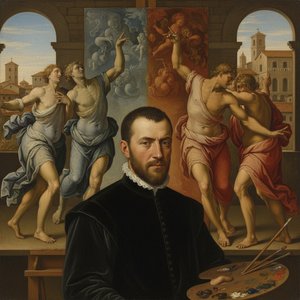
Domenico Beccafumi: A Sienese Master Between Mannerism & Baroque Anticipation
Explore the captivating world of Domenico Beccafumi, a pivotal figure bridging Mannerism & Baroque art. Discover his unique style, religious masterpieces, and lasting legacy with OriginalUniqueArt.

Sacred Narratives on Canvas: Exploring Religious Scenes & Their Enduring Influence
Explore the rich history of religious art from Giotto to the Renaissance masters with OriginalUniqueArt. Discover symbolism, techniques & enduring legacies. Museum-quality reproductions available.
The Enduring Legacy of Architecture in Art: A Historical Survey of Representation & Aesthetic Influence
Explore the rich history of architecture's influence on art! Discover Renaissance perspective techniques, symbolism, & iconic masterpieces. Enhance your understanding with our expert analysis.
List of Artworks

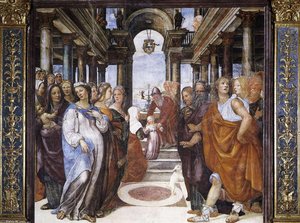
domenico di pace beccafumi
Frescoes in the Oratory of St. Benedict in Siena (Italy), Scene: Marriage of Mary with Joseph




Subscribe to Our Newsletter
Stay updated with the latest art news, exclusive offers, and decoration ideas.
Get 3 Free Art Suggestions
Tell us about your project and our art experts will provide you with 3 personalized art suggestions.
Not Sure Where to Start?
Let Us Curate 3 Options Just for You - Free!