
The most famous artists with works in the Centre Pompidou are Henri Matisse, Wassily Kandinsky, Piet Mondrian and Joan Miró.
Our catalogue lists 364 works of the Centre Pompidou by 60 artists; the 25 best known are ranked below, each with the works the museum holds.
The masters of the originals
The 10 masters whose originals hang in the Centre Pompidou
For each master: where and when they were born, their movement, how many originals the museum keeps in our catalogue, a note from their life, and the originals to see.
-
Fauvism
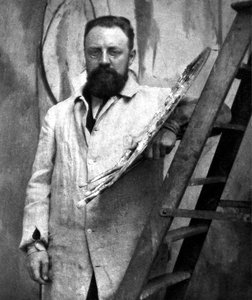
1. Henri Matisse 1869–1954
1869–1954 Born in Le Cateau-Cambrésis, France Fauvism 25 originals at the Centre Pompidou
After finishing secondary school, Matisse moved to Paris to study law. In 1889, an attack of appendicitis forced a long recovery, and it was during this confinement that the act of painting first took hold. By around 1905, this approach had coalesced into the Fauvist movement.
Originals at the Centre Pompidou
-

Expressionism
2. Wassily Kandinsky 1866–1944
1866–1944 Born in Moscow, Russia Expressionism 174 originals at the Centre Pompidou
Wassily Wassilyevich Kandinsky was born in Moscow to Lidia Ticheeva and Vassily Silvestrovich Kandinsky. By about 1896, he had moved to Munich to begin formal studies in art. After his time in Russia, where he served as the first director of the Institute of Artistic Culture in Moscow, Kandinsky moved toward the academic circles of Germany. The era of his teaching came to an abrupt end when the Nazi regime closed the Bauhaus in 1933.
Originals at the Centre Pompidou
-

Hague School
3. Piet Mondrian 1872–1944
1872–1944 Born in Amersfoort, Netherlands Hague School 2 originals at the Centre Pompidou
The man who would reshape the visual language of the twentieth century began his life as Pieter Cornelis Mondriaan, Jr. He was born on March 7, 1872, in Amersfoort, Netherlands. By 1892, he is already qualified as a drawing teacher. By 1909, his presence in the Dutch art scene is established through a major exhibition at the Stedelijk Museum in Amsterdam. By 1917, the deconstruction of form has moved beyond the mere fragmentation of objects.
Originals at the Centre Pompidou
-
Surrealism
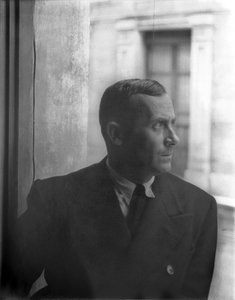
4. Joan Miró 1893–1983
1893–1983 Born in Barcelona, Spain Surrealism 2 originals at the Centre Pompidou
Joan Miró i Ferrà enters a world of precision and gears, born into a family of watchmakers. While many attempt to pin him to a single movement, Miró remains fiercely independent, often expressing a desire to overturn established aesthetic hierarchies. By the time he passes away on December 25, 1983, he has left behind a visual language that challenges the very definition of artistic expression.
Originals at the Centre Pompidou
-

Expressionism
5. Paul Klee 1879–1940
1879–1940 Born in Münchenbuchsee, Switzerland Expressionism 6 originals at the Centre Pompidou
Born on December 18, 1879, in Münchenbuchsee, near Bern, Switzerland, Paul Klee grew up in a home defined by the discipline of music. Between 1898 and 1901, he trained under Heinrich Knirr and Franz von Stuck. In the early years, Klee traveled to Italy from October 1901 to May 1902 with Hermann Haller.
Originals at the Centre Pompidou
-

Suprematism
6. Kazimir Malevich 1879–1935
1879–1935 Born in Kyiv, Ukraine Suprematism 3 originals at the Centre Pompidou
Kazimir Malevich was born near Kiev, in the Kiev Governorate of the Russian Empire, around 1878 or 1879. The family moved frequently, often settling in Ukrainian villages amidst sugar-beet plantations. His formal education in the visual arts began in Kiev, where he studied drawing between 1895 and 1896. Seeking more rigorous instruction, he moved to Moscow in 1904. By 1915, Malevich had moved beyond the fractured planes of Cubism to reach a radical conclusion.
Originals at the Centre Pompidou
-

Expressionism
7. Amedeo Modigliani 1884–1920
1884–1920 Born in Livorno, Italy Expressionism 3 originals at the Centre Pompidou
Amedeo Clemente Modigliani was born on July 12, 1884, in the port city of Livorno, Italy. In 1906, the pull of Paris became too strong to resist. Modigliani arrived in the city and settled in Montmartre, renting a studio on rue Caulaincourt. In 1907, he also attended the Paul Gauguin retrospective at the Salon d'Automne, an event that left a mark on his developing vision.
Originals at the Centre Pompidou
-
Cubism
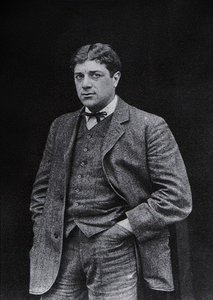
8. Georges Braque 1882–1963
1882–1963 Born in Argenteuil, France Cubism 4 originals at the Centre Pompidou
Georges Braque was born in Argenteuil, France, in 1882. Growing up in a family of house painters and decorators, he was immersed in the tactile realities of his trade from a young age. The transition from trade to formal study took him to Paris in 1902. Braque was a primary innovator in this shift, having created the first papier collé by attaching wallpaper to a drawing.
Originals at the Centre Pompidou
-

Cubism
9. Fernand Léger 1881–1955
1881–1955 Born in Argentan, France Cubism 6 originals at the Centre Pompidou
By 1900, the pull of the city became too strong to ignore, and he moved to Paris. In 1916, a mustard gas attack nearly claimed his life, leaving him to recover while the world around him was being reshaped by the sheer power of industrial destruction. By 1917, a distinct shift had taken hold in his creative spirit, marking the beginning of what would be called his mechanical period.
Originals at the Centre Pompidou
-

Naive Art
10. Henri Rousseau 1844–1910
1844–1910 Born in Laval, France Naive Art 2 originals at the Centre Pompidou
Born on May 21, 1844, in Laval, France, Henri Julien Félix Rousseau led an unconventional life before becoming a renowned artist. Henri Rousseau died on September 2, 1910, in Paris.
Originals at the Centre Pompidou


The masters, continued
No. 11 to No. 25: more masters of the Centre Pompidou
-

Spanish Cubist known for mathematical precision and structured still lifes using geometric planes and collage techniques.
- The Dice (1922)
- Still Life on a Chair (1917)
- View across the Bay (1921)
-
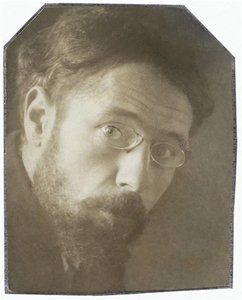
12. Pierre Bonnard
Post-Impressionism
1867–1947 · born in Fontenay-aux-Roses, France · 5 originals at the Centre Pompidou
French Nabis artist of intimate domestic scenes and vibrant, memory-based color explorations, often featuring his muse Marthe in soft light.
-
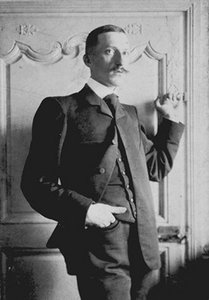
French Fauvist known for riotous colorism in Collioure landscapes and bold, vibrant depictions of the Thames and London cityscapes.
- Untitled
- Westminster (1905)
-

French Orphism pioneer known for vibrant geometric shapes and simultaneous color contrasts that deconstruct the Eiffel Tower into light.
- The City of Paris (1912)
- Portrait of Henri Rousseau (1914)
- The jug (1916)
-

15. Max Beckmann
Expressionism
1884–1950 · born in Leipzig, Germany · 2 originals at the Centre Pompidou
German Expressionist known for crowded, claustrophobic compositions and heavy impasto textures that capture the tension of a changing era.
- Portrait of a Frenchmen (1933)
- Landscape with Woodcutters (1927)
-

French Fauvist known for a stenographic style of thin color washes depicting yachting regattas and elegant social gatherings.
-

17. Suzanne Valadon
Post-Impressionism
1865–1938 · born in Bessines-sur-Gartempe, France · 6 originals at the Centre Pompidou
French Post-Impressionist known for bold lines and unidealized female nudes, capturing the raw reality of life in Montmartre.
- The Blue Room (1923)
- Bouquet of flowers
- Adam and Eve (1909)
-

French avant-garde provocateur known for Cubist deconstruction and satirical Dadaist machine drawings of fantastical mechanical contraptions.
-

19. Theo van Doesburg
De Stijl
1883–1931 · born in Utrecht, Netherlands · 3 originals at the Centre Pompidou
Dutch pioneer of De Stijl using primary colors and geometric abstraction to create dynamic compositions through straight lines and right angles.
-
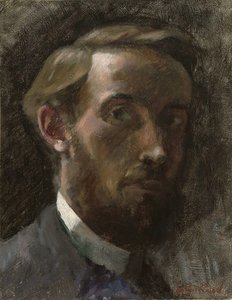
20. Édouard Vuillard
Post-Impressionism
1868–1940 · born in Cuiseaux, France · 2 originals at the Centre Pompidou
French Nabis painter of intimate, patterned interiors and flattened planes of color, often using distemper to capture domestic life.
- Demolition rue de Calais (1927)
-

21. Maurice Utrillo
Post-Impressionism
1883–1955 · born in 18th arrondissement of Paris, France · 3 originals at the Centre Pompidou
French School of Paris painter of textured Montmartre cityscapes, using heavy impasto and zinc white to recreate weathered Parisian facades.
-

22. Albert Marquet
Fauvism
1875–1947 · born in Bordeaux, France · 14 originals at the Centre Pompidou
French Fauvist known for atmospheric landscapes and serene port scenes using a muted palette and calligraphic, simplified lines.
- Women of Laghouat (1921)
- Dock at Havre (1906)
- Rotterdam (1914)
-

23. Jules Pascin
Expressionism
1885–1930 · born in Vidin, Bulgaria · 2 originals at the Centre Pompidou
Bulgarian School of Paris painter known for intimate, sensual nudes and expressive watercolors that capture the melancholic soul of Montparnasse.
- Portrait of Hermine David (1918)
- Mrieille (1930)
-

24. Gerda Wegener
1885–1940 · born in Hammelev, Denmark · 2 originals at the Centre Pompidou
-

25. Roger de La Fresnaye
Cubism
1885–1925 · born in Le Mans, France · 10 originals at the Centre Pompidou
French Cubist known for prismatic colors and geometric forms, bridging Nabis symbolism with the radical abstraction of the Section d'Or.
- Mademoiselle Maria Zimmern (1909)
- Self-Portrait at the Easel (1907)
- Portrait of Guynemer (1922)
Famous artists in the Centre Pompidou, No. 26 to 28


The house in figures
The masters of the Centre Pompidou, in figures
The masters with the most originals at the Centre Pompidou
Masters with two originals or more, by century of birth
Masters with two originals or more, by country of birth
Masters with two originals or more, by movement
Women masters
The women whose originals hang in the Centre Pompidou
7 women masters, 13 originals, in our catalogue of the Centre Pompidou.
-
Suzanne Valadon
1865–1938 · born in Bessines-sur-Gartempe, France · 6 originals at the Centre Pompidou
- The Blue Room (1923)
- Bouquet of flowers
- Adam and Eve (1909)
-
Gerda Wegener
1885–1940 · born in Hammelev, Denmark · 2 originals at the Centre Pompidou
-
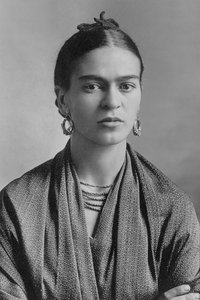
Frida Kahlo
1907–1954 · born in Coyoacán, Mexico · 1 originals at the Centre Pompidou
- Self Portrait - the Frame (1938)
-

Tamara de Lempicka
1898–1980 · born in Warsaw, Poland · 1 originals at the Centre Pompidou
-

María Blanchard
1881–1932 · born in Santander, Spain · 1 originals at the Centre Pompidou
- Maternity (1921)
-

Séraphine Louis
1864–1942 · born in Arsy, France · 1 originals at the Centre Pompidou
- L'arbre de Paradis (1928)
-

Agnès Thurnauer
born 1962 · born in Paris, France · 1 originals at the Centre Pompidou
Two houses
The Centre Pompidou or the Louvre: whose originals are where
The Centre Pompidou
- Masters in our catalogue
- 60
- Originals
- 364
- The masters to know
- Henri Matisse, Wassily Kandinsky, Piet Mondrian, Joan Miró
- Most originals by
- Wassily Kandinsky (174), Henri Matisse (25), Robert Delaunay (24)
The Louvre
- Masters in our catalogue
- 696
- Originals
- 2,614
- The masters to know
- Leonardo da Vinci, Rembrandt, Michelangelo, Albrecht Dürer
- Most originals by
- Pierre-Henri de Valenciennes (101), Eustache Le Sueur (56), Eugène Delacroix (42)
Asked of us
Questions on the masters of the Centre Pompidou
Open a question to read the answer.
Who is the most famous artist in the Centre Pompidou?
Henri Matisse, with 25 works at the Centre Pompidou in our catalogue (Blue Nude III, Polynésie and L'Algerienne); then Wassily Kandinsky and Piet Mondrian.
What did Henri Matisse paint that hangs in the Centre Pompidou?
Our catalogue lists 25 works by Henri Matisse at the Centre Pompidou, among them Blue Nude III (1952), Polynésie (1946), L'Algerienne (1909) and Untitled.
What did Wassily Kandinsky paint that hangs in the Centre Pompidou?
Our catalogue lists 174 works by Wassily Kandinsky at the Centre Pompidou, among them Yellow, Red, Blue (1925), On White II (1923), Composition IX (1936) and Akhtyrka. A Datcha close to the pond (1917).
How many Piet Mondrian paintings are in the Centre Pompidou?
Our catalogue lists 2 works by Piet Mondrian at the Centre Pompidou, among them New York City I (1942) and Composition in red (1937).
Which famous artists are displayed in the Centre Pompidou?
By fame: Henri Matisse (25), Wassily Kandinsky (174), Piet Mondrian (2), Joan Miró (2), Paul Klee (6), Kazimir Malevich (3), Amedeo Modigliani (3), Georges Braque (4), Fernand Léger (6) and Henri Rousseau (2).
Which artist has the most works in the Centre Pompidou?
Wassily Kandinsky (1866–1944), with 174 works in our catalogue of the Centre Pompidou, ahead of Henri Matisse (25), Robert Delaunay (24) and Albert Marquet (14).
Are there Leonardo da Vinci works in the Centre Pompidou?
No: the Centre Pompidou holds no work by Leonardo da Vinci in our catalogue. The Louvre holds 30.
Is Pablo Picasso in the Centre Pompidou?
No: the Centre Pompidou holds no work by Pablo Picasso in our catalogue.
How many women artists are in the Centre Pompidou?
7 women artists have works of the Centre Pompidou in our catalogue, among them Suzanne Valadon (6), Gerda Wegener (2), Frida Kahlo (1), Tamara de Lempicka (1), María Blanchard (1) and Séraphine Louis (1).
The Centre Pompidou or the Louvre: which has the more famous artists?
For Henri Matisse, Wassily Kandinsky and Piet Mondrian, the Centre Pompidou; for Leonardo da Vinci, Rembrandt and Michelangelo, the Louvre. Our catalogue lists 60 artists at the Centre Pompidou and 696 at the Louvre.
Which countries are the painters of the Centre Pompidou from?
Counting the artists with two works or more, the Centre Pompidou holds painters born mostly in France (16), Netherlands (2), Spain (2), Russia (1) and Switzerland (1).
Who is the earliest artist in the Centre Pompidou?
Most of the artists with two works or more at the Centre Pompidou were born in the 19th century (28 artists); the earliest in this ranking is Henri Rousseau (1844–1910), the latest Joan Miró (1893–1983).
The house
The Centre Pompidou, Paris, in a few lines
The Origins and History of Centre Pompidou
The presence of the Centre Pompidou in the Beaubourg area of the 4th arrondissement of Paris is the result of a specific political and cultural ambition. The project emerged from the ideas of France's first Minister of Cultural Affairs, André Malraux, who sought to redefine the relationship between the public and modern creation. This vision was later championed by President Georges Pompidou, who held office from 1969 until his death in 1974. The institution was designed to occupy a space where art, literature, and music could coexist within a single urban complex. The construction of this landmark transformed the historic district. It was officially opened on 31 January 1977 by President Valéry Giscard d'Estaing. The building arrived as a response to the need for a large-scale public library and a dedicated space for the evolution of modern art. Its placement in the heart of Paris ensured that the center of the city would host a multifaceted ecosystem of intellectual and creative exchange.
The Revolutionary High-Tech Architecture
The architectural identity of the Centre Pompidou emerged from a selection of 681 competition entries. A jury including Oscar Niemeyer and Philip Johnson chose the design that would fundamentally alter the urban fabric of Paris. The resulting eight-story structure, conceived by the architectural partnership of Richard Rogers, Renzo Piano, and Gianfranco Franchini, operates on a principle of radical transparency. It rejects the traditional, enclosed museum façade in favor of an "inside-out" philosophy. This approach deliberately exposes the building's internal mechanics to the street. Structural elements, ducts, and pipes are moved to the exterior, rendered in large, colorful forms that define the building's silhouette. External escalators move through the glass skin, turning the movement of people into a visible part of the architecture. This exposure of industrial engineering transforms the utility of the building into its primary aesthetic. The presence of these mechanical systems creates a sense of constant motion within the Beaubourg district.
The famous originals of the Centre PompidouThe Centre Pompidou: the full page, 384 originalsThe museums of Paris
How the masters of the originals are ranked
The masters with two originals or more of the Centre Pompidou in our catalogue are ranked by fame: the Wikipedia language editions that describe them, the visits to their OriginalUniqueArt.com page and our studio's ranking. Originals are counted in our catalogue — one entry per work, without details, studies or copies — not in the museum's inventory. Every date, birthplace and movement is the catalogue's; the notes are drawn from the master's biography.
Go on