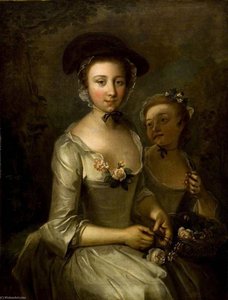
Portrait of Philippe Mercier

Philippe Mercier Paintings: The 78 Most Famous, Through a Gallery's Eye

Updated October 2026 · ranked by our popularity score (searches, visits and orders for each work) · 79 works by Philippe Mercier in our catalogue

In short

To the gallery's eye, Philippe Mercier's most famous painting is Sir Edward Hales, Baronet, of Hales Place, Hackington, Kent (1744), whose original hangs in the Yale Center for British Art, New Haven. Girl with a Tray (1744) and School for Girls (1738) complete the trio every eye recognises. Of the 79 works by Philippe Mercier in our catalog, the gallery presents the 78 most famous below, each original with its year, its museum and what makes it unique.

1689 – 1760, Berlin Rococo Most works: Yale Center for British Art

The gallery's top 10 Philippe Mercier paintings

1
Sir Edward Hales, Baronet, of Hales Place, Hackington, Kent (1744) by Philippe Mercier

Sir Edward Hales, Baronet, of Hales Place, Hackington, Kent

1744 · Oil On Canvas · Yale Center for British Art, New Haven

A formal full-length portrait from 1744 captures Sir Edward Hales, Baronet, of Hales Place, Hackington, Kent, in a moment of composed elegance. He stands slightly off-center, framed by the organic curves of a large tree and a soft, twilight sky. The composition balances the verticality of a long-barreled flintlock musket against the relaxed posture of the subject. At his feet, a hunting dog rests near the spoils of the field,…

2
Girl with a Tray (1744) by Philippe Mercier

Girl with a Tray

1744 · Oil On Canvas · Hermitage Museum, Saint Petersburg

A young woman holds a wooden tray, her hands steady under the weight of a silver teapot and delicate cups. She is positioned slightly off-center, a soft presence against a dark, atmospheric background of deep grays and browns. The light falls from the upper left, catching the translucency of her skin and the crisp edges of her lace bonnet. She wears the attire of the mid-18th century, her form rendered…

3
School for Girls (1738) by Philippe Mercier

School for Girls

1738 · Oil On Canvas

In this 1738 oil on canvas, a group of nine young women gathers within an interior space, their attention drawn to a singular, unseen event or object. The composition is structured through a series of overlapping figures, some positioned in the immediate foreground while others recede into the background, creating a sense of depth and naturalistic movement. One figure gestures emphatically, her movement acting as a visual anchor that directs…

4
Pierrot Catching a Fly (1745) by Philippe Mercier

Pierrot Catching a Fly

1745 · Oil On Canvas · Art Institute of Chicago, Chicago

The scene unfolds in a quiet, focused moment within Pierrot Catching a Fly. This work, attributed to Philippe Mercier, captures a solitary figure in a state of intense concentration. The subject, a Pierrot, leans into the light, his attention fixed entirely on the small, elusive movement of an insect. It is a study of singular purpose, where the world outside the immediate task seems to fade into a soft, dark…

5
The Belton Conversation Piece (1726) by Philippe Mercier

The Belton Conversation Piece

1726 · Oil On Canvas · National Trust, Grantham

The Belton Conversation Piece by Philippe Mercier captures a quiet afternoon of social grace. Painted about 1726, this portrait work brings together six figures within a lush, outdoor setting. They exist in a moment of leisure, gathered amidst the soft textures of nature and the structured elegance of an aristocratic life. A stately mansion rests in the distance, a silent witness to the gathering.

6
Bagpipe player (1740) by Philippe Mercier

Bagpipe player

1740 · Oil On Canvas · Musée Des Beaux, Strasbourg

The composition of Bagpipe player by Philippe Mercier is a medium close-up that focuses on the subject from the waist up. The figure is positioned slightly off-center to the left, creating a sense of natural movement within the frame. This placement allows the viewer to observe the subject at an eye-level perspective, establishing an intimate spatial relationship between the observer and the musician. The arrangement of the figure against the…

7
Portrait of a Lady (1744) by Philippe Mercier

Portrait of a Lady

1744 · Oil On Canvas

In this intimate oil portrait, titled Portrait of a Lady, we encounter a young woman captured during a quiet moment in 1744. The work is a significant example of the hand of Philippe Mercier, an artist whose career bridged the artistic traditions of Germany and Britain. Having been born in Berlin, Germany, Mercier brought a refined sensibility to the London art scene, eventually becoming a favored painter for the British…

8
Comedians by a Fountain (1735) by Philippe Mercier

Comedians by a Fountain

1735 · Oil · Royal Collection, London

The scene unfolds within Comedians by a Fountain, an oil painting that captures a fleeting moment of theatrical leisure. Created by Philippe Mercier, the work invites the viewer into a lush, pastoral setting where the boundaries between performance and reality seem to blur. The figures gathered near the water appear caught in a mid-gesture pause, as if the laughter of the troupe has only just subsided into the soft sounds…

9
The Sense of Hearing (1744) by Philippe Mercier

The Sense of Hearing

1744 · Oil On Canvas · Yale Center for British Art, New Haven

In the 1744 oil painting titled The Sense of Hearing, Philippe Mercier presents a group of four figures engaged in a musical ensemble. The subject matter functions as a personification of the sense of hearing, represented through the collective act of making music. Within the composition, women are depicted playing a variety of instruments, including a violin, a violoncello, a harpsichord, and a flute. These figures are arranged in a…

10
The Sense of Smell (1744) by Philippe Mercier

The Sense of Smell

1744 · Oil On Canvas · Yale Center for British Art, New Haven

In The Sense of Smell, Philippe Mercier presents a balanced and classical arrangement of four young figures within a tranquil pastoral setting. The group is captured from a medium shot at eye level, creating an intimate proximity that invites the viewer into their private moment of sensory discovery. These figures are engaged with various aromatic elements, specifically interacting with fruit and flowers to illustrate the theme. In the foreground, a…

Philippe Mercier paintings, ranked 11 to 78

11The Sense of Sight (1744) by Philippe MercierThe Sense of Sight1744 · Yale Center for British Art 12The Sense of Touch (1744) by Philippe MercierThe Sense of Touch1744 · Yale Center for British Art 13The Sense of Taste (1744) by Philippe MercierThe Sense of Taste1744 · Yale Center for British Art 14Colonel Charles Ingram with His Children (1741) by Philippe MercierColonel Charles Ingram with His Children1741 · Temple Newsam House 15Bridget Gee, Mrs Ralph Pennyman (m.1732 d.1774). (1745) by Philippe MercierBridget Gee, Mrs Ralph Pennyman (m.1732 d.1774).1745 16The Italian Comedians (1750) by Philippe MercierThe Italian Comedians1750 · Cincinnati Art Museum 17The sense of smell (1750) by Philippe MercierThe sense of smell1750 · Museum of New Zealand Te Papa Tongarewa 18Portrait of a Child (1747) by Philippe MercierPortrait of a Child1747 · Royal Collection 19An Unknown Man (1746) by Philippe MercierAn Unknown Man1746 · Yale Center for British Art 20Young Woman with Roses (Spring) (1755) by Philippe MercierYoung Woman with Roses (Spring)1755 · National Trust 21Playing Soldier (1743) by Philippe MercierPlaying Soldier1743 · Detroit Institute of Arts 22LA FAMILLE BURTON DIT AUSSI SCENE D'INTERIEUR A L'ECUREUIL by Philippe MercierLA FAMILLE BURTON DIT AUSSI SCENE D'INTERIEUR A L'ECUREUILThe Louvre 23L'ESCAMOTEUR by Philippe MercierL'ESCAMOTEURThe Louvre 24Princess Amelia Sophia (1711–1786) (1728) by Philippe MercierPrincess Amelia Sophia (1711–1786)1728 · Hertford Magistrates' Court 25Princess Anne (1709–1759) (1728) by Philippe MercierPrincess Anne (1709–1759)1728 · Hertford Magistrates' Court 26Frederick Louis, Prince of Wales (1707–1751) (1728) by Philippe MercierFrederick Louis, Prince of Wales (1707–1751)1728 · Hertford Magistrates' Court 27Dr Alexander Russell of Braidshaw (1730) by Philippe MercierDr Alexander Russell of Braidshaw1730 · British Library 28Princess Caroline Elizabeth (1713–1757) (1728) by Philippe MercierPrincess Caroline Elizabeth (1713–1757)1728 · Hertford Magistrates' Court 29The Drawing Lesson (1738) by Philippe MercierThe Drawing Lesson1738 30Francis Willey (1741) by Philippe MercierFrancis Willey1741 31Mrs Dawson (1740) by Philippe MercierMrs Dawson1740 · Scottish National Gallery 32Margaret 'Peg' Woffington (1714 –1760) (1740) by Philippe MercierMargaret 'Peg' Woffington (1714 –1760)1740 33Francis Drake, Surgeon and Historian of York (1743) by Philippe MercierFrancis Drake, Surgeon and Historian of York1743 · York Mansion House 34John Philips, Aged 116 (1741) by Philippe MercierJohn Philips, Aged 1161741 · Temple Newsam House 35Frederick Lewis, Prince of Wales (1736) by Philippe MercierFrederick Lewis, Prince of Wales1736 · National Portrait Gallery 36Portrait of a Man (1740) by Philippe MercierPortrait of a Man1740 · National Gallery 37Lady Mary Fairfax (1741) by Philippe MercierLady Mary Fairfax1741 · Fairfax House 38John Brewster Darley (1744) by Philippe MercierJohn Brewster Darley1744 39A Girl Sewing (1750) by Philippe MercierA Girl Sewing1750 40The Letter Writer (1750) by Philippe MercierThe Letter Writer1750 41A Girl Holding a Cat (1750) by Philippe MercierA Girl Holding a Cat1750 · Scottish National Gallery 42A Boy Drawing from the Antique (1751) by Philippe MercierA Boy Drawing from the Antique1751 · Cannon Hall Museum 43The Young Artists (1745) by Philippe MercierThe Young Artists1745 · Government Art Collection 44Anne Fairfax as a Shepherdess (1750) by Philippe MercierAnne Fairfax as a Shepherdess1750 · Fairfax House 45The Singing Party (1760) by Philippe MercierThe Singing Party1760 · National Gallery of Art 46Portrait of a Girl with a Bottle and a Glass (1760) by Philippe MercierPortrait of a Girl with a Bottle and a Glass1760 · Wimpole Hall 47Portrait of a Girl with a Patch Box (1760) by Philippe MercierPortrait of a Girl with a Patch Box1760 · Wimpole Hall 48A Music Party (1737) by Philippe MercierA Music Party1737 49Frederick, Prince of Wales (1707-1751) by Philippe MercierFrederick, Prince of Wales (1707-1751)Burrell Collection 50A Young Woman Pulling on Her Stocking by Philippe MercierA Young Woman Pulling on Her StockingMuseum of Fine Arts 51A Girl with a Tea-cup by Philippe MercierA Girl with a Tea-cupScottish National Gallery 52A Boy and a Dog by Philippe MercierA Boy and a DogScottish National Gallery 53Conversation dans un parc by Philippe MercierConversation dans un parc 54Mrs Francis Willey by Philippe MercierMrs Francis Willey 55Miss Adams by Philippe MercierMiss Adams 56Young Woman with Goldfinch (Air) by Philippe MercierYoung Woman with Goldfinch (Air)Dumfries Museum And Camera Obscura 57Young Woman with Bellows (Fire) by Philippe MercierYoung Woman with Bellows (Fire)Dumfries Museum And Camera Obscura 58Mr Dawson (1740) by Philippe MercierMr Dawson1740 · Scottish National Gallery 59Frederick Louis (1707–1751), Prince of Wales, Accompanied by His Sisters, Anne (1709–1759), Caroline (1713–1757), and Amelia (1711–1786), Making Music at Kew (1734) by Philippe MercierFrederick Louis (1707–1751), Prince of Wales, Accompanied by His Sisters, Anne (1709–1759), Caroline (1713–1757), and Amelia (1711–1786), Making Music at Kew1734 · Національний траст 60Mrs Shakespeare (1739) by Philippe MercierMrs Shakespeare1739 · The Hepworth Wakefield 61PORTRAIT D'UN OFFICIER ANGLAIS by Philippe MercierPORTRAIT D'UN OFFICIER ANGLAISThe Louvre 62The Family concert by Philippe MercierThe Family concert 63Sir Thomas Samwell (1687–1757), with His Four Children Thomas, Millicent, Mary and Frances by Philippe MercierSir Thomas Samwell (1687–1757), with His Four Children Thomas, Millicent, Mary and Frances 64Portrait of a Gentleman by Philippe MercierPortrait of a Gentleman 65Elegant Couples Conversing by Philippe MercierElegant Couples Conversing 66Portrait of a Man by Philippe MercierPortrait of a Man 67Portrait of a Boy by Philippe MercierPortrait of a Boy 68The drawing lesson by Philippe MercierThe drawing lesson 69A boy drawing at his desk by Philippe MercierA boy drawing at his desk 70Philip, Richard and Joanna Hollingsworth by Philippe MercierPhilip, Richard and Joanna HollingsworthEnfield Museum Service 71Two Young Women by Philippe MercierTwo Young WomenDumfries Museum And Camera Obscura 72A Girl Knitting by Philippe MercierA Girl KnittingScottish National Gallery 73Young Woman with a Bird by Philippe MercierYoung Woman with a BirdGovernment Art Collection 74Young Woman with Scallop Shell (Water) by Philippe MercierYoung Woman with Scallop Shell (Water)Dumfries Museum And Camera Obscura 75Young Woman with Verbena (Earth) by Philippe MercierYoung Woman with Verbena (Earth)Dumfries Museum And Camera Obscura 76LE JEUNE DEGUSTATEUR by Philippe MercierLE JEUNE DEGUSTATEURThe Louvre 77The Schutz Family and their Friends on a Terrace (1725) by Philippe MercierThe Schutz Family and their Friends on a Terrace1725 78Frederick, Prince of Wales, and his sisters (1733) by Philippe MercierFrederick, Prince of Wales, and his sisters1733 · National Portrait Gallery

The subjects that held Philippe Mercier's eye

The four subjects that come back most often in these originals, each with its finest example.

The museums that keep Philippe Mercier's originals

The 8 museums that hold the most of the paintings on this page.

Museum City Works by Philippe Mercier Paintings from this list
Yale Center for British Art, New HavenYale Center for British Art New Haven 7 Sir Edward Hales, Baronet, of Hales Place, Hackington, Kent, The Sense of Hearing, The Sense of Smell
Scottish National Gallery, EdinburghScottish National Gallery Edinburgh 6 Mrs Dawson, A Girl Holding a Cat, A Girl with a Tea-cup
Dumfries Museum And Camera Obscura, DumfriesDumfries Museum And Camera Obscura Dumfries 5 Young Woman with Goldfinch (Air), Young Woman with Bellows (Fire), Two Young Women
The Louvre, ParisThe Louvre Paris 4 LA FAMILLE BURTON DIT AUSSI SCENE D'INTERIEUR A L'ECUREUIL, L'ESCAMOTEUR, PORTRAIT D'UN OFFICIER ANGLAIS
Hertford Magistrates' Court, HertfordHertford Magistrates' Court Hertford 4 Princess Amelia Sophia (1711–1786), Princess Anne (1709–1759), Frederick Louis, Prince of Wales (1707–1751)
Royal Collection, LondonRoyal Collection London 2 Comedians by a Fountain, Portrait of a Child
Temple Newsam House, LeedsTemple Newsam House Leeds 2 Colonel Charles Ingram with His Children, John Philips, Aged 116
National Portrait Gallery, LondonNational Portrait Gallery London 2 Frederick Lewis, Prince of Wales, Frederick, Prince of Wales, and his sisters

Philippe Mercier, one signature painting per decade

Works per decade

Pick a decade to see the original that defines it.

Philippe Mercier's paintings: the gallery answers

Which Philippe Mercier painting is the most famous of all?Reveal the answer

Sir Edward Hales, Baronet, of Hales Place, Hackington, Kent (1744), Yale Center for British Art, New Haven. Girl with a Tray (1744) and School for Girls (1738) come next.

How old was Philippe Mercier on completing Sir Edward Hales, Baronet, of Hales Place, Hackington, Kent?Reveal the answer

55 years old: Sir Edward Hales, Baronet, of Hales Place, Hackington, Kent dates from 1744, and Philippe Mercier was born in 1689.

Which are Philippe Mercier's top 10 paintings?Reveal the answer

Sir Edward Hales, Baronet, of Hales Place, Hackington, Kent, Girl with a Tray, School for Girls, Pierrot Catching a Fly, The Belton Conversation Piece, Bagpipe player, Portrait of a Lady, Comedians by a Fountain, The Sense of Hearing and The Sense of Smell. The ranking above gives each one's year and museum.

How many works did Philippe Mercier create?Reveal the answer

Our catalog holds 79 works by Philippe Mercier, dated from 1725 to 1760.

Where do Philippe Mercier's most famous originals hang?Reveal the answer

Mostly in Yale Center for British Art (New Haven), Scottish National Gallery (Edinburgh) and Dumfries Museum And Camera Obscura (Dumfries). The museum table above lists them all.

When did Philippe Mercier create the most famous paintings?Reveal the answer

In 1740s: 25 of the 78 works on this page were made then, Sir Edward Hales, Baronet, of Hales Place, Hackington, Kent among them.

Which are Philippe Mercier's earliest and latest famous works?Reveal the answer

On this page, the earliest is The Schutz Family and their Friends on a Terrace (1725) and the latest The Singing Party (1760).

Which subjects did Philippe Mercier return to most?Reveal the answer

Portrait (8), Woman (6) and Portraiture (6), across the 78 works on this page.

Which medium did Philippe Mercier work in most?Reveal the answer

Oil On Canvas, for 16 of the 78 works on this page.

Which movement is Philippe Mercier associated with?Reveal the answer

Rococo, judging by the originals on this page.

Which Philippe Mercier originals does the Yale Center for British Art hold?Reveal the answer

Sir Edward Hales, Baronet, of Hales Place, Hackington, Kent, The Sense of Hearing and The Sense of Smell: the Yale Center for British Art, New Haven holds 7 of the works on this page.

Philippe Mercier: the artist

A Brushstroke of Elegance: The Life and Art of Philippe Mercier

Philippe Mercier, a name perhaps less instantly recognizable than some of his Rococo contemporaries, nevertheless occupies a significant niche in the annals of 18th-century portraiture. Born in Berlin in 1689, Mercier’s artistic journey was one that spanned continents and courts, ultimately leaving an indelible mark on the visual culture of Britain. While details surrounding his early life remain somewhat elusive, it is known he received initial training within the French artistic milieu – a crucial foundation for the style he would later refine and popularize. His formative years were steeped in the prevailing aesthetic of grace, refinement, and aristocratic sensibility that characterized the Rococo movement. Mercier wasn’t merely a painter; he was a chronicler of an era, capturing not just likenesses but also the very spirit of a privileged society on the cusp of change.

From Dresden to London: A Rising Star

Mercier's career began to flourish in Dresden, where he served as a court painter. However, it was his relocation to London around 1740 that truly cemented his reputation. He quickly established himself as a sought-after portraitist, attracting the attention of Frederick, Prince of Wales – heir apparent to the British throne. This patronage proved pivotal. Mercier became *the* official artist for the Prince and his family, a position he held with distinction for over a decade. The sheer volume of work commissioned by the royal household speaks volumes about the trust and admiration they placed in his abilities. He wasn’t simply documenting faces; he was constructing an image of princely virtue and domestic harmony, carefully curated for public consumption. This period saw Mercier at the height of his powers, producing some of his most iconic works that defined the aesthetic of the British aristocracy during the mid-18th century.

The Charm of Domesticity: Defining a Rococo Style

Mercier’s artistic style is quintessentially Rococo – characterized by its lightness, elegance, and playful use of color. However, he infused this with a distinctly English sensibility. Unlike the often-opulent and overtly theatrical depictions found in French court painting, Mercier favored scenes that were more intimate and relatable. His portraits frequently depict family groups engaged in everyday activities: playing music, sharing a meal, or simply enjoying each other’s company. These weren't grand statements of power; they were carefully constructed narratives of familial affection and refined leisure. The emphasis on domesticity, coupled with his masterful use of pastel shades and delicate brushwork, created an aesthetic that resonated deeply with the British public. He possessed a remarkable ability to capture not just physical resemblance but also the personality and emotional nuances of his sitters. His works exude a warmth and charm that continues to captivate viewers today.

Influences and Legacy: A Bridge Between Cultures

Mercier’s artistic influences were diverse, drawing from both French and English traditions. He clearly absorbed the techniques of artists like François Boucher and Jean-Antoine Watteau – masters of Rococo elegance. However, he also demonstrated a keen understanding of English portraiture conventions, particularly the work of Anthony van Dyck and Godfrey Kneller. This synthesis of styles allowed him to create a unique aesthetic that appealed to both aristocratic patrons and a wider audience. His influence extended beyond portraiture, impacting the broader decorative arts of the period. The lightheartedness and elegance of his paintings found echoes in furniture design, textiles, and even garden landscaping. While his popularity waned somewhat after the death of Frederick, Prince of Wales in 1751, Mercier’s legacy endures as a key figure in shaping the visual identity of 18th-century Britain. He left behind a rich body of work that continues to offer valuable insights into the lives and values of the aristocracy during this fascinating period.

Major Achievements & Historical Significance

  • Establishing himself as the premier portraitist of Frederick, Prince of Wales: This patronage provided Mercier with unparalleled access to the British royal family and allowed him to create a lasting visual record of their lives.
  • Popularizing a distinctly English Rococo style: He adapted French artistic conventions to suit British tastes, emphasizing domesticity and intimacy in his portraits.
  • Capturing the spirit of an era: His paintings offer valuable insights into the social customs, values, and aspirations of the 18th-century aristocracy.
  • Influencing broader decorative arts trends: The elegance and lightheartedness of his work found echoes in furniture design, textiles, and garden landscaping.
Mercier’s historical significance lies not just in his technical skill but also in his ability to capture a specific moment in time. He wasn't simply painting portraits; he was constructing an image of aristocratic life that reflected the values and aspirations of a privileged society. His works remain a testament to the enduring power of art to shape our understanding of the past, offering a glimpse into a world of elegance, refinement, and domestic charm.