Portrait of Lorenzo Monaco

The 86 Most Famous Lorenzo Monaco Paintings, a Gallery Selection

Updated November 2026 · ranked by our popularity score (searches, visits and orders for each work) · 91 works by Lorenzo Monaco in our catalogue

In short

Of all the originals Lorenzo Monaco left, the most famous is Antiphonary (Cod. Cor. 3, folio 59) (1410), in the collection of the Bernard H. Breslauer, New York City. Close behind it come Nativity (1414) and Antiphonary (Cod. Cor. 8, folio 134) (1395). Our catalog holds 91 works by Lorenzo Monaco; the gallery has kept the 86 the world admires most, each shown with its date, its museum and its story.

1370 – 1425, Siena Early renaissance Most works: Metropolitan Museum of Art

Lorenzo Monaco's top 10 paintings: the gallery's choice

1
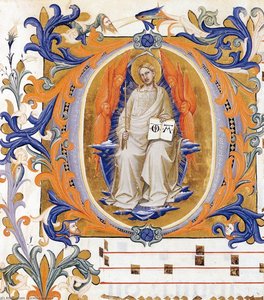
Antiphonary (Cod. Cor. 3, folio 59) (1410) by Lorenzo Monaco

Antiphonary (Cod. Cor. 3, folio 59)

1410 · Gold Leaf · Bernard H. Breslauer, New York City

Behold this breathtaking illumination, an Antiphonary page capturing the profound moment of the Ascension of Christ. It is not merely a depiction of a theological event; it is a vibrant portal into the spiritual fervor of the early Quattrocento. The composition immediately overwhelms the viewer with its sheer density of divine activity and meticulous artistry. Central to the narrative, Jesus ascends toward an ethereal heaven, bathed in a light that…

2
Nativity (1414) by Lorenzo Monaco

Nativity

1414 · Oil On Panel · Galleria degli Uffizi, Florence

Lorenzo Monaco (c. 1370-1425), a Florentine monk whose artistic vision stands as a pivotal bridge between the solemn grandeur of the Trecento and the burgeoning optimism of the Quattrocento, remains an artist shrouded in intriguing biographical obscurity. Yet, his oeuvre speaks volumes about his profound engagement with faith and his masterful assimilation of stylistic influences—a testament to the dynamism of Renaissance art’s formative years.

3
Antiphonary (Cod. Cor. 8, folio 134) (1395) by Lorenzo Monaco

Antiphonary (Cod. Cor. 8, folio 134)

1395 · Oil · National Gallery of Art, Washington

Lorenzo Monaco's ‘Antiphonary (Cod. Cor. 8, folio 134)’ isn’t merely a medieval manuscript page; it’s a profound meditation on faith rendered in vibrant tempera paint. Born Piero di Giovanni around 1370 in Siena and later embracing monastic life within the Camaldolese order at Santa Maria degli Angeli, Monaco's journey embodies the transition from the Gothic era to the burgeoning Renaissance. His work, particularly this illuminated manuscript, reveals a unique synthesis…

4
The Coronation of the Virgin (1414) by Lorenzo Monaco

The Coronation of the Virgin

1414 · Tempera On Panel · Galleria degli Uffizi, Florence

In the quiet, contemplative atmosphere of the early fifteenth century, Lorenzo Monaco breathed life into a celestial vision that continues to captivate the modern soul. The Coronation of the Virgin is not merely a painting; it is a profound window into the transition between the graceful, rhythmic elegance of the Gothic era and the burgeoning humanism of the Italian Renaissance. Created in 1414, this monumental polyptych serves as a breathtaking…

5
The Last Supper (1394) by Lorenzo Monaco

The Last Supper

1394 · Acrylic On Canvas · Staatliche Museen zu Berlin, Berlin

Leonardo da Vinci’s The Last Supper, housed within the refectory of Santa Maria delle Grazie in Milan, isn't merely a painting; it’s an immersive experience. Completed between 1495 and 1498, this monumental mural captures a pivotal moment from Christian scripture – the announcement by Jesus of his impending betrayal by one of his apostles. More than just a depiction of an event, it’s a profound exploration of human emotion, faith,…

6
Antiphonary (Cod. Cor. 7, folio 124v) (1406) by Lorenzo Monaco

Antiphonary (Cod. Cor. 7, folio 124v)

1406 · Painting · Metropolitan Museum of Art, New York

To stand before Lorenzo Monaco's Antiphonary (Cod. Cor. 7, folio 124v) is to witness a moment suspended between worlds—a breathtaking confluence where the luminous spirituality of the Gothic tradition gracefully yields to the nascent intellectualism of the Renaissance. This magnificent illumination, dating from 1406, is far more than mere decoration; it is a profound theological narrative rendered in exquisite pigment and gold. The scene captures a gathering imbued with palpable…

8
Christ on the Cross (detail) (1405) by Lorenzo Monaco

Christ on the Cross (detail)

1405 · Oil On Panel · Lindenau-Museum, Altengau

Lorenzo Monaco (c.1370 – c.1425) stands as a singular figure in the burgeoning Florentine Renaissance, representing a crucial bridge between the contemplative traditions of the Gothic era and the revolutionary innovations that would reshape European art. Though biographical details remain elusive—scholars debate his birthplace and early life—his artistic output reveals an unwavering devotion to monastic principles interwoven with a remarkable mastery of technique and profound emotional resonance.

9
Madonna and Child with Two Angels (1420) by Lorenzo Monaco

Madonna and Child with Two Angels

1420 · Oil On Panel · Liechtenstein Museum, Vienna

This exquisite gilded panel painting, measuring 68 x 36 cm and dating back to 1420, offers a captivating glimpse into the artistic world of Lorenzo Monaco – a pivotal figure bridging the Gothic sensibilities of the Trecento with the burgeoning innovations of the Quattrocento. Created by this Florentine monk, originally Piero di Giovanni born in Siena around 1370, the artwork embodies a profound spirituality and represents a masterful synthesis of…

10
The Visitation (1405) by Lorenzo Monaco

The Visitation

1405 · Oil On Canvas · Courtauld Gallery, London

Lorenzo Monaco's "The Visitation," painted around 1405-1410, is more than just a religious depiction; it’s a poignant meditation on faith, family, and the profound mystery at the heart of Christian belief. Created during a pivotal transition in Florentine art – bridging the late Gothic with the nascent Renaissance – this tempera panel offers a glimpse into the deeply spiritual world of Lorenzo Monaco, a Camaldolese monk who profoundly shaped his…

The Lorenzo Monaco selection continues, 11 to 86

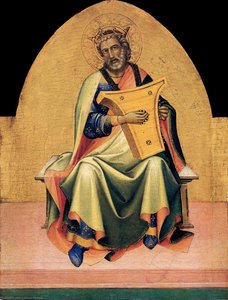
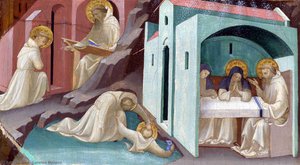
11Madonna (1403) by Lorenzo MonacoMadonna1403 · Rijksmuseum 12The Temptation of Christ (1410) by Lorenzo MonacoThe Temptation of Christ1410 · The Louvre 13Antiphonary (Cod. Cor. 8, folio 102) (1395) by Lorenzo MonacoAntiphonary (Cod. Cor. 8, folio 102)1395 · Staatliche Museen zu Berlin 14Processional Cross (1392) by Lorenzo MonacoProcessional Cross1392 · Art Institute of Chicago 15Nativity (1390) by Lorenzo MonacoNativity1390 · Staatliche Museen zu Berlin 16Madonna and Child (1413) by Lorenzo MonacoMadonna and Child1413 · National Gallery of Art 17The Martyrdom of St. James the Greater (1387) by Lorenzo MonacoThe Martyrdom of St. James the Greater1387 18Crucifixion (1387) by Lorenzo MonacoCrucifixion1387 19The Banquet of Herod (1387) by Lorenzo MonacoThe Banquet of Herod1387 20The Beheading of St. Catherine of Alexandria (1389) by Lorenzo MonacoThe Beheading of St. Catherine of Alexandria1389 · Gemäldegalerie 21Virgin and Child enthroned (1400) by Lorenzo MonacoVirgin and Child enthroned1400 · Fitzwilliam Museum 22Lamentation of Christ (1408) by Lorenzo MonacoLamentation of Christ1408 · National Gallery Prague 23The Death of Saint Benedict: Predella Panel (1409) by Lorenzo MonacoThe Death of Saint Benedict: Predella Panel1409 · National Gallery 24Madonna of Humility (1415) by Lorenzo MonacoMadonna of Humility1415 25Saint John the Baptist Entering the Wilderness (1400) by Lorenzo MonacoSaint John the Baptist Entering the Wilderness1400 · New Walk Museum - Art Gallery 26Triptych of Saint Laurent (1407) by Lorenzo MonacoTriptych of Saint Laurent1407 · Musée du Petit Palais 27The Virgin and Child Enthroned (1418) by Lorenzo MonacoThe Virgin and Child Enthroned1418 · Scottish National Gallery 28Saint Francis Receiving the Stigmata (1420) by Lorenzo MonacoSaint Francis Receiving the Stigmata1420 · Rijksmuseum 29Antiphonary (Cod. Cor. 1, folio 63) (1396) by Lorenzo MonacoAntiphonary (Cod. Cor. 1, folio 63)1396 · Staatliche Museen zu Berlin 30Coronation of the Virgin (1414) by Lorenzo MonacoCoronation of the Virgin1414 31Cut-out Crucifix (detail) (1410) by Lorenzo MonacoCut-out Crucifix (detail)1410 · Szépművészeti Múzeum 32The Crucifixion (1415) by Lorenzo MonacoThe Crucifixion1415 · Yale University Art Gallery 33Diptych: Madonna of Humility (1420) by Lorenzo MonacoDiptych: Madonna of Humility1420 · Музей Торвальдсена 34David (1408) by Lorenzo MonacoDavid1408 · Metropolitan Museum of Art 35Abraham (1408) by Lorenzo MonacoAbraham1408 · Metropolitan Museum of Art 36Adoration of the Magi (1422) by Lorenzo MonacoAdoration of the Magi1422 · Galleria degli Uffizi 37Studies (1417) by Lorenzo MonacoStudies1417 · Metropolitan Museum of Art 38Virgin and Child Enthroned with Six Angels (1415) by Lorenzo MonacoVirgin and Child Enthroned with Six Angels1415 · Fundación Colección Thyssen-Bornemisza 39Madonna of Humility (1420) by Lorenzo MonacoMadonna of Humility1420 · Brooklyn Museum 40Christ on the Cross (1405) by Lorenzo MonacoChrist on the Cross1405 · Lindenau-Museum 41Crucifixion with the Virgin and St John the Evangelist (1400) by Lorenzo MonacoCrucifixion with the Virgin and St John the Evangelist1400 · Metropolitan Museum of Art 42The Beheading of St Catherine of Alexandria (1394) by Lorenzo MonacoThe Beheading of St Catherine of Alexandria1394 · Staatliche Museen zu Berlin 43Gradual (Cod. H 74, folio 122v) (1410) by Lorenzo MonacoGradual (Cod. H 74, folio 122v)1410 · Cleveland Museum of Art 44Jeremiah (1407) by Lorenzo MonacoJeremiah1407 45Lamentation over the Dead Christ (1400) by Lorenzo MonacoLamentation over the Dead Christ1400 46St Peter (1405) by Lorenzo MonacoSt Peter1405 47Christ as the Man of Sorrows (1415) by Lorenzo MonacoChrist as the Man of Sorrows1415 48The Prophet Isaiah (1405) by Lorenzo MonacoThe Prophet Isaiah1405 49The Flight into Egypt (1405) by Lorenzo MonacoThe Flight into Egypt1405 · Lindenau-Museum 50The Nativity (1405) by Lorenzo MonacoThe Nativity1405 · Metropolitan Museum of Art 51Moses (1408) by Lorenzo MonacoMoses1408 · Metropolitan Museum of Art 52Antiphonary (Choir Book 5) (1394) by Lorenzo MonacoAntiphonary (Choir Book 5)1394 · Biblioteca Medicea-Laurenziana 53Virgin and Child Enthroned with Sts John the Baptist and John the Evangelist (1390) by Lorenzo MonacoVirgin and Child Enthroned with Sts John the Baptist and John the Evangelist1390 · The Louvre 54Madonna Enthroned (from a ten-part altarpiece) (1400) by Lorenzo MonacoMadonna Enthroned (from a ten-part altarpiece)1400 · Toledo Museum of Art 55Christ on the Cross (cut-out Crucifix) (1420) by Lorenzo MonacoChrist on the Cross (cut-out Crucifix)1420 · Szépművészeti Múzeum 56Antiphonary (Cod. Cor. 1, folio 111v) (1396) by Lorenzo MonacoAntiphonary (Cod. Cor. 1, folio 111v)1396 · Biblioteca Apostolica 57Antiphonary (Cod. Cor. 1, folio 3) (1396) by Lorenzo MonacoAntiphonary (Cod. Cor. 1, folio 3)1396 · The Louvre 58Marriage of the Virgin (1420) by Lorenzo MonacoMarriage of the Virgin1420 · Santa Trinità 59Diptych: St Jerome (1420) by Lorenzo MonacoDiptych: St Jerome1420 · Rijksmuseum 60Adoration of the Magi (1405) by Lorenzo MonacoAdoration of the Magi1405 · Courtauld Gallery 61Antiphonary (Choir Book 5) (1394) by Lorenzo MonacoAntiphonary (Choir Book 5)1394 · Biblioteca Medicea-Laurenziana 62The Crucified Christ between the Virgin and Saint John the Evangelist (1406) by Lorenzo MonacoThe Crucified Christ between the Virgin and Saint John the Evangelist1406 · Metropolitan Museum of Art 63The Intercession of Christ and the Virgin (1402) by Lorenzo MonacoThe Intercession of Christ and the Virgin1402 · Metropolitan Museum of Art 64Virgin and Child, Lorenzo Monaco (school of), 1381 - 1410 (1410) by Lorenzo MonacoVirgin and Child, Lorenzo Monaco (school of), 1381 - 14101410 65Abraham (1408) by Lorenzo MonacoAbraham1408 · Metropolitan Museum of Art 66Antiphonary (Cod. Cor. 1, folio 102) (1396) by Lorenzo MonacoAntiphonary (Cod. Cor. 1, folio 102)1396 · Staatliche Museen zu Berlin 67Calvary by Lorenzo MonacoCalvary 68Mary with the Child by Lorenzo MonacoMary with the ChildGemäldegalerie 69Madonna and Child with Saints John the Baptist and Nicholas by Lorenzo MonacoMadonna and Child with Saints John the Baptist and NicholasGemäldegalerie 70The Annunciation (1410) by Lorenzo MonacoThe Annunciation1410 · Galleria dell'Accademia di Firenze 71Coronation of the Virgin (1407) by Lorenzo MonacoCoronation of the Virgin1407 · National Gallery 72Adoration of the Magi (detail) (1422) by Lorenzo MonacoAdoration of the Magi (detail)1422 · Galleria degli Uffizi 73Altarpiece (1408) by Lorenzo MonacoAltarpiece1408 · The Louvre 74Coronation of the Virgin and Adoring Saints (1407) by Lorenzo MonacoCoronation of the Virgin and Adoring Saints1407 · National Gallery 75Madonna of Humility (1418) by Lorenzo MonacoMadonna of Humility1418 · Nelson-Atkins Museum of Art 76Noah (1408) by Lorenzo MonacoNoah1408 · Metropolitan Museum of Art 77The Flight into Egypt (detail) (1405) by Lorenzo MonacoThe Flight into Egypt (detail)1405 · Lindenau-Museum 78Gradual (Cod. H 74, folio 43r) (1410) by Lorenzo MonacoGradual (Cod. H 74, folio 43r)1410 · National Gallery of Art 79St Jerome in the Wilderness by Lorenzo MonacoSt Jerome in the Wilderness 80Adoring saints - left main tier panel by Lorenzo MonacoAdoring saints - left main tier panelNational Gallery 81Adoring saints - right main tier panel by Lorenzo MonacoAdoring saints - right main tier panelNational Gallery 82Saint Benedict admitting Saints into the Order by Lorenzo MonacoSaint Benedict admitting Saints into the OrderNational Gallery 83Incidents in the Life of Saint Benedict by Lorenzo MonacoIncidents in the Life of Saint BenedictNational Gallery 84The Baptism of Christ by Lorenzo MonacoThe Baptism of ChristNational Gallery 85Annunciation Triptych (1415) by Lorenzo MonacoAnnunciation Triptych1415 · Galleria dell'Accademia di Firenze 86Bartolini Salimbeni Annunciation (1420) by Lorenzo MonacoBartolini Salimbeni Annunciation1420

Lorenzo Monaco's famous paintings, period by period

The subjects that held Lorenzo Monaco's eye

The four subjects that come back most often in these originals, each with its finest example.

The museums that keep Lorenzo Monaco's originals

The 8 museums that hold the most of the paintings on this page.

Museum City Works by Lorenzo Monaco Paintings from this list
Metropolitan Museum of Art, New YorkMetropolitan Museum of Art New York 11 Antiphonary (Cod. Cor. 7, folio 124v), David, Abraham
National Gallery, LondonNational Gallery London 8 The Death of Saint Benedict: Predella Panel, Coronation of the Virgin, Coronation of the Virgin and Adoring Saints
Staatliche Museen zu Berlin, BerlinStaatliche Museen zu Berlin Berlin 6 The Last Supper, Antiphonary (Cod. Cor. 8, folio 102), Nativity
Galleria degli Uffizi, FlorenceGalleria degli Uffizi Florence 4 Nativity, The Coronation of the Virgin, Adoration of the Magi
Lindenau-Museum, AltengauLindenau-Museum Altengau 4 Christ on the Cross (detail), Christ on the Cross, The Flight into Egypt
The Louvre, ParisThe Louvre Paris 4 The Temptation of Christ, Virgin and Child Enthroned with Sts John the Baptist and John the Evangelist, Antiphonary (Cod. Cor. 1, folio 3)
National Gallery of Art, WashingtonNational Gallery of Art Washington 3 Antiphonary (Cod. Cor. 8, folio 134), Madonna and Child, Gradual (Cod. H 74, folio 43r)
Galleria dell'Accademia di Firenze, FlorenceGalleria dell'Accademia di Firenze Florence 3 Crucifixion, The Annunciation, Annunciation Triptych

Lorenzo Monaco decade by decade: the original that defines each

Works per decade

Pick a decade to see the original that defines it.

Collectors' questions about Lorenzo Monaco's paintings

Which work is Lorenzo Monaco most famous for?Reveal the answer

Antiphonary (Cod. Cor. 3, folio 59) (1410), Bernard H. Breslauer, New York City. Nativity (1414) and Antiphonary (Cod. Cor. 8, folio 134) (1395) come next.

What age was Lorenzo Monaco when Antiphonary (Cod. Cor. 3, folio 59) was made?Reveal the answer

40 years old: Antiphonary (Cod. Cor. 3, folio 59) dates from 1410, and Lorenzo Monaco was born in 1370.

What are the ten most famous Lorenzo Monaco paintings?Reveal the answer

Antiphonary (Cod. Cor. 3, folio 59), Nativity, Antiphonary (Cod. Cor. 8, folio 134), The Coronation of the Virgin, The Last Supper, Antiphonary (Cod. Cor. 7, folio 124v), Crucifixion, Christ on the Cross (detail), Madonna and Child with Two Angels and The Visitation. The ranking above gives each one's year and museum.

How many paintings did Lorenzo Monaco leave?Reveal the answer

Our catalog holds 91 works by Lorenzo Monaco, dated from 1387 to 1422.

In which museums do Lorenzo Monaco's masterpieces hang?Reveal the answer

Mostly in Metropolitan Museum of Art (New York), National Gallery (London) and Staatliche Museen zu Berlin (Berlin). The museum table above lists them all.

In which years did Lorenzo Monaco paint the most famous works?Reveal the answer

In 1400s: 31 of the 86 works on this page were made then, Antiphonary (Cod. Cor. 7, folio 124v) among them.

What are the first and the last famous originals of Lorenzo Monaco?Reveal the answer

On this page, the earliest is The Martyrdom of St. James the Greater (1387) and the latest Adoration of the Magi (1422).

Which subjects did Lorenzo Monaco choose most often?Reveal the answer

Gold background (18), Medieval art (15) and Religious art (13), across the 86 works on this page.

Which technique did Lorenzo Monaco use most?Reveal the answer

Tempera On Panel, for 38 of the 86 works on this page.

To which art movement does Lorenzo Monaco belong?Reveal the answer

Early renaissance and International gothic, judging by the originals on this page.

Which Lorenzo Monaco works hang at the Metropolitan Museum of Art?Reveal the answer

Antiphonary (Cod. Cor. 7, folio 124v), David and Abraham: the Metropolitan Museum of Art, New York holds 11 of the works on this page.

Lorenzo Monaco: life and work

A Florentine Monk’s Vision: The World of Lorenzo Monaco

Lorenzo Monaco, born Piero di Giovanni around 1370 in Siena, occupies a fascinating and pivotal position in the transition from the Gothic grace of the Trecento to the burgeoning Renaissance ideals of the Quattrocento. Though biographical details remain scarce, his artistic journey reveals a compelling story of adaptation, innovation, and deeply felt spirituality. Apprenticed in Florence, he absorbed the lessons of masters like Giotto, Spinello Aretino, and Agnolo Gaddi – artists who established a foundation of narrative clarity and emotional resonance. However, it was his embrace of monastic life in 1390, joining the Camaldolese order at Santa Maria degli Angeli, that truly shaped both his artistic identity and earned him the name by which he is best known: Lorenzo Monaco, or “Lawrence the Monk.” This commitment to a contemplative existence profoundly influenced the character of his work, imbuing it with an introspective quality and a focus on devotional themes.

Blending Gothic Elegance with Renaissance Stirrings

Monaco’s early works, emerging in the 1390s, demonstrate a masterful command of the International Gothic style then prevalent throughout Europe. These paintings are characterized by their refined elegance, delicate linearism, and a palette initially restrained in its chromatic range. Yet even within this established framework, hints of his individual artistic voice begin to emerge. He absorbed influences from contemporaries like Lorenzo Ghiberti and Gherardo Starnina, incorporating elements of their sophisticated compositions and attention to detail. Over time, Monaco’s style evolved, becoming increasingly marked by elongated figures draped in sinuous, flowing garments, a preference for sharp edges and brilliant colors – particularly the luxurious hues of gold and lapis lazuli – and a subtle, almost ethereal quality of light. His gestures are often understated, hinting at inner emotion rather than overtly displaying it, and his spatial arrangements tend to be flattened, prioritizing symbolic resonance over strict realism. He consistently sought to depict scenes imbued with strong spiritual value, often distancing himself from the pursuit of purely naturalistic representation.

Masterpieces of Faith and Artistic Innovation

The breadth of Monaco’s artistic output is impressive, encompassing panel paintings, frescoes, and illuminated manuscripts. The Pietà, housed in Florence's Galleria dell'Accademia, stands as a testament to his early mastery, showcasing a nervous energy in its lines and a palpable sense of emotional tension. The magnificent Coronation of the Virgin, now gracing the Uffizi Gallery, exemplifies his mature style – a vibrant tapestry of saints rendered with sinuous forms and dazzling colors. The Polyptych of Monteoliveto, also in the Galleria dell'Accademia, reveals a profound spirituality that anticipates the work of Fra Angelico. Perhaps one of his most celebrated achievements is the Adoration of the Magi (1420-1422), where his innovative use of foreshortening, though lacking strict geometrical perspective, creates a compelling and visually arresting composition. His frescoes in the Bartolini Salimbeni Chapel represent one of his few surviving mural works, offering a glimpse into his skill as a large-scale decorator. These pieces demonstrate not only technical brilliance but also a deep understanding of theological symbolism and a commitment to conveying religious narratives with clarity and grace.

A Bridge Between Eras

Despite the revolutionary artistic currents sweeping Florence during his lifetime – particularly the groundbreaking innovations of Masaccio and Filippo Brunelleschi in perspective and naturalism – Lorenzo Monaco remained largely unaffected by these developments. He steadfastly maintained his distinctive style, forging a unique path that bridged the gap between late Gothic traditions and the emerging Renaissance aesthetic. Giorgio Vasari, writing in his Lives of the Artists, acknowledged Monaco’s talent while noting his untimely death from an unidentified infection around 1425. While biographical details are limited, his contributions to art history are undeniable. He stands as the last significant exponent of the Giotto style, preserving its legacy while simultaneously incorporating elements that foreshadowed the artistic transformations to come. His emphasis on spirituality, stylized forms, and refined elegance represents a distinct aesthetic within Florentine painting, leaving an enduring mark on subsequent generations of artists.

Legacy and Enduring Influence

Lorenzo Monaco’s work continues to captivate viewers with its delicate beauty, profound piety, and subtle innovations. He was not a revolutionary in the same vein as Masaccio, but his contribution lies in his ability to synthesize existing traditions into a harmonious and deeply personal style. He demonstrated that artistic excellence could flourish within the confines of established conventions, enriching them with individual expression and spiritual depth. His influence can be seen in the work of later artists who appreciated his refined technique and devotional sensibility. Today, his paintings serve as invaluable windows into a pivotal moment in art history – a time of transition, experimentation, and the enduring power of faith expressed through artistic vision.