Portrait of Jean Clouet

The 35 Most Famous Jean Clouet Paintings, a Gallery Selection

Updated November 2026 · ranked by our popularity score (searches, visits and orders for each work) · 37 works by Jean Clouet in our catalogue

In short

Of all the originals Jean Clouet left, the most famous is Francis I of France (1494-1547), king of France (1515), in the collection of the Condé Museum, Chantilly. Close behind it come Unknown Lady (1525) and Unknown Lady (1530). Our catalog holds 37 works by Jean Clouet; the gallery has kept the 35 the world admires most, each shown with its date, its museum and its story.

1480 – 1541, Brussels Renaissance portraiture Most works: Château de Chantilly

Jean Clouet's top 10 paintings: the gallery's choice

1
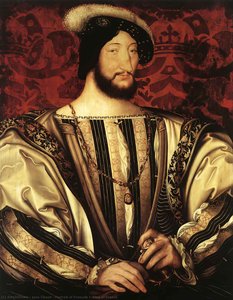
Francis I of France (1494-1547), king of France (1515) by Jean Clouet

Francis I of France (1494-1547), king of France

1515 · Oil On Panel · Condé Museum, Chantilly

The subject is positioned in a bust-length composition, facing toward the right of the frame while his gaze remains directed forward. He wears a black hat and a cloak that covers his shoulders. A cream-colored collar with a ribbed texture sits at his neck, contrasting with the dark fabric of his attire. The skin on his face appears smooth, with light coming from the upper left to define the bridge…

2
Unknown Lady (1525) by Jean Clouet

Unknown Lady

1525 · Oil On Canvas · Château de Chantilly, Chantilly

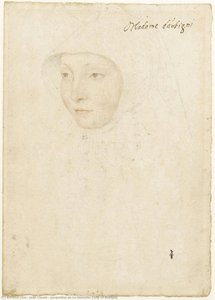
The painting "Unknown Lady," attributed to the masterful French Renaissance artist Jean Clouet, is not merely a portrait; it's an invitation into a world of subtle observation and carefully constructed mystery. Completed around 1525, this captivating drawing—a testament to Clouet’s meticulous technique and psychological acuity—holds within its delicate lines a profound sense of contained emotion. It resides in the heart of the WahooArt collection, offering a glimpse into the courtly…

3
Unknown Lady (1530) by Jean Clouet

Unknown Lady

1530 · Acrylic On Canvas · Château de Chantilly, Chantilly

The world of 16th-century French portraiture is often associated with opulent courts and meticulously rendered depictions of royalty, yet within this grand tradition lies a captivating vein of quiet introspection—exemplified perfectly by Jean Clouet’s “Unknown Lady.” Painted around 1525, this drawing, now housed in a stunning reproduction, offers far more than a simple likeness; it's an invitation to contemplate the veiled emotions and subtle power dynamics inherent in Renaissance society.…

4
Guillaume Budé (1536) by Jean Clouet

Guillaume Budé

1536 · Oil On Panel · Metropolitan Museum of Art, New York

In this portrait, Jean Clouet captures the likeness of Guillaume Budé, a man whose intellectual influence shaped the French Renaissance. Completed around 1536, the work presents Budé not merely as a figure of authority, but as a scholar deeply immersed in his vocation. As the librarian to King Francis I, Budé occupied a central position in the intellectual life of the French court, and Clouet’s brushwork reflects this status through…

5
Portrait of Beatrix Pacheco, Countess of Montbel und Entremonts (1550) by Jean Clouet

Portrait of Beatrix Pacheco, Countess of Montbel und Entremonts

1550 · Oil On Panel · Städel Museum, Frankfurt

The Countess Beatrix Pacheco sits in a quiet, poised stillness, her presence filling the space with a sense of noble composure. She turns her head slightly toward the left, her eyes meeting the viewer with a steady, penetrating look that bridges the centuries. A soft, gentle smile rests upon her lips, suggesting a woman of profound character and inner life. The light, descending from the upper left, brushes against the…

7
Portrait of a Banker (1522) by Jean Clouet

Portrait of a Banker

1522 · Oil On Panel · Saint Louis Art Museum, Saint Louis

The portrait presents a middle-aged man in a half-length composition, positioned slightly off-center. He gazes toward the left of the frame with a steady, calm expression. The subject is dressed in dark, somber clothing, featuring a black hat with sharp folds and sleeves of a warm pinkish-red hue. His pale skin tones contrast against the deep navy and black of his attire and the dark background. In his hands, he…

8
Portrait of Louis de Cleves (1530) by Jean Clouet

Portrait of Louis de Cleves

1530 · Oil On Panel · Accademia Carrara, Bergamo

In the Portrait of Louis de Cleves by Jean Clouet, a single male figure emerges from a dark forest green background. The composition is a medium close-up, capturing the man from the chest up. He is positioned slightly off-center, his gaze directed toward the left of the frame. This orientation creates a sense of quiet gravity within the space. The subject's presence is anchored by a palette of deep, saturated…

9
Madame de Canaples (Marie d'Assigny, 1502 - 58) (1525) by Jean Clouet

Madame de Canaples (Marie d'Assigny, 1502 - 58)

1525 · Oil On Panel · Scottish National Gallery, Edinburgh

The artwork titled Madame de Canaples (Marie d'Assigny, 1502 - 58) is a portrait executed by the artist Jean Clouet. This oil on panel work depicts Marie d’Acigné, who is also identified as Madame de Canaples. The sitter was a lady of the court, specifically serving as a maid of honour to Queen Claude of France. The portrait was likely produced in 1525, coinciding with the year Marie d’Acigné married…

10
Portrait of an unknown man (1515) by Jean Clouet

Portrait of an unknown man

A young man is captured in a bust-length portrait, his gaze drifting slightly away from the viewer toward the left. The composition relies on a stark tonal contrast, utilizing a monochrome palette of black, grey, and white to define form through light and shadow. Directional lighting from the upper left carves out the features of the face, emphasizing a prominent nose and high cheekbones. This technique creates a sense of…

The Jean Clouet selection continues, 11 to 35

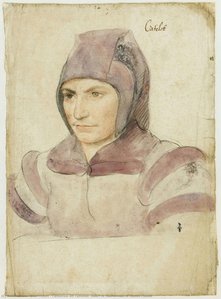
11Francis I (1494-1547), King of France. (1525) by Jean ClouetFrancis I (1494-1547), King of France.1525 12Portrait of Madeleine of France (1520–1537), 3rd Daughter of François I (1494–1537) and Claude of France (1499–1524) (1522) by Jean ClouetPortrait of Madeleine of France (1520–1537), 3rd Daughter of François I (1494–1537) and Claude of France (1499–1524)1522 13Bemberg Fondation Toulouse - Jean Bertrand, archevêque et cardinal de Sens - Capitoul - Jean CLOUET (1520) by Jean ClouetBemberg Fondation Toulouse - Jean Bertrand, archevêque et cardinal de Sens - Capitoul - Jean CLOUET1520 · Collection Bemberg 14Charles de Cossé (1506–1563), Count of Brissac (1535) by Jean ClouetCharles de Cossé (1506–1563), Count of Brissac1535 · Metropolitan Museum of Art 15Portrait of a Lady (1530) by Jean ClouetPortrait of a Lady1530 · Yale Center for British Art 16Doña Leonor Zapata (1531) by Jean ClouetDoña Leonor Zapata1531 · Château de Chantilly 17Portrait of Jean de Dinteville, Seigneur de Polisy (1533) by Jean ClouetPortrait of Jean de Dinteville, Seigneur de Polisy1533 · Condé Museum 18Renée de France, Duchess of Ferrara and Chartres (1519) by Jean ClouetRenée de France, Duchess of Ferrara and Chartres1519 · Château de Chantilly 19Jacqueline de La Queuille, Lady of Aubigny (1535) by Jean ClouetJacqueline de La Queuille, Lady of Aubigny1535 · Château de Chantilly 20Catherine dit Cathelot, dwarf or madwoman of Queen Claude (1540) by Jean ClouetCatherine dit Cathelot, dwarf or madwoman of Queen Claude1540 · Château de Chantilly 21Unknown Lady (1525) by Jean ClouetUnknown Lady1525 · Château de Chantilly 22Marguerite of France, Duchess of Berry and Savoy (1527) by Jean ClouetMarguerite of France, Duchess of Berry and Savoy1527 · Château de Chantilly 23Madeleine of France, Queen of Scotland (1524) by Jean ClouetMadeleine of France, Queen of Scotland1524 · Château de Chantilly 24Portrait of Claude of Lorraine, Duke of Guise (1528) by Jean ClouetPortrait of Claude of Lorraine, Duke of Guise1528 · Galleria Palatina 25Portrait of Marguerite of Navarre (1527) by Jean ClouetPortrait of Marguerite of Navarre1527 · Walker Art Gallery 26Beatrice Pacheco de Silva, Countess of Entremont (1531) by Jean ClouetBeatrice Pacheco de Silva, Countess of Entremont1531 · Château de Chantilly 27Guillame Gouffier by Jean ClouetGuillame GouffierSaint Louis Art Museum 28Portrait of a Man Holding a Volume of Petrarch by Jean ClouetPortrait of a Man Holding a Volume of PetrarchRoyal Collection 29Portrait of an Unknown Man by Jean ClouetPortrait of an Unknown ManCondé Museum 30The Dauphin François, Son of François I by Jean ClouetThe Dauphin François, Son of François IKoninklijk Museum voor Schone Kunsten 31Jean de la Barre (1520) by Jean ClouetJean de la Barre1520 · Condé Museum 32Elisabeth of Austria in hunting costume by Jean ClouetElisabeth of Austria in hunting costume 33Marie d (1525) by Jean ClouetMarie d1525 · Château de Chantilly 34Portrait of François I, King of France (1525) by Jean ClouetPortrait of François I, King of France1525 · The Louvre 35Portrait of François I as St John the Baptist (1518) by Jean ClouetPortrait of François I as St John the Baptist1518

Jean Clouet's famous paintings, period by period

The subjects that held Jean Clouet's eye

The four subjects that come back most often in these originals, each with its finest example.

The museums that keep Jean Clouet's originals

The 8 museums that hold the most of the paintings on this page.

Museum City Works by Jean Clouet Paintings from this list
Château de Chantilly, ChantillyChâteau de Chantilly Chantilly 11 Unknown Lady, Unknown Lady, Doña Leonor Zapata
Condé Museum, ChantillyCondé Museum Chantilly 4 Francis I of France (1494-1547), king of France, Portrait of Jean de Dinteville, Seigneur de Polisy, Portrait of an Unknown Man
Metropolitan Museum of Art, New YorkMetropolitan Museum of Art New York 2 Guillaume Budé, Charles de Cossé (1506–1563), Count of Brissac
Saint Louis Art Museum, Saint LouisSaint Louis Art Museum Saint Louis 2 Portrait of a Banker, Guillame Gouffier
Städel Museum, FrankfurtStädel Museum Frankfurt 1 Portrait of Beatrix Pacheco, Countess of Montbel und Entremonts
Minneapolis Institute of Art, MinneapolisMinneapolis Institute of Art Minneapolis 1 Portrait of Charlotte of France
Accademia Carrara, BergamoAccademia Carrara Bergamo 1 Portrait of Louis de Cleves
Scottish National Gallery, EdinburghScottish National Gallery Edinburgh 1 Madame de Canaples (Marie d'Assigny, 1502 - 58)

Jean Clouet decade by decade: the original that defines each

Works per decade

Pick a decade to see the original that defines it.

Collectors' questions about Jean Clouet's paintings

Which work is Jean Clouet most famous for?Reveal the answer

Francis I of France (1494-1547), king of France (1515), Condé Museum, Chantilly. Unknown Lady (1525) and Unknown Lady (1530) come next.

What age was Jean Clouet when Francis I of France (1494-1547), king of France was made?Reveal the answer

35 years old: Francis I of France (1494-1547), king of France dates from 1515, and Jean Clouet was born in 1480.

What are the ten most famous Jean Clouet paintings?Reveal the answer

Francis I of France (1494-1547), king of France, Unknown Lady, Unknown Lady, Guillaume Budé, Portrait of Beatrix Pacheco, Countess of Montbel und Entremonts, Portrait of Charlotte of France, Portrait of a Banker, Portrait of Louis de Cleves, Madame de Canaples (Marie d'Assigny, 1502 - 58) and Portrait of an unknown man. The ranking above gives each one's year and museum.

How many paintings did Jean Clouet leave?Reveal the answer

Our catalog holds 37 works by Jean Clouet, dated from 1515 to 1540.

In which museums do Jean Clouet's masterpieces hang?Reveal the answer

Mostly in Château de Chantilly (Chantilly), Condé Museum (Chantilly) and Metropolitan Museum of Art (New York). The museum table above lists them all.

In which years did Jean Clouet paint the most famous works?Reveal the answer

In 1520s: 15 of the 35 works on this page were made then, Unknown Lady among them.

What are the first and the last famous originals of Jean Clouet?Reveal the answer

On this page, the earliest is Francis I of France (1494-1547), king of France (1515) and the latest Catherine dit Cathelot, dwarf or madwoman of Queen Claude (1540).

Which subjects did Jean Clouet choose most often?Reveal the answer

Portrait (10), Woman (10) and Man (9), across the 35 works on this page.

Which technique did Jean Clouet use most?Reveal the answer

Oil On Panel, for 13 of the 35 works on this page.

To which art movement does Jean Clouet belong?Reveal the answer

Renaissance portraiture and French renaissance, judging by the originals on this page.

Which Jean Clouet works hang at the Château de Chantilly?Reveal the answer

Unknown Lady, Unknown Lady and Doña Leonor Zapata: the Château de Chantilly, Chantilly holds 11 of the works on this page.

Jean Clouet: life and work

A Courtly Hand: The Life and Art of Jean Clouet

Jean Clouet, a name whispered with reverence among connoisseurs of the French Renaissance, remains an enigmatic figure despite his profound impact on portraiture. Born around 1480, likely in Brussels within the Low Countries—though definitive records are scarce—Clouet’s artistic journey led him to become one of the most sought-after painters at the court of Francis I. His origins are shrouded in some mystery; while “Clouet” may not have been his birth name, it became synonymous with a distinctive style that captured the essence of an era defined by elegance and burgeoning humanism. The early influences shaping Clouet’s artistic vision remain somewhat speculative, yet the hallmarks of Flemish training—a meticulous attention to detail, subtle modeling, and a refined sense of realism—are undeniably present in his work. It's believed he may have been connected to a family of artists already established in Brussels, further solidifying the foundations of his technical skill.

Ascension at the French Court

Clouet’s arrival at the French court around 1516 marked a turning point not only in his career but also in the evolution of royal portraiture. Francis I, a passionate patron of the arts and a monarch determined to emulate the Italian Renaissance courts, recognized Clouet's exceptional talent immediately. Unlike previous court painters who often focused on grand historical narratives or religious scenes, Clouet specialized in capturing the likenesses of those within the king’s inner circle—nobles, courtiers, and members of the royal family. He wasn’t merely recording features; he was delving into character, conveying personality through subtle nuances of expression and posture. This shift towards psychological insight set his work apart. Appointed as painter and wardrobe valet, then progressing to more prestigious positions, Clouet enjoyed a level of favor rarely granted to artists of the time, receiving a salary comparable to that of esteemed surgeons—a testament to Francis I’s high regard for his abilities. He established himself in Tours initially before relocating with the court to Fontainebleau, becoming an integral part of the vibrant artistic atmosphere fostered by the king.

The Art of Likeness: Technique and Style

Jean Clouet's mastery lay not in flamboyant displays of color or dramatic compositions but in a quiet, understated elegance. He favored drawing as his primary medium, particularly utilizing black and red chalk on paper. These drawings weren’t preliminary sketches; they were often finished works in themselves, prized for their delicate lines, subtle shading, and remarkable ability to capture the sitter's individual character. His technique involved a meticulous layering of strokes, building up form with incredible precision. When working in paint—often employing oil on panel—he maintained this same level of refinement, creating portraits that were both realistic and idealized. He possessed an uncanny ability to convey texture – the sheen of silk, the weight of velvet, the delicate softness of skin – adding another layer of verisimilitude to his work. While influenced by Italian Renaissance masters whose works Francis I avidly collected, Clouet’s style remained distinctly French, characterized by a certain restraint and an emphasis on capturing inner life rather than outward grandeur.

Legacy and Enduring Influence

Though Jean Clouet died around 1541 in Paris, his artistic legacy extended far beyond his lifetime. His son, François Clouet, continued the family tradition, inheriting both his father’s skill and his position at court. Together, they established a dynasty of portraitists who shaped the visual image of the French Renaissance for generations. The rediscovery of Clouet's extensive collection of drawings in the 19th century—many held within the collections of Musée Condé in Chantilly—sparked renewed interest in his work and cemented his place as a pivotal figure in art history. His influence can be seen in the works of later portraitists who sought to emulate his ability to capture not just physical likeness but also the inner essence of their subjects. The portraits attributed to Clouet offer a unique window into the world of the French court, providing invaluable insights into the personalities and power dynamics of the era. His drawings remain treasured possessions in museums worldwide, continuing to captivate viewers with their beauty, subtlety, and enduring psychological depth. Jean Clouet’s art is a testament to the power of observation, the skill of draftsmanship, and the timeless appeal of capturing the human spirit on paper and canvas.