Portrait of James Peale

James Peale Paintings: The 95 Most Famous, Through a Gallery's Eye

Updated October 2026 · ranked by our popularity score (searches, visits and orders for each work) · 97 works by James Peale in our catalogue

In short

To the gallery's eye, James Peale's most famous painting is George Washington (1782), whose original hangs in the Metropolitan Museum of Art, New York. Portrait of William Young (1817) and Member of the Washington Family (1795) complete the trio every eye recognises. Of the 97 works by James Peale in our catalog, the gallery presents the 95 most famous below, each original with its year, its museum and what makes it unique.

1749 – 1831, Chestertown Neoclassicism Most works: Metropolitan Museum of Art

The gallery's top 10 James Peale paintings

1
George Washington (1782) by James Peale

George Washington

1782 · Oil On Canvas · Metropolitan Museum of Art, New York

In the annals of American art, few images capture the dawn of a nation with as much dignified poise as James Peale’s 1782 portrait of George Washington. This is not merely a likeness of a man; it is a window into a pivotal moment of historical transformation. Painted in the wake of the decisive victory at Yorktown, the work transcends the boundaries of traditional portraiture to embody the very spirit…

2
Portrait of William Young (1817) by James Peale

Portrait of William Young

1817 · Oil On Canvas

The Portrait of William Young, painted by James Peale in 1817, presents a formal depiction of the subject in a state of dignified composure. William Young is positioned centrally, seated in a chair and angled slightly toward the viewer to establish a direct gaze. To the left, a portion of a table is visible, holding papers and writing implements. The background remains dark and indistinct, which serves to focus all…

3
Member of the Washington Family (1795) by James Peale

Member of the Washington Family

1795 · Watercolor · Smithsonian American Art Museum, Washington, D.C.

The portrait miniature titled Member of the Washington Family is a work by James Peale. Created about 1795, this small-scale painting captures an unidentified child in a bust-length view. The subject gazes forward with a quiet, steady presence, held within the delicate confines of an oval composition.

4
Susanne Correy (1790) by James Peale

Susanne Correy

1790 · Watercolor · Smithsonian American Art Museum, Washington, D.C.

The gaze of Susanne Correy meets us from across the centuries, captured in a moment of quiet poise. This portrait, titled Susanne Correy, emerges from the brush of James Peale, an artist who finds life within the smallest of scales. Created in the United States, the work presents a woman whose presence feels immediate, as if she has only just paused her movements to acknowledge the viewer. The likeness is…

5
Martha Stewart Wilson (1814) by James Peale

Martha Stewart Wilson

1814 · Oil · Metropolitan Museum of Art, New York

In this 1814 portrait, we encounter Martha Stewart Wilson in a moment of profound stillness. The composition brings us close to the subject, capturing her in a medium close-up that feels deeply personal. She leans her head gently against her left hand, a posture that suggests a quiet, reflective state of mind. The light enters from the upper left, casting soft shadows across the contours of her face and creating…

6
Howes Goldsborough (1799) by James Peale

Howes Goldsborough

1799 · Watercolor · Smithsonian American Art Museum, Washington, D.C.

James Peale painted this miniature portrait of Howes Goldsborough in 1799. The subject was twenty-four years old at the time of the sitting. This intimate likeness captures a man of the early American republic during a period of significant social transition.

7
Thomas Lee Shippen (1795) by James Peale

Thomas Lee Shippen

1795 · Watercolor · Smithsonian American Art Museum, Washington, D.C.

A small, oval window opens upon a child of three years. Thomas Lee Shippen sits centered in the frame, his gaze directed slightly toward the left while his eyes meet the viewer with a quiet, steady presence. He is a study in pale flesh tones and creamy whites, his skin rendered with a smoothness that suggests the softness of a cheek. His hair, a tangle of light blonde curls, is…

8
Mrs. John McCluney (1795) by James Peale

Mrs. John McCluney

1795 · Watercolor · Smithsonian American Art Museum, Washington, D.C.

The portrait of Mrs. John McCluney emerges from the soft light of the late eighteenth century, a delicate presence captured by the hand of James Peale. This intimate work, dating to about 1795, presents a bust-length view of a woman whose gaze meets the viewer with a quiet, steady intensity. She exists within this small, oval space as a figure of grace, her features rendered with a precision that suggests…

9
Josiah Hewes Anthony (1790) by James Peale

Josiah Hewes Anthony

1790 · Watercolor · Smithsonian American Art Museum, Washington, D.C.

A young boy gazes out from an oval frame, his presence felt through the soft, luminous quality of a portrait captured in 1790. He sits in a bust-length pose, slightly off-center, as if caught in a moment of quiet reflection. His skin possesses a porcelain-like texture, rendered with subtle, blended lines that suggest a gentle warmth. A deep navy blue coat provides a heavy, solid contrast to the pale, light…

10
William Shippen (1794) by James Peale

William Shippen

1794 · Watercolor · Smithsonian American Art Museum, Washington, D.C.

James Peale painted this portrait of William Shippen in 1794. The subject was a young child, approximately two or three years old, at the time of the sitting. This miniature captures the likeness of the boy who would later earn a medical degree and marry Mary Louise Shore in 1817.

James Peale paintings, ranked 11 to 95

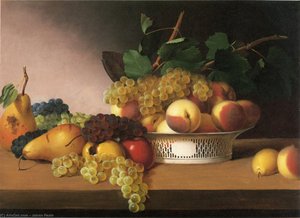
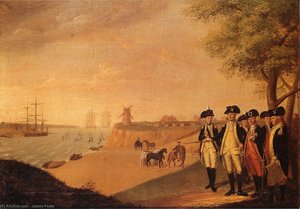
11Grapes, Apples and Bowl of Peaches (1828) by James PealeGrapes, Apples and Bowl of Peaches1828 12Johnathan Trumbull (1792) by James PealeJohnathan Trumbull1792 · Metropolitan Museum of Art 13Major-General Anthony Wayne (1795) by James PealeMajor-General Anthony Wayne1795 · Smithsonian American Art Museum 14John Tower (1806) by James PealeJohn Tower1806 · Smithsonian American Art Museum 15Portrait of a Gentleman (1800) by James PealePortrait of a Gentleman1800 · Smithsonian American Art Museum 16Vegetable Still Life (1825) by James PealeVegetable Still Life1825 17Elizabeth Oliphant (1795) by James PealeElizabeth Oliphant1795 · Smithsonian American Art Museum 18Elizabeth Knapp (1802) by James PealeElizabeth Knapp1802 · Smithsonian American Art Museum 19Olivia Simes Morris (1814) by James PealeOlivia Simes Morris1814 · Art Institute of Chicago 20Portrait of Captain Moses Owen of Bath, Maine (1822) by James PealePortrait of Captain Moses Owen of Bath, Maine1822 · Maine Maritime Museum 21Horatio Gates (1782) by James PealeHoratio Gates1782 · National Portrait Gallery 22Martha Washington (1782) by James PealeMartha Washington1782 · Metropolitan Museum of Art 23George Washington (1782) by James PealeGeorge Washington1782 · Metropolitan Museum of Art 24Portrait of a Gentleman (1785) by James PealePortrait of a Gentleman1785 · Metropolitan Museum of Art 25Reuben Etting (1794) by James PealeReuben Etting1794 · Pennsylvania Academy of Fine Arts 26Frances Gratz Etting (1794) by James PealeFrances Gratz Etting1794 · Pennsylvania Academy of Fine Arts 27Artist and His Family (1795) by James PealeArtist and His Family1795 · Pennsylvania Academy of Fine Arts 28Portrait of a Gentleman (1793) by James PealePortrait of a Gentleman1793 · Smithsonian American Art Museum 29A Gentleman (1789) by James PealeA Gentleman1789 · Harvard Art Museums 30The Ramsay-Polk Family at Carpenter's Point, Cecil County, Maryland (1793) by James PealeThe Ramsay-Polk Family at Carpenter's Point, Cecil County, Maryland1793 · Crystal Bridges Museum of American Art 31Portrait of a Gentleman (1791) by James PealePortrait of a Gentleman1791 · Metropolitan Museum of Art 32Portrait of a Gentleman (1795) by James PealePortrait of a Gentleman1795 · Metropolitan Museum of Art 33Mrs. John McAllister (Frances Wardale) (1791) by James PealeMrs. John McAllister (Frances Wardale)1791 · Metropolitan Museum of Art 34Portrait of a Gentleman (1794) by James PealePortrait of a Gentleman1794 · Metropolitan Museum of Art 35Portrait of a Lady (1791) by James PealePortrait of a Lady1791 · Metropolitan Museum of Art 36Mrs. John Sevier, Jr. (Rebecca Richards) (1794) by James PealeMrs. John Sevier, Jr. (Rebecca Richards)1794 · Metropolitan Museum of Art 37Self-portrait (1789) by James PealeSelf-portrait1789 · Metropolitan Museum of Art 38Major Thomas Humphrey Cushing (1799) by James PealeMajor Thomas Humphrey Cushing1799 · Indianapolis Museum of Art 39Portrait of a Lady (1800) by James PealePortrait of a Lady1800 · Metropolitan Museum of Art 40William Jonas Keen (1796) by James PealeWilliam Jonas Keen1796 · Metropolitan Museum of Art 41Curtis Clay (1798) by James PealeCurtis Clay1798 · Metropolitan Museum of Art 42Portrait of a Gentleman (1799) by James PealePortrait of a Gentleman1799 · Metropolitan Museum of Art 43Moses Cox (1796) by James PealeMoses Cox1796 · Metropolitan Museum of Art 44Mrs. Joseph Cooper (Mary Justice) (1797) by James PealeMrs. Joseph Cooper (Mary Justice)1797 · Metropolitan Museum of Art 45William Smallwood (1798) by James PealeWilliam Smallwood1798 · Metropolitan Museum of Art 46Mrs. Jonathan Pinkney, Jr. (Elizabeth Munroe) (1798) by James PealeMrs. Jonathan Pinkney, Jr. (Elizabeth Munroe)1798 · Metropolitan Museum of Art 47Jonathan Pinkney, Jr. (1798) by James PealeJonathan Pinkney, Jr.1798 · Metropolitan Museum of Art 48Pryor Smallwood (1798) by James PealePryor Smallwood1798 · Metropolitan Museum of Art 49Anna Claypoole Peale (1805) by James PealeAnna Claypoole Peale1805 · Cincinnati Art Museum 50Anna and Margaretta Peale (1805) by James PealeAnna and Margaretta Peale1805 · Pennsylvania Academy of Fine Arts 51Sarah Smith Logan (Mrs. William Clarke) (1808) by James PealeSarah Smith Logan (Mrs. William Clarke)1808 · Harvard Art Museums 52Dr. Henry Nicolls Kitchin (1807) by James PealeDr. Henry Nicolls Kitchin1807 · Metropolitan Museum of Art 53William Young (1807) by James PealeWilliam Young1807 · Metropolitan Museum of Art 54Beulah Elmy Twining (Mrs. Torbert) (1811) by James PealeBeulah Elmy Twining (Mrs. Torbert)1811 · Metropolitan Museum of Art 55Portrait of a Gentleman (1789) by James PealePortrait of a Gentleman1789 · Smithsonian American Art Museum 56William Young Heberton (1816) by James PealeWilliam Young Heberton1816 57Mary Hall (Mrs. James Patriot Wilson, Sr.) (1823) by James PealeMary Hall (Mrs. James Patriot Wilson, Sr.)1823 · Cincinnati Art Museum 58James Patriot Wilson, Sr. (1823) by James PealeJames Patriot Wilson, Sr.1823 · Cincinnati Art Museum 59Elizabeth Depeyster Peale (1795) by James PealeElizabeth Depeyster Peale1795 · National Portrait Gallery 60George Washington (1782) by James PealeGeorge Washington1782 61Benjamin Lincoln (1794) by James PealeBenjamin Lincoln1794 · Metropolitan Museum of Art 62Francis Depau (1802) by James PealeFrancis Depau1802 · Metropolitan Museum of Art 63The Battle of Princeton (1782) by James PealeThe Battle of Princeton1782 64Untitled (D2X6HW) (1782) by James PealeUntitled (D2X6HW)1782 65George Washington (1780) by James PealeGeorge Washington1780 66Goerge Washington (1787) by James PealeGoerge Washington1787 67Samuel Allen (1791) by James PealeSamuel Allen1791 68Pleasure Party by a Mill (1790) by James PealePleasure Party by a Mill1790 · Museum of Fine Arts 69Richard Thomas III (1796) by James PealeRichard Thomas III1796 · Metropolitan Museum of Art 70Jane Ramsay Peale (1802) by James PealeJane Ramsay Peale1802 · Addison Gallery of American Art 71Untitled (D2X2GQ) (1811) by James PealeUntitled (D2X2GQ)1811 · Metropolitan Museum of Art 72Madame Dubocq and Her Children (1807) by James PealeMadame Dubocq and Her Children1807 73Apples and grapes in a pierced bowl (1820) by James PealeApples and grapes in a pierced bowl1820 74Still Life with Grapes (1822) by James PealeStill Life with Grapes1822 75Fruit in a Basket (1820) by James PealeFruit in a Basket1820 76Still Life: Apples, Grapes, Pear (1822) by James PealeStill Life: Apples, Grapes, Pear1822 77Still LIfe with Watermelon (1820) by James PealeStill LIfe with Watermelon1820 78Still Life with Broken Watermelon (1820) by James PealeStill Life with Broken Watermelon1820 79Still LIfe of Fruit with a Porcelain Bowl (1820) by James PealeStill LIfe of Fruit with a Porcelain Bowl1820 80Still Life No. 2 (1821) by James PealeStill Life No. 21821 81Landscape (1830) by James PealeLandscape1830 82Still Life with Fruit on a Tabletop (1825) by James PealeStill Life with Fruit on a Tabletop1825 83Still Life with Watermelon (1829) by James PealeStill Life with Watermelon1829 84Fruit Still Life with Chinese Export Basket (1824) by James PealeFruit Still Life with Chinese Export Basket1824 · National Gallery of Art 85Still Life with Fruit (1829) by James PealeStill Life with Fruit1829 86Still Life with Fruit (1821) by James PealeStill Life with Fruit1821 · Fine Arts Museums of San Francisco 87Still Life with Vegetables (1826) by James PealeStill Life with Vegetables1826 · Museum of Fine Arts 88View on the Wissahickon (1830) by James PealeView on the Wissahickon1830 · Philadelphia Museum of Art 89Portrait of Margaretta Peale by James PealePortrait of Margaretta Peale 90Balsam Apples and Vegetables by James PealeBalsam Apples and Vegetables 91Still Life with Apples and Grapes by James PealeStill Life with Apples and Grapes 92The Generals at Yorktown by James PealeThe Generals at Yorktown 93Sir Peter Parker's Attack Against Fort Moultrie by James PealeSir Peter Parker's Attack Against Fort Moultrie 94Anna Claypoole Peale (1812) by James PealeAnna Claypoole Peale1812 · Hallwyl Museum 95Still Life: Balsam Apple and Vegetables (1818) by James PealeStill Life: Balsam Apple and Vegetables1818 · Metropolitan Museum of Art

James Peale's famous paintings, period by period

The subjects that held James Peale's eye

The four subjects that come back most often in these originals, each with its finest example.

The museums that keep James Peale's originals

The 8 museums that hold the most of the paintings on this page.

Museum City Works by James Peale Paintings from this list
Metropolitan Museum of Art, New YorkMetropolitan Museum of Art New York 31 George Washington, Martha Stewart Wilson, Johnathan Trumbull
Smithsonian American Art Museum, Washington, D.C.Smithsonian American Art Museum Washington, D.C. 14 Member of the Washington Family, Susanne Correy, Howes Goldsborough
Pennsylvania Academy of Fine Arts, PhiladelphiaPennsylvania Academy of Fine Arts Philadelphia 4 Reuben Etting, Frances Gratz Etting, Artist and His Family
Cincinnati Art Museum, CincinnatiCincinnati Art Museum Cincinnati 3 Anna Claypoole Peale, Mary Hall (Mrs. James Patriot Wilson, Sr.), James Patriot Wilson, Sr.
National Portrait Gallery, Washington, D.C.National Portrait Gallery Washington, D.C. 2 Horatio Gates, Elizabeth Depeyster Peale
Harvard Art Museums, CambridgeHarvard Art Museums Cambridge 2 A Gentleman, Sarah Smith Logan (Mrs. William Clarke)
Museum of Fine Arts, HoustonMuseum of Fine Arts Houston 2 Pleasure Party by a Mill, Still Life with Vegetables
Art Institute of Chicago, ChicagoArt Institute of Chicago Chicago 1 Olivia Simes Morris

James Peale, one signature painting per decade

Works per decade

Pick a decade to see the original that defines it.

James Peale's paintings: the gallery answers

Which James Peale painting is the most famous of all?Reveal the answer

George Washington (1782), Metropolitan Museum of Art, New York. Portrait of William Young (1817) and Member of the Washington Family (1795) come next.

How old was James Peale on completing George Washington?Reveal the answer

33 years old: George Washington dates from 1782, and James Peale was born in 1749.

Which are James Peale's top 10 paintings?Reveal the answer

George Washington, Portrait of William Young, Member of the Washington Family, Susanne Correy, Martha Stewart Wilson, Howes Goldsborough, Thomas Lee Shippen, Mrs. John McCluney, Josiah Hewes Anthony and William Shippen. The ranking above gives each one's year and museum.

How many works did James Peale create?Reveal the answer

Our catalog holds 97 works by James Peale, dated from 1780 to 1830.

Where do James Peale's most famous originals hang?Reveal the answer

Mostly in Metropolitan Museum of Art (New York), Smithsonian American Art Museum (Washington, D.C.) and Pennsylvania Academy of Fine Arts (Philadelphia). The museum table above lists them all.

When did James Peale create the most famous paintings?Reveal the answer

In 1790s: 36 of the 95 works on this page were made then, Member of the Washington Family among them.

Which are James Peale's earliest and latest famous works?Reveal the answer

On this page, the earliest is George Washington (1780) and the latest Landscape (1830).

Which subjects did James Peale return to most?Reveal the answer

Portrait (19), Life (10) and Man (7), across the 95 works on this page.

Which medium did James Peale work in most?Reveal the answer

Watercolor, for 15 of the 95 works on this page.

Which movement is James Peale associated with?Reveal the answer

Neoclassicism, judging by the originals on this page.

Which James Peale originals does the Metropolitan Museum of Art hold?Reveal the answer

George Washington, Martha Stewart Wilson and Johnathan Trumbull: the Metropolitan Museum of Art, New York holds 31 of the works on this page.

James Peale: the artist

A Life Etched in Miniature and Stillness

James Peale, born in the burgeoning colonial landscape of Chestertown, Maryland, in 1749, occupies a fascinating, often understated position within the pantheon of early American art. Though overshadowed by the renown of his elder brother, Charles Willson Peale—a pivotal figure in establishing an authentically American artistic identity—James carved out a distinguished career marked by delicate miniatures, luminous still lifes, and a quiet dedication to capturing the essence of his era. His life story is one interwoven with familial legacy, military service, and a persistent pursuit of artistic refinement. The early loss of his father propelled the family to Annapolis, where young James initially apprenticed in practical trades—saddlery and cabinetmaking—experiences that perhaps instilled within him an appreciation for meticulous detail and craftsmanship, qualities that would later define his artistic approach. It was upon Charles’ return from London, having studied under Benjamin West, that James found his true calling, becoming his brother's assistant and embarking on a path of formal artistic training.

From Battlefield to Brushstroke

The burgeoning revolutionary fervor dramatically altered the course of Peale’s life. In 1776, he traded brush for musket, accepting a commission as an ensign in William Smallwood's regiment within the Continental Army. This wasn’t merely a patriotic gesture; it was a period of intense experience that would subtly inform his later work. He rose quickly through the ranks to captain, participating in pivotal battles—Long Island, White Plains, Trenton, Brandywine, Germantown, Princeton, and Monmouth—witnessing firsthand the hardships and heroism of the American Revolution. This military service instilled within him not only courage but also a keen observational skill, a capacity to register detail under pressure, qualities that would serve him well in portraiture and still life. Resigning his commission in 1779, he returned to Philadelphia, rejoining Charles’ studio, yet now possessing a broadened perspective shaped by the realities of war and nation-building. A notable collaboration with his brother followed in 1788, designing floats for a grand procession celebrating the newly ratified United States Constitution—a testament to their shared commitment to the ideals of the new republic.

A Legacy of Delicate Skill

Peale’s artistic development was significantly influenced by his brother's decision to relinquish his miniature portrait practice, allowing James to fully dedicate himself to this demanding art form. Throughout the 1790s and early 1800s, he became a master of watercolor on ivory, creating exquisitely detailed portraits that captured not just likeness but also a sense of personality and social standing. These miniatures were highly sought after, reflecting the growing demand for accessible and intimate representations of individuals within American society. However, Peale’s talents weren't confined to miniature painting. He excelled in still life compositions, particularly those featuring fruit, demonstrating an exceptional ability to render textures, light, and form with remarkable realism. As his eyesight began to decline around 1810, he transitioned towards larger-scale portraits and still lifes, allowing him to continue working despite the challenges of diminishing vision. His later works are characterized by a boldness of execution and a continued commitment to meticulous detail.

A Family of Artists and Enduring Influence

The Peale family’s artistic legacy extends far beyond James himself. He married Mary Claypoole in 1782, establishing his own household and fostering an environment that nurtured creativity. Remarkably, three of their six children—Anna Claypoole Peale, Margaretta Angelica Peale, and Sarah Miriam Peale—also became accomplished painters, each specializing in different genres but all inheriting their father’s dedication to artistic excellence. Maria Peale also pursued painting, though with less widespread recognition than her sisters. This familial constellation of artists underscores the importance of mentorship and the transmission of skills within early American art circles. James Peale's work, while often overshadowed by his brother Charles and his talented daughters, remains a significant contribution to the development of American artistic identity. He captured a pivotal moment in history—the birth of a nation—through portraits that documented its citizens and still lifes that celebrated the bounty of its land. His legacy lies not only in the beauty and technical skill of his paintings but also in the enduring influence he had on generations of artists within his family and beyond. He died in Philadelphia in 1831, leaving behind a body of work that continues to resonate with viewers today.