Peale's Revolutionary Beginnings: From Saddlemaker to Portraitist
Charles Willson Peale’s story is, at its heart, a testament to the burgeoning spirit of self-invention that defined 18th-century America. Born in Queen Anne’s County, Maryland, in 1741, his early life offered little indication of the artistic legacy he would forge. Initially apprenticed to a saddlemaker – a practical trade reflecting the needs of colonial society – Peale found himself drawn not to leather and buckles, but to the subtle art of representation. His initial forays into painting were hesitant, marked by experimentation with clock repair and metalwork before fully embracing the canvas as his primary medium. This period of searching wasn’t merely a vocational detour; it instilled in him a meticulous attention to detail, a craftsman's sensibility that would later distinguish his portraits. A brief apprenticeship under John Hesselius and a formative sojourn in London studying with Benjamin West proved pivotal, exposing him to the prevailing neoclassical style and solidifying his ambition as an artist.
However, Peale’s transformation wasn’t solely artistic; it was deeply intertwined with the political ferment of the era. His involvement with the Sons of Liberty signaled a growing commitment to the revolutionary cause, a passion that would propel him from the studio into the heart of American history. This early engagement imbued his work with a sense of purpose, a desire not just to depict likenesses but to capture the ideals and aspirations of a nation in formation.
Capturing the Founders: Peale’s Iconic Portraits & Neoclassical Style
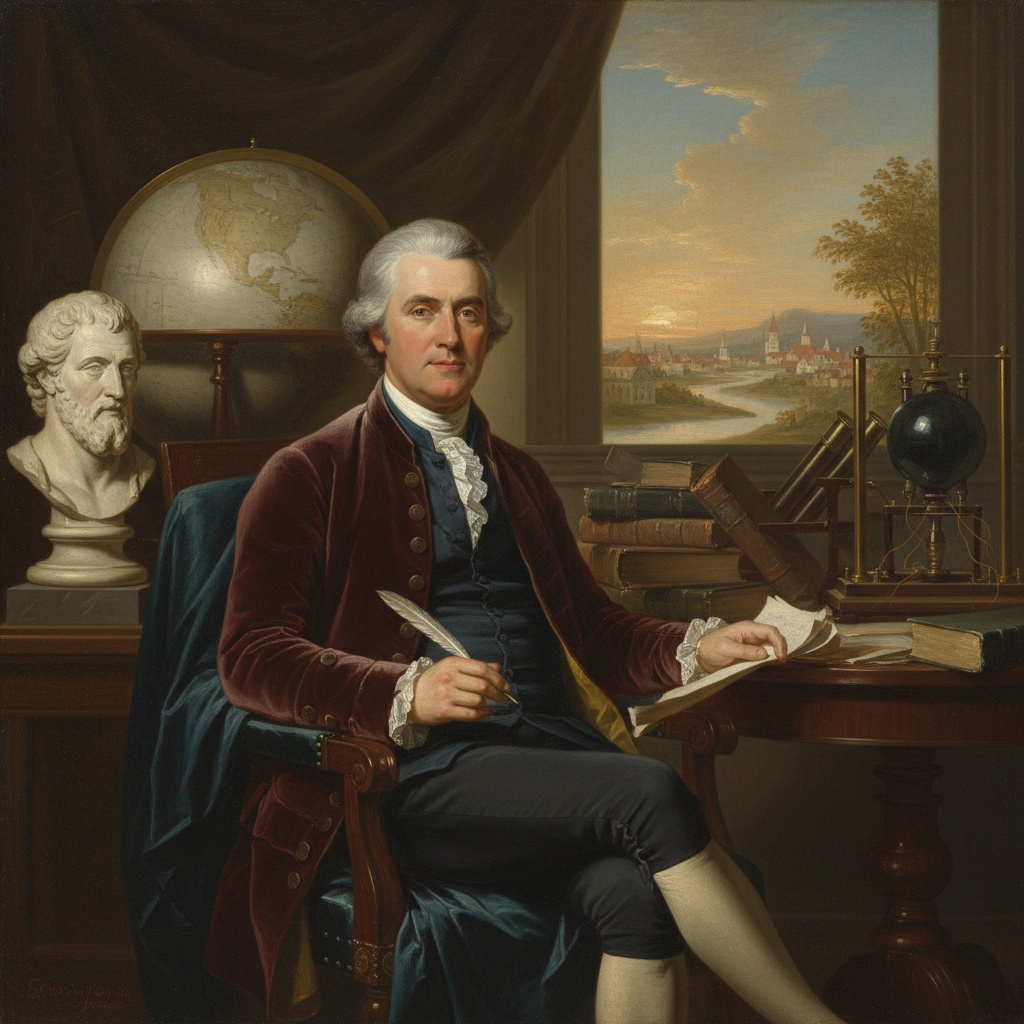
 Charles Willson Peale in the Character of an Artist, (painting)
A striking black & white portrait by Mary Jane Peale of her father, Charles Willson Peale, as an artist. Neoclassical style, rich texture & symbolism – a glimpse into 18th-century American art.
The outbreak of the American Revolution proved to be a watershed moment for Peale. He relocated to Philadelphia, then the epicenter of revolutionary activity, establishing a studio and quickly gaining recognition for his ability to portray leading figures with both accuracy and dignity. His portraits weren’t simply exercises in technical skill; they were carefully constructed statements about power, virtue, and national identity. The neoclassical style he embraced – characterized by its emphasis on order, balance, and classical forms – lent a gravitas to his subjects, aligning them with the heroes of antiquity.
Perhaps no figure embodies this more powerfully than George Washington. Peale painted Washington numerous times, creating a series of iconic images that shaped the public perception of the nation’s first president. His 1779 portrait of Washington at Princeton, for example, is not merely a likeness but a carefully constructed narrative of leadership and resilience. The dramatic lighting, the resolute gaze, and the symbolic details – such as the landscape evoking American soil – all contribute to a powerful sense of national pride. Peale’s mastery lay in his ability to blend realism with idealization, creating portraits that were both recognizable and aspirational.
Beyond Washington, Peale immortalized figures like Thomas Jefferson, Benjamin Franklin, and Alexander Hamilton, each portrait reflecting the unique character and contributions of these founding fathers. His self-portrait from 1791 further exemplifies his artistic prowess; a neoclassical masterpiece showcasing realism & dramatic lighting, it’s a bold declaration of his own role in shaping American artistry and history.
The Philadelphia Museum: A Temple of Enlightenment and American Identity
 Pennsylvania Academy of Fine Arts
Discover PAFA, America's oldest art museum & school! Explore 19th & 20th-century American masterpieces, including works by Eakins, and experience a vibrant artistic legacy in historic Philadelphia.
Peale's ambition extended far beyond the confines of the portrait studio. In 1784, he founded the Philadelphia Museum – a groundbreaking institution that stands as one of the first public museums in the United States. This wasn’t merely a collection of curiosities; it was a carefully curated “temple of Enlightenment,” designed to educate and inspire the burgeoning citizenry.
The museum's holdings were remarkably diverse, encompassing botanical specimens, geological samples, archaeological artifacts, and, most notably, Peale’s extensive collection of animal skeletons. His fascination with natural history wasn’t simply a scientific pursuit; it was rooted in his belief that understanding the natural world was essential to fostering civic virtue and national progress. The museum served as a laboratory for observation, a space where citizens could engage directly with the wonders of creation.
Peale's self-portrait, *The Artist in His Museum* (1822), offers a compelling glimpse into this ambitious project. He dramatically pulls back a curtain to reveal his collection, inviting viewers to partake in the intellectual feast he has assembled. The painting is a visual manifesto, proudly showcasing how one man’s eclectic passion could ignite a cultural revolution and foster a sense of national identity.
Science, Naturalism, and the Expanding Scope of Peale’s Vision
 Charles Willson Peale
Explore Charles Willson Peale (1741-1827): Revolutionary portraits, science & America's first museum! See Washington depictions & his legacy.
Peale's dedication to natural history wasn’t confined to the walls of his museum. He actively pursued scientific expeditions, most famously leading the first American exhumation of a mastodon in 1801. This undertaking was not merely an archaeological dig; it was a public spectacle designed to demonstrate the richness and potential of the American landscape.
The mastodon skeleton became a centerpiece of his museum, attracting visitors from across the country and fueling scientific debate. Peale meticulously documented his findings, publishing lectures and essays on natural history that further disseminated his knowledge. His approach was deeply rooted in Enlightenment principles – emphasizing empirical observation, systematic classification, and the pursuit of rational understanding.
This commitment to science extended beyond paleontology. He experimented with new techniques for preserving specimens, developed a patent fireplace designed for efficiency, and even explored the manufacture of porcelain teeth. Peale’s relentless curiosity and his willingness to embrace innovation were hallmarks of his character, reflecting the broader spirit of experimentation that defined early America.
Peale's Family Legacy: Artistic Dynasties and the Pursuit of Knowledge
Charles Willson Peale wasn’t just a painter and scientist; he was also a dedicated educator who fostered a remarkable artistic dynasty. He named several of his seventeen children after celebrated artists – Raphaelle, Rembrandt, Titian, Rubens – instilling in them a passion for painting and encouraging their pursuit of knowledge.
Rembrandt Peale, perhaps the most famous of his sons, followed in his father’s footsteps, becoming a renowned portraitist in his own right. He continued to paint iconic likenesses of Washington and Jefferson, further solidifying the family’s artistic legacy. Other members of the Peale family also achieved prominence as artists, contributing to a vibrant artistic community in Philadelphia.
The Pennsylvania Academy of Fine Arts, co-founded by Charles Willson Peale in 1805, served as a crucial institution for nurturing this artistic talent. It provided a platform for aspiring painters to hone their skills and exhibit their work, fostering a new generation of American artists. The family’s commitment to education and the arts left an indelible mark on the cultural landscape of the United States.
Beyond the Canvas: Peale’s Military Service & Civic Contributions
While celebrated for his artistic achievements, it's crucial to remember Charles Willson Peale as a man deeply engaged in the civic life of his time. His involvement in the American Revolution wasn’t limited to painting portraits of its heroes; he actively served in the Pennsylvania Militia and the Continental Army, participating in key battles like Trenton and Princeton.
His military service instilled in him a sense of duty and patriotism that permeated his work. He also served as a representative to the Pennsylvania State Assembly from 1779 to 1780, advocating for policies that promoted education and civic engagement. Peale’s commitment to public service wasn’t merely a political gesture; it was rooted in his belief that art and science had a vital role to play in shaping a just and prosperous society.
Charles Willson Peale's life, therefore, represents a remarkable synthesis of artistic talent, scientific curiosity, and civic dedication. He wasn’t simply a painter of portraits; he was a visionary who helped define the cultural identity of a new nation. His legacy continues to inspire artists, scientists, and educators today.
Explore more masterpieces and discover the stories behind them at OriginalUniqueArt.com