Portrait of Hieronymus Bosch

The 100 Most Famous Hieronymus Bosch Paintings, Each One of a Kind

Updated November 2026 · ranked by our popularity score (searches, visits and orders for each work) · 371 works by Hieronymus Bosch in our catalogue

In short

The Garden of Earthly Delights (1504) is the Hieronymus Bosch painting that draws the most eyes; the original belongs to the Museo del Prado, Madrid. After it, the eye goes to The Seven Deadly Sins (1480) and Triptych of Temptation of St Anthony (1506). Among the 371 works of Hieronymus Bosch in our catalog, these 100 are the most famous, each a unique original presented with its year, its museum and the reason it endures.

1450 – 1516, 's-Hertogenbosch Northern renaissance Most works: Museo del Prado

Top 10 paintings by Hieronymus Bosch, through the gallery's eye

1
The Garden of Earthly Delights (1504) by Hieronymus Bosch

The Garden of Earthly Delights

1504 · Oil On Panel · Museo del Prado, Madrid

The triptych unfolds in three distinct movements across oak panels. On the far left, a lush landscape holds the moment God presents Eve to Adam. A strange fountain rises from the earth, its pink waters reflecting a quiet, primordial light. Nearby, an elephant with a monkey on its back wanders through the greenery. The scene is dense with life, yet a heavy stillness rests upon the figures.

2
The Seven Deadly Sins (1480) by Hieronymus Bosch

The Seven Deadly Sins

1480 · Tempera On Panel · Museo del Prado, Madrid

Created around 1480, this captivating artwork presents a complex allegorical scene centered on the popular medieval motif of “The Wheel of Fortune.” More than just a visually striking composition, it’s a profound meditation on the cyclical nature of life, the unpredictable hand of fate, and the enduring struggle between virtue and vice. This piece offers a compelling glimpse into the anxieties and beliefs of late 15th-century Europe.

3
Triptych of Temptation of St Anthony (1506) by Hieronymus Bosch

Triptych of Temptation of St Anthony

1506 · Oil On Panel · Museu Nacional de Arte Antiga, Lisbon

Captivating Subject and Narrative Depth This extraordinary triptych vividly captures the spiritual and moral struggles of Saint Anthony amidst a surreal, chaotic landscape filled with fantastical creatures and symbolic elements. Central to the composition is Saint Anthony himself, depicted in a moment of intense prayer and contemplation, confronting the temptations and vices that threaten his spiritual purity. The work explores themes of faith, temptation, and divine perseverance, inviting viewers into…

4
The Haywain Triptych (1504) by Hieronymus Bosch

The Haywain Triptych

1504 · Oil On Panel · Museo del Prado, Madrid

The Haywain Triptych: A Masterpiece of Northern Renaissance Art Overview The Haywain Triptych by Hieronymus Bosch is a captivating masterpiece that exemplifies the artist's unique style and profound symbolism. Created around 1504, this triptych is a stunning example of Northern Renaissance art, known for its intricate details, rich colors, and complex narratives. Composition and Style The triptych consists of three panels, each telling a distinct yet interconnected story. The left…

5
The Ship of Fools (1500) by Hieronymus Bosch

The Ship of Fools

1500 · Oil On Panel · The Louvre, Paris

This captivating masterpiece presents a vivid allegory of human folly and societal excess, vividly depicted through a surreal and symbolic scene. Central to the composition is a fantastical figure with a bird-like head, perched atop a lush, mystical tree embedded with a skull, symbolizing mortality and the transient nature of human life. Below, a chaotic boat filled with diverse, expressive figures embodies the collective foolishness and moral decay of society,…

6
The last judgement (1482) by Hieronymus Bosch

The last judgement

A Descent into Cosmic Horror: Hieronymus Bosch’s ‘The Last Judgement’ Hieronymus Bosch's 'The Last Judgement,' completed in 1482, isn’t merely a depiction of religious dogma; it’s an unsettling plunge into the subconscious mind of the Renaissance artist and a chilling reflection of anxieties surrounding mortality and divine judgment. Painted on wood—a medium favored by Bosch for its durability and ability to convey intricate detail—this monumental triptych transcends simple storytelling, presenting…

8
Christ Carrying the Cross (10) (1515) by Hieronymus Bosch

Christ Carrying the Cross (10)

1515 · Oil On Panel · Museum voor Schone Kunsten, Gent

Hieronymus Bosch, one of the most enigmatic and fascinating artists of the Northern Renaissance, created a series of paintings depicting Christ carrying the cross. Among these works, Christ Carrying the Cross (10), housed in the Museum voor Schone Kunsten in Ghent, Belgium, stands out for its unique composition and emotional depth.

9
Triptych of the Adoration of the Magi (1510) by Hieronymus Bosch

Triptych of the Adoration of the Magi

1510 · Oil On Panel · Museo del Prado, Madrid

Created around 1510, Hieronymus Bosch’s Triptych of the Adoration of the Magi is a breathtaking example of Northern Renaissance artistry. This meticulously detailed work unfolds the biblical story with a unique blend of earthly realism and profound spiritual symbolism, inviting viewers into a world where devotion meets the fantastical.

10
Death and the Miser (1490) by Hieronymus Bosch

Death and the Miser

1490 · Acrylic On Canvas · National Gallery of Art, Washington

A Stark Reminder: Delving into Hieronymus Bosch’s *Death and the Miser* Death and the Miser*, created around 1490 by the enigmatic Dutch master Hieronymus Bosch, is not merely a painting; it's a chilling meditation on mortality, greed, and the ultimate futility of earthly possessions. Originally part of a larger triptych – now sadly dispersed – this panel offers a concentrated dose of Bosch’s signature surrealism and moralizing intent. Subject &…

Hieronymus Bosch's famous paintings, numbers 11 to 100

11The Wayfarer by Hieronymus BoschThe WayfarerMuseum Boijmans Van Beuningen 12Ecce Homo (1500) by Hieronymus BoschEcce Homo1500 · Städel Museum 13Ship of Fools (1500) by Hieronymus BoschShip of Fools1500 14Triptych of Temptation of St Anthony (central panel) (1505) by Hieronymus BoschTriptych of Temptation of St Anthony (central panel)1505 · Museu Nacional de Arte Antiga 15Death and the Miser (Part) (1490) by Hieronymus BoschDeath and the Miser (Part)1490 · National Gallery of Art 16Last Judgement central panel of the triptych by Hieronymus BoschLast Judgement central panel of the triptych 17The Temptation of St. Anthony (detail) (1516) by Hieronymus BoschThe Temptation of St. Anthony (detail)1516 18Triptych of Garden of Earthly Delights (detail) (23) (1500) by Hieronymus BoschTriptych of Garden of Earthly Delights (detail) (23)1500 · Museo del Prado 19The Seven Deadly Sins by Hieronymus BoschThe Seven Deadly Sins 20Last Judgement Triptych (1504) by Hieronymus BoschLast Judgement Triptych1504 · Academy of Fine Arts Vienna 21Christ Mocked (The Crowning with Thorns) (1510) by Hieronymus BoschChrist Mocked (The Crowning with Thorns)1510 · National Gallery 22Triptych of Garden of Earthly Delights (detail) (13) (1500) by Hieronymus BoschTriptych of Garden of Earthly Delights (detail) (13)1500 · Museo del Prado 23Triptych of Last Judgement (left wing) by Hieronymus BoschTriptych of Last Judgement (left wing) 24Christ's Descent into Hell by Hieronymus BoschChrist's Descent into HellMetropolitan Museum of Art 25The Adoration of the Magi (1510) by Hieronymus BoschThe Adoration of the Magi1510 · Museo del Prado 26Adoration of the Magi (central panel) (1510) by Hieronymus BoschAdoration of the Magi (central panel)1510 · Museo del Prado 27Mankind Beset by Devils (reverse of Rebel Angels panel) (1500) by Hieronymus BoschMankind Beset by Devils (reverse of Rebel Angels panel)1500 · Museum Boijmans Van Beuningen 28Palazzo ducale, venice - hell by Hieronymus BoschPalazzo ducale, venice - hell 29The Garden of Earthly Delights (1500) by Hieronymus BoschThe Garden of Earthly Delights1500 30The Seven Deadly Sins (detail) (10) (1480) by Hieronymus BoschThe Seven Deadly Sins (detail) (10)1480 · Museo del Prado 31The Ship of Fools (1500) by Hieronymus BoschThe Ship of Fools1500 32The Garden of Earthly Delights (detail) (1515) by Hieronymus BoschThe Garden of Earthly Delights (detail)1515 33The Seven Deadly Sins (detail) (11) (1480) by Hieronymus BoschThe Seven Deadly Sins (detail) (11)1480 · Museo del Prado 34Triptych of Garden of Earthly Delights (detail) (48) (1500) by Hieronymus BoschTriptych of Garden of Earthly Delights (detail) (48)1500 · Museo del Prado 35Triptych of Temptation of St Anthony (detail) (11) (1505) by Hieronymus BoschTriptych of Temptation of St Anthony (detail) (11)1505 · Museu Nacional de Arte Antiga 36St. Liberata Triptych (1503) by Hieronymus BoschSt. Liberata Triptych1503 37Last Judgement Triptych (central panel) (1504) by Hieronymus BoschLast Judgement Triptych (central panel)1504 · Academy of Fine Arts Vienna 38Haywain( detail) (1500) by Hieronymus BoschHaywain( detail)1500 39Triptych of Garden of Earthly Delights (detail) (33) (1500) by Hieronymus BoschTriptych of Garden of Earthly Delights (detail) (33)1500 · Museo del Prado 40Triptych of Haywain (right wing) (1500) by Hieronymus BoschTriptych of Haywain (right wing)1500 · Museo del Prado 41Triptych of Temptation of St Anthony (detail) (37) (1505) by Hieronymus BoschTriptych of Temptation of St Anthony (detail) (37)1505 · Museu Nacional de Arte Antiga 42Noah's Ark on Mount Ararat (obverse) (1500) by Hieronymus BoschNoah's Ark on Mount Ararat (obverse)1500 · Museum Boijmans Van Beuningen 43Hermit Saints Triptych (1505) by Hieronymus BoschHermit Saints Triptych1505 · Doge's Palace 44The Arrest of Christ, Jheronimus Bosch (manner of), c. 1530 - c. 1550 (1550) by Hieronymus BoschThe Arrest of Christ, Jheronimus Bosch (manner of), c. 1530 - c. 15501550 45Ecce Homo (1475) by Hieronymus BoschEcce Homo1475 · Städelsche Kunstinstitut Und Städtische Galerie 46Triptych of Garden of Earthly Delights (detail) (18) (1500) by Hieronymus BoschTriptych of Garden of Earthly Delights (detail) (18)1500 · Museo del Prado 47Palazzo Ducale, Venice - Hell, Fall of the Damned by Hieronymus BoschPalazzo Ducale, Venice - Hell, Fall of the Damned 48The Garden of Earthly Delights (1515) by Hieronymus BoschThe Garden of Earthly Delights1515 · Museo del Prado 49The Temptations of Saint Anthony (1501) by Hieronymus BoschThe Temptations of Saint Anthony1501 · Museo del Prado 50Allegory of Gluttony and Lust by Hieronymus BoschAllegory of Gluttony and LustYale University Art Gallery 51Christ Carrying the Cross (1480) by Hieronymus BoschChrist Carrying the Cross1480 · Kunsthistorisches Museum 52The Garden of Earthly Delights (detail) (30) (1504) by Hieronymus BoschThe Garden of Earthly Delights (detail) (30)1504 53Christ Mocked (Crowning with Thorns) (1495) by Hieronymus BoschChrist Mocked (Crowning with Thorns)1495 · National Gallery 54Triptych of the Martyrdom of St Liberata (1500) by Hieronymus BoschTriptych of the Martyrdom of St Liberata1500 · Doge's Palace 55Triptych of Temptation of St Anthony (detail) (31) (1505) by Hieronymus BoschTriptych of Temptation of St Anthony (detail) (31)1505 · Museu Nacional de Arte Antiga 56Triptych of Haywain (central panel) (1500) by Hieronymus BoschTriptych of Haywain (central panel)1500 · Monasterio de San Lorenzo 57Triptych of Haywain (central panel) (1500) by Hieronymus BoschTriptych of Haywain (central panel)1500 · Museo del Prado 58Triptych of Temptation of St Anthony (detail) (1505) by Hieronymus BoschTriptych of Temptation of St Anthony (detail)1505 · Museu Nacional de Arte Antiga 59Triptych of Temptation of St Anthony (detail) (14) (1505) by Hieronymus BoschTriptych of Temptation of St Anthony (detail) (14)1505 · Museu Nacional de Arte Antiga 60The Adoration of the Magi by Hieronymus BoschThe Adoration of the MagiPhiladelphia Museum of Art 61Ascent of the Blessed (1504) by Hieronymus BoschAscent of the Blessed1504 62Triptych of the Martyrdom of St Liberata (central panel) (1500) by Hieronymus BoschTriptych of the Martyrdom of St Liberata (central panel)1500 · Doge's Palace 63Ecce Homo (1490) by Hieronymus BoschEcce Homo1490 · Philadelphia Museum of Art 64The Garden of Earthly Delights (detail) (1515) by Hieronymus BoschThe Garden of Earthly Delights (detail)1515 · Museo del Prado 65The Garden of Earthly Delights (detail) (9) (1515) by Hieronymus BoschThe Garden of Earthly Delights (detail) (9)1515 66Paradise and Hell (1510) by Hieronymus BoschParadise and Hell1510 · Museo del Prado 67St John the Baptist in the Wilderness by Hieronymus BoschSt John the Baptist in the WildernessMuseo Lázaro Galdiano 68The Mounted Escort of the Magi (triptych, inside of right wing) (1500) by Hieronymus BoschThe Mounted Escort of the Magi (triptych, inside of right wing)1500 · Upton House 69Triptych of Garden of Earthly Delights (detail) (21) (1500) by Hieronymus BoschTriptych of Garden of Earthly Delights (detail) (21)1500 · Museo del Prado 70Paradise, Ascent of the Blessed by Hieronymus BoschParadise, Ascent of the Blessed 71The Seven Deadly Sins and the Four Last Things by Hieronymus BoschThe Seven Deadly Sins and the Four Last Things 72St John the Evangelist on Patmos (1504) by Hieronymus BoschSt John the Evangelist on Patmos1504 · Staatliche Museen zu Berlin 73Christ in Limbo by Hieronymus BoschChrist in LimboPhiladelphia Museum of Art 74Saint Christopher (1508) by Hieronymus BoschSaint Christopher1508 · Noordbrabants Museum 75Tree-Man by Hieronymus BoschTree-ManGraphische Sammlung Albertina 76The Garden of Earthly Delights (detail) (12) (1515) by Hieronymus BoschThe Garden of Earthly Delights (detail) (12)1515 · Szépművészeti Múzeum 77St Agnes with the Donor (right wing, detail) (1510) by Hieronymus BoschSt Agnes with the Donor (right wing, detail)1510 · Museo del Prado 78Christ in Limbo (1510) by Hieronymus BoschChrist in Limbo1510 79Triptych of Temptation of St Anthony (outer right wing) (1505) by Hieronymus BoschTriptych of Temptation of St Anthony (outer right wing)1505 · Museu Nacional de Arte Antiga 80Triptych of Garden of Earthly Delights (detail) (20) (1500) by Hieronymus BoschTriptych of Garden of Earthly Delights (detail) (20)1500 · Museo del Prado 81Beggars by Hieronymus BoschBeggarsGraphische Sammlung Albertina 82The Temptation of St. Anthony (detail) (1516) by Hieronymus BoschThe Temptation of St. Anthony (detail)1516 83Witches by Hieronymus BoschWitchesThe Louvre 84The Garden of Earthly Delights (detail) (1500) by Hieronymus BoschThe Garden of Earthly Delights (detail)1500 · Museo del Prado 85Triptych of Temptation of St Anthony (detail) (22) (1505) by Hieronymus BoschTriptych of Temptation of St Anthony (detail) (22)1505 · Museu Nacional de Arte Antiga 86The adoration of the magi (1650) by Hieronymus BoschThe adoration of the magi1650 · Rijksmuseum 87Triptych of Temptation of St Anthony (detail) (40) (1505) by Hieronymus BoschTriptych of Temptation of St Anthony (detail) (40)1505 · Museu Nacional de Arte Antiga 88The Seven Deadly Sins (detail) (12) (1480) by Hieronymus BoschThe Seven Deadly Sins (detail) (12)1480 · Museo del Prado 89The Ship of Fools in Flames by Hieronymus BoschThe Ship of Fools in FlamesAcademy of Fine Arts Vienna 90Triptych of Temptation of St Anthony (detail) (30) (1505) by Hieronymus BoschTriptych of Temptation of St Anthony (detail) (30)1505 · Museu Nacional de Arte Antiga 91The Garden of Earthly Delights (detail) (1500) by Hieronymus BoschThe Garden of Earthly Delights (detail)1500 92The Garden of Earthly Delights (detail) (17) (1504) by Hieronymus BoschThe Garden of Earthly Delights (detail) (17)1504 93Triptych of Garden of Earthly Delights (detail) (19) (1500) by Hieronymus BoschTriptych of Garden of Earthly Delights (detail) (19)1500 · Museo del Prado 94Triptych of Last Judgement (Right wing) by Hieronymus BoschTriptych of Last Judgement (Right wing) 95Temptation of St. Anthony, central panel by Hieronymus BoschTemptation of St. Anthony, central panel 96Triptych of Haywain (detail) (1500) by Hieronymus BoschTriptych of Haywain (detail)1500 · Monasterio de San Lorenzo 97Triptych of Garden of Earthly Delights (detail) (22) (1500) by Hieronymus BoschTriptych of Garden of Earthly Delights (detail) (22)1500 · Museo del Prado 98Triptych of Haywain (detail) (1500) by Hieronymus BoschTriptych of Haywain (detail)1500 · Monasterio de San Lorenzo 99Triptych of Garden of Earthly Delights (detail) (46) (1500) by Hieronymus BoschTriptych of Garden of Earthly Delights (detail) (46)1500 · Museo del Prado 100Christ and the Woman Taken in Adultery (1575) by Hieronymus BoschChrist and the Woman Taken in Adultery1575 · Philadelphia Museum of Art

Hieronymus Bosch's famous paintings, period by period

The subjects that held Hieronymus Bosch's eye

The four subjects that come back most often in these originals, each with its finest example.

The museums that keep Hieronymus Bosch's originals

The 8 museums that hold the most of the paintings on this page.

Museum City Works by Hieronymus Bosch Paintings from this list
Museo del Prado, MadridMuseo del Prado Madrid 63 The Garden of Earthly Delights, The Seven Deadly Sins, The Haywain Triptych
Museu Nacional de Arte Antiga, LisbonMuseu Nacional de Arte Antiga Lisbon 18 Triptych of Temptation of St Anthony, Triptych of Temptation of St Anthony (central panel), Triptych of Temptation of St Anthony (detail) (11)
Academy of Fine Arts Vienna, ViennaAcademy of Fine Arts Vienna Vienna 8 The last judgement, Last Judgement Triptych, Last Judgement Triptych (central panel)
Philadelphia Museum of Art, PhiladelphiaPhiladelphia Museum of Art Philadelphia 7 The Adoration of the Magi, Ecce Homo, Christ in Limbo
Museum Boijmans Van Beuningen, RotterdamMuseum Boijmans Van Beuningen Rotterdam 13 The Wayfarer, Mankind Beset by Devils (reverse of Rebel Angels panel), Noah's Ark on Mount Ararat (obverse)
Doge's Palace, VeniceDoge's Palace Venice 8 Hermit Saints Triptych, Triptych of the Martyrdom of St Liberata, Triptych of the Martyrdom of St Liberata (central panel)
Monasterio de San Lorenzo, EscorialMonasterio de San Lorenzo Escorial 5 Triptych of Haywain (central panel), Triptych of Haywain (detail), Triptych of Haywain (detail)
The Louvre, ParisThe Louvre Paris 4 The Ship of Fools, Witches

Hieronymus Bosch across the decades: one unique original for each

Works per decade

Pick a decade to see the original that defines it.

Hieronymus Bosch's paintings: questions for the gallery

What is the single most famous work of Hieronymus Bosch?Reveal the answer

The Garden of Earthly Delights (1504), Museo del Prado, Madrid. The Seven Deadly Sins (1480) and Triptych of Temptation of St Anthony (1506) come next.

At what age did Hieronymus Bosch create The Garden of Earthly Delights?Reveal the answer

54 years old: The Garden of Earthly Delights dates from 1504, and Hieronymus Bosch was born in 1450.

Which ten paintings by Hieronymus Bosch are the most famous?Reveal the answer

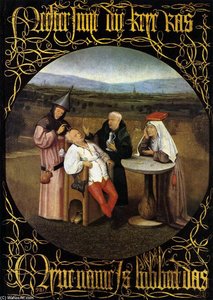
The Garden of Earthly Delights, The Seven Deadly Sins, Triptych of Temptation of St Anthony, The Haywain Triptych, The Ship of Fools, The last judgement, The Cure of Folly (Extraction of the Stone of Madness), Christ Carrying the Cross (10), Triptych of the Adoration of the Magi and Death and the Miser. The ranking above gives each one's year and museum.

How many works by Hieronymus Bosch are known?Reveal the answer

Our catalog holds 371 works by Hieronymus Bosch, dated from 1475 to 1516.

Where can the most famous Hieronymus Bosch originals be seen?Reveal the answer

Mostly in Museo del Prado (Madrid), Museu Nacional de Arte Antiga (Lisbon) and Academy of Fine Arts Vienna (Vienna). The museum table above lists them all.

During which period did Hieronymus Bosch create the best-known paintings?Reveal the answer

In 1500s: 51 of the 100 works on this page were made then, The Garden of Earthly Delights among them.

Which famous Hieronymus Bosch painting is the earliest, and which the latest?Reveal the answer

On this page, the earliest is The Cure of Folly (Extraction of the Stone of Madness) (1475) and the latest The Temptation of St. Anthony (detail) (1516).

What subjects did Hieronymus Bosch favour?Reveal the answer

Medieval art (25), Medieval (23) and Allegory (17), across the 100 works on this page.

What materials did Hieronymus Bosch paint with most?Reveal the answer

Oil On Panel, for 74 of the 100 works on this page.

Which movement does the work of Hieronymus Bosch belong to?Reveal the answer

Northern renaissance, judging by the originals on this page.

What Hieronymus Bosch originals can I see at the Museo del Prado?Reveal the answer

The Garden of Earthly Delights, The Seven Deadly Sins and The Haywain Triptych: the Museo del Prado, Madrid holds 28 of the works on this page.

Hieronymus Bosch: a portrait of the artist

The Life and Identity of Hieronymus Bosch

The name Hieronymus Bosch belongs to a man born Jheronimus van Aken. He emerges from the history of the Netherlands around 1450 in the town of 's-Hertogenbosch. This was a period of intense religious fervor and societal unease in the Duchy of Brabant. He was a Dutch painter whose very identity remains a subject of intense scrutiny. Records from the time are fragmented. They offer only glimpses of a man who would become a notable representative of the Early Netherlandish painting school.

His existence was rooted in a lineage of creators. He was born into a family with a long tradition of painting, a background that likely shaped his early understanding of the medium. While his contemporaries often focused on the serene, Bosch turned his gaze toward the grotesque and the symbolic. He navigated a world where the boundaries between the divine and the demonic appeared to dissolve. His work reflects the anxieties of the late medieval era, capturing a sense of human folly through a highly individualistic lens.

Early Life, Family and Training

The roots of the artist's identity are embedded in the very architecture of 's-Hertogenbosch. He is born in his grandfather's house, a structure tied to a lineage of creators. His grandfather, Jan van Aken, was a painter who died in 1454. This familial connection to the craft is not merely incidental; it is foundational. His father, Anthonius van Aken, continues this tradition, working both as a painter and as an artistic adviser. The workshop environment is the first classroom, a space where the technical conventions of Netherlandish painting are absorbed through daily practice and observation.

Training begins within this family workshop. He learns the discipline of the medium through the hands of his kin, absorbing the methods of his predecessors. The transition from a student in a family studio to a recognized figure in the municipal records occurs in 1474. This is the first time his name appears in the official documents of 's-Hertogenbosch. He moves from the private sphere of the family workshop into the public record of the city, a step that marks his emergence as an individual within the professional landscape of the Duchy of Brabant.

Marriage and Social Standing

The stability of Bosch's personal life takes shape between 1479 and 1481. He marries Aleyt Goyaerts van den Meervenne, a union that brings more than companionship. Through her family’s holdings, Aleyt provides a layer of financial security, anchoring the artist within the local economy. The couple eventually moves to the nearby town of Oirschot, a shift that marks a departure from the immediate bustle of his birthplace.

Socially, Bosch moves within the influential circles of the Brabant region. In 1486 or 1487, he joins the Illustrious Brotherhood of Our Lady. Membership in this highly respected religious confraternity places him among the influential citizens of 's-Hertogenbosch. This affiliation provides a structured connection to the religious and civic life of the community, cementing his position as a recognized figure in the local social hierarchy.

Technique and Artistic Style

Bosch works primarily on oak panels, utilizing the masterful oil techniques of the Netherlandish tradition. He does not seek the smooth, invisible surface favored by many of his contemporaries. Instead, his application of paint often leaves a rough surface, a tactile quality that lends weight to his strange subjects. Through the precise use of glazing—layering thin, translucent washes of color—he achieves a sense of luminous depth and intricate texture. This technical control allows for a startling clarity even within his most chaotic compositions.

His visual language relies on a fusion of meticulous detail and wildly imaginative imagery. He populates his landscapes with hybrid beings, grotesque demons, and strange, anatomical distortions that challenge the viewer's perception of reality. These figures are not mere decorations; they function as symbols of vice and spiritual corruption. The tension between his precise, realistic rendering of textures and the surreal nature of his subjects creates a profound sense of unease. He captures the human condition through a lens of intense moral scrutiny, where every creature carries a heavy theological weight.

Key Works and Masterpieces

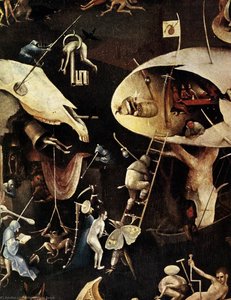
The gaze shifts to the triptych known as The Garden of Earthly Delights. It remains his most famous work, a complex visual labyrinth. The left panel presents the Garden of Eden, teeming with life. The central panel depicts a world consumed by sensual pleasure and unrestrained desire. On the right, a terrifying vision of hell unfolds. This work functions as a panoramic view of humanity’s fall from grace, moving from paradise to the torments of the afterlife.

In other compositions, Bosch explores the mechanics of sin and the chaos of the human condition. The Seven Deadly Sins, held in the Museo del Prado in Madrid, examines moral failure through a structured lens. Around 1500, he produced The Ship of Fools, a work capturing the folly of mankind. His ability to render the grotesque is further seen in The Temptation of St. Anthony, one of his notable works. The Haywain Triptych also stands as a significant piece in his body of work, presenting a world caught in a cycle of temptation and judgment.

Legacy and Enduring Influence

The ripples of Bosch’s vision moved rapidly through the 16th century, shaping the trajectory of Northern art. Pieter Bruegel the Elder emerges as his most significant follower, adopting and expanding upon the complex compositional structures and moralizing themes that Bosch pioneered. This lineage of imagery did not end with the Renaissance. Centuries later, the Surrealists found a precursor in his work. Salvador Dalí and Max Ernst looked toward his canvases to find a visual language for the subconscious, drawing direct inspiration from his ability to render the impossible with startling clarity.

His work remains remarkably modern in its execution. He possessed a unique capacity to weave together the grotesque and the beautiful, creating a tension that feels contemporary even in a digital age. This duality allows his paintings to function as windows into the religious and social climate of the 15th and 16th centuries. Through his brush, the anxieties of a changing world find physical form. He captured a specific era of intense moral scrutiny and societal shifts, turning theological concepts into visceral, visual realities that continue to provoke debate.

Where to See the Works Today

The weight of Bosch's legacy is concentrated heavily in Madrid. The Museo del Prado holds 55 of his works, providing the most extensive look at his visual language. Within these halls, one encounters the terrifying details of his hellscapes and the complex moral allegories that defined his career. The collection includes the Triptych of the Adoration of the Magi (c. 1510) and The Seven Deadly Sins (c. 1480).

In Lisbon, the Museu Nacional de Arte Antiga preserves 18 works, including the Temptation of St. Anthony (c. 1506). The presence of his imagery in Portugal highlights the reach of his influence across Europe. Meanwhile, the Museum Boijmans Van Beuningen in the Netherlands maintains 10 works, including The Vagabond (The Prodigal Son) (c. 1516). These pieces offer a direct connection to the Netherlandish tradition from which he emerged.

Other significant collections are scattered across the continent. The Academy of Fine Arts in Vienna holds 8 works, such as Christ Child with a Walking Frame (c. 1480). In Berlin, the Staatliche Museen contains 7 works. To see his output in its entirety, one must move between these specific centers of preservation.