Portrait of Claude Monet

The 100 Most Famous Claude Monet Paintings, Each One of a Kind

Updated October 2026 · ranked by our popularity score (searches, visits and orders for each work) · 2,448 works by Claude Monet in our catalogue

In short

Water Lilies (or Nympheas) (1916) is the Claude Monet painting that draws the most eyes; the original belongs to the National Museum of Western Art, Tokyo. After it, the eye goes to Impression, Sunrise (1872) and Haystacks: Snow Effect (1891). Among the 2,448 works of Claude Monet in our catalog, these 100 are the most famous, each a unique original presented with its year, its museum and the reason it endures.

1840 – 1926, Paris Impressionism Most works: Musée d'Orsay

Top 10 paintings by Claude Monet, through the gallery's eye

2
Impression, Sunrise (1872) by Claude Monet

Impression, Sunrise

1872 · Oil On Canvas · Musée Marmottan Monet, Paris

Claude Monet's "Impression, Sunrise" is a seminal work that epitomizes the Impressionist movement. Painted in 1873, this captivating piece captures the serene beauty of a harbor at sunset, bathed in the soft glow of twilight. The artwork exudes a sense of tranquility and serenity, making it a timeless addition to any art collection or interior space.

3
Haystacks: Snow Effect (1891) by Claude Monet

Haystacks: Snow Effect

1891 · Oil On Canvas · Scottish National Gallery, Edinburgh

A Moment Frozen in Light: Exploring Monet’s Haystacks The painting “Haystacks: Snow Effect,” created by Claude Monet in 1891, isn't merely a depiction of agricultural scenery; it represents a pivotal moment in Impressionist art history and embodies the artist’s unwavering dedication to capturing the ephemeral beauty of nature. Painted during Monet’s prolific Normandy period—a time when he sought refuge from Parisian society and immersed himself in the transformative power of…

4
The Walk. Lady with a Parasol (1875) by Claude Monet

The Walk. Lady with a Parasol

1875 · Oil On Canvas · National Gallery of Art, Washington

Claude Monet's "The Walk. Lady with a Parasol" (1875) is a quintessential Impressionist masterpiece that captures a tranquil moment in nature. The painting depicts a woman holding an umbrella, accompanied by a child, strolling through a lush landscape bathed in the soft glow of a setting sun. This idyllic scene exudes a sense of peace and elegance, inviting viewers to immerse themselves in the beauty of the outdoors.

6
Lunch on the Grass (central panel) (1865) by Claude Monet

Lunch on the Grass (central panel)

1865 · Oil On Canvas · Musée d'Orsay, Paris

Lunch on the Grass (central panel): A Symphony of Impressionism Claude Monet’s “Lunch on the Grass” stands as an emblem of Impressionist ambition—a daring attempt to capture not just what the eye sees, but how it *feels*. Painted in 1865, this monumental canvas resides within the Musée d'Orsay, offering visitors a glimpse into a pivotal moment in artistic history and Monet’s unwavering devotion to his revolutionary vision. It wasn’t merely…

7
The Magpie (1869) by Claude Monet

The Magpie

1869 · Oil On Canvas

Claude Monet's "The Magpie," painted in 1869, is far more than a mere depiction of a snowy landscape; it is a profound embodiment of Impressionism’s core philosophy—the pursuit of capturing fleeting moments of beauty and emotion. This oil-on-canvas masterpiece, which resides within the Musée d’Orsay's permanent collection, serves as a beacon for those seeking serenity in art. The painting immediately draws the eye with its masterful use of color and…

8
Terrace by the Sea at Sainte-Adresse by Claude Monet

Terrace by the Sea at Sainte-Adresse

Acrylic On Canvas · Metropolitan Museum of Art, New York

Claude Monet’s “Terrace by the Sea at Sainte-Adresse,” painted in 1867, isn't merely a depiction of a coastal vista; it’s an embodiment of Impressionism’s core philosophy – capturing the ephemeral beauty of nature as perceived by the artist’s senses. Situated on the shores of Sainte-Adresse, Normandy, France, this canvas represents more than just a picturesque scene; it encapsulates Monet’s groundbreaking approach to artistic representation and his unwavering dedication to portraying…

10
Monet's Garden, the Irises by Claude Monet

Monet's Garden, the Irises

Oil On Canvas · Musée d'Orsay, Paris

Introduction Claude Monet, one of the most renowned impressionist painters, created a series of paintings featuring his water garden at Giverny. Among these masterpieces is Monet's Garden, The Irises, an oil painting on canvas that showcases the artist's exceptional ability to capture the beauty and essence of nature. The Artist and His Garden Monet was a passionate gardener who cultivated many different varieties of irises in his garden at Giverny.…

Claude Monet's famous paintings, numbers 11 to 100

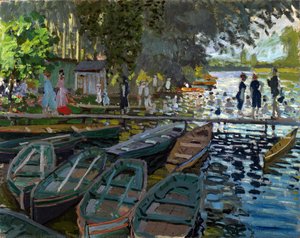
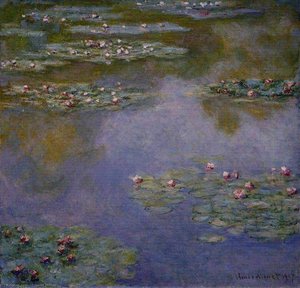
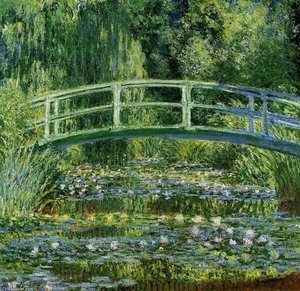
11Wild Poppies, near Argenteuil (1873) by Claude MonetWild Poppies, near Argenteuil1873 · Musée d'Orsay 12Madame Monet in Japanese Costume (La Japonaise) (1876) by Claude MonetMadame Monet in Japanese Costume (La Japonaise)1876 · Museum of Fine Arts 13Bathers at La Grenouillere (1869) by Claude MonetBathers at La Grenouillere1869 · National Gallery 14San Giorgio Maggiore at Dusk (1908) by Claude MonetSan Giorgio Maggiore at Dusk1908 · National Museum Cardiff 15Woman in a Garden (1876) by Claude MonetWoman in a Garden1876 · Hermitage Museum 16Camille Monet On Her Deathbed (1879) by Claude MonetCamille Monet On Her Deathbed1879 · Musée d'Orsay 17Gare Saint Lazare, Pari (1877) by Claude MonetGare Saint Lazare, Pari1877 · Musée d'Orsay 18Grainstack in the Morning, Snow Effect (1890) by Claude MonetGrainstack in the Morning, Snow Effect1890 · Museum of Fine Arts 19Water Lilies (1906) by Claude MonetWater Lilies1906 · Art Institute of Chicago 20The Thames below Westminster (1871) by Claude MonetThe Thames below Westminster1871 · National Gallery 21Clifftop Walk at Pourville (1882) by Claude MonetClifftop Walk at Pourville1882 · Art Institute of Chicago 22Poplars at Giverny (1887) by Claude MonetPoplars at Giverny1887 23le bassin aux nympheas - reflets verts (1920) by Claude Monetle bassin aux nympheas - reflets verts1920 · Foundation E.G. Bührle Collection 24The Road Bridge at Argenteuil (1874) by Claude MonetThe Road Bridge at Argenteuil1874 · National Gallery of Art 25Boulevard of Capucines (1874) by Claude MonetBoulevard of Capucines1874 26The Studio Boat (1876) by Claude MonetThe Studio Boat1876 · Barnes Foundation 27The Pont de l'Europe, Gare Saint-Lazare (1877) by Claude MonetThe Pont de l'Europe, Gare Saint-Lazare1877 · Musée Marmottan Monet 28Monet's Garden at Vetheuil (1881) by Claude MonetMonet's Garden at Vetheuil1881 · Museum Barberini 29Cart on the Snow Covered Road with Saint-Simeon Farm (1865) by Claude MonetCart on the Snow Covered Road with Saint-Simeon Farm1865 · Musée d'Orsay 30Irises in Monet's Garden (1900) by Claude MonetIrises in Monet's Garden1900 · Musée d'Orsay 31Red Boats, Argenteuil (1875) by Claude MonetRed Boats, Argenteuil1875 · Fogg Art Museum 32Pathway in Monet's Garden at Giverny (1902) by Claude MonetPathway in Monet's Garden at Giverny1902 · Kunsthistorisches Museum 33Grainstacks in the Sunlight, Midday (1890) by Claude MonetGrainstacks in the Sunlight, Midday1890 · Hill-Stead Museum 34Fisherman's Cottage at Varengeville (1882) by Claude MonetFisherman's Cottage at Varengeville1882 · Museum of Fine Arts 35Track Coming out of Saint-Lazare Station (1877) by Claude MonetTrack Coming out of Saint-Lazare Station1877 · Pola Museum of Art 36Exterior View of the Saint-Lazare Station by Claude MonetExterior View of the Saint-Lazare Station 37Sunrise, The Sea (1873) by Claude MonetSunrise, The Sea1873 · Getty Center 38The Rocks near Pourville at Ebb Tide (1882) by Claude MonetThe Rocks near Pourville at Ebb Tide1882 39The Harbour at Argenteuil (1872) by Claude MonetThe Harbour at Argenteuil1872 · Musée d'Orsay 40Blue Water Lilies by Claude MonetBlue Water LiliesOrangerie 41La Grenouillere (1869) by Claude MonetLa Grenouillere1869 · Metropolitan Museum of Art 42Autumn Effect at Argenteuil (1873) by Claude MonetAutumn Effect at Argenteuil1873 · Courtauld Gallery 43Woman with a Parasol in the Garden in Argenteuil (1875) by Claude MonetWoman with a Parasol in the Garden in Argenteuil1875 44Camille Monet and a Child in the Artist’s Garden in Argenteuil (1875) by Claude MonetCamille Monet and a Child in the Artist’s Garden in Argenteuil1875 · Museum of Fine Arts 45View of the Sea at Sunset (1862) by Claude MonetView of the Sea at Sunset1862 · Museum of Fine Arts 46Etretat, Cliff of d`Aval, Sunset (1885) by Claude MonetEtretat, Cliff of d`Aval, Sunset1885 47The Saint-Lazare Station (1877) by Claude MonetThe Saint-Lazare Station1877 · National Gallery 48Pathway in Monet's Garden at Giverny (1900) by Claude MonetPathway in Monet's Garden at Giverny1900 49Houses of Parliament, Sunset (1904) by Claude MonetHouses of Parliament, Sunset1904 50The Undergrowth in the Forest of Saint-Germain (1882) by Claude MonetThe Undergrowth in the Forest of Saint-Germain1882 51The Japanese Bridge (The Water-Lily Pond, Water Irises) (1900) by Claude MonetThe Japanese Bridge (The Water-Lily Pond, Water Irises)1900 52Water Lilies (52) (1917) by Claude MonetWater Lilies (52)1917 53Water-Lilies (54) (1914) by Claude MonetWater-Lilies (54)1914 · National Museum of Western Art 54Twilight, Venice (1908) by Claude MonetTwilight, Venice1908 · Artizon Museum 55Springtime (1886) by Claude MonetSpringtime1886 · Fitzwilliam Museum 56Reflections of Clouds on the Water-Lily Pond (tryptich, center panel) (1920) by Claude MonetReflections of Clouds on the Water-Lily Pond (tryptich, center panel)1920 · MOMA - Museum of Modern Art 57Water Lilies (17) (1906) by Claude MonetWater Lilies (17)1906 58The Japanese Bridge (1918) by Claude MonetThe Japanese Bridge1918 · Philadelphia Museum of Art 59Monet's garden in Argenteuil Sun by Claude MonetMonet's garden in Argenteuil SunNational Gallery of Art 60Irises in Monet's Garden (1900) by Claude MonetIrises in Monet's Garden1900 · Musée d'Orsay 61The alley of roses (1921) by Claude MonetThe alley of roses1921 · Musée Marmottan Monet 62The artists garden Sun by Claude MonetThe artists garden Sun 63The River (1881) by Claude MonetThe River1881 · Art Institute of Chicago 64The Bridge in Monet's Garden by Claude MonetThe Bridge in Monet's Garden 65Water-Lilies (1917) by Claude MonetWater-Lilies1917 · Toledo Museum of Art 66Water Lilies (70) (1919) by Claude MonetWater Lilies (70)1919 · Metropolitan Museum of Art 67Water Lilies (Nympheas) (1907) by Claude MonetWater Lilies (Nympheas)1907 · Museum of Fine Arts 68A Woman Reading (1872) by Claude MonetA Woman Reading1872 69The Artist's House from the Rose Garden (1924) by Claude MonetThe Artist's House from the Rose Garden1924 · Musée Marmottan Monet 70Water-Lilies, Reflection of a Weeping Willow (1916) by Claude MonetWater-Lilies, Reflection of a Weeping Willow1916 · Musée Marmottan Monet 71The Esterel Mountains (1888) by Claude MonetThe Esterel Mountains1888 · Courtauld Gallery 72Alice Hoschede in the Garden (1881) by Claude MonetAlice Hoschede in the Garden1881 73Olive Tree Wood in the Moreno Garden (1884) by Claude MonetOlive Tree Wood in the Moreno Garden1884 74Waterloo Bridge, Overcast Weather (1900) by Claude MonetWaterloo Bridge, Overcast Weather1900 75Monet's Garden at Vétheuil by Claude MonetMonet's Garden at Vétheuil 76Waterloo Bridge, Grey Weather (1903) by Claude MonetWaterloo Bridge, Grey Weather1903 · Ordrupgaard 77Etretat la falaise d Aval au cocher de soleil (also known as Sunset at Etretat) (1883) by Claude MonetEtretat la falaise d Aval au cocher de soleil (also known as Sunset at Etretat)1883 78Water-Lilies (29) (1916) by Claude MonetWater-Lilies (29)1916 · Musée Marmottan Monet 79The Sea at Pourville (1882) by Claude MonetThe Sea at Pourville1882 · Columbus Museum of Art 80Water Lilies (61) (1919) by Claude MonetWater Lilies (61)1919 81The Promenade at Argenteuil (1872) by Claude MonetThe Promenade at Argenteuil1872 · National Gallery of Art 82Poppy Field, Argenteuil (1875) by Claude MonetPoppy Field, Argenteuil1875 · Metropolitan Museum of Art 83Argenteuil, Seen from the Small Arm of the Seine (1872) by Claude MonetArgenteuil, Seen from the Small Arm of the Seine1872 84The Rose Bush (1925) by Claude MonetThe Rose Bush1925 · Musée Marmottan Monet 85The Japanese Bridge (1899) by Claude MonetThe Japanese Bridge1899 86Rouen Cathedral, Sunlight Effect (1893) by Claude MonetRouen Cathedral, Sunlight Effect1893 · Museum of Fine Arts 87Camille Monet in Japanese Costume (1876) by Claude MonetCamille Monet in Japanese Costume1876 · Museum of Fine Arts 88Water-Lilies (12) (1916) by Claude MonetWater-Lilies (12)1916 · Musée d'Orsay 89The Iris Garden at Giverny (1899) by Claude MonetThe Iris Garden at Giverny1899 · Yale University Art Gallery 90The Jetty of Le Havre in Rough Weather (1867) by Claude MonetThe Jetty of Le Havre in Rough Weather1867 91Japan's (Camille Monet in Japanese Costume) (1876) by Claude MonetJapan's (Camille Monet in Japanese Costume)1876 92Tree in Flower near Vetheuil (1879) by Claude MonetTree in Flower near Vetheuil1879 93Water-Lilies (43) (1907) by Claude MonetWater-Lilies (43)1907 · Museum of Fine Arts 94Water Lilies (39) (1908) by Claude MonetWater Lilies (39)1908 95Water Lilies (1922) by Claude MonetWater Lilies1922 · Toledo Museum of Art 96Arm of the Seine near Giverny at Sunrise by Claude MonetArm of the Seine near Giverny at SunriseHiroshima Museum of Art 97The Japanese Bridge (The Water-Lily Pond) (1899) by Claude MonetThe Japanese Bridge (The Water-Lily Pond)1899 98Water Lilies (1919) by Claude MonetWater Lilies1919 99Water-Lilies (22) (1908) by Claude MonetWater-Lilies (22)1908 · Worcester Art Museum 100Boulevard Saint-Denis, Argenteuil, in Winter (1875) by Claude MonetBoulevard Saint-Denis, Argenteuil, in Winter1875 · Museum of Fine Arts

Claude Monet's famous paintings, period by period

The subjects that held Claude Monet's eye

The four subjects that come back most often in these originals, each with its finest example.

The museums that keep Claude Monet's originals

The 8 museums that hold the most of the paintings on this page.

Museum City Works by Claude Monet Paintings from this list
Musée d'Orsay, ParisMusée d'Orsay Paris 110 Lunch on the Grass (central panel), Women in the Garden, Monet's Garden, the Irises
Museum of Fine Arts, BostonMuseum of Fine Arts Boston 47 Madame Monet in Japanese Costume (La Japonaise), Grainstack in the Morning, Snow Effect, Fisherman's Cottage at Varengeville
Musée Marmottan Monet, ParisMusée Marmottan Monet Paris 76 Impression, Sunrise, The Pont de l'Europe, Gare Saint-Lazare, The alley of roses
Metropolitan Museum of Art, New YorkMetropolitan Museum of Art New York 55 Terrace by the Sea at Sainte-Adresse, La Grenouillere, Water Lilies (70)
National Gallery of Art, WashingtonNational Gallery of Art Washington 34 The Walk. Lady with a Parasol, The Road Bridge at Argenteuil, Monet's garden in Argenteuil Sun
Art Institute of Chicago, ChicagoArt Institute of Chicago Chicago 41 Water Lilies, Clifftop Walk at Pourville, The River
National Gallery, LondonNational Gallery London 20 Bathers at La Grenouillere, The Thames below Westminster, The Saint-Lazare Station
National Museum of Western Art, TokyoNational Museum of Western Art Tokyo 16 Water Lilies (or Nympheas), Water-Lilies (54)

Claude Monet across the decades: one unique original for each

Works per decade

Pick a decade to see the original that defines it.

Claude Monet's paintings: questions for the gallery

What is the single most famous work of Claude Monet?Reveal the answer

Water Lilies (or Nympheas) (1916), National Museum of Western Art, Tokyo. Impression, Sunrise (1872) and Haystacks: Snow Effect (1891) come next.

At what age did Claude Monet create Water Lilies (or Nympheas)?Reveal the answer

76 years old: Water Lilies (or Nympheas) dates from 1916, and Claude Monet was born in 1840.

Which ten paintings by Claude Monet are the most famous?Reveal the answer

Water Lilies (or Nympheas), Impression, Sunrise, Haystacks: Snow Effect, The Walk. Lady with a Parasol, Rouen Cathedral, Symphony in Grey and Rose, Lunch on the Grass (central panel), The Magpie, Terrace by the Sea at Sainte-Adresse, Women in the Garden and Monet's Garden, the Irises. The ranking above gives each one's year and museum.

How many works by Claude Monet are known?Reveal the answer

Our catalog holds 2,448 works by Claude Monet, dated from 1862 to 1925.

Where can the most famous Claude Monet originals be seen?Reveal the answer

Mostly in Musée d'Orsay (Paris), Museum of Fine Arts (Boston) and Musée Marmottan Monet (Paris). The museum table above lists them all.

During which period did Claude Monet create the best-known paintings?Reveal the answer

In 1870s: 28 of the 100 works on this page were made then, Impression, Sunrise among them.

Which famous Claude Monet painting is the earliest, and which the latest?Reveal the answer

On this page, the earliest is View of the Sea at Sunset (1862) and the latest The Rose Bush (1925).

What subjects did Claude Monet favour?Reveal the answer

Landscape (40), Water lilies (25) and Tranquility (22), across the 100 works on this page.

What materials did Claude Monet paint with most?Reveal the answer

Oil On Canvas, for 79 of the 100 works on this page.

Which movement does the work of Claude Monet belong to?Reveal the answer

Impressionism, judging by the originals on this page.

What Claude Monet originals can I see at the Musée d'Orsay?Reveal the answer

Lunch on the Grass (central panel), Women in the Garden and Monet's Garden, the Irises: the Musée d'Orsay, Paris holds 11 of the works on this page.

Where can I order a hand-painted Claude Monet reproduction?Reveal the answer

Yes, as a reproduction: the original stays in its museum, but any painting on this page can be painted by hand for you, made to order one at a time, from the painting's own page.

Claude Monet: a portrait of the artist

Early Life, Family and Training

Born in Paris, France, on 14 November 1840, Claude Monet entered a world of diverging expectations. While his father, Claude-Adolphe Monet, envisioned a more stable professional path for his son, his mother, Louise-Justine Aubrée Monet, offered a quiet support for his burgeoning creative inclinations. The family eventually settled in Le Havre, Normandy, where the coastal atmosphere would leave a lasting impression on the young boy. This period of childhood was marked by an early talent for drawing, a skill that would eventually lead him away from the commercial interests his father preferred.

Tragedy arrived in January 1857, when Monet was sixteen years old. The death of his mother, Louise-Justine, forced a sudden shift in his domestic life. He was sent to live with his aunt, Marie-Jeanne Lecadre, a widow who possessed significant wealth and no children of her own. This transition provided the stability necessary for his formal development. It was during these formative years that he encountered Eugène Boudin, a man who would fundamentally alter his perspective on the purpose of painting. Boudin introduced him to the practice of plein air painting, encouraging him to take his materials outdoors to capture the immediate reality of the natural world.

His training continued in the structured environments of Paris. He sought instruction at the Académie Suisse, studying under the academic history painter Charles Gleyre. This period of study allowed him to refine his technical abilities while navigating the tension between traditional academic methods and the more spontaneous, observational approach he had begun to favor. These early years of instruction and loss shaped the foundation of a career defined by the pursuit of light and atmosphere.

The Impressionist Movement and Style

As a founder of French Impressionism, Claude Monet acted as a key precursor to modernism. He was the most consistent and prolific practitioner of the movement's core philosophy, which sought to express a person's perceptions of nature. This pursuit was defined by plein air landscape painting, a method that required him to work directly on large-scale canvases out of doors. He would often return to his studio to rework and complete these pieces, bridging the gap between the immediate observation of the outdoors and the controlled environment of the studio.

His technical approach relied on unmediated colors and asymmetrical arrangements of forms. Rather than seeking a static representation, he developed a method of painting the same scene many times to capture the shifting effects of light and the passing of the seasons. This repetitive study allowed him to document how atmosphere and weather transformed a single subject. His work moved away from academic precision, focusing instead on the ephemeral qualities of the environment.

Life and Works in Argenteuil

In 1871, Monet moved to Argenteuil, a village situated northwest of Paris. This period marked a significant shift in his social and creative landscape. As his colleagues frequently joined him in the village, the area became closely associated with the burgeoning Impressionist movement. The setting provided a steady rhythm of life and light that would define much of his output during these years.

His domestic life was deeply intertwined with his artistic practice. His first wife, Camille Doncieux, became a frequent presence in his compositions, serving as a model for his figurative paintings throughout the 1860s and 1870s. In the spring of 1872, he turned his attention to the immediate surroundings of his home, producing several canvases within his own garden. These works captured the seasonal shifts of the local landscape through a lens of direct observation.

The Years in Giverny

In 1883, Monet moved to a house and property in Giverny, a village northwest of Paris. This relocation marked the beginning of a forty-three-year residency that would define his later existence. He did not merely inhabit the space; he actively shaped it, embarking on a vast landscaping project that transformed the grounds into a living subject. His hands were as much involved in the cultivation of the earth as they were in the application of pigment, as he planted thousands of flowers and engineered a water-lily pond to serve as a focal point for his observations.

The garden became a sanctuary of light and seasonal change. For the final thirty-one years of his life, his artistic focus narrowed toward the specificities of this environment. He sought to document the way light interacted with the water and the flora, often working directly from the garden to capture the immediate sensations of the landscape. This period was characterized by a devotion to the shifting atmosphere of his private estate, where the boundaries between the cultivated garden and the canvas began to blur.

Key Works and Series Paintings

Monet’s contribution to the evolution of modern art was cemented by a single work that inadvertently defined an entire movement. His 1873 painting, Impression, Sunrise, provided the name for the Impressionist movement, even as its loose handling and indistinct forms initially drew scorn from the establishment. This work signaled a departure from the rigid expectations of the Salon, favoring the immediate perception of light over the polished finish of academic tradition.

As his career progressed, his focus shifted toward the repetitive study of a single subject to capture the shifting nuances of light, weather, and time. This method of creating series paintings allowed him to document how a single scene transformed under different atmospheric conditions. He applied this rigorous observation to various subjects, including Haystacks, Rouen Cathedrals, and Poplars. Through these studies, he sought to render not just the object itself, but the very air and light that surrounded it.

The most extensive manifestation of this obsession occurred in his later years at Giverny. There, he produced a vast series of approximately 250 oil paintings titled Water Lilies (Nymphéas). These works focused on his flower garden and the water-lily pond, often painted while he contended with failing eyesight. The series represents a profound commitment to the ephemeral, attempting to fix the movement of water and the reflection of clouds upon its surface.

Circle of Artists and Influences

Monet’s artistic path was shaped by a series of vital encounters and mentorships that moved him away from the rigid constraints of academic tradition. His early training was significantly influenced by Eugène Boudin, who introduced him to the practice of plein air painting. This emphasis on working outdoors allowed him to observe the immediate effects of light on the landscape, a method that would define his entire career. He also drew inspiration from the Dutch landscapist Johan Jongkind, whose approach to nature helped refine his vision of the natural world.

In the studios of Paris, his development was furthered by the company of peers who would become central to the evolution of modern painting. While studying under Charles Gleyre at the Académie Suisse, he was a classmate of Auguste Renoir, alongside Frédéric Bazille and Camille Pissarro. These friendships were more than mere social connections; they were the foundations of a shared rebellion against the established Salon. Throughout his career, he worked and exhibited alongside figures such as Edgar Degas and Édouard Manet, contributing to a collective shift in how light and atmosphere were perceived on canvas.

Later Years and Death

The final decades of Monet's life were deeply intertwined with the landscape he had so meticulously cultivated. In 1892, he married Alice Hoschedé, a union that provided a sense of stability as he continued his obsessive study of light and atmosphere. His focus narrowed toward the water garden at Giverny, where the interplay of reflections and flora became his primary preoccupation. This period was marked by a relentless pursuit of the ephemeral, often working through the physical challenges of failing vision to capture the shifting nuances of his surroundings.

As his life drew to a close, the scale of his vision expanded. He moved toward large-scale works that sought to envelop the viewer, particularly through his series of water lily paintings. These works were not merely depictions of a pond but were attempts to record the very act of perception. His death occurred on 5 December 1926, leaving behind a body of work that had fundamentally altered the way nature was observed on canvas.

The transition from his personal life to his public presence was completed shortly after his passing. In May 1927, the Musée de l'Orangerie opened its doors to the public, providing a permanent home for his large-scale murals. This space was designed to honor the specific atmosphere he had spent his final years attempting to translate into paint.

Legacy and Global Influence

The influence of Claude Monet expanded significantly during the second half of the 20th century, as his presence in the global consciousness grew. He remains an undisputed titan of Impressionism, having been a key figure in the movement that transformed French painting during the latter half of the nineteenth century. His approach to light and atmosphere fundamentally altered how painters perceived the natural world, moving away from academic rigidity toward a more immediate, sensory experience of the landscape.

His late-career focus on the water-lily paintings produced a body of work that is among the most recognised and celebrated of the 20th century. These works, often characterized by their scale and focus on the reflections within his Giverny garden, moved beyond mere landscape to explore the very essence of perception. By documenting the shifting qualities of light through repetitive study, he provided a blueprint for modernism, influencing generations of artists who sought to capture the ephemeral nature of sight and color.

All 2448 works by Claude Monet →