Switch to Print
 Read More







































 For artworks or reproductions larger than 105 cm (approximately 41 inches) on any side, the frame will be shipped as a kit, disassembled. This method ensures safe delivery and prevents damage during transport.


A Glimpse of Paradise: Monet’s 1906 Water Lilies
Immerse yourself in the tranquil beauty of Claude Monet's Water Lilies (1906), a quintessential example of Impressionism that transcends mere representation to evoke a profound emotional response. Measuring 87 x 92 cm, this painting is not simply a depiction of a pond; it’s an invitation to experience the fleeting magic of light, color, and atmosphere.
Impressionistic Mastery & Artistic Innovation
Painted during a pivotal period in Monet's career, this work exemplifies his dedication to capturing the subjective impression of a scene. Rejecting traditional academic constraints, Monet employed loose brushstrokes and a vibrant palette to convey the *feeling* of being present within the water garden at Giverny – his beloved sanctuary. The painting’s surface is alive with texture, achieved through the impasto technique where paint is applied thickly, creating a tactile quality that draws the viewer in.
Subject & Composition: A World Within a Pond
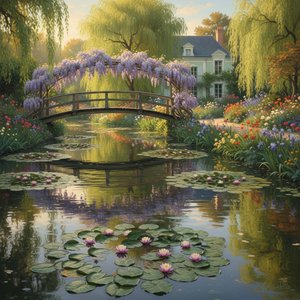
The composition focuses on the densely populated surface of a water lily pond, dominated by an interplay of light and reflection. Lily pads of varying sizes and shades of green float amidst delicate pink and white blossoms. The background subtly suggests foliage and trees, blending into the atmospheric effect rather than defining a clear horizon line. This deliberate lack of a strong focal point encourages the eye to wander, mirroring the natural randomness and organic growth within the garden itself.
A Symphony of Color & Light
Monet’s masterful use of color is central to the painting's impact. Shades of green and blue dominate – from deep emeralds to pale sages and cerulean to indigo – representing the water, vegetation, and reflections of the sky. Delicate accents of pink and white from the lilies provide a subtle contrast against this cool backdrop, while hints of yellow suggest sunlight filtering through the leaves. These colors aren’t blended smoothly; instead, they are applied in distinct strokes, creating a vibrant and textured surface that shimmers with light.
Symbolism & Emotional Resonance
Water lilies have long been associated with purity, enlightenment, rebirth, and peace. In Monet's hands, they become symbols of tranquility and harmony with nature. The immersive quality of the composition invites contemplation and fosters a sense of calm. The fleeting nature of the impressionistic style also subtly reminds us of beauty’s ephemeral quality and the importance of appreciating each moment.
Historical Context & Legacy
By 1906, Monet was deeply engrossed in his water lily series, which would become his most celebrated achievement. These paintings were not merely studies of nature; they were explorations of perception, light, and color that profoundly influenced the development of modern art. His Giverny garden became his living studio, providing endless inspiration for these iconic works. Owning a reproduction of this painting is owning a piece of art history – a testament to Monet’s enduring legacy.
This Water Lilies offers not only aesthetic pleasure but also a sense of serenity and connection to the natural world, making it an ideal addition to any home or collection. It's a timeless masterpiece that continues to captivate audiences over a century after its creation.
Questions & Answers
What technique was used for "Water Lilies", and when was it created?
"Water Lilies" was made in 1906, in oil on canvas.
Does "Water Lilies" have an augmented reality preview?
The AR Preview page of "Water Lilies" by Claude Monet uses augmented reality to show the artwork in your own space, on a compatible device.
What historical period is "Water Lilies" by Claude Monet from?
"Water Lilies" by Claude Monet dates from the Modern period. The period gives the historical context of the work.
More about this painting
 Preview
 Send
Send Share
Share
 Details
 Guide
Guide

 Download
 Similars
 X-Ray
X-Ray Diaporama
 Q&A
Q&A Stats
Stats